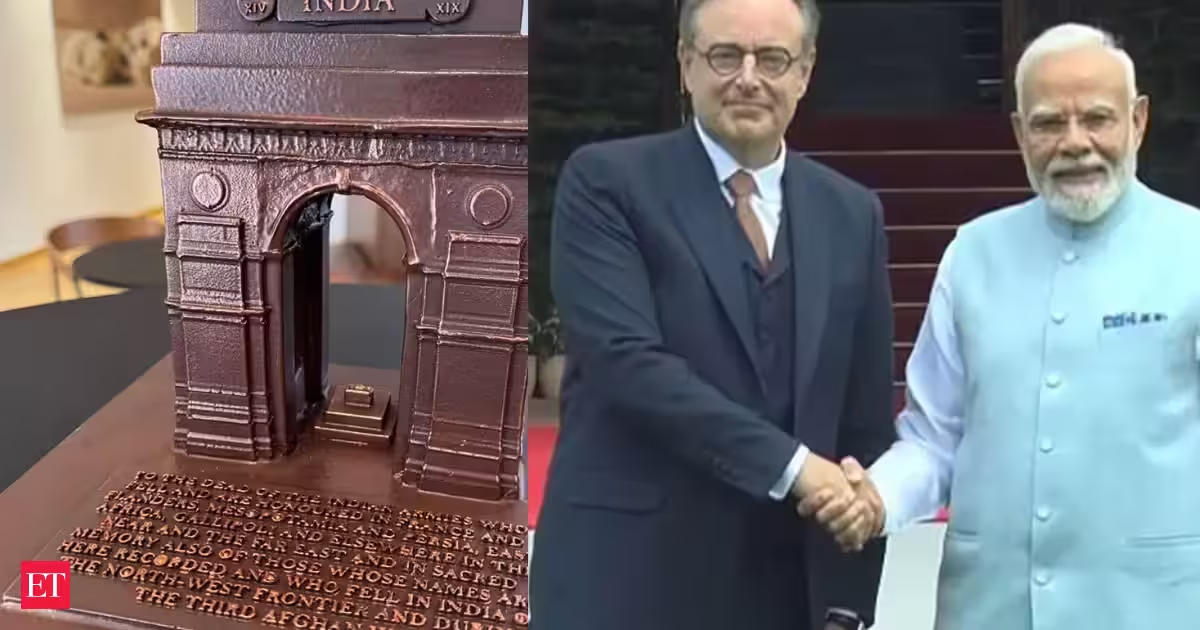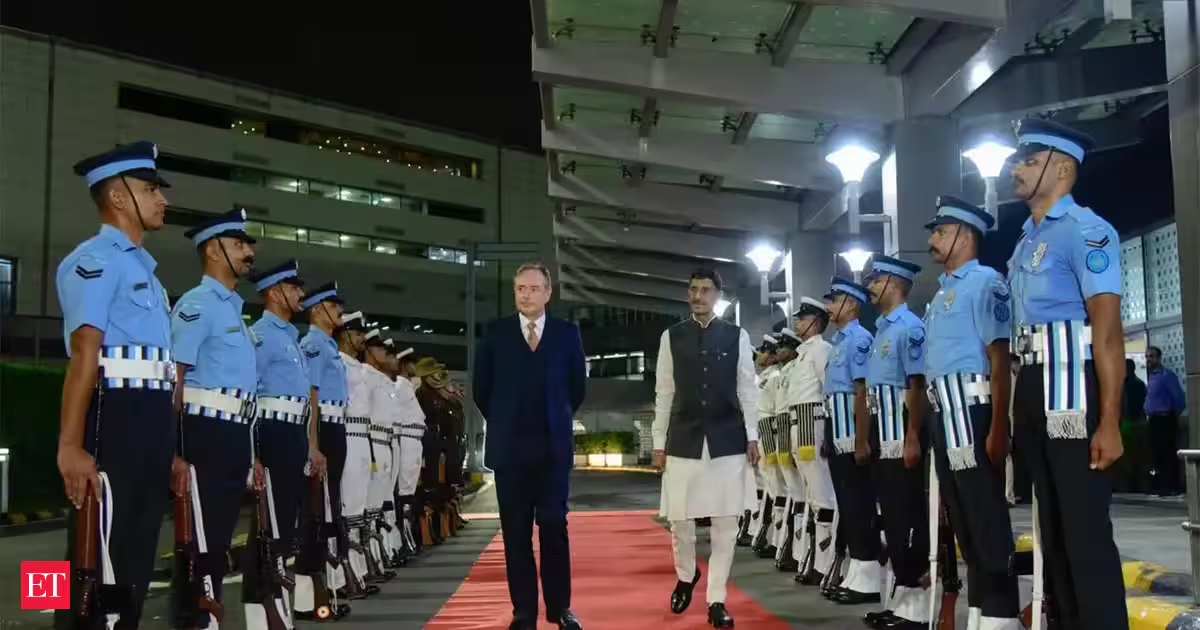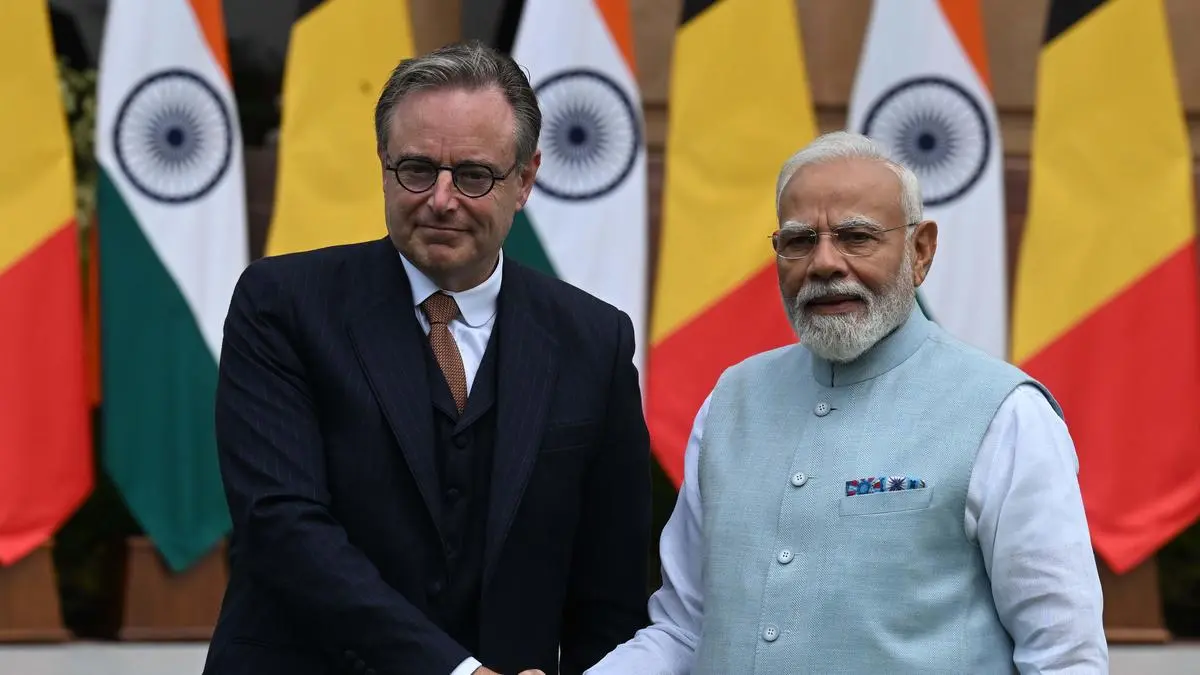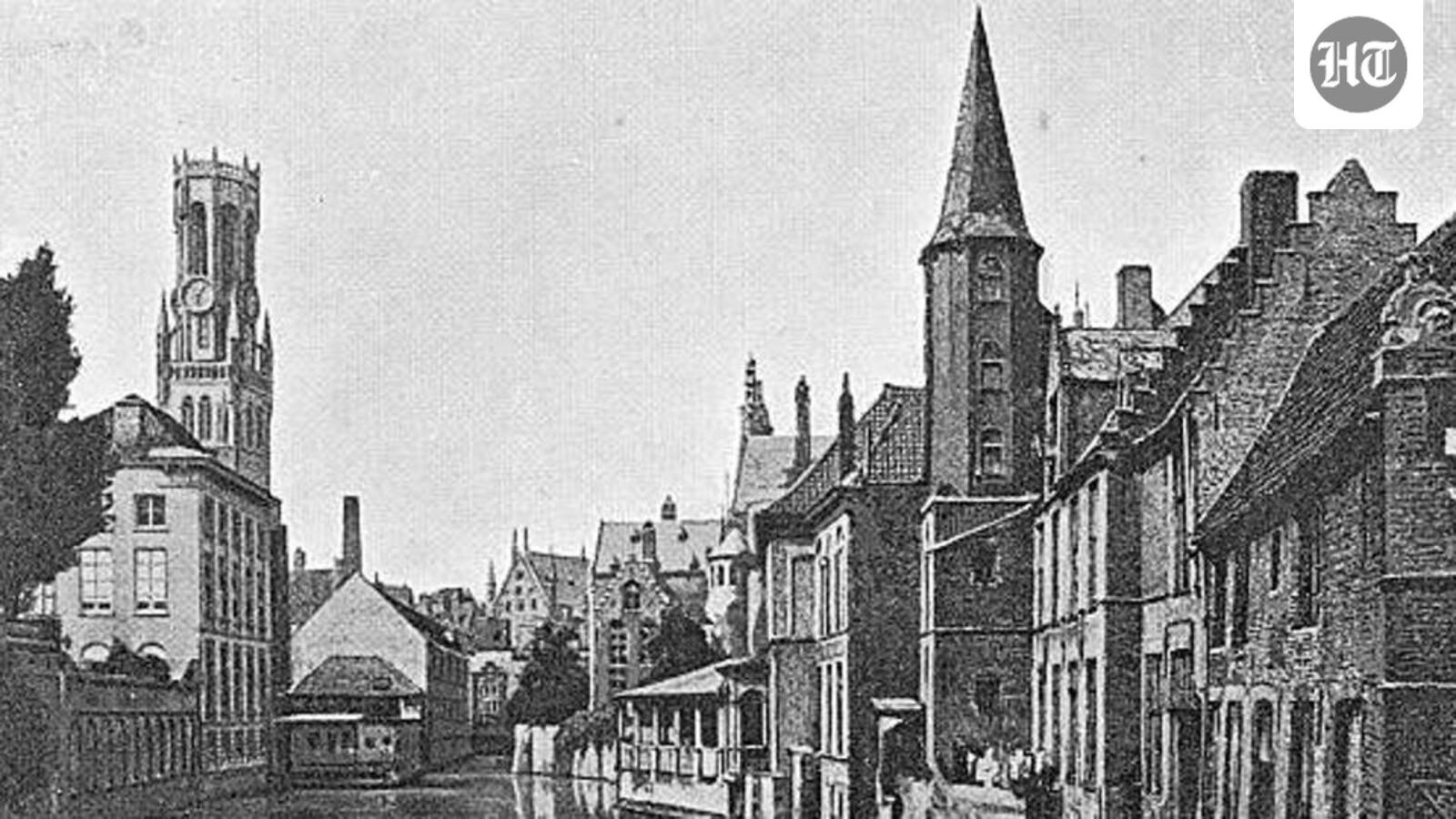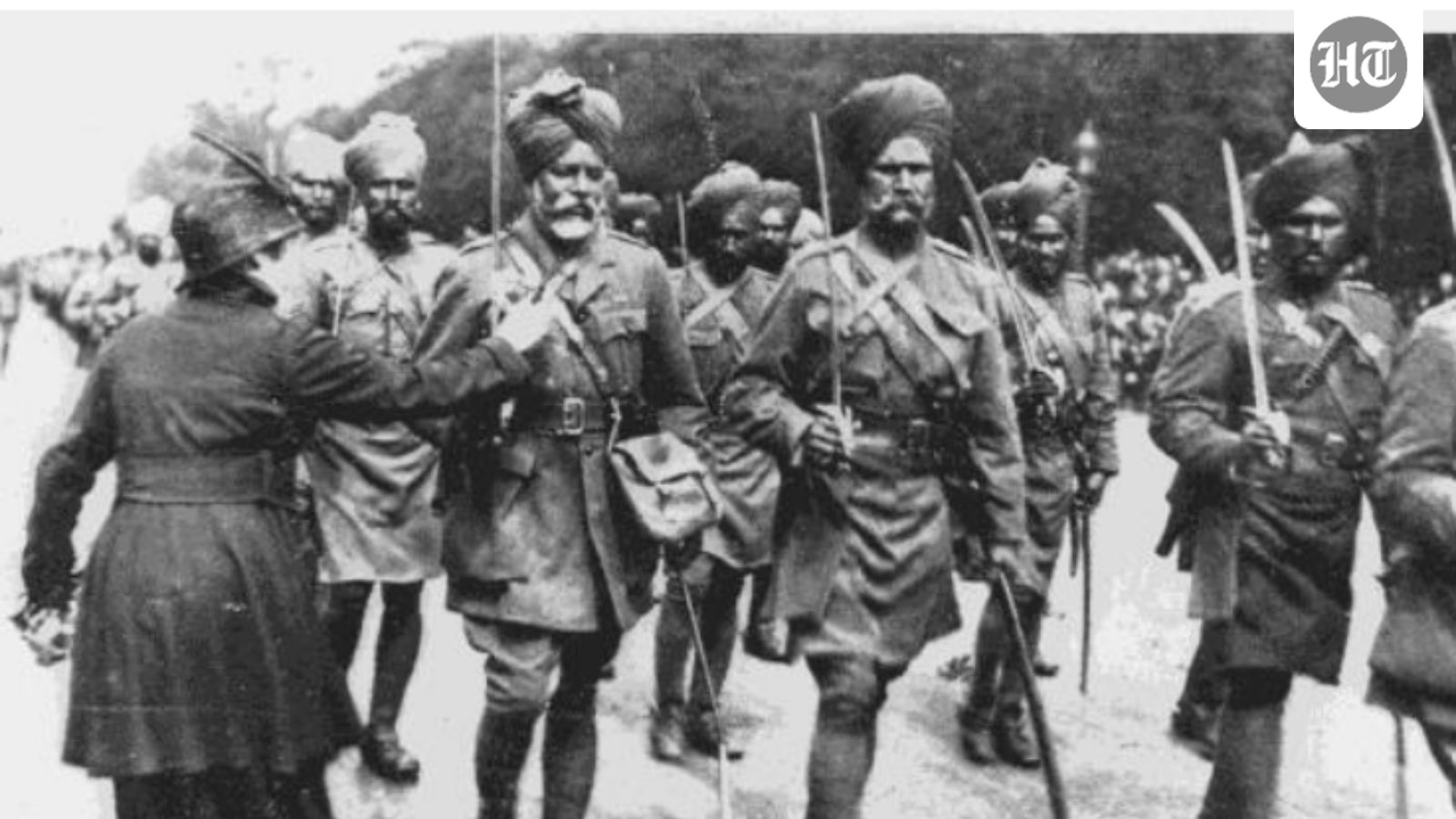
The gesture is a small, sweet reminder of the ties between the two countries, and of shared history that began more than a century ago in the fields of FlandersPrefer HTon Google Belgian Prime Minister Bart De Wever, who is on a three-day official visit to India, had a unique gift planned for his Indian counterpart, Narendra Modi. It was not an award or an artefact, but chocolate.Indian forces on their way to the Front in Flanders. (Indian Embassy in Brussels)The gesture was a small, sweet reminder of the ties between the two countries — and of a shared history that began more than a century ago on the battlefields of Flanders.During a media briefing, De Wever said he had planned to present Modi with a fitting gift — a sculpture of India Gate made entirely out of the finest Belgian chocolate. However, the sculpture did not survive the journey to India.“I had actually planned to present to Prime Minister Modi a fitting gift — a sculpture of India Gate entirely made out of the best Belgian chocolates. But unlike the real India Gate, which has stood for almost a century, the chocolate version didn't even survive the journey to India,” he said.“Chocolate is excellent for diplomacy, but not excellent for diplomatic travel, we noticed. But no worries, we have a backup in Belgium, and one way or another, I will get it to Prime Minister Modi in one piece,” he added.De Wever said he chose India Gate “deliberately” because it symbolises the shared history between India and Belgium and carries a “deep message”.Indian Army in the Ypres Salient - World War – I (1914-1918)More than a century ago, soldiers from India travelled thousands of miles to fight and die on Belgian soil. Their story is carved into the stone of Ypres and Neuve-Chapelle — and remains part of the shared memory of two continents.When the First World War erupted in the summer of 1914, the Western Front quickly descended into a stalemate of trenches, mud and machine guns. With British forces suffering heavy losses, Britain turned to troops from across its empire for reinforcements.Indian forces on their way to the Front in Flanders. (Indian Embassy in Brussels)August 6, 1914 - the day it all beganThe Indian Army’s involvement on the Western Front began on August 6, 1914, when the War Council in London requested two infantry divisions and a cavalry brigade from the Viceroy’s government, initially to be sent to Egypt.However, on August 27, the British government decided that the Indian divisions should be sent immediately to France, as the British Expeditionary Force continued to suffer heavy losses following the Battle of Mons.According to the Commonwealth War Graves Commission, about 138,000 soldiers from India were sent to Europe during the war, with many deployed in the Ypres Salient and at Neuve-Chapelle in France in 1914-15.The Indian Corps was subsequently formed, comprising two infantry divisions — the Lahore Division (3rd Indian Division) and the Meerut Division (7th Indian Division). The Secunderabad Cavalry Brigade was added later.Also Read: After 2 atomic bombings and a WWII radio message, Japan surrendered in 23 minutesThe Lahore Division landed at Marseille in late September 1914 and travelled north through Orléans. For many Indian soldiers, Europe was a completely new and unfamiliar environment. The French population nevertheless greeted them warmly, although language and cultural differences made communication difficult.Indian soldiers arriving on double –decker buses (Indian Embassy in Brussels)On October 22, 1914, the Ferozepore Brigade entered the trenches of the Ypres Salient. The 57th Wilde’s Rifles was the first Indian battalion deployed into battle. On the same day, the first Indian casualty of the war on the Western Front was recorded: Naik Laturia of the 57th Wilde’s Rifles, son of Phehu of Tikar, Hamirpur, Kangra, Punjab. He is now commemorated at the Menin Gate.More Indian troops continued to arrive. Achiel Van Walleghem, a priest in Dikkebus, recorded in his diary that Indian troops were transported throughout the night of October 22-23 in English double-decker buses.Many of the soldiers had never seen snow and were unprepared for the harsh Flanders winter, where they fought in waterlogged trenches.The losses were severe. In the final two days of October 1914, the 57th Wilde’s Rifles lost 300 of its 750 men, who were killed, wounded or taken prisoner.Indian soldiers trying to keep warm in their trenches, winter
'Shared history': India, Belgium and the forgotten World War 1 soldiers of Flanders Fields
The gesture is a small, sweet reminder of the ties between the two countries, and of shared history that began more than a century ago in the fields of Flanders | World News
1,409 words~6 min read