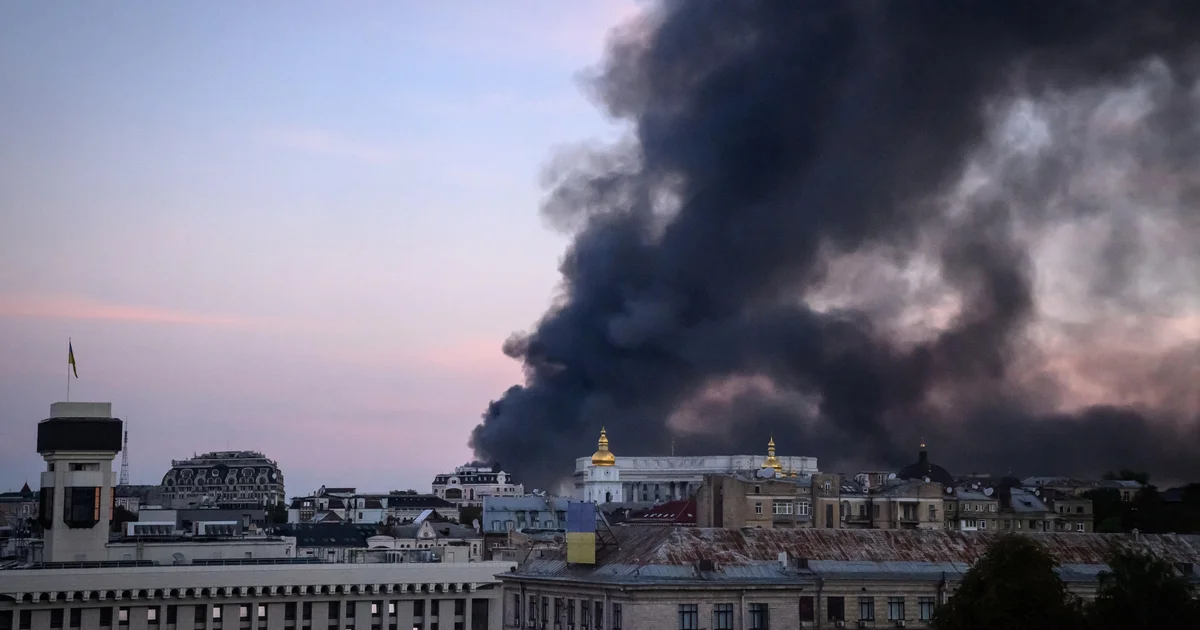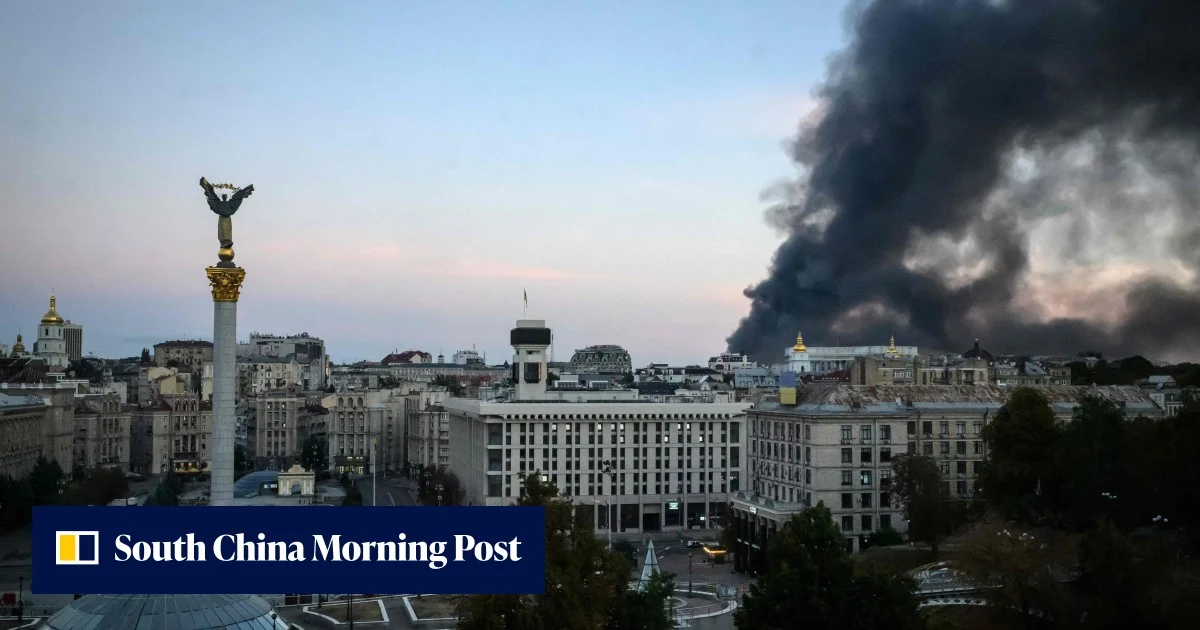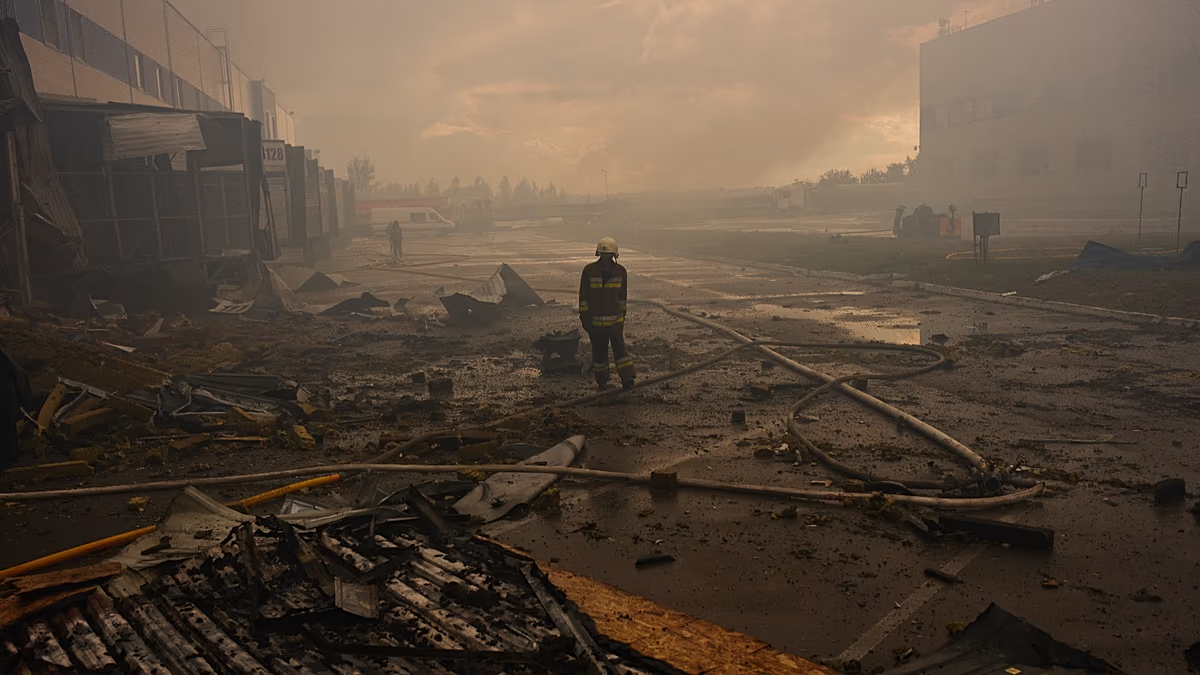
For much of the war, Russian drone and missile attacks on the Ukrainian capital Kyiv followed a particular rhythm; they almost always came at night.
The warnings would begin on monitoring channels on Telegram in the late evening. They announced drones moving south, missiles being launched, air defences working.
Ukrainian civilians judged whether it was prudent to stay indoors or make for shelter in the metro based on the severity of the threat.
Now, Russia has changed tactics with the use of fast-flying, jet-powered drones and the expectation that daylight brings a return to normal life has been shattered.
Since last week, attacks have come day and night, compounding the terror of overnight strikes with the exhaustion of constant daytime disruption.