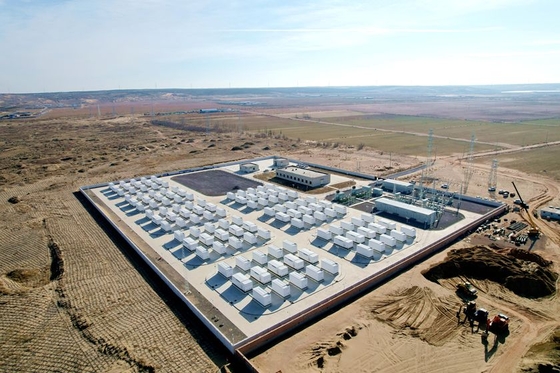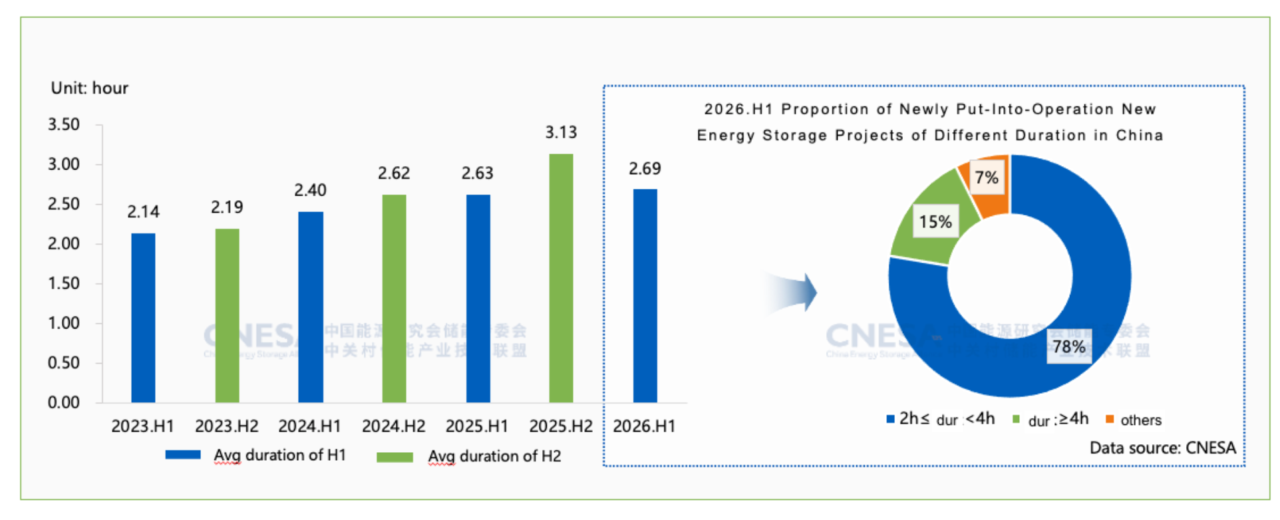
The market is clearly shifting toward larger projects and longer storage durations. The number of newly commissioned projects fell by 51% year-on-year, but the share of projects sized at 100MW or above increased by 8%. The average storage duration for new projects reached 2.69 hours, up 2.3% year-on-year, while the share of projects with a duration of four hours or more rose by 4.8%.
According to Chen, the market is moving away from pure volume growth toward optimising individual plant scale and storage duration profiles, with long-duration energy storage (LDES) continuing to gain ground.
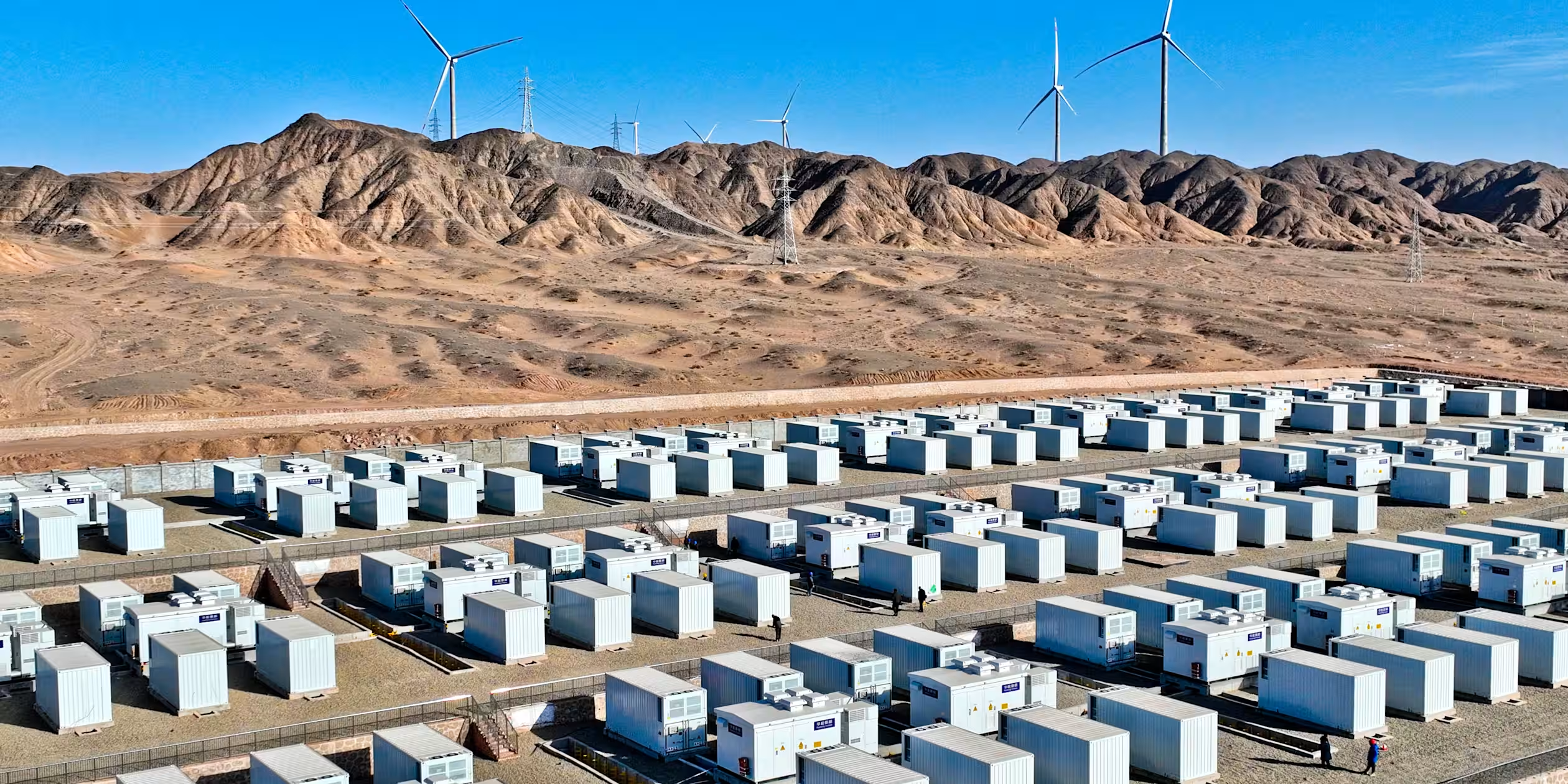
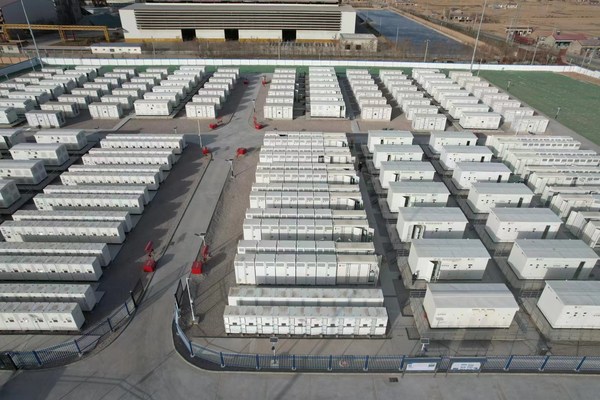
Standalone storage has become the primary driver of domestic deployments. CNESA data shows that 15.1GW of standalone storage was commissioned in H1 2026, accounting for 69.3% of total new capacity—a year-on-year increase of 13.9%. Following the issuance of National Document No. 114 (establishing the first national capacity pricing mechanism for standalone energy storage), the value of new storage assets has received formal policy recognition.
Provinces including Gansu, Jilin, Shaanxi, Xinjiang, Hubei, Ningxia, and Qinghai have rolled out implementation rules for capacity tariffs, establishing a three-pillar revenue model for standalone storage: capacity tariffs, energy markets, and ancillary services.