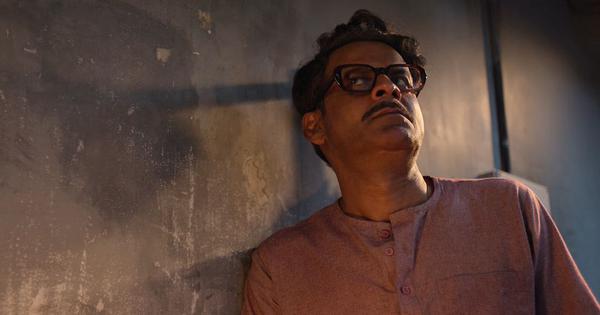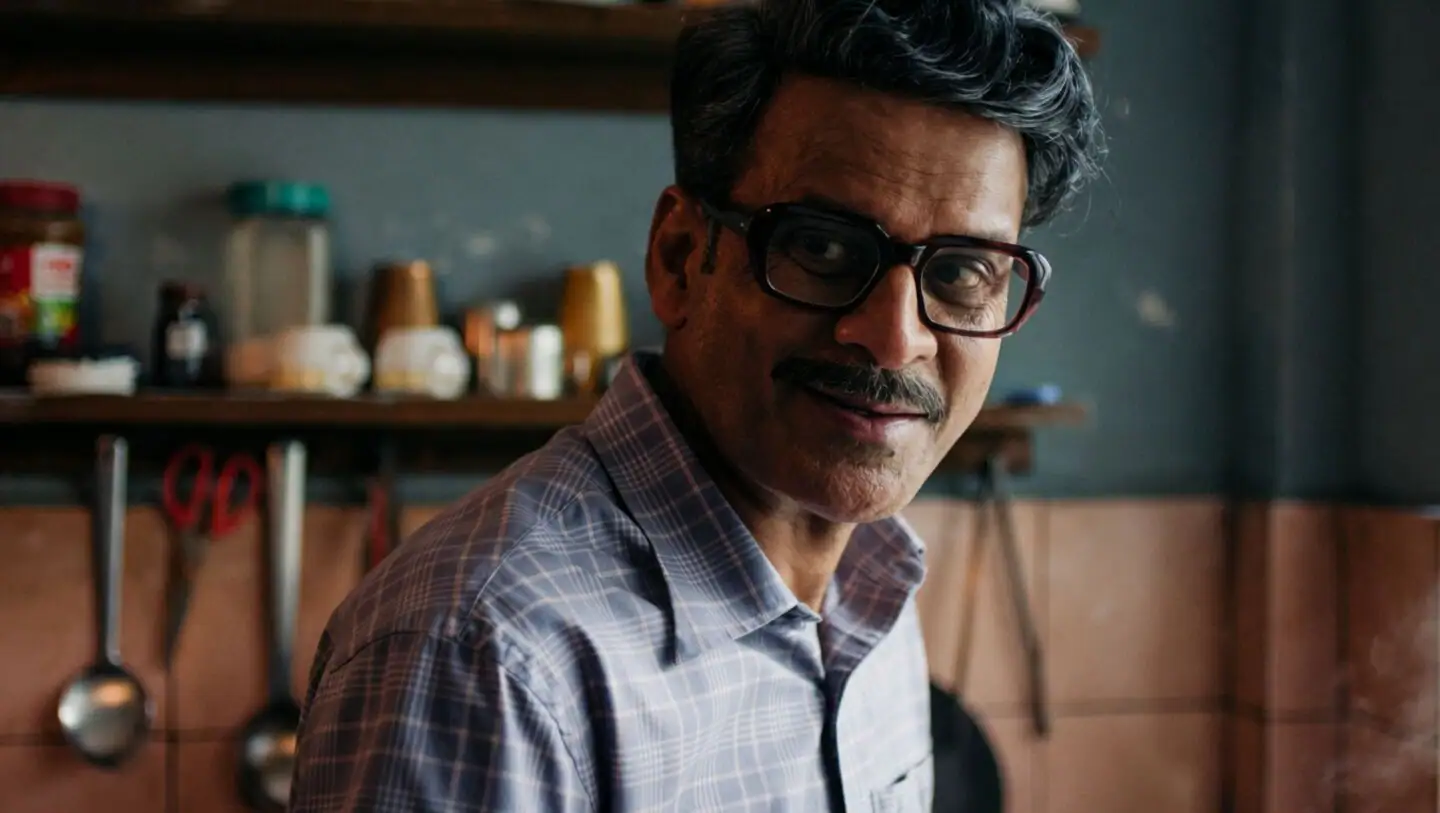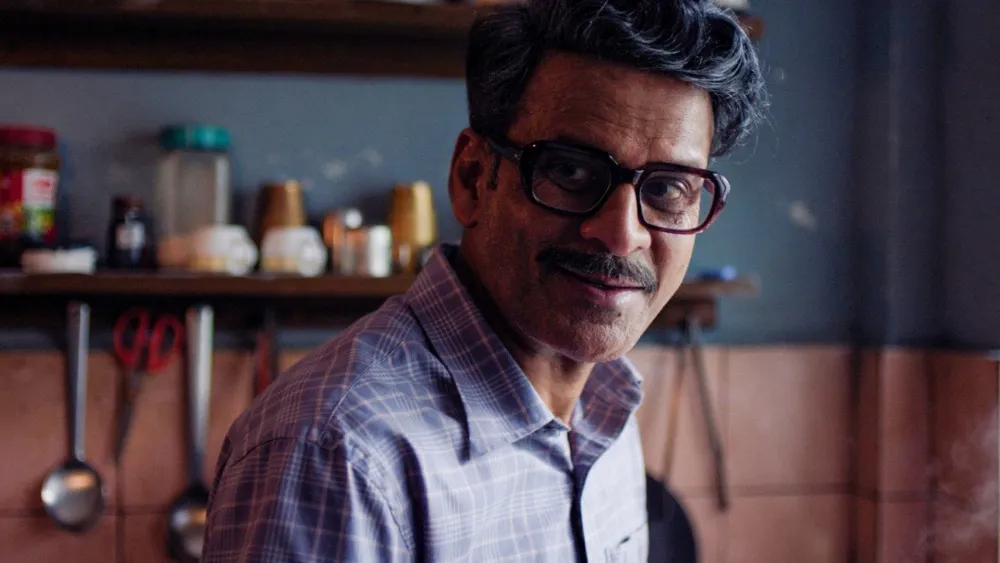
American director Ben Rekhi has had a productive 2026. His documentary Breaking the Code, about his father, Indian-American entrepreneur Kanwal Rekhi, was screened at film festivals earlier in the year. Rekhi’s feature Last Man in Tower will be released in cinemas on September 11.The Hindi-language film, adapted by Sooni Taraporevala from the Aravind Adiga novel of the same name, stars Manoj Bajpayee in the lead role. Co-produced by Rana Daggubati, the movie will be released on September 11 in cinemas.Bajpayee plays Yogesh Mishra, a retired school teacher who opposes a proposal to redevelop his decades-old building in Mumbai. Yogesh, who’s also known as Masterji, is increasingly isolated in his stand against the builder Dharmesh Shah (Boman Irani).Various neighbours initially support and then turn against Yogesh. His neighbour Sangeeta Puri (Divya Dutta) turns out to be a formidable adversary. Even Yogesh’s son Gaurav (Sukant Goel) rejects Yogesh’s principled position against what he believes to be the end of a way of life.While Ben Rekhi was born and raised in California, he has been living in Mumbai for the past four years. Rekhi’s experience of the megapolis, particularly its obsession with redevelopment, informed Last Man in Tower, he told Scroll. Here are edited experts from the interview.What relationship do you have with Mumbai?I grew up with a Punjabi father and an American mother, so I’ve been coming to India all my life. I specifically started coming to Mumbai in 2008. I’ve been spending a good portion of the year here.The amount of redevelopment that’s happening is unbelievable. There’s no corner of the city that’s left untouched. That’s one of the things that will make this film so relatable.Aravind Adiga’s book was written in 2011. It was almost prescient, ahead of its time in terms of where we’ve ended up. It’s become even more relevant over time. He saw what was happening before any of us did.Divya Dutta in Last Man in Tower (2026). Courtesy Spirit Media/State of Awe/Midsummer Films.How did the project take off?I got introduced to Aravind years ago. I told him what a big fan I was, and how honoured I was that he trusted me to put this together.I got the rights from Aravind. It took almost 10 years to bring it to the screen. The first step was to get Sooni [Taraporevala] on board. She has become my closest collaborator on this project.What guided the adaptation of a 419-page novel into a 97-minute film?It’s no easy feat. It’s a sprawling tale and there are so many different characters and subplots. How to extract the skeleton and put new flesh around it?The book is an ensemble. The fabric is these neighbours and how long they’ve known each other. They have gone through celebrations and grief and loss. They’ve become like a family, but they’re also a dysfunctional family.That’s where Sooni came in. She’s obviously done this before with The Namesake and other big titles. She infused her own sensibility and wit into the screenplay.More than what to keep and what to lose, the adaptation was about maintaining the tone. Aravind has this brilliant voice that’s both hilarious and tragic. The human condition is full of contradictions. That’s not easy to translate to the screen.So at every step, there was a sort of reality check – is this ringing true to the source material? Having a veteran like Sooni helped guide the process. She really carried the film on her back.Juhi Chaturvedi did the Hindi dialogue. Adiga, Sooni and Juhi – it was like the triad of storytelling. But it’s really when Manoj [Bajpayee] came on board that the film came to life.Ben Rekhi.Was Aravind Adiga involved in the writing and making of the film?No. I think this was something that he also probably went through with the adaptation of The White Tiger.Aravind, to his credit, understood, the book is my thing and the film is your thing. I don’t want to be involved. Please take good care of the book, but I don’t want to interfere. This was a very generous position.The film isn’t as darkly comical as the book. The tone is more measured.The darkness of the book is something that can confuse audiences. If it’s too funny, it can get slapstick. To exist in that no man’s land can be very tricky for a film. In a book, you have more time with the readers. With the film, there was a choice to lean into more of the dramatic elements, the nuance and subtlety. Even though we picked the lane of the human drama, as opposed to the more comedic elements, all of the situations were from the book.Boman Irani in Last Man in Tower (2026). Courtesy Spirit Media/State of Awe/Midsummer Films.What is Last Man in Tower saying about redevelopment , which is rampant in Mumbai?While the film takes place in an intimate housing society, the thing that makes it so universal is that it’s a microcosm of our larger society. The question really becomes about the needs of the individual versus the needs of the community.The film has this moral grey area where you see Masterji’s point but also see Sangeeta’s point. I don’t know what I would do in this scenario. There’s some self-reflection that happens that hopefully makes it more personal for people in the audience.The film is also about loneliness. We’re in a world that’s changing so fast, whether because of social media or AI or climate change or politics or war. It’s very disorienting for both young and old people.We’re taught that if you chase material things, you’ll find happiness. But what really gives us true peace is community and the quality of our relationships.The sad thing is, we squander it. We have these petty fights with our families and neighbours. Our pride gets in the way. We might deeply love these people, but we can’t find the words to express it.This film is really about that – how do we tell the people that mean the most to us that we care about them while they’re still here? I hope that’s something that makes us feel all less alone.Last Man in Tower (2026). Courtesy Spirit Media/State of Awe/Midsummer Films.What kind of conversations did you have with Manoj Bajpayee?When we were thinking about casting, there were very few people that we thought could pull this off because Yogesh is such a nuanced character. He reaches his breaking point and beyond. To watch someone psychologically devolve into the brink of madness is something that only Manoj could deliver.One of the conversations I had with Manoj was, is Masterji likable, and does that matter? He is written as sort of stubborn and curmudgeonly, and it also comes off as brash and funny. But these have real consequences in his life, especially with his son.Manoj is playing the truth of the character. It doesn’t matter if you like him or not. If you understand what he’s doing, that’s more interesting.The second big conversation I had with Manoj was, why is Masterji so damn stubborn? This problem isn’t of his making, so why should he have to deal with it? He’s standing up for his ideals against the builder. But there are so many times where a character asks him, why are you doing this? And each time, it’s a different answer.I think even Masterji doesn’t fully understand what’s driving him. Is he fighting for himself? Is he fighting for his home? Is he being selfish? Is he fighting for this sense of community that will be lost?In a world that’s changing so fast, it’s important to have people question and say, is this the right thing to be changing towards?Manoj Bajpayee in Last Man in Tower (2026). Courtesy Spirit Media/State of Awe/Midsummer Films.Divya Dutta is almost a second lead in Last Man in Tower.She’s a real scene-stealer. Divya was the most heart-breaking surprise for me.Her character is complicated in that she’s a mother of a special needs child. As a woman and a mother and a wife, she’s had to put her dreams and wishes on the backburner. Here comes this builder who says, you can have it all, you can have the home of your dreams, you can have some extra money to be a bit comfortable.The lengths at which a mother will go to provide for her family are limitless. There’s a sort of primal portrayal that Divya has done.It’s really courageous, what she did. There were certain scenes that weren’t flattering. Divya was like, give it to me, I want to sink my teeth in, whatever the story requires. I don’t know that many performers, especially actresses, who would be that brave, who would put themselves out there in this way.Filmmakers shooting in Mumbai struggle to find suitable locations. Your film ironically demands the kind of old-fashioned building that barely exists anymore because of redevelopment.It’s one of those truth-is-stranger-than-fiction scenarios. Most of these housing societies that were built in the 1950s and 1960s are no longer there. They don’t exist.It was very difficult. We went deep into the suburbs of Mumbai to find these societies. We needed not just one flat but the whole society. It was very difficult, but we got lucky.
What the film ‘Last Man in Tower’ says about Mumbai: ‘No corner of the city’s left untouched’
Ben Rekhi talks to ‘Scroll’ about the adaptation of Aravind Adiga’s novel, written by Sooni Taraporevala and starring Manoj Bajpayee.
1,553 words~7 min read