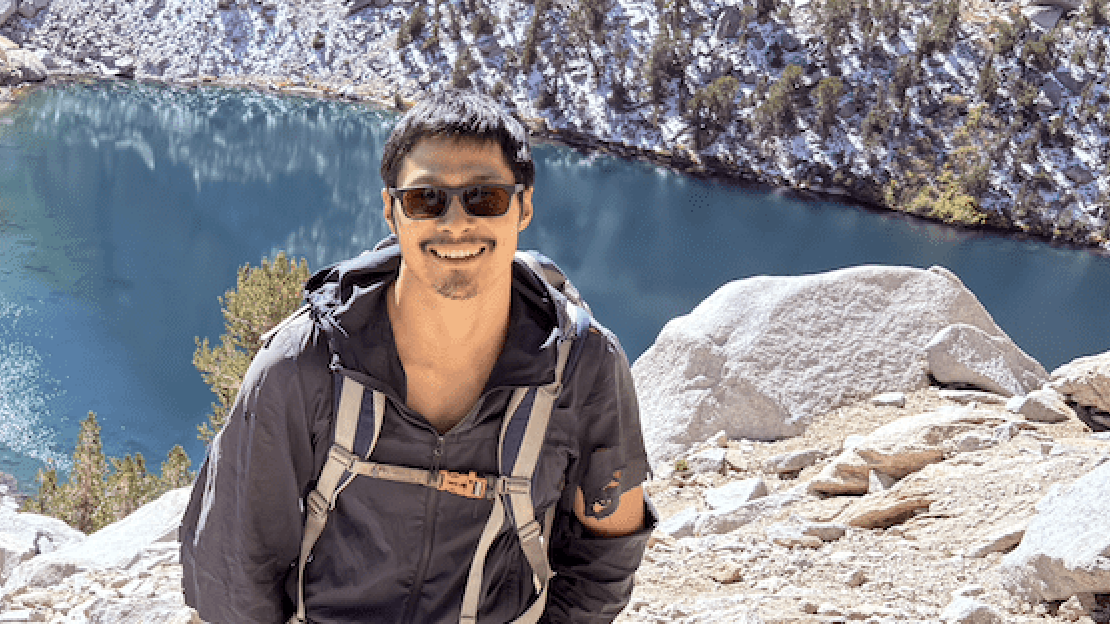
Growing up in a small village in central China, where his family’s home sat halfway up a mountainside, Tingan Li spent much of his childhood outdoors. The landscape surrounding his home was both a refuge and a classroom, shaping a lifelong curiosity about the forces that sculpt rivers, hillsides and mountains.
Today, that curiosity has brought Li to Cornell as an assistant professor in the Department of Earth and Atmospheric Sciences, where he studies the physical processes that shape Earth’s surface—from the movement of sediment in rivers to the hidden flow of water beneath glaciers. His research combines field observations, laboratory experiments and mechanistic computer models to better understand how landscapes evolve over time.
“I spent a lot of time in nature when I was a kid,” Li said. “When I went back and asked myself what I was actually interested in, I realized it was rivers and mountains and how these things work together.”
That realization was not immediate.
As the first generation in his family to attend college, Li initially pursued petroleum geology because it promised stable employment. Having grown up in his village, he understood why his parents encouraged a practical career path, even if it wasn’t where his own interests ultimately lay.