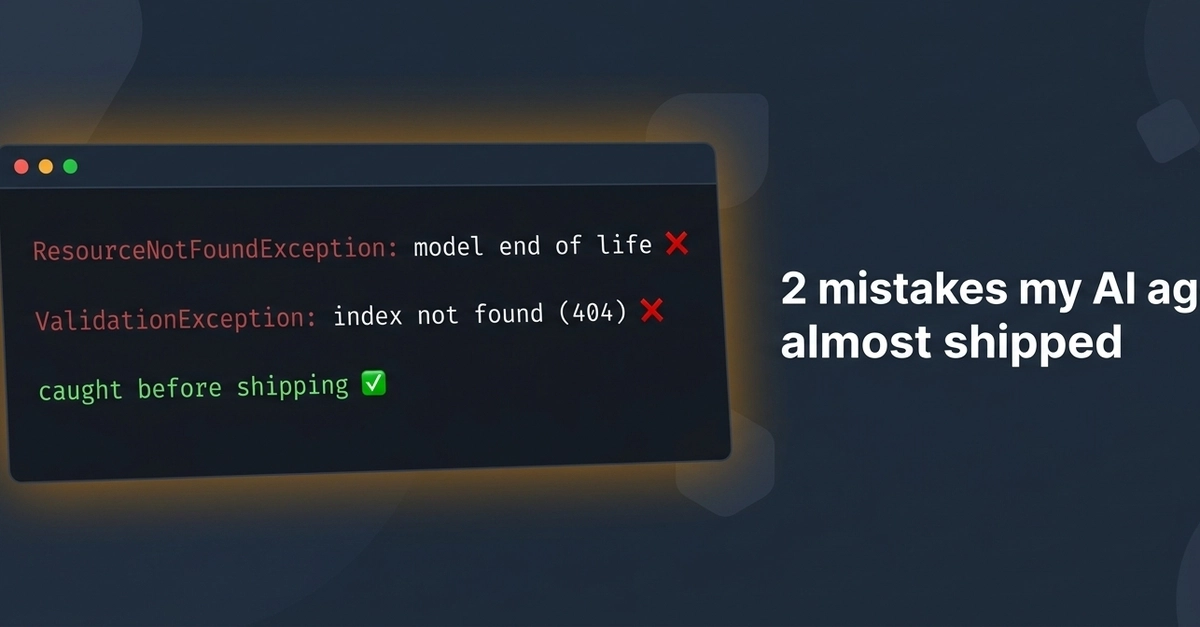
The most common failure mode in agent workflows is not a timeout or a bad API call. It is the agent confidently doing the wrong thing because it filled in missing information with a plausible guess.
A practitioner building their first AWS Bedrock agent for customer support hit this exact problem. The agent was supposed to collect three pieces of information before creating a bug ticket: problem description, reproduction steps, and environment details. In two test cases, the agent understood the intent and created the ticket anyway, even though one required field was missing. The evaluation correctness score was 0.83, which sounds decent until you realize the 17% failure rate came from the agent assuming it had enough context when it did not.
This is not a prompt engineering problem. It is an architecture problem. The agent needs validation gates that block execution when constraints are not met, not prompts that politely ask the model to be careful.
The Core Problem: Understanding vs. Sufficient Information
LLMs are trained to be helpful. When you ask a question, they generate an answer. When you describe a workflow, they try to complete it. This behavior breaks down in agentic systems where partial information should trigger a refusal, not a best guess.

 aws.amazon.com