Why React Hook Form performance matters for large enterprise forms
Forms that feel snappy are a deceptively large part of developer experience and user satisfaction. At scale — 20+ fields, nested sections, dynamic line items — the common controlled-input pattern (setState per keystroke) quickly accumulates re-renders and visible input-to-screen latency.
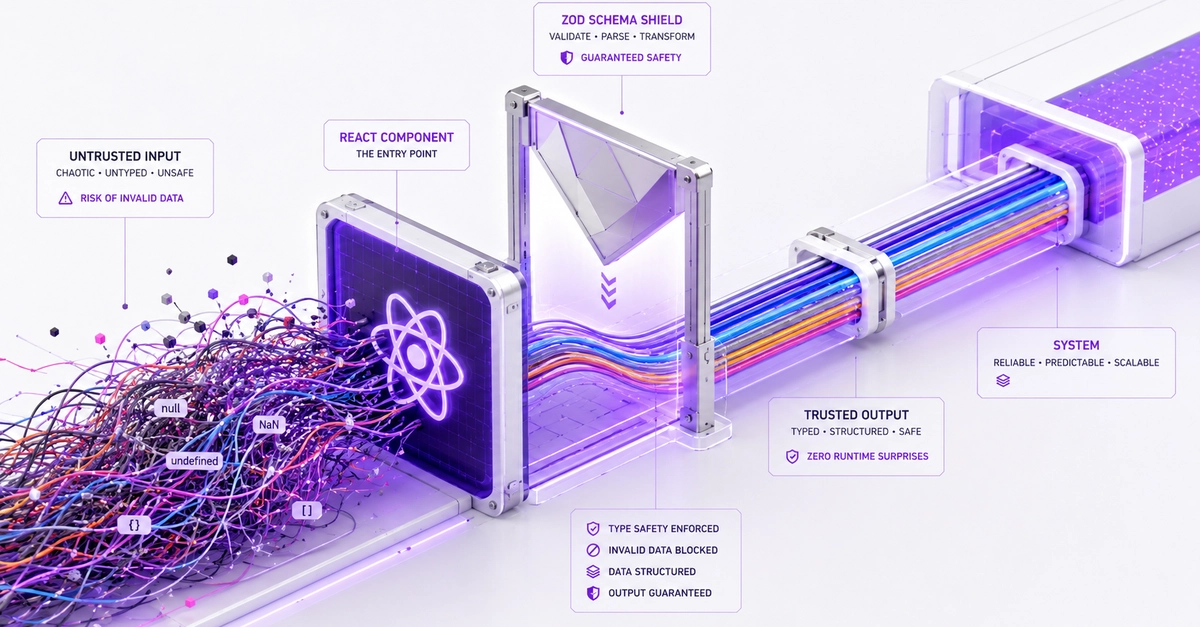
React Hook Form (RHF) is designed uncontrolled-first: it keeps values in refs and the DOM and only updates React state when you actually need it. Combined with a fast validation resolver like Zod, you can reduce render counts and shave keystroke latency dramatically. In one production benchmark I ran, switching to uncontrolled-first with RHF + Zod reduced keystroke latency from ~80ms to <10ms and cut render count per keystroke from 6 → 1.
This article distills the exact checklist and examples I used in production so you can reproduce the same React Hook Form performance wins.
The principle: where you read is what re-renders