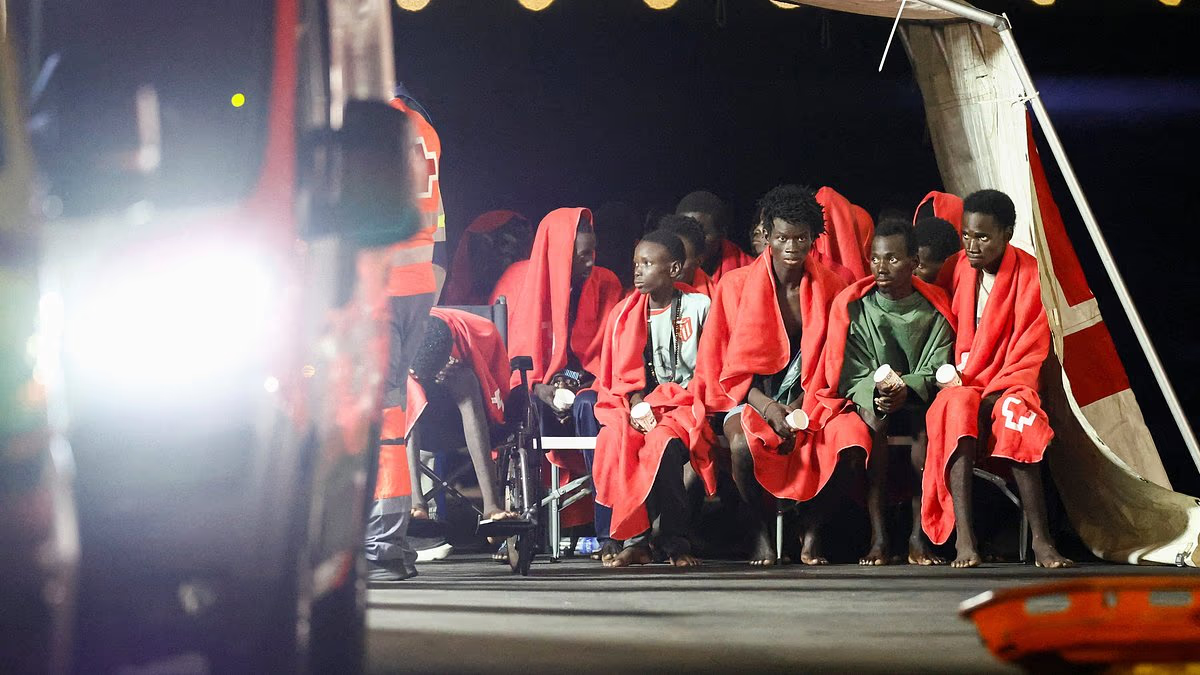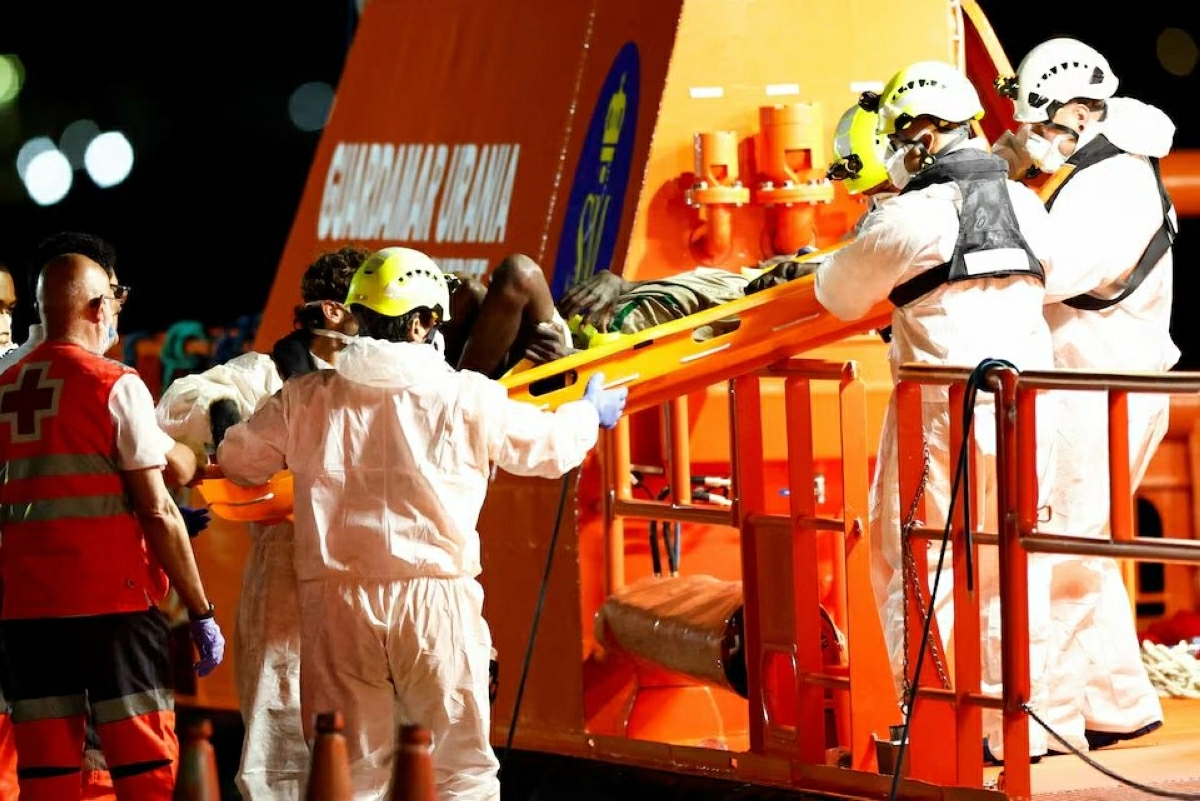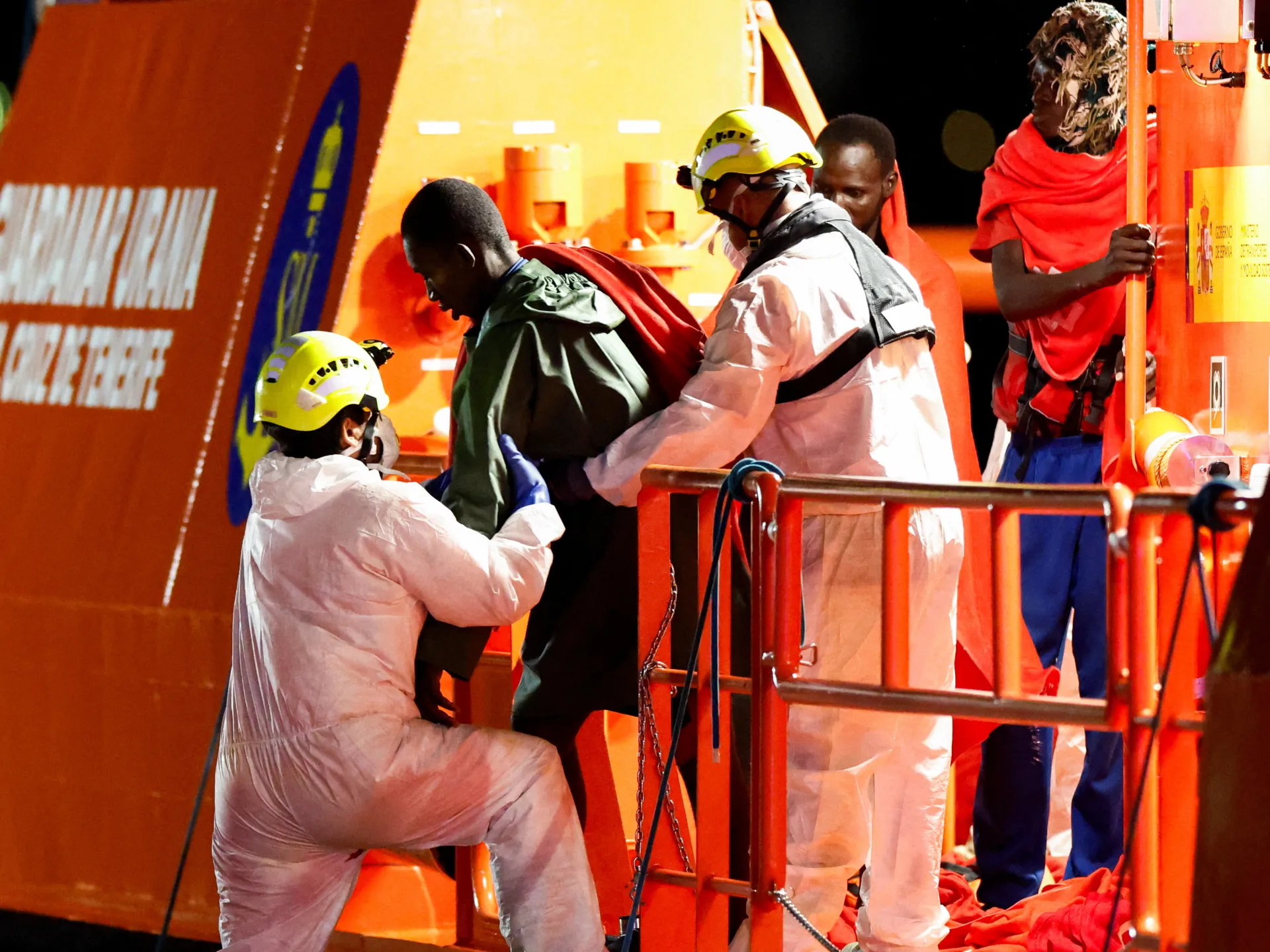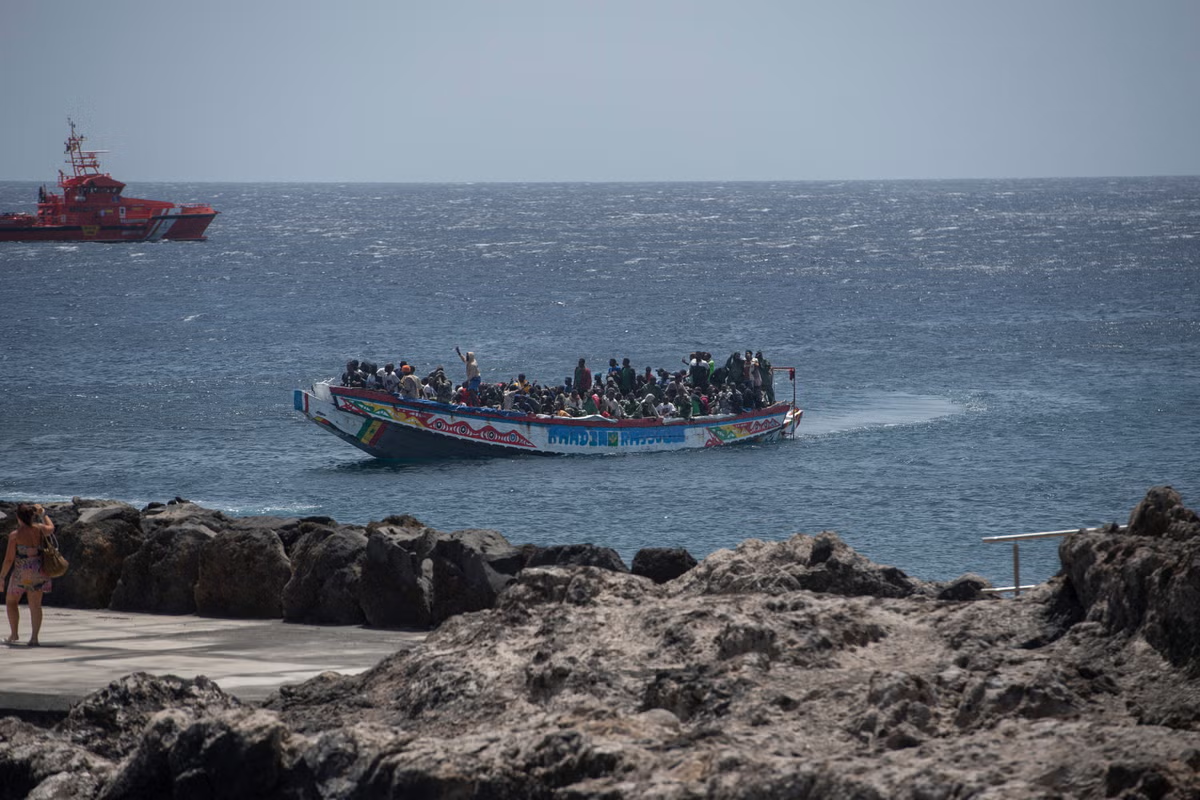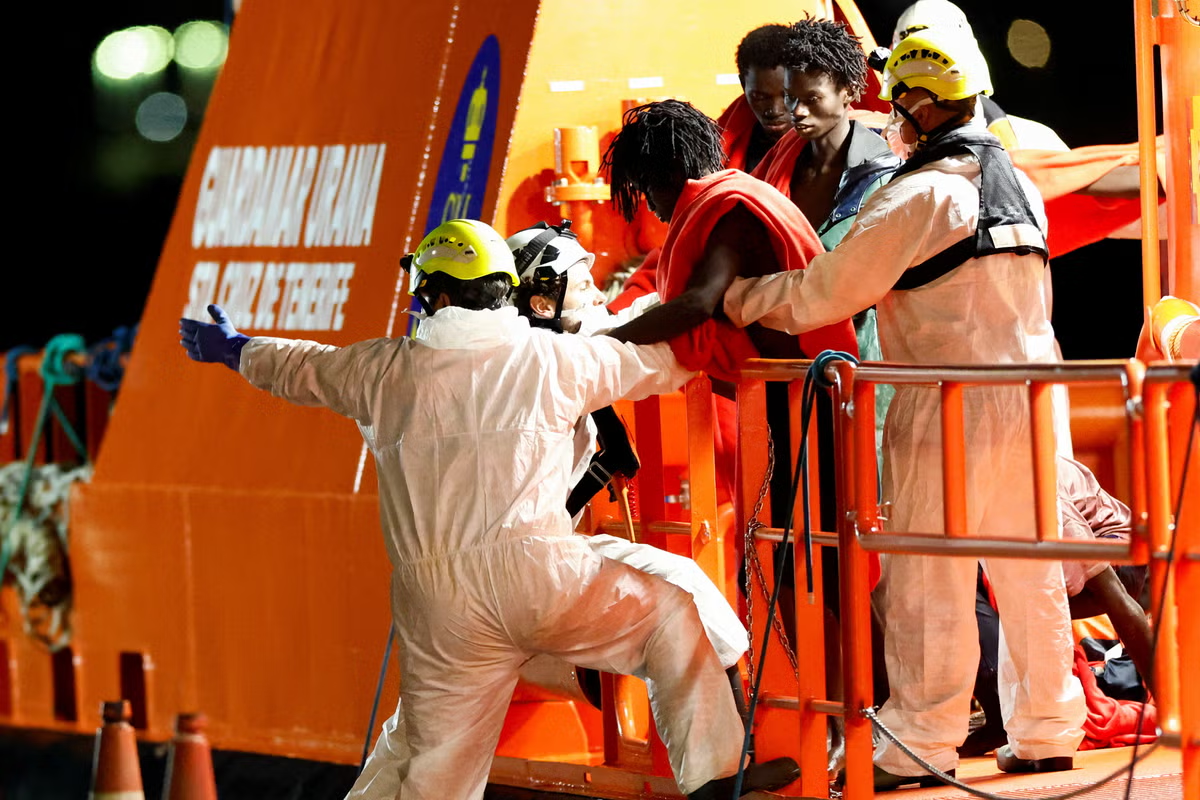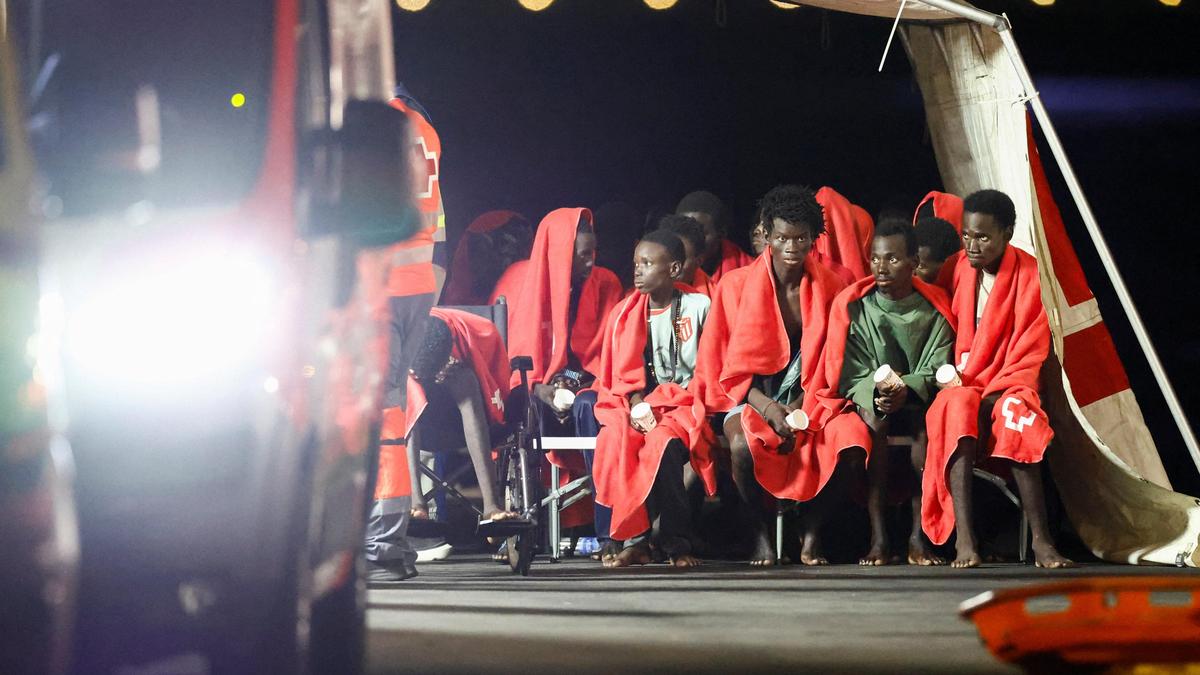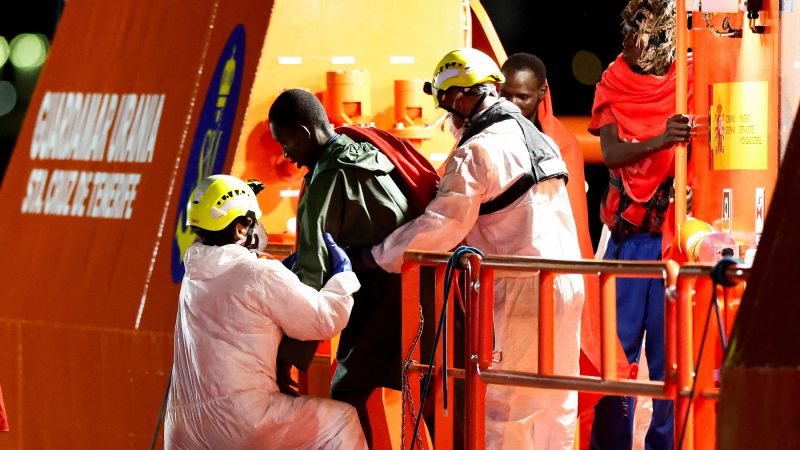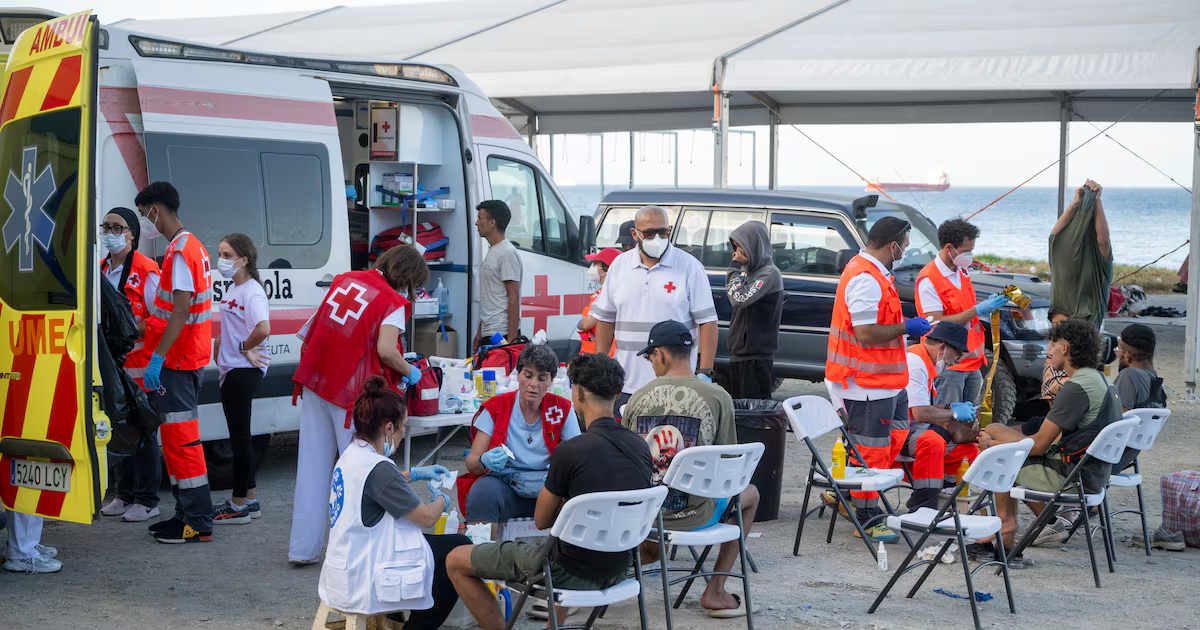
More than 80 people, including a baby, are feared to have died in a boat which was adrift in the Atlantic Ocean for 27 days.Spanish Maritime Rescue teams located the vessel 65 nautical miles southwest of Gran Canaria’s coastal town of Arguineguín on Wednesday and found 44 survivors, with five dead bodies also on board.The boat is believed to have departed The Gambia in West Africa in early August with 127 occupants on board. Helena Maleno, founder of Walking Borders, said on social media that survivors on the boat reported that 83 people, including three women and a baby, had died during the crossing. The boat had left The Gambia 27 days earlier.The figures could not be independently verified. Maritime Rescue said it could confirm only that five bodies were aboard the vessel when rescuers reached it. The bodies could not be recovered because of adverse weather conditions.Five migrants were found dead aboard the boat. Three survivors were in a serious condition and were airlifted to hospital, while another 41 disembarked at the port of Arguineguin on Gran Canaria in the early hours of Thursday, Maritime Rescue said in a statement.Sally Hayden on the deadly Atlantic migration route Video: Sally Hayden Editor: Eoin Ronayne [ ‘It was day 13 or 14 when people started dying’: More than 200 set sail for Europe. Only 36 survivedOpens in new window ]Canary Islands regional leader, Fernando Clavijo, said the tragedy underscored the need for a state policy on migration, especially after a deadly migrant surge in Spain’s North African enclave of Ceuta in July.“It is intolerable that lives continue to be lost. The Canaries cannot get used to or accept as normal the fact that the Atlantic continues to be a death trap,” he said on X.The Atlantic route from West Africa to the Canary Islands is one of the world’s deadliest migration crossings. Thousands of migrants attempt the journey each year in overcrowded boats seeking to reach Spanish territory despite the risks posed by rough seas, strong currents and long distances.Spain, meanwhile, said it has seen no evidence “whatsoever” that Morocco planned or facilitated a mass border breach into its north African territory of Ceuta, the Spanish prime minister, Pedro Sánchez, told the country’s parliament.The address on Thursday followed the emergence of a police report, commissioned by a judge and widely quoted in the media, claiming Moroccan border forces had actively aided about 70,000 people to cross the border in late July.“I can assure you that no institution – not the diplomatic service, nor the European Commission, nor any international body – has provided the Spanish government with any solid evidence that Morocco planned or carried out the incident. None whatsoever,” Sánchez told parliament.Speaking the morning after about 50,000 people marched in Madrid to protest over his handling of the Ceuta crisis, the socialist prime minister also denied the government had received any warning of the mass breach, saying no reports to authorities had anticipated “the scale or probability of what eventually happened”.Sánchez has repeatedly defended Morocco during the crisis, highlighting Rabat’s cooperation in returning most of the migrants in the days after the surge.But he said on Thursday that Spain had summoned Morocco’s ambassador on August 21st because of “unacceptable statements” made by two ministers over Ceuta and Melilla, another Spanish north African territory. Last month, Morocco’s justice minister, Abdellatif Ouahbi, publicly reiterated Rabat’s sovereignty claims over the cities.Sánchez said he had “for now” ruled out Moroccan government involvement but conceded that Moroccan forces had allowed crossings to occur during a key 10-hour period on July 30th.Many of those who crossed said in interviews they had been actively encouraged to do so. Moroccan officials have denied enabling the crossing.Alberto Núñez Feijóo, the leader of the conservative People’s party, called on Sánchez to resign for his “incompetence and complicity”.As many as 141 people are thought to have died trying to enter Ceuta at the end of July. The influx unleashed a political crisis, a humanitarian emergency and reignited tensions within the EU over immigration. - Guardian/Reuters
About 80 feared dead after migrant boat gets into difficulty off Gran Canaria
Human rights group says 44 survivors rescued from boat with 127 occupants
674 words~3 min read