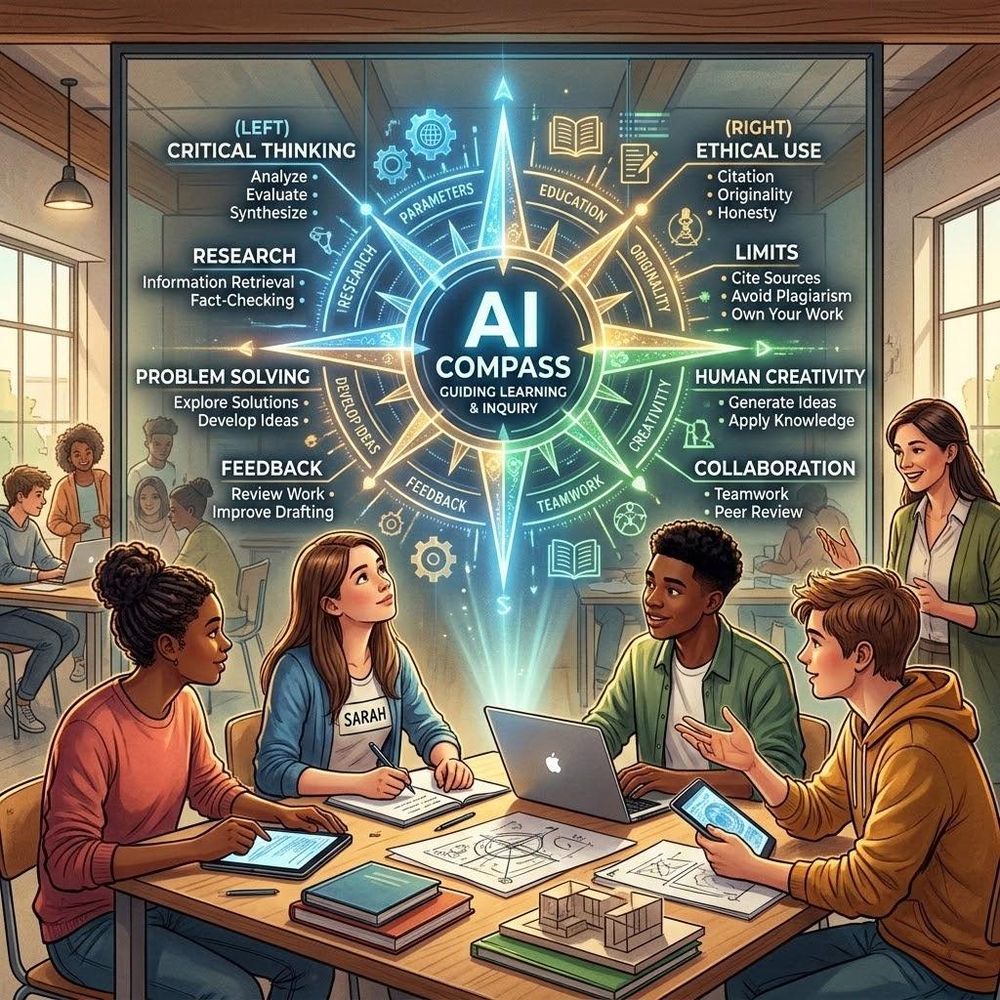
An AI compass is a way to allow students to use AI and keep expectations clear.
Seven out of 10 employers regard analytical thinking as an essential core skill, according to the World Economic Forum’s Future of Jobs Report 2025. 57% of employers consider creative thinking essential, while 51% identify technological literacy as a core skill[4]. Young people will need to use technology confidently, but also with judgement, creativity and independence.
The OECD’s Digital Education Outlook 2026[5] makes the educational case equally clearly: generative AI can support learning when guided by sound teaching principles. But when students use it simply to outsource a task, it may improve the work they produce without delivering genuine learning gains. A convincing answer, in other words, is not always evidence of understanding.
AI is already part of how many students search, write, revise, code and create. The question is no longer whether it belongs in education. It does. The question is how schools ensure it supports learning rather than replaces the thinking students need to do themselves.
At Koa Academy, the response is neither unrestricted AI use nor blanket prohibition. It is the AI Compass: an internally developed framework and set of teaching guidelines that gives students, parents and teachers a shared language for responsible AI use.