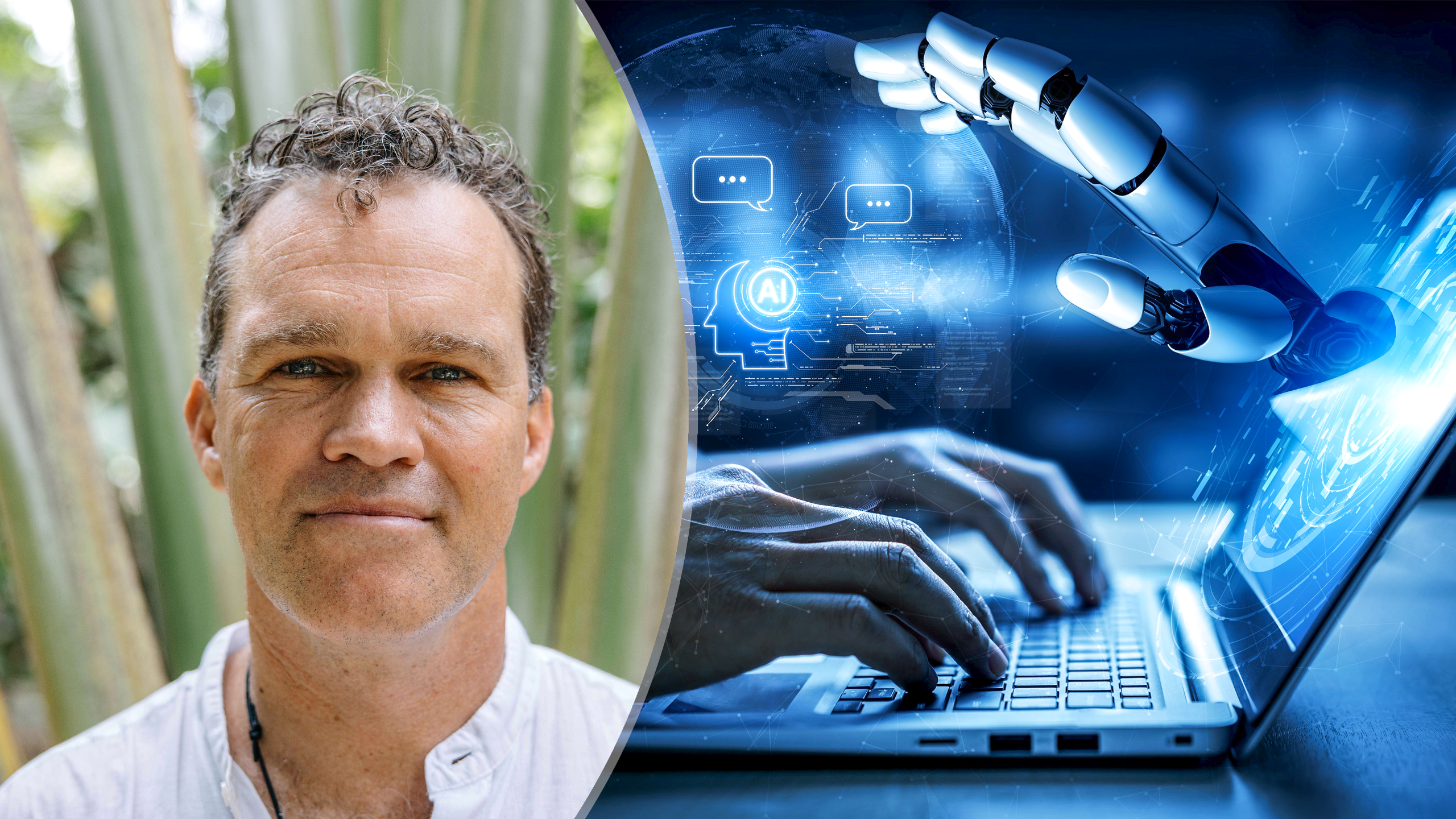
(Image credit: Zach Bush/Shutterstock)
With such an abundance of AI tools becoming available to users from all walks of life, the rapid evolution of those same tools has become commonplace.But as AI intelligence grows to even more impressive levels, we may reach a point where we forget to acknowledge the high level of intellect that humans already exhibit. Dr. Zach Bush, a physician, educator and author of an introspective book called “Biological Elegance,” has spoken at length about that very same dilemma. One of Bush’s central arguments about AI notes that, rather than seeing AI as the enemy, he believes the challenge is ensuring that technological progress doesn’t come at the expense of the qualities that make us human.After making an appearance on The Joe Rogan Experience and speaking with the likes of Mel Robbins and Jay Shetty, Dr. Bush spoke with us to discuss the future of humanity, its current & growing connection to AI and the ways in which technology is changing how humans connect with each other.What parts of being human do you believe technology can never truly replicate?Feelings. And I mean feeling in a much deeper sense than emotions. A machine can describe grief beautifully. It can recognize the linguistic patterns associated with grief. It can produce a sentence that makes you cry. But it cannot grieve. It cannot age. It cannot hunger. It cannot heal a wound. It cannot metabolize a meal. It cannot feel another person's hand. It cannot become a parent. It cannot stand beside someone it loves while they die and discover that the experience has permanently changed who it is.AI can represent difference, but it cannot metabolize difference. It can model diversity, but it cannot undergo the vulnerability of encountering it. Technology can simulate the outputs of life with astonishing fidelity. But it cannot live them.And that may turn out to be the most important distinction of this century.The biggest tech companies in the world are spending billions trying to create and improve artificial intelligence. Do you think they're overlooking the intelligence that already exists in humans?Yes, but I think almost all of us are overlooking it. I don't want to make technology companies the villains of this story. AI didn't create our abstraction. We did, and AI is the natural terminal invention of human abstraction. We built educational systems that reward memorization over curiosity. We built economies that reward productivity over vitality. We built healthcare systems that increasingly measure the body instead of listening to it. We moved work indoors, food into packages, relationships onto screens, and communities into algorithms. Then we spent billions building a machine capable of doing abstraction better than humans. And we're shocked that it can.What we've barely begun to investigate is the intelligence already occurring inside a human being. Every second, an enormous ecosystem is sensing light, food, microbes, temperature, relationships, danger, beauty, movement, gravity, rhythm and time — and integrating those signals without you consciously directing it.I don't want to make technology companies the villains of this story.