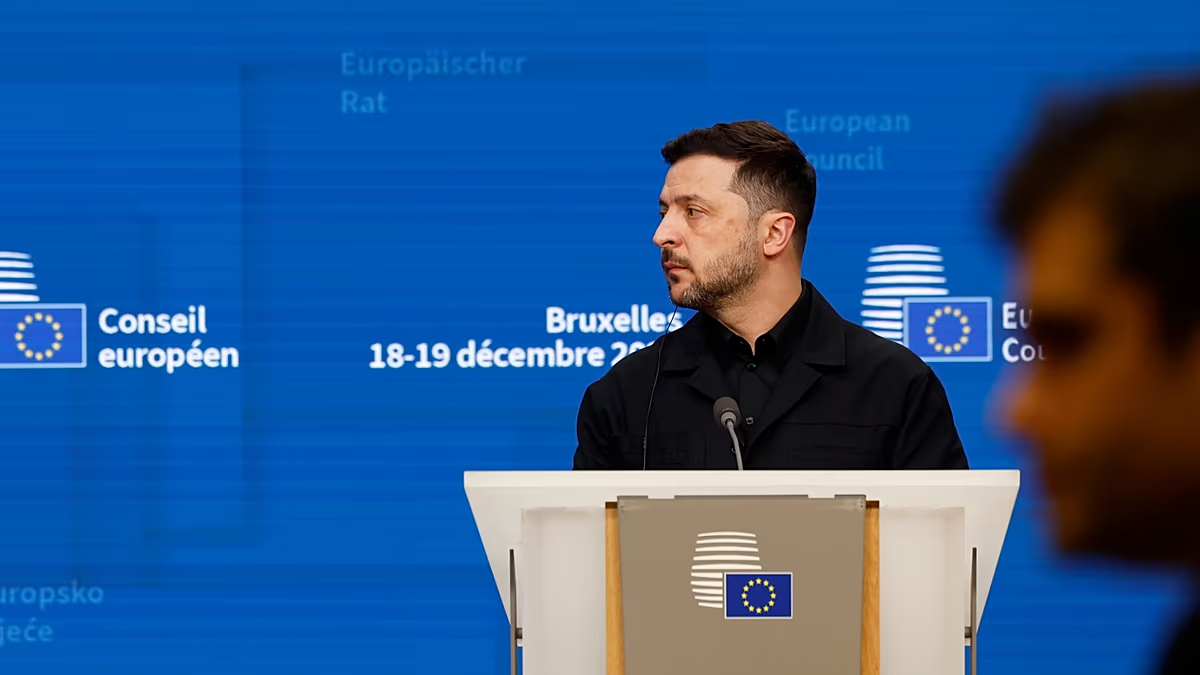
You burn through billions of euro very quickly during a war. Ukraine is now facing into a winter short of both money and air defence interceptors it uses to shoot down incoming Russian ballistic missiles and attack drones. Russia has reorientated its entire economy to sustain its invasion of Ukraine. Vladimir Putin calculates that he doesn’t need to outlast Ukraine’s will to resist, just the will of European governments to keep Ukraine’s defences properly funded. The Russian leader will take encouragement from signs of creeping fatigue among some of Kyiv’s European allies, who are under budgetary strain domestically. A deal struck last December by European Union leaders to agree a €90 billion loan to Ukraine seems a long time back. The loan was put together so that two-thirds of the funds would be put towards defence and weapons. The remaining third goes into Ukraine’s national budget. It is being paid out in tranches over two years. That was never going to do all of the job, however. Ukrainian president Volodymyr Zelenskiy recently said his defence ministry has a $27 billion hole in its budget that needs to be plugged in the short term. Money that had been earmarked for the second half of 2026 was spent speeding up drone production in the early months of the year and needs to be found elsewhere now. Different rules apply to government fiscal planning in times of war, for obvious reasons. The gist is: spend what you have when you can on the things needed most, and then find more cash later on. Russian bombardment of Ukrainian cities has seriously depleted Ukraine’s stocks of Patriot missiles, the US-made air defence interceptors capable of knocking out Russian ballistic rockets. Zelenskiy estimates Ukraine needs an additional 300 Patriot missiles for the winter months, to protect civilian populations and key energy infrastructure from Russian strikes. The Trump administration’s war in Iran has made sourcing extra air defences a lot harder. The United States and its Gulf allies have burnt through large chunks of their Patriot reserves in shooting down Iranian drones and missiles. Kyiv has been pushed to the back of the queue for new interceptor missiles coming off the production line. “Putin is not interested in peace talks. They [Russia] think they can outlast Ukrainians and the West… The winter will be very, very hard,” Estonia’s defence minister Hanno Pevkur told me over the phone this week. Many governments needed to up their financial contributions, he said. The general public perhaps does not appreciate the extent to which Ukraine overwhelmingly relies on Europe to help finance its defensive war. The huge flow of money and weapons coming from Washington dried up shortly after Donald Trump returned to the White House. It fell to the EU, plus Norway and the UK, to pick up the slack. That burden hasn’t been shouldered equally. The wealthy Nordic countries, Poland, the Netherlands, Germany and the trio of Baltic states have proportionally provided much more to Ukraine than other EU states.There will be an ideological reluctance from fiscally conservative countries to repeat the €90 billion loan trick. The Germans, Dutch and Austrians are hostile to Brussels taking on more and more joint debt. In the short term, European capitals may need to search the back of their budgetary couches to fund a financial package to help Ukraine get through another winter. Some countries want to revisit the idea of tapping €210 billion in frozen Russian assets to aid Kyiv. Sweeping economic sanctions introduced in the days after Putin’s invasion froze, or “immobilised”, a hefty pile of Russian central bank assets that had been held inside the EU. The funds have been on ice ever since then in Euroclear, a Belgian securities depository. Belgium fiercely resisted using the assets to backstop a loan to Ukraine, fearing it would be left exposed in a costly legal battle with Moscow. The decision that the EU would itself borrow the €90 billion on the market emerged when negotiations over the Russian assets hit a wall. A letter of August 27th signed by the foreign ministers of Poland, the Netherlands, Sweden and Spain asked the European Commission to have a think about “new options... to use the immobilised assets for the benefit of Ukraine”. There is a recognition that Kyiv needs funds in the short term. “By using the immobilised assets, the EU can ensure that Russia pays for the destruction it has caused in Ukraine without delay, while at the same time reducing the burden on our own taxpayers,” the four ministers wrote. The fact that a handful of governments are back sizing up Russia’s frozen assets tells you people are beginning to worry about where Europe will find the money Ukraine needs to keep fighting.
Ukraine urgently needs money and missiles. Can Europe find them?
Europe letter: EU will struggle to repeat its €90bn loan trick to keep Ukraine funded
792 words~4 min read