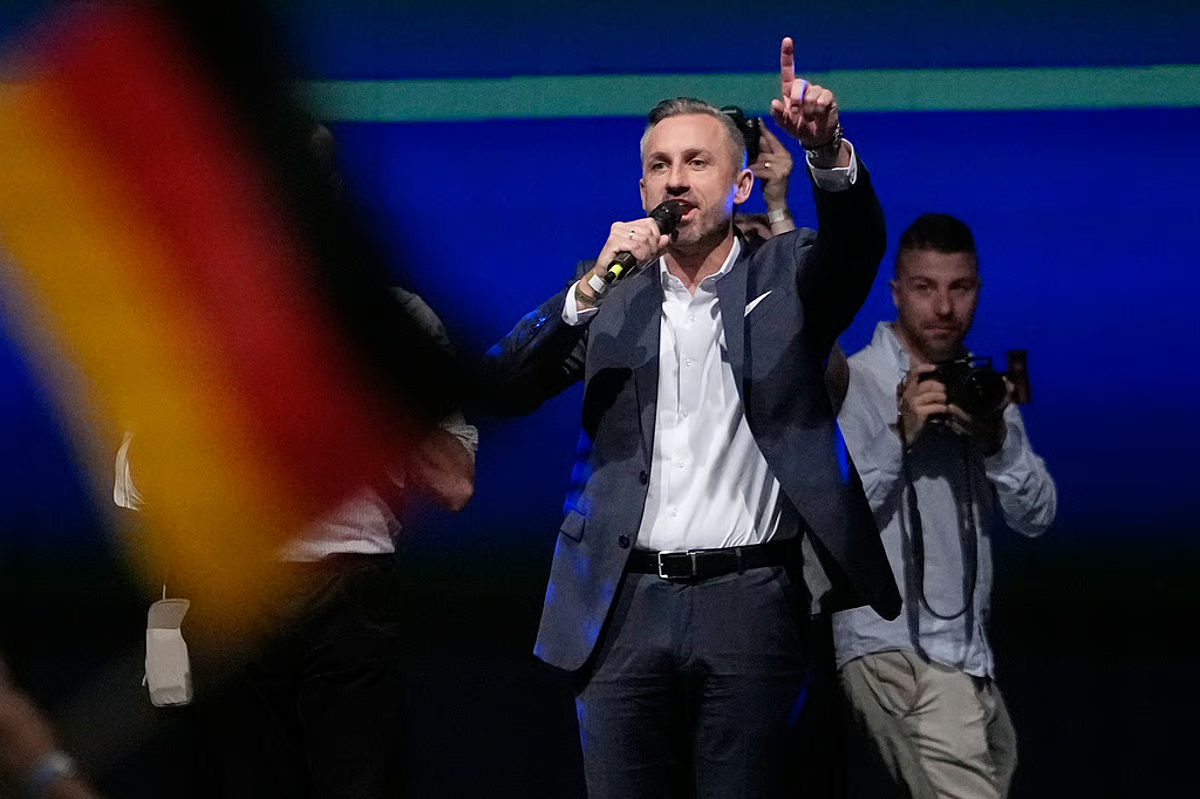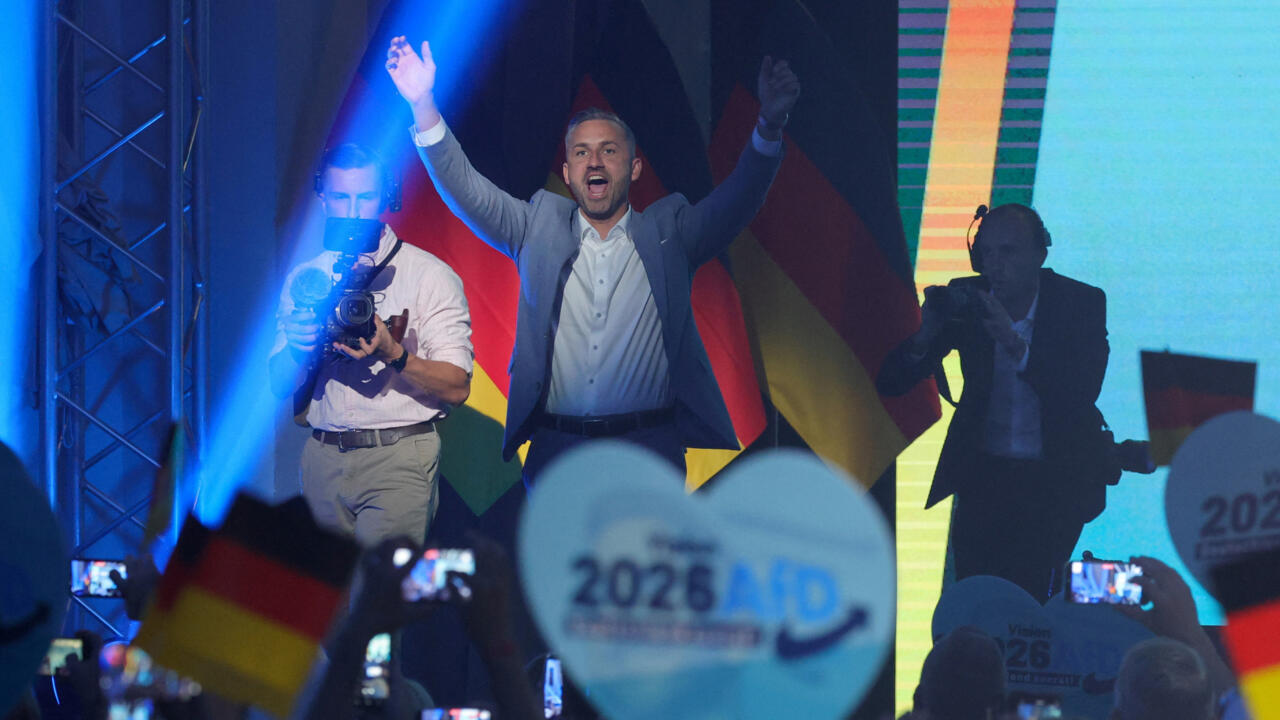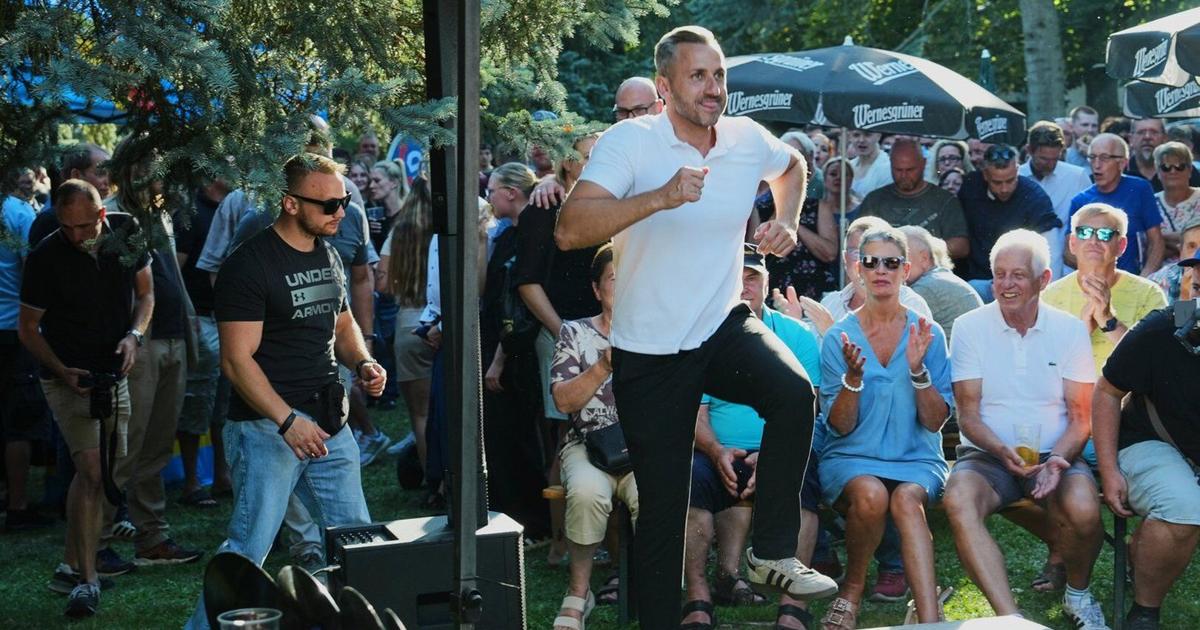
Ulrich Siegmund, lead candidate for the far-right Alternative for Germany (AfD) party, took to the stage in the central marketplace of the town of Naumburg and declared there was a new “awakening” in eastern Germany.
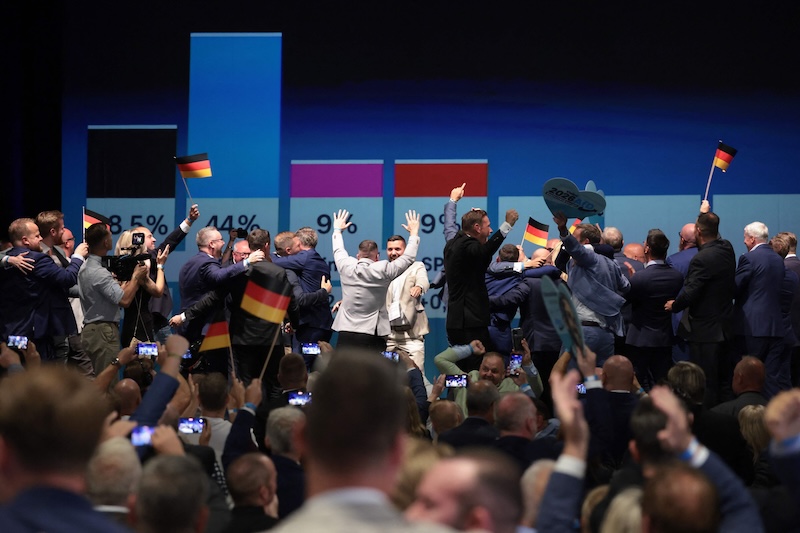
Ahead of a vital election in the region of Saxony-Anhalt on Sunday — in which Siegmund is within striking distance of becoming the first far-right leader to govern a German state since 1945 — that appeal to an eastern identity struck a chord.
A young man beside me was hollering “Ostdeutschland!” although he was too young to have lived in the communist German Democratic Republic. “It was purer there,” he explained. “More German. Not America-Germany like the West.”
Elements of Siegmund’s new awakening sounded reminiscent of the old East, and his speech would certainly have played well in the Kremlin. He condemned the foolishness of supporting “corrupt” Ukraine and addressed the need to return to oil and gas supplies from Russia.
East Germany formally dissolved in 1990, but it did not disappear. Its struggles for identity within the sprawling German federal system, with power concentrated in Berlin, have fueled the ascent of the far right.