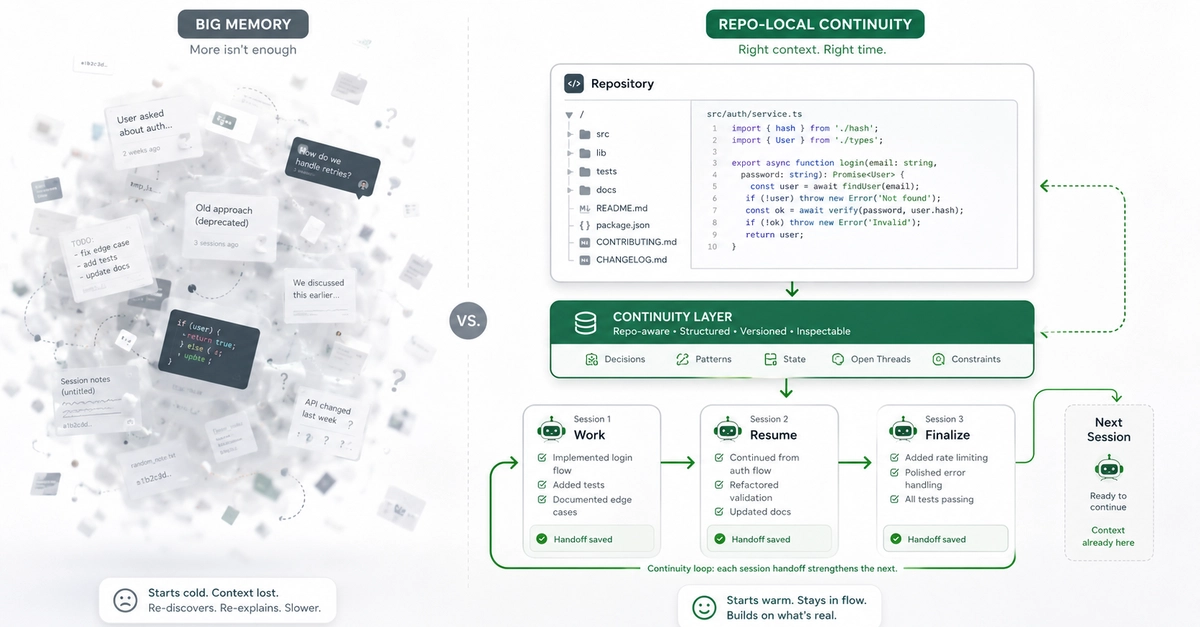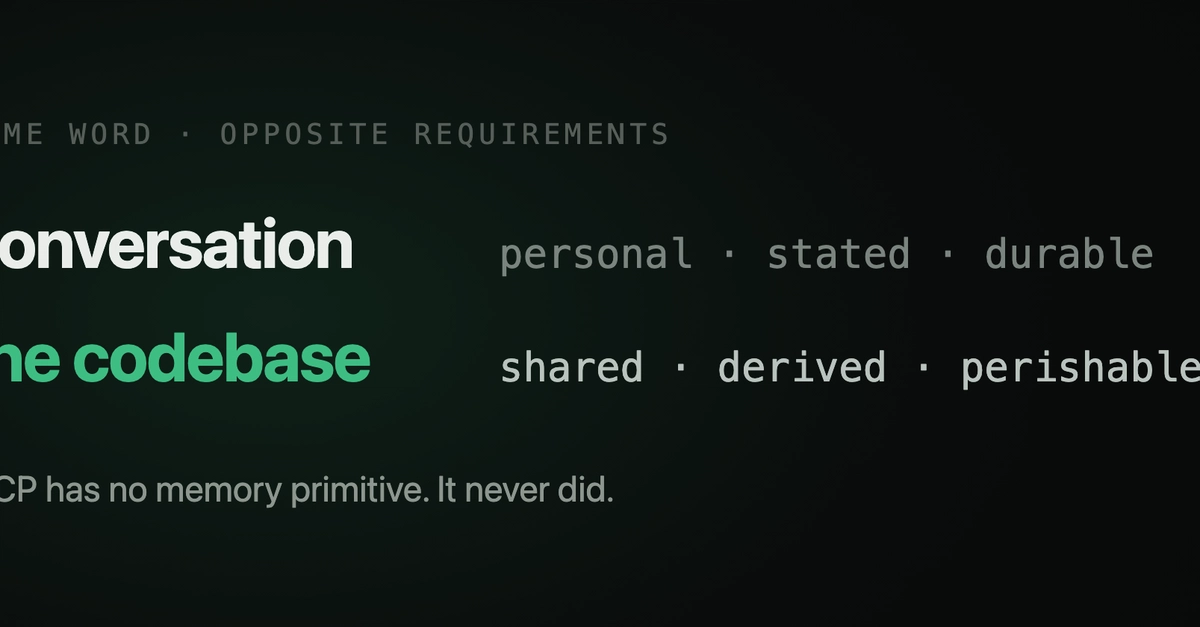
Every coding-agent conversation ends the same way. The component you spent an hour getting exactly right, the fix you never want to derive again, the pattern that finally worked: all of it stays behind in a chat log you will never open again. Developers are producing huge amounts of valuable, hard-won work this way, and almost none of it survives the conversation that produced it. Grabbing those assets and giving them somewhere permanent to live is the biggest unlock I see in how we work with these tools.
That belief is what I am building with Sirro: a hosted memory layer for AI coding agents, served over MCP on streamable HTTP. Agents like Cursor, Claude Code, and Codex save the work that earned persistence and pull it back in a different project, in a different agent, three weeks later. You stop letting the AI guess from zero every session and start composing from building blocks you already trust.
Running it in production taught me four things the docs never mentioned. It started the week I put the server on a public directory and watched the listing bounce every client that was not Cursor, Claude Code, or Codex. The error users saw was "Unknown agent", which is a terrible thing to tell someone who just tried to install your product. The bug was not in my protocol handling. It was in a decision I had made early on, to allowlist OAuth clients by name, and fixing it forced me to learn how the MCP ecosystem actually works.