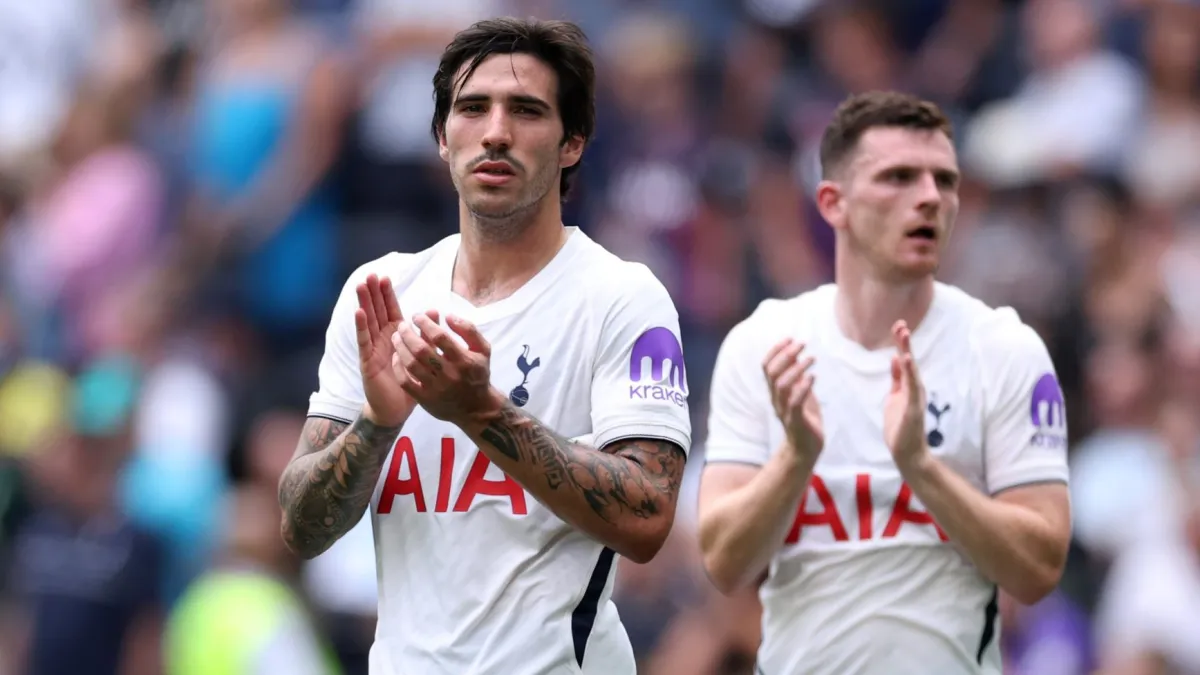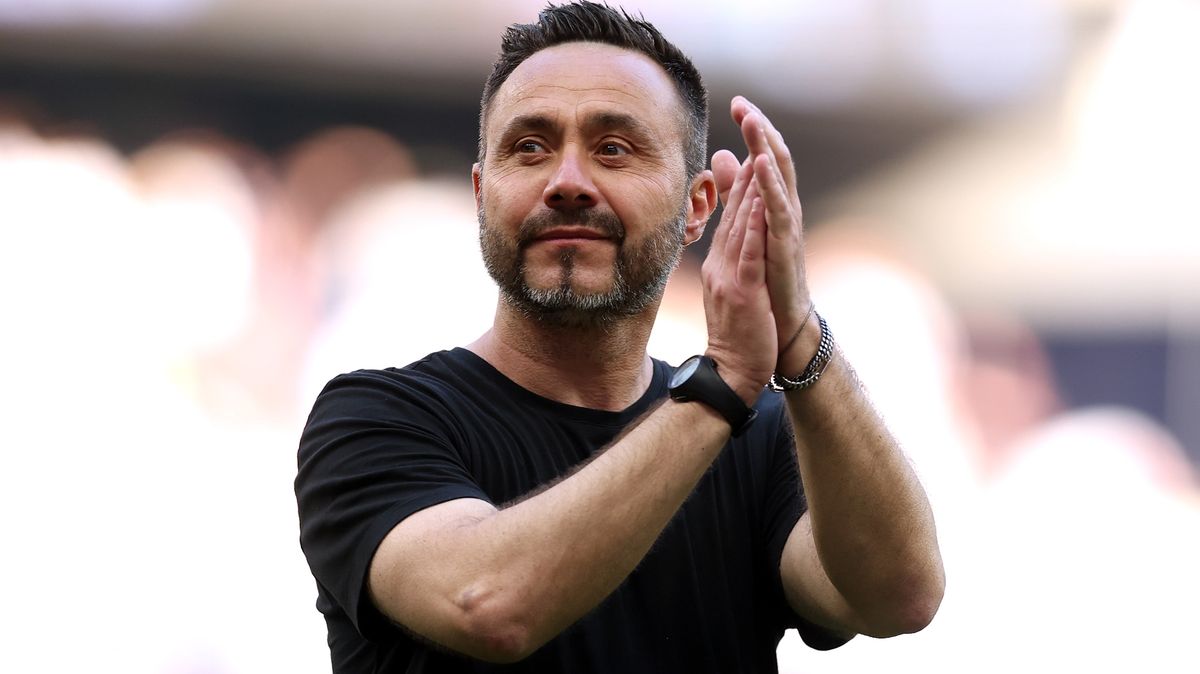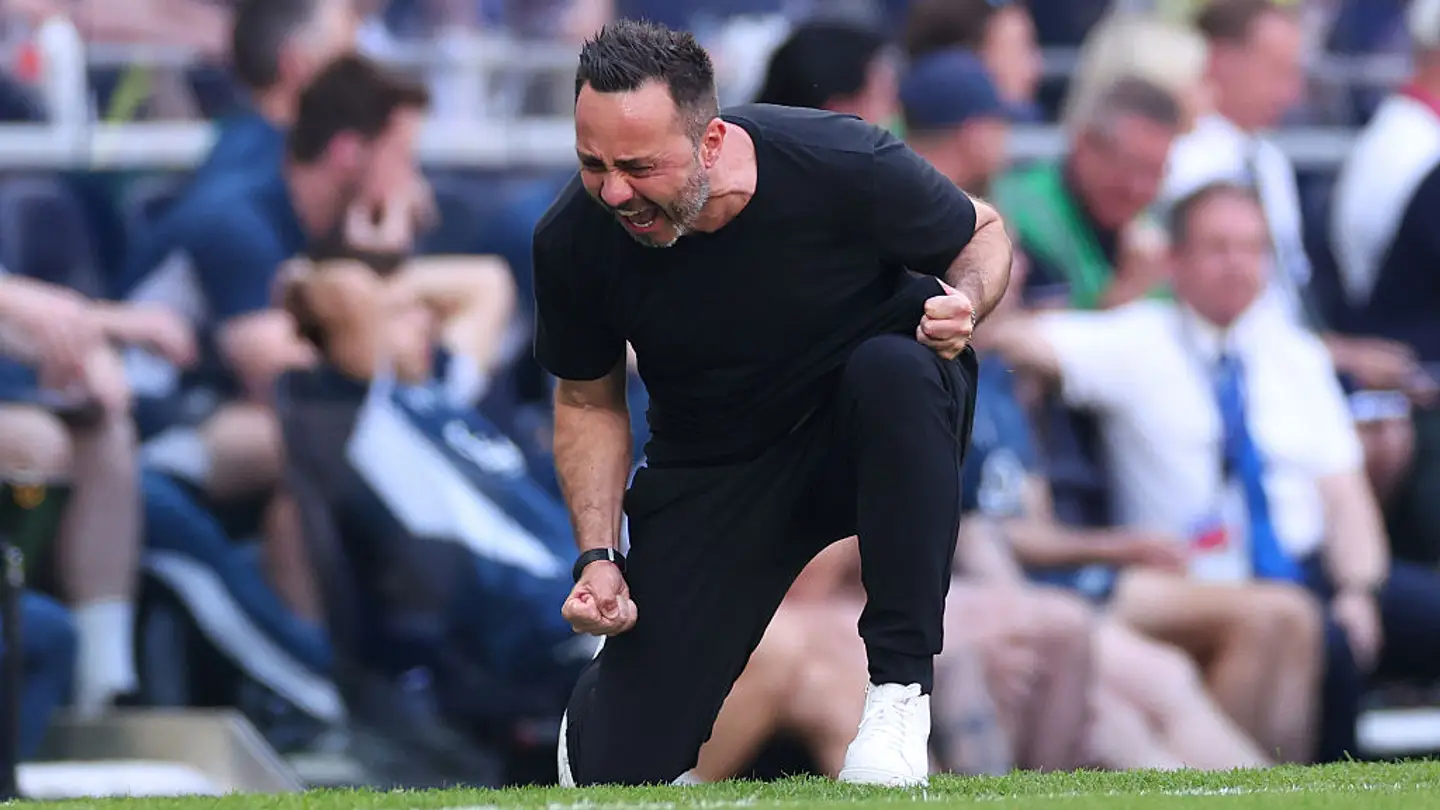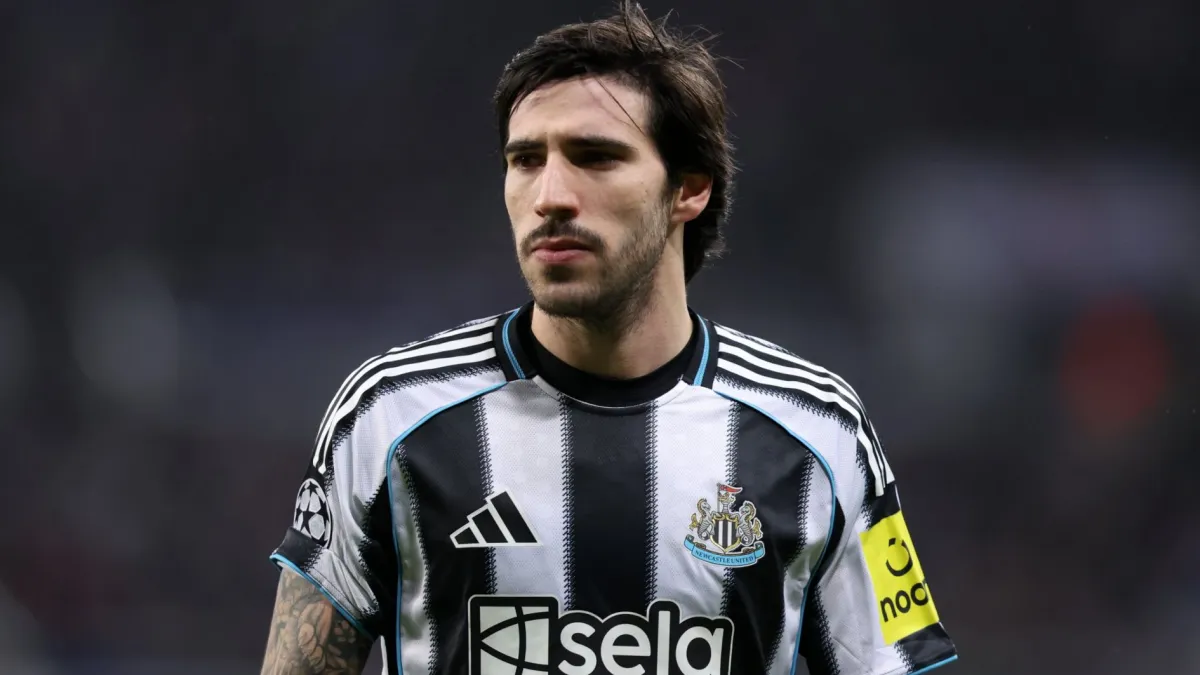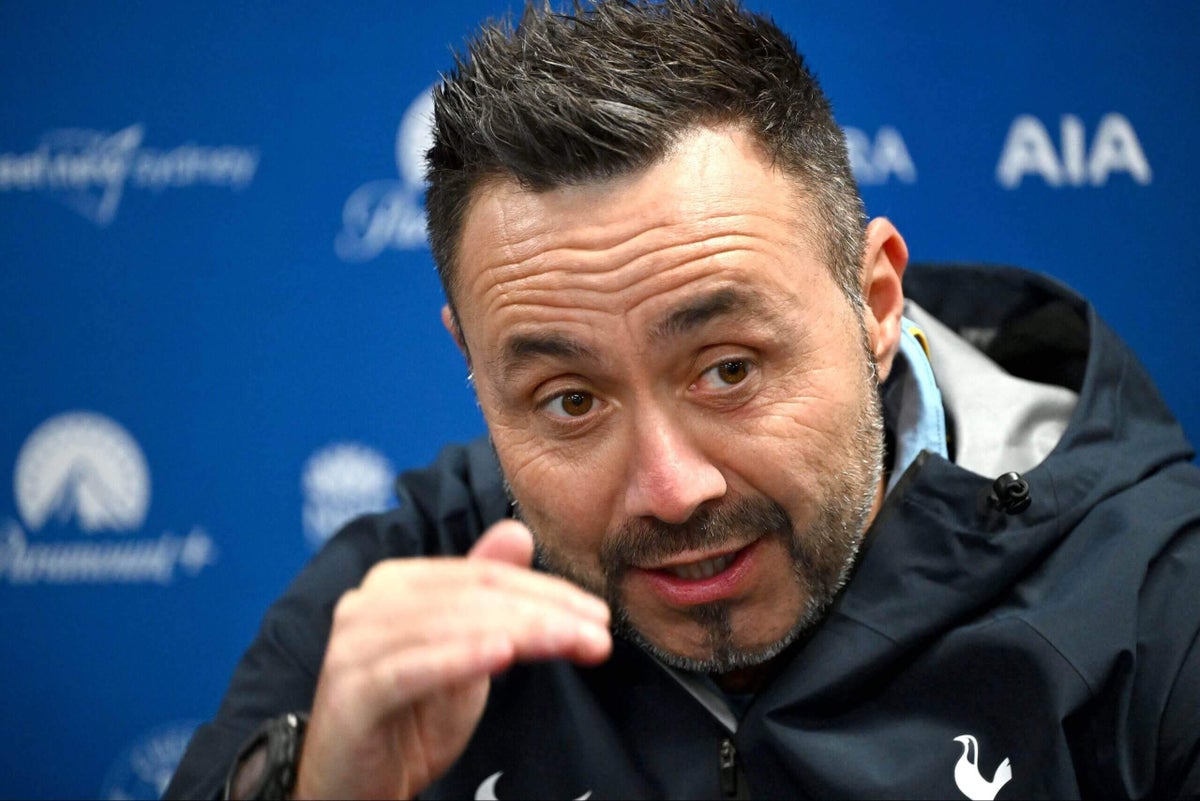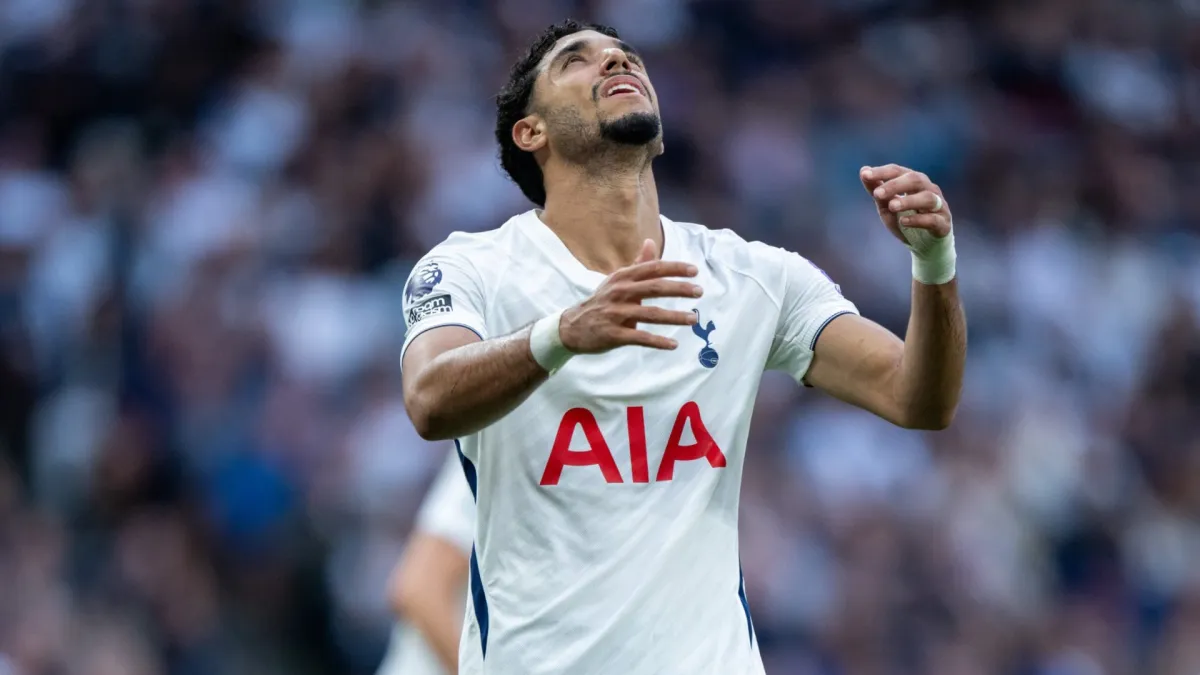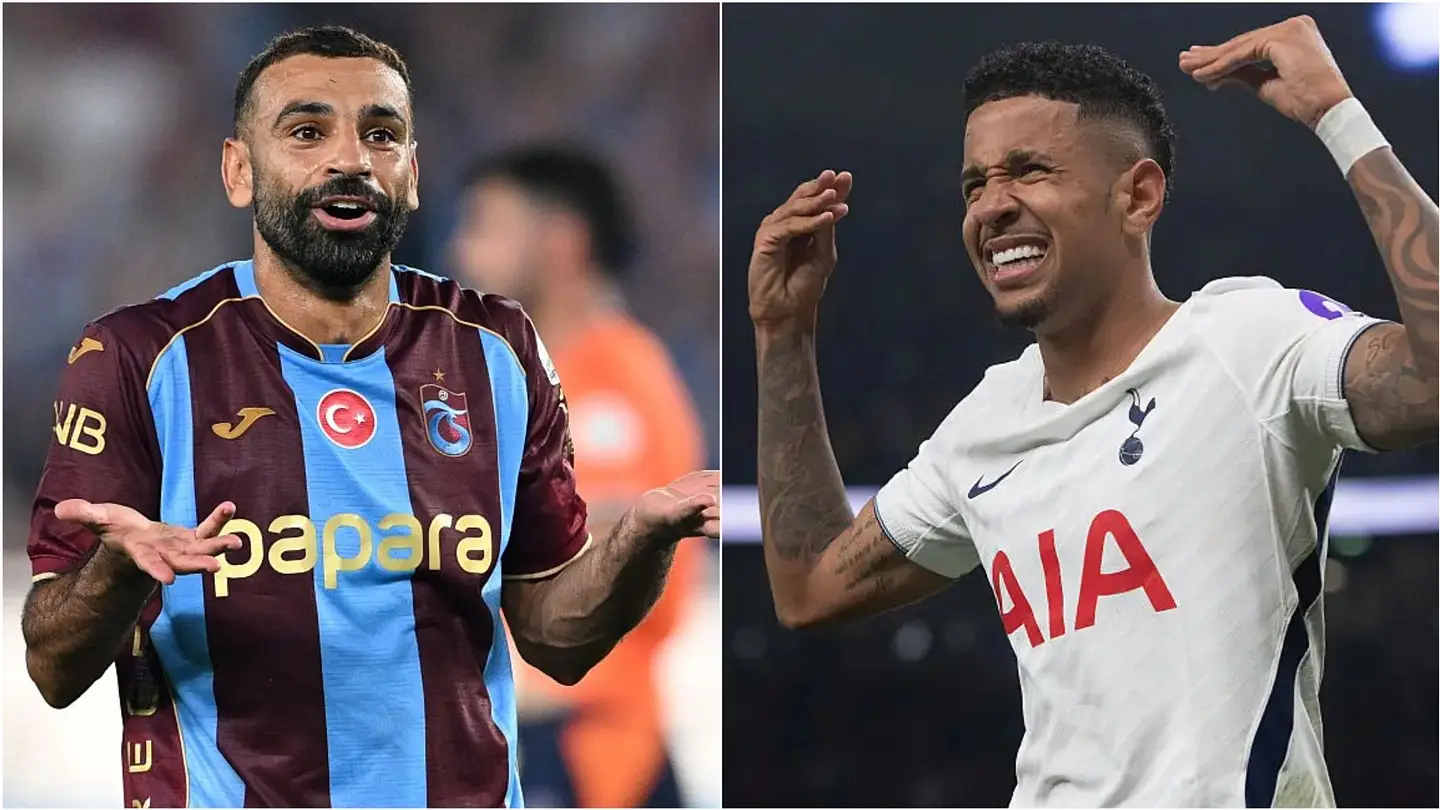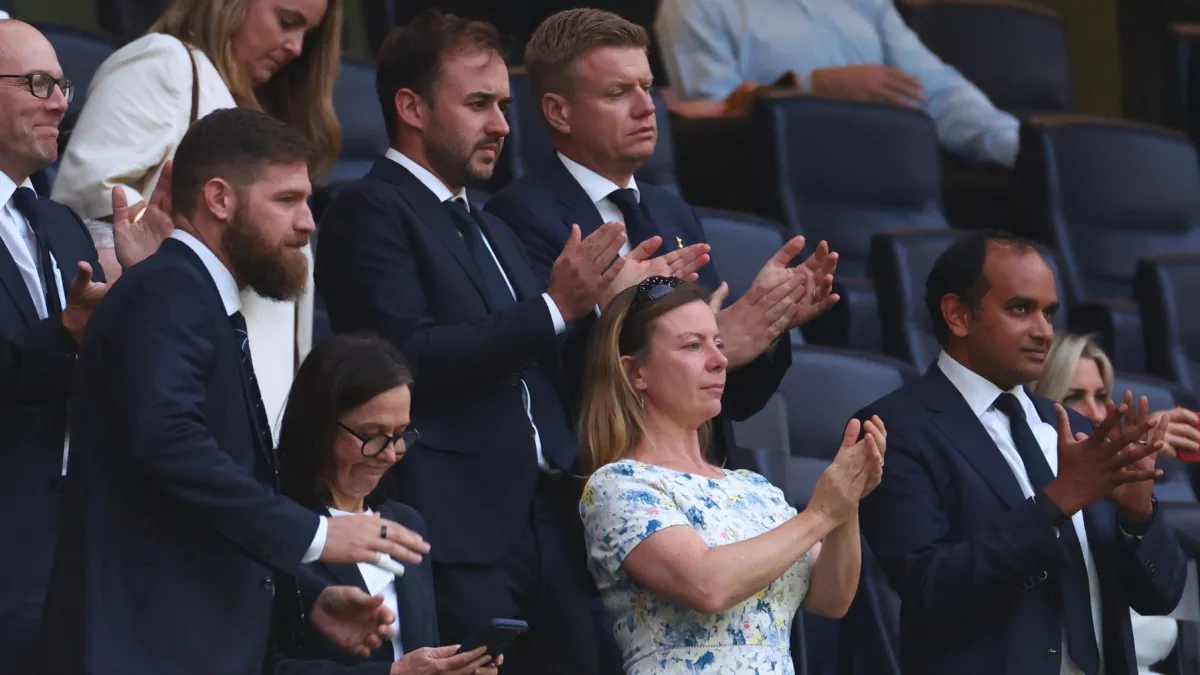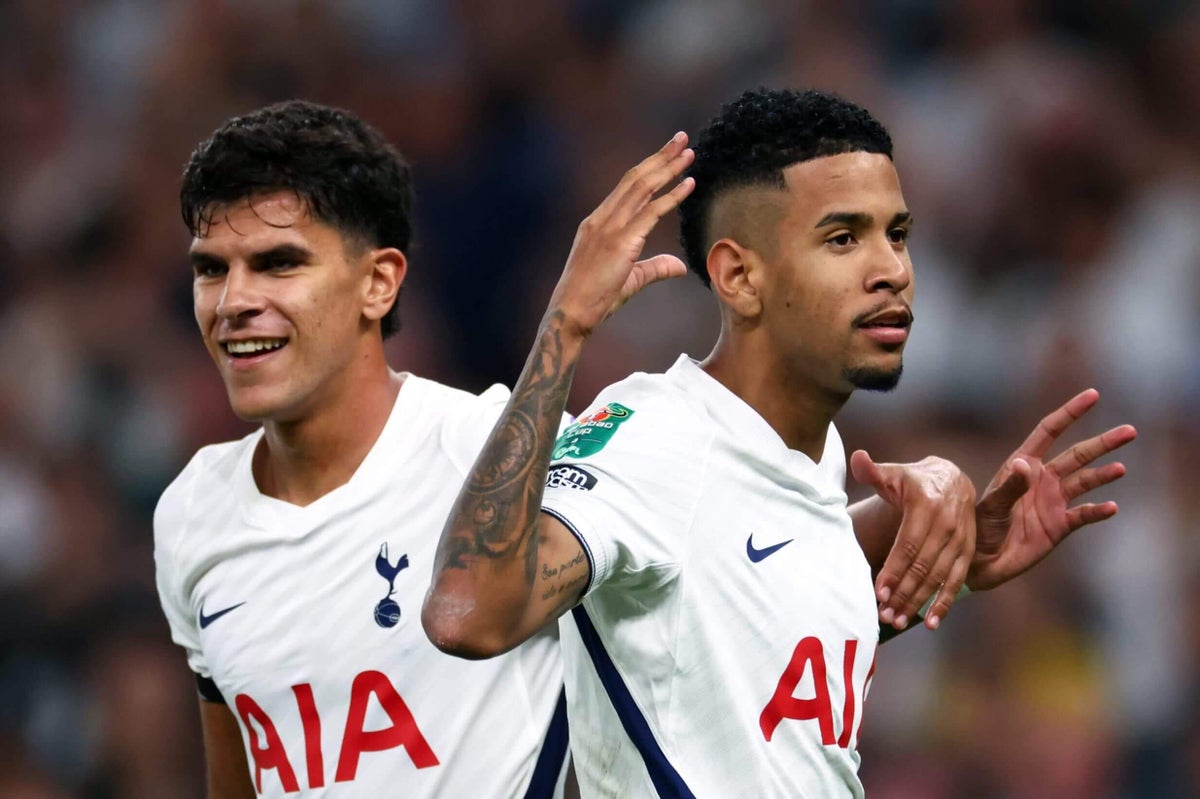
The arrivals of Mykhailo Mudryk and Tosin Adarabioyo late on Tuesday evening marked the end of one of the most radical transfer windows in Tottenham Hotspur’s history.This summer, Spurs spent more than £300million ($405m) on 10 players, all of them from Premier League clubs. They paid three fees well in excess of their old transfer record and shattered the wage structure that had defined the club for a generation. The perception of Tottenham in the marketplace has changed forever.Last Thursday evening, after Omar Marmoush’s arrival on an initial loan from Manchester City was confirmed, Roberto De Zerbi took CEO Vinai Venkatesham and sporting director Johan Lange out for dinner at an Italian restaurant in central London, in part to toast the success of the transfer window. De Zerbi even admitted in his press conference the following day that he did not expect a window as successful as this one. But Spurs still found time, in the final days of the window, to add two more players to the squad.Tottenham have completely transformed how they do business in the market. They have ripped up their old rulebook, abandoning the strategies with which former chairman Daniel Levy ran the club. Almost one year after Levy’s dismissal, it represents one of the most profound strategic pivots undertaken by any Premier League club in recent years.To understand that pivot, and why Tottenham have decided to change course so profoundly, you do not have to look very far. They have finished 17th in the Premier League for two consecutive years. And last time, it took a rescue job by De Zerbi to keep them in the top flight. Spurs won three of their last five games to stay up, but even then, they relied on West Ham United stumbling in May to survive.Tottenham’s players and staff celebrate that goal that saved them from relegation (Alex Pantling/Getty Images)Had Tottenham been relegated, it would have been one of the most spectacular failures in modern football. But the majority-shareholding Lewis family, who effectively took back control of the club last September when they sacked Levy, were still shocked and horrified by how close they had come. They knew that this could never happen again.There was plenty of talk last season about the need for a “reset”, a change in how the club was run and in its culture. As Venkatesham often said privately, it was like rebuilding a plane while keeping it in the air. But while all of that internal transformation and investment has gone on behind the scenes, with the gym at the training ground transformed, the medical team revamped, and even the away dressing room at the stadium altered, there was an immediate need for a much stronger first-team squad for the new season.As soon as Premier League status was confirmed, with that 1-0 win over Everton, it was clear that Tottenham would be busy. De Zerbi used his post-match press conference to make explicit what he wanted from the market. He talked about “the team I have in my dream in my head”, how he had only “10, 11, 12 good enough players”, and how he needed “first-level players” coming in. De Zerbi had not wanted to discuss the market before the Everton game, and said afterwards that the rebuild had to start that very evening, and there was “no time to go on holiday”.The day after the Everton game, non-executive chairman Peter Charrington published a letter on the Tottenham website promising that the owners would “invest across multiple windows” and that this summer would be “an important first step in that work”. What mattered to Spurs fans, of course, was not the words but the actions.The Lewis family had been very clear that they would back the team in the summer transfer window with money. But the specifics of the strategy and the targets would be down to the senior management of the club. There had been a lot of pressure on Venkatesham and Lange last season, but they were empowered to execute a far more ambitious plan than Tottenham had ever delivered.Lange and Venkatesham were under huge pressure as Spurs struggled last season (Vince Mignott/Getty Images)At the end of last season, Tottenham had spoken with Sebastian Kehl, Borussia Dortmund’s former head of first-team football, about joining as a co-sporting director, but nothing came of it. The one prominent addition to the recruitment team was Rafi Moersen, the new director of football operations, who joined in June from Manchester City and immediately began overseeing the finer points of transactions, such as contracts, clauses and payment structures.Sometimes in the past, Tottenham’s recruitment would get slightly confused, with too many of the involved parties having their own ideas. For years, Fabio Paratici was a powerful influence, whether as managing director of football, an unofficial consultant, or during his brief return as a co-sporting director last season. Levy naturally would have his own ideas too. But going into this window, with neither Paratici nor Levy around, there was a feeling that recruitment could be clearer and more focused than in the past.Venkatesham, Lange and Moersen took turns holding talks with clubs and agents, depending on who had the best pre-existing relationship. For example, Lange handled the negotiations with Manchester City director of football Hugo Viana over Savio and Marmoush, with input from Moersen, while Venkatesham engaged with Newcastle United and West Ham United.There was a clear desire from the club hierarchy to be decisive and ruthless in this window, to bring in the players that Spurs needed. There was also a feeling that this summer represented a window of opportunity. They had a top coach in De Zerbi, whom they had moved heaven and earth to recruit in March. And with other teams in transition, now was the moment to take advantage.Apart from converting Mathys Tel and Kevin Danso’s loans into permanent deals, Spurs’ earliest first-team signing last summer came on July 10, when Mohammed Kudus arrived from West Ham for £55m. At the same stage of this window, Spurs had spent nearly £250m on six new players.There was a clear focus on bringing in players who were already established in the Premier League, proving they were up to its unique physical demands, and who were ready to play De Zerbi’s football. It was no coincidence that every first-team signing this window came from an English club and that the two youngest, Savio and Mateus Fernandes, are already experienced at 22 years old. Tottenham have worked hard in the market for teenage prospects, but the main focus has been on players who can make an immediate impact.Spurs wanted players who could quickly adapt to De Zerbi’s football (Ayush Kumar/Getty Images)There was also a desire to bring in players who could be cultural architects for a new era at Spurs, and set the right tone in the dressing room. Andy Robertson is an example, but so are younger signings, such as Jan Paul van Hecke (26) and Fernandes.While there has been a perception that this summer’s business has been driven entirely by De Zerbi, the reality is that some of their signings were players Tottenham had pursued in the past. Spurs made well-publicised attempts to sign Savio last summer and Robertson in January, both during Thomas Frank’s tenure. Tottenham had tracked Van Hecke for years, and Lange visited his representatives in Amsterdam in March before De Zerbi’s appointment. Fernandes had been on their radar since he scored against them for Sporting CP in a UEFA Youth League game in September 2022, before further impressing Tottenham when he was at Southampton.Identifying players is only part of the story. Getting them into the building is where Tottenham have struggled in recent years. Spurs’ history is full of stories of good players — Joao Moutinho, Jack Grealish, Bruno Fernandes — who were lined up to join before deals fell apart over the finer points of negotiations. Last summer, they pushed for Antoine Semenyo, Morgan Gibbs-White and Eberechi Eze, but ended up with none of them. This summer, they landed most of their first-choice targets quickly. Crucially, they were proactive by signing Robertson and Van Hecke before selling Djed Spence and Cristian Romero to Inter and Atletico Madrid.De Zerbi did play a part in convincing players to join Spurs, speaking to them before they joined and explaining how he saw them fitting into his system. Signing a five-year contract was a sign of the club’s potential stability under De Zerbi.The five best transfers of the 2026 summer windowTim SpiersBut it is impossible to do this sort of recruitment without huge amounts of money, for both fees and salaries. And Spurs’ willingness to spend money like never before became the single most important change of this window.Fees that the club would never have dreamed of paying in the past were willingly signed off. Van Hecke from Brighton for a fixed £52m, even though he only had one year left on his contract. Savio from Manchester City for an initial £75m with £10m add-ons. Fernandes from relegated West Ham for £85m. And biggest of all, Sandro Tonali from Newcastle for an initial £92.5m with another £7.5m in add-ons.Former head coach Ange Postecoglou said in 2024, speaking at a pre-match press conference before facing Aston Villa, that he thought Tottenham would never be in a position to spend £100m on a player. When the Tonali deal was agreed, a delighted Venkatesham video-called De Zerbi, who was on holiday, to share the news.Sandro Tonali became Tottenham Hotspur’s record signing (Justin Setterfield/Getty Images)In particular, there was a feeling at the club that it was worth paying a premium for Savio because he was their top target and a player they viewed as one of the most talented young wingers in the world. Spurs did not want to compromise by spending less money on a second-choice option who might not be the right long-term fit.The clearest sign of Spurs’ approach came in the final days of the window. De Zerbi had said on Friday that Tottenham could still “do one player more, in one specific position”, a clear reference to the left of the front three. Spurs had been interested in Liverpool’s Cody Gakpo earlier in the window, but last weekend their attention turned to Iliman Ndiaye of Everton. The Athletic reported on Sunday that a deal had been agreed in principle, along with a separate deal taking Richarlison back to Everton.Spurs have spent significantly this summer and viewed it as a smart move to sign Ndiaye, with Richarlison as a makeweight, but that stalled when Richarlison did not agree terms with Everton. Ndiaye also preferred the idea of playing for City and the prospect of Champions League football.Have Spurs had a good or a bad window?Jay Harris and Rachael TindeStill trying to add a left-winger, Tottenham then moved fast to sign another player from the Premier League who De Zerbi specifically wanted: Mykhailo Mudryk on loan from Chelsea with an option to buy for £75m. He played for De Zerbi at Shakhtar Donetsk but had not featured for Chelsea for almost two years following a ban. It is a steep figure but the option gives them control over the situation, compared to an obligation to buy. Tottenham also moved for another Chelsea player, Tosin Adarabioyo, to replace departing centre-back Kevin Danso, who last week told De Zerbi he wanted to leave due to a lack of game time.Spurs fans have mostly been thrilled by this summer’s business and the radical shift from the club’s old policies. But there has been slightly less excitement about these final two deals, which have underlined the full extent of Tottenham’s insistence on getting players in from other Premier League clubs — even, if required, from Chelsea.Spurs made a surprise deadline day move for Mykhailo Mudryk (Matt McNulty/Getty Images)The fees alone spent this summer do not tell the whole story. Tottenham were also willing to transform their long-standing strategy on player salaries. For years, Spurs had been known for their restrictive wage structure, keeping their wage spending relative to turnover at the lowest ratio in the league. This summer, it has felt as if a giant tap was finally turned on. Players were tempted to join Tottenham with salaries that Spurs had never paid before, meaning that they often had a free run at potential signings who only wanted to join Spurs.Existing players were rewarded with bumper new contracts to keep them at the club — Pedro Porro and Micky van de Ven have more than doubled their previous salaries. Tying down Porro before he won the World Cup with Spain turned out to be a shrewd move. Lange led the contract renewal negotiations with Van de Ven, Porro and goalkeeper Antonin Kinsky.But Tottenham’s new policy on wages was about more than just big salaries. This summer’s new contracts are structured more around performance incentives. There is a recognition that success on the pitch — whether qualifying for Europe or winning trophies — will bring the club far more commercial revenue. And with a view to incentivising success and prioritising high performance, new bonuses have been introduced should those targets be met. The new structure has been especially advocated by Moersen.All these arrivals have to be paid for. Tottenham have embraced an approach to player sales that is as radical, as much of a departure, as their approach to fees and salaries. Traditionally, Tottenham were reluctant sellers, only willing to part with players under what you might call ‘Gareth Bale conditions’, when they had an asset so valuable they could extract a record fee. This year, they have been far more pragmatic.Luka Vuskovic became one of the most expensive sales in Tottenham history when he went to Brighton & Hove Albion for an initial £46m. The teenager had never played a game for Spurs but they made a significant profit three years after buying him from Hajduk Split. Spence was sold for roughly £26m, and Romero for just over £34m. In the final days of the window, Pape Matar Sarr left for Juventus on loan with a conditional obligation to buy of £23.5m, and Danso for an obligation of £22.5m contingent on Sunderland staying up.Kevin Danso moved to Sunderland on deadline day (Nigel French/Getty Images)The loan department, led by Andy Scoulding, proved its worth by generating fees for Alejo Veliz, Alfie Devine, Will Lankshear, Manor Solomon and Ashley Phillips after successful spells at other clubs last season. In total, Spurs have brought in close to £150m in guaranteed fees this summer to offset their spending.There was also another significant contribution from the Lewis family, who delivered another £100m equity injection at the start of the window, similar to the funds from October 2025. There is an understanding within the family of the requirement for them to back the club’s strategy with money, and a commitment to continued investment over the long term.When De Zerbi spoke in his press conference on Friday, he wanted to make clear that the credit for this window belongs to the owners.But given the money spent on Premier League players for De Zerbi’s benefit, he has now been backed more firmly and further than any other Tottenham manager in history. That means that he will be more directly accountable than any of his predecessors for what comes next. The opening two games of the league season have been disappointing, defeats to Brentford and Newcastle United without scoring a goal.The onus is on De Zerbi to build a winning team.Additional reporting: Elias Burke
Tottenham’s hectic summer window: Explaining the club’s transfer and wage policy shift
Spurs ripped up their own rulebook to spend more than £300million on 10 players. This is the inside story of their dramatic transfer window
2,585 words~12 min read