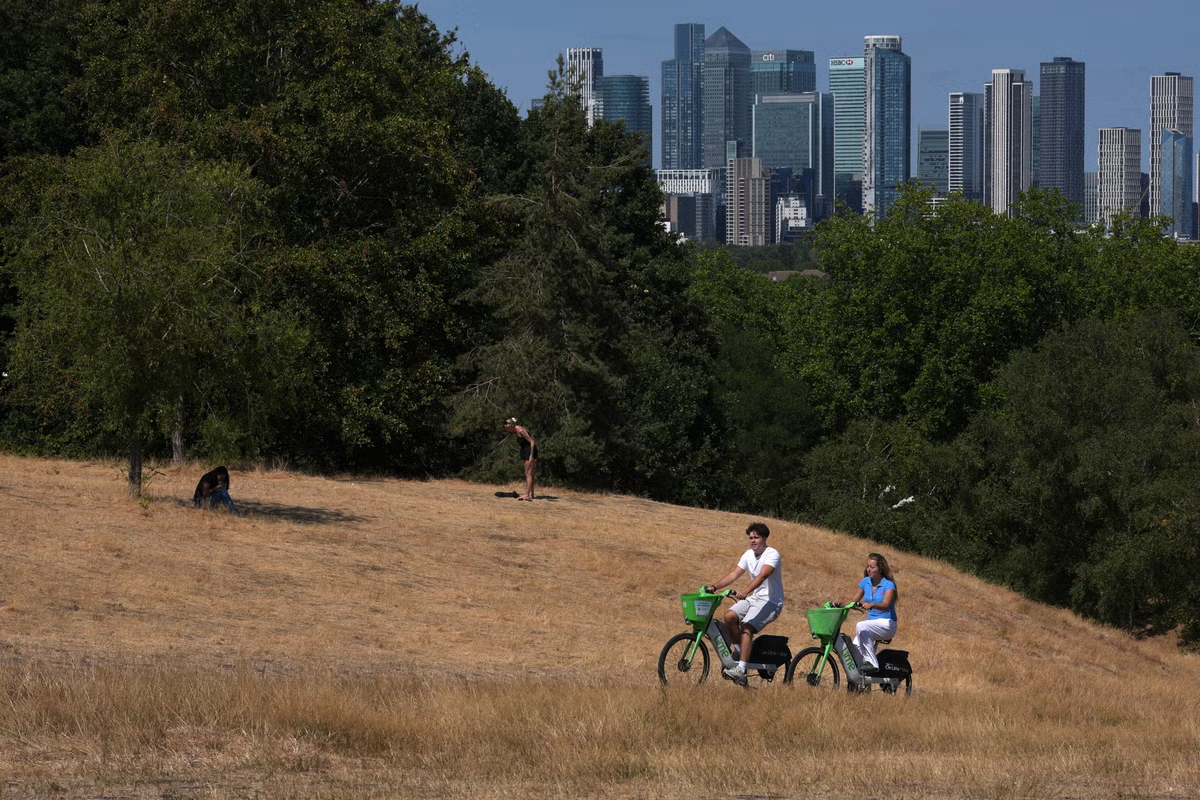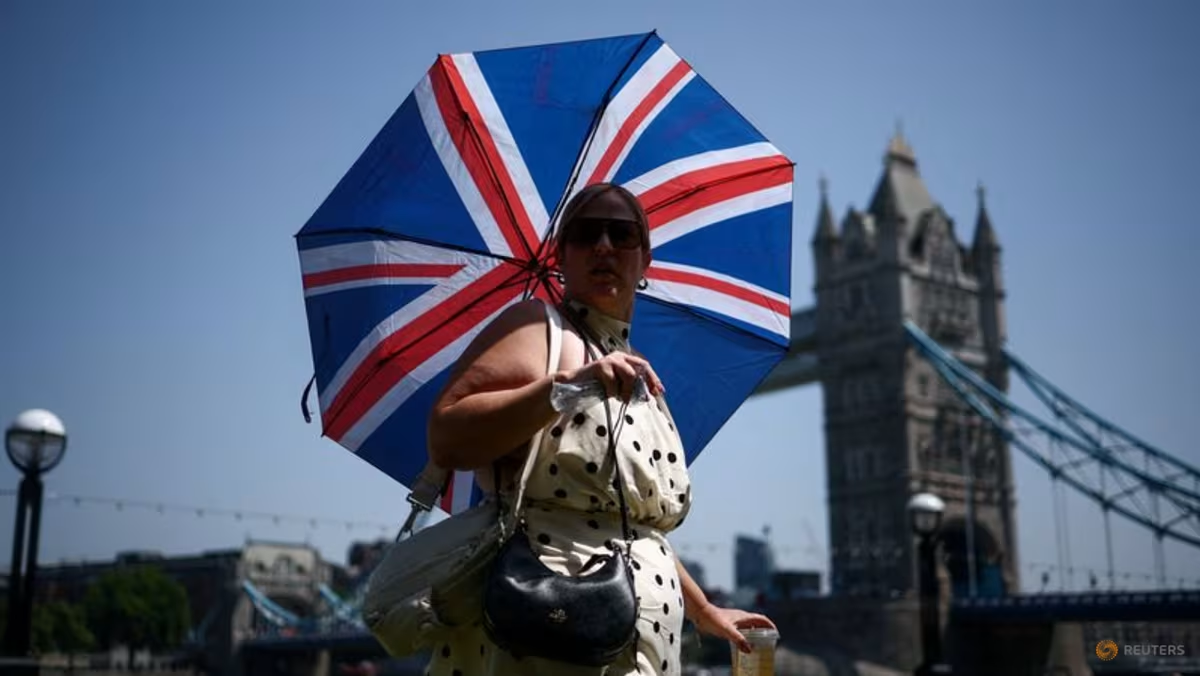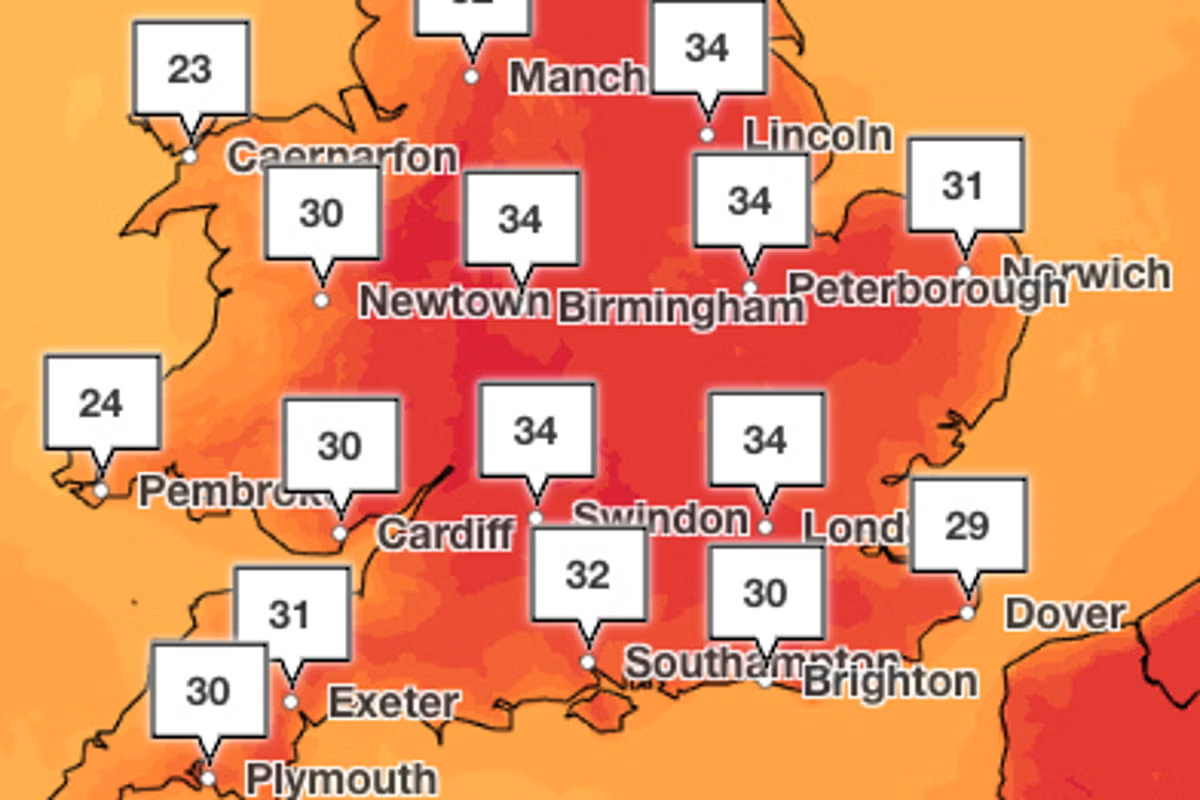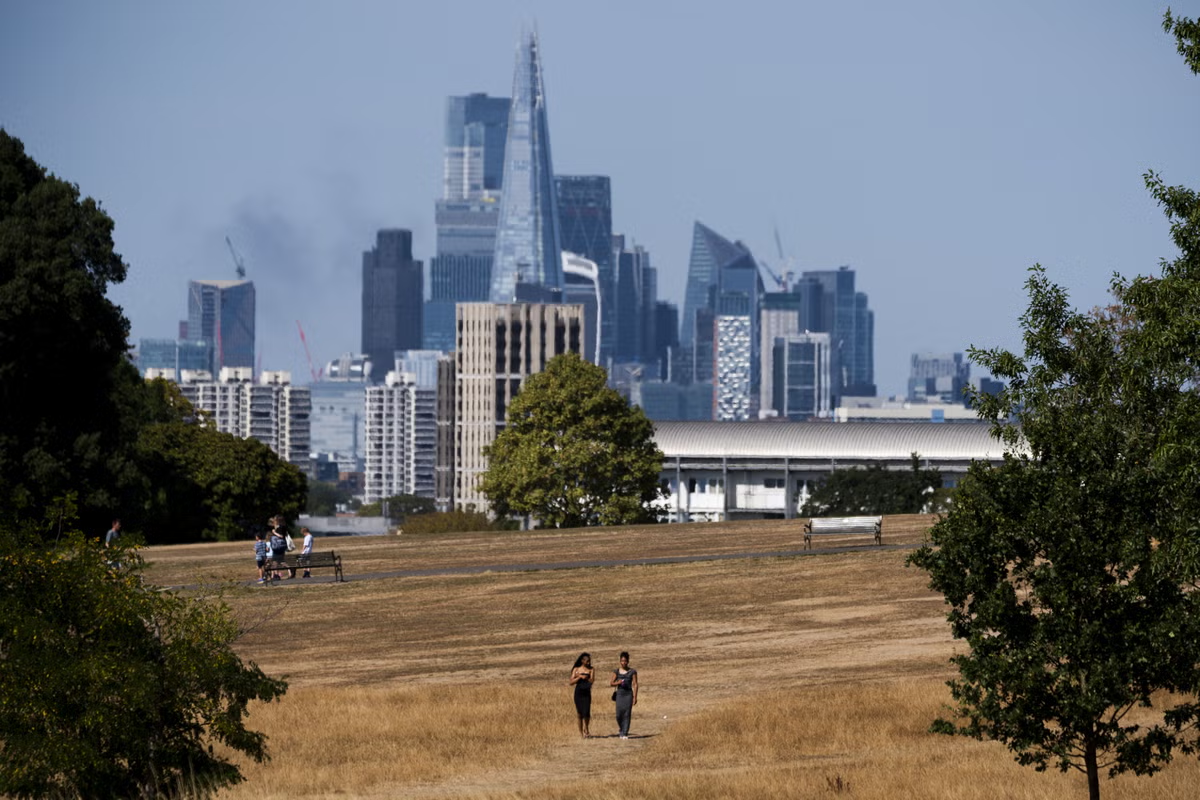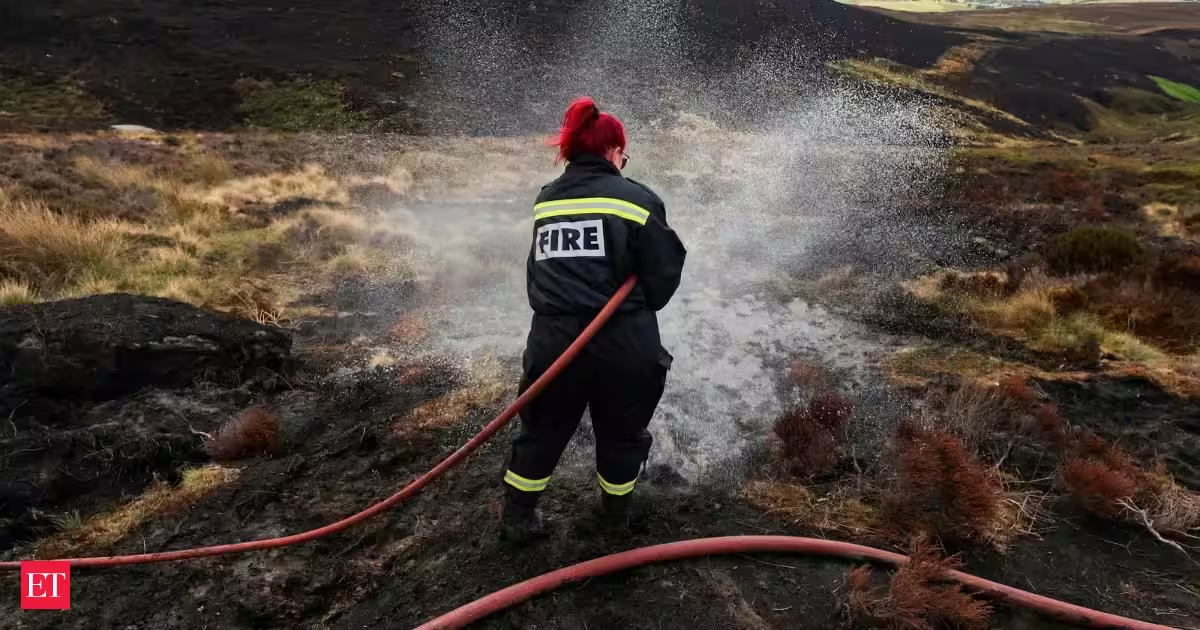
SynopsisBritain has endured its hottest summer on record, marked by successive heat waves, drought, destructive wildfires and water restrictions. The Met Office said the 16.5°C mean temperature surpassed last year’s record. Scientists say human-caused climate change made such extreme heat 130 times more likely, underscoring a deepening climate crisis.ReutersBritain’s hottest summer on record brought relentless heat, drought and wildfires, with the Met Office saying climate change has dramatically increased the likelihood of such extreme temperatures.Britain has emerged from a summer of relentless heat, parched landscapes and destructive wildfires with a record it had barely had time to absorb before breaking again: the summer of 2026 was the hottest ever recorded in the country, the Met Office said Tuesday.The season brought successive heat waves from late May through the summer, scarce rainfall, wildfires and water restrictions, pushing the mean average temperature to 16.5 Celsius (61.7 Fahrenheit). That eclipsed last year's record of 16.1 C (61 F), which itself had surpassed the previous high of 15.7 C (60.2 F) set in 2018.Also read: Let data reign: Trump's data center gospel meets a growing American backlashThe figures are provisional and are based on records dating to 1884, according to the national weather service."These records are now breaking with increasing frequency, reflecting the influence of human-induced climate change," said Amy Doherty, head of the National Climate Information Center. "Particularly notable is how much we've exceeded the previous summer mean temperature record, set just last year."The top five hottest British summers have all occurred since 2003 — a pattern that the Met Office says underscores the growing imprint of climate change.A summer Britain could once have seen only once in 1,000 yearsThe Met Office calculated that human-caused climate change had made a summer this hot 130 times more likely.Without human greenhouse gas emissions, a summer of this intensity would be expected only once in a millennium. With climate change, the Met Office says, it is now expected roughly once every nine years."Our hottest summer ever is a brutal reminder that we're not waiting for climate change to arrive in Britain; we're living in the middle of it," Minister of Climate Transition Katie White said."With kids too hot to sleep, families worrying about older relatives, farmers watching fields dry out, and firefighters and our armed forces battling wildfires, we've all woken up to a reality none of us wants for the people and places we love."The heat was not confined to a single spell. Heat waves began in late May and returned in each month of the summer, including two in July.The consequences were felt beyond weather charts. The U.K. Health Security Agency estimated that 2,877 deaths in England were associated with heat waves in May and June.Also read: Deadlocked jury in Lindsay Clancy trial: What happens next if no verdict is reached?From record heat to drought and wildfiresBritain's highest temperature of the summer reached 38.1 C (100.6 F) in London on Aug. 13. Earlier, on June 26, Norfolk recorded 38 C (100.4 F), setting a record for the month.The heat arrived alongside increasingly dry conditions. All of Wales and most of England remain in drought, while wildfires tore through landscapes already stressed by the lack of rainfall.England, Wales and Northern Ireland each recorded their hottest summer on average. Scotland, which experienced cooler and less dry conditions, tied for its sixth-warmest summer.The record-setting season, AP reported, has left Britain confronting a summer that was once considered extraordinarily unlikely — and is now becoming increasingly familiar.(With inputs from AP)Read More News on
Drought, wildfires & a brutal 'once-in-a-millennium' summer plague Britain
Britain has endured its hottest summer on record, marked by successive heat waves, drought, destructive wildfires and water restrictions. The Met Office said the 16.5°C mean temperature surpassed last years record. Scientists say human-caused climate change made such extreme heat 130 times more likely, underscoring a deepening climate crisis.
585 words~3 min read