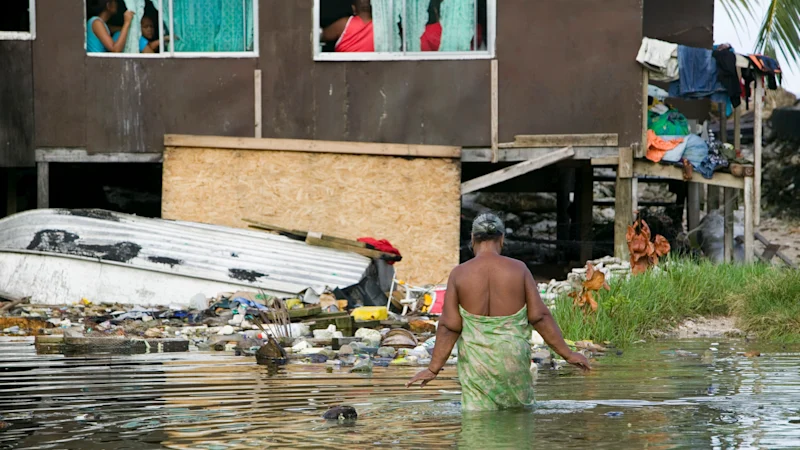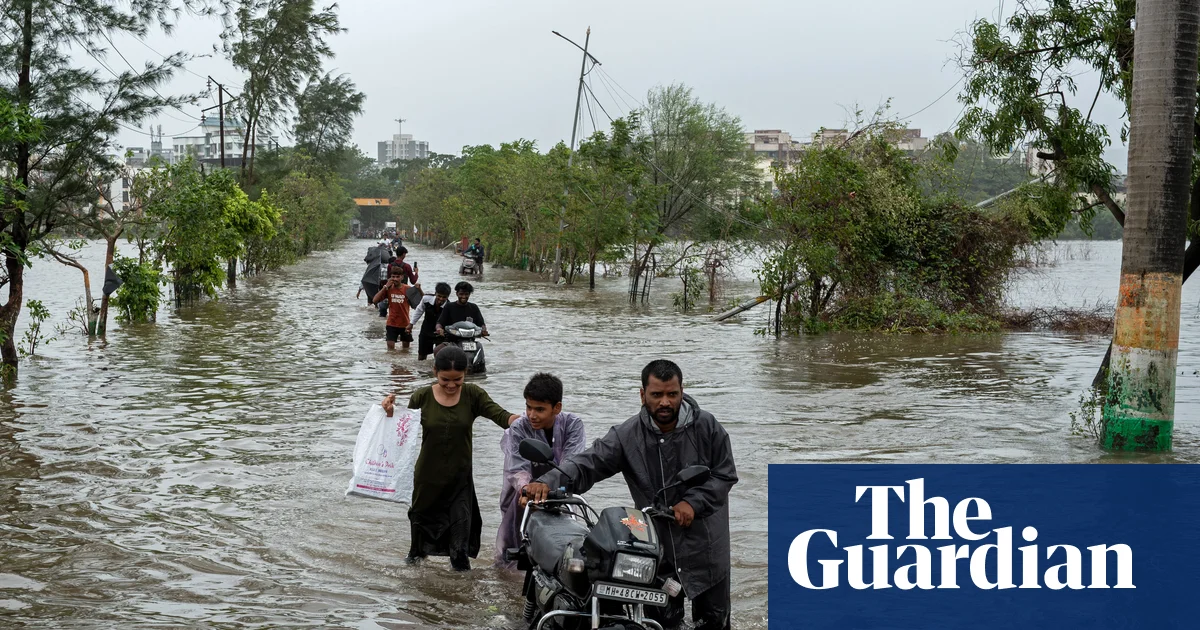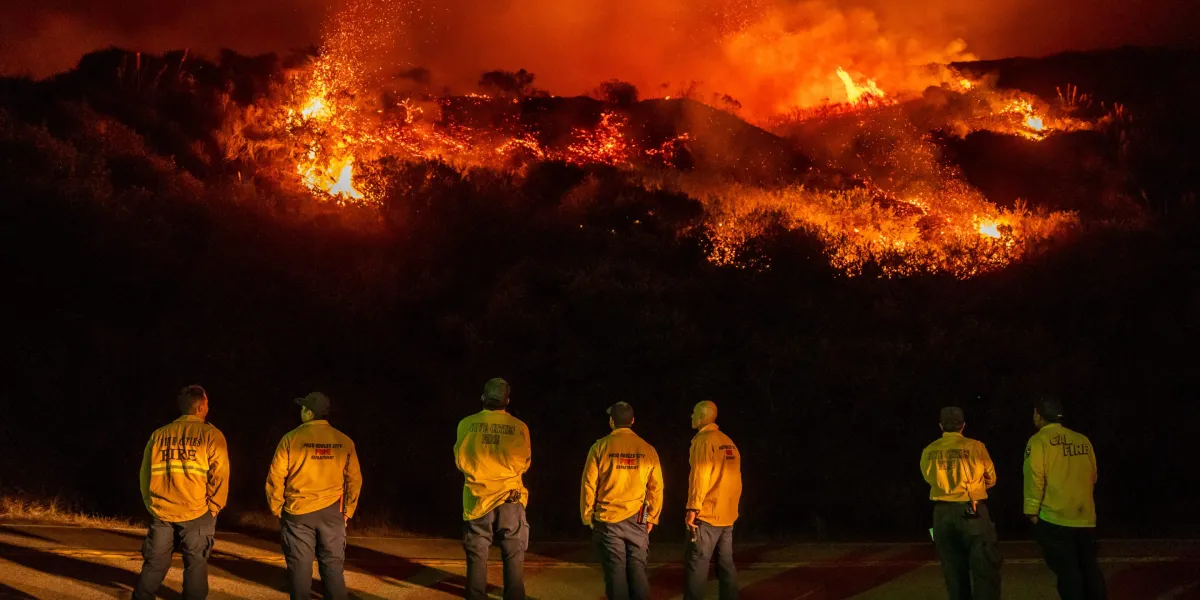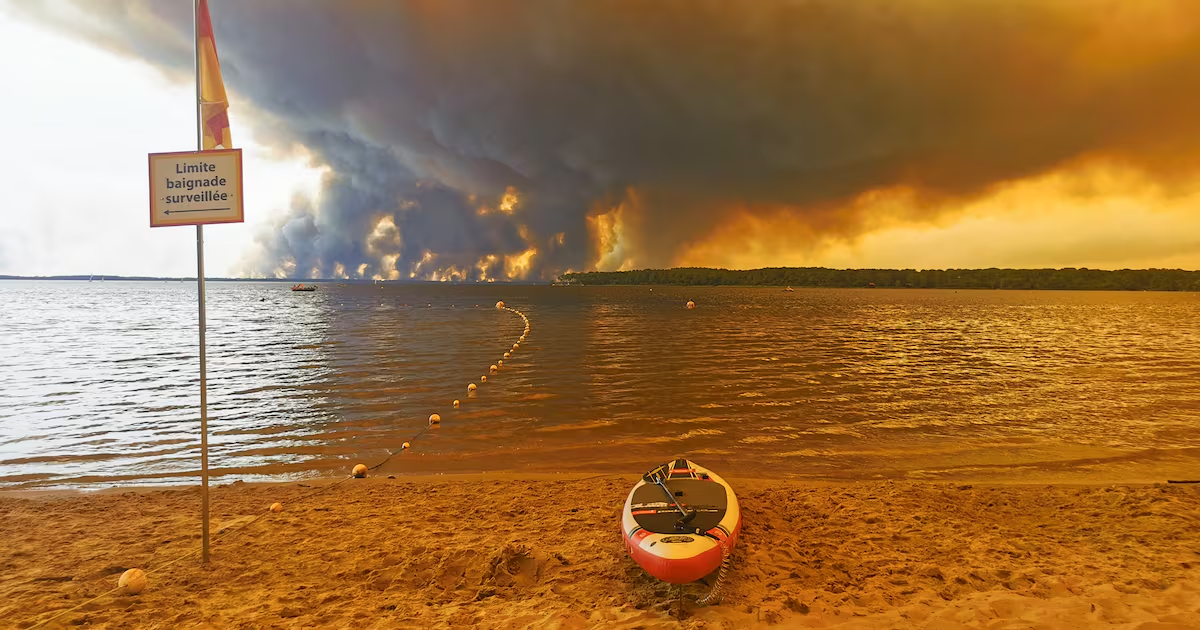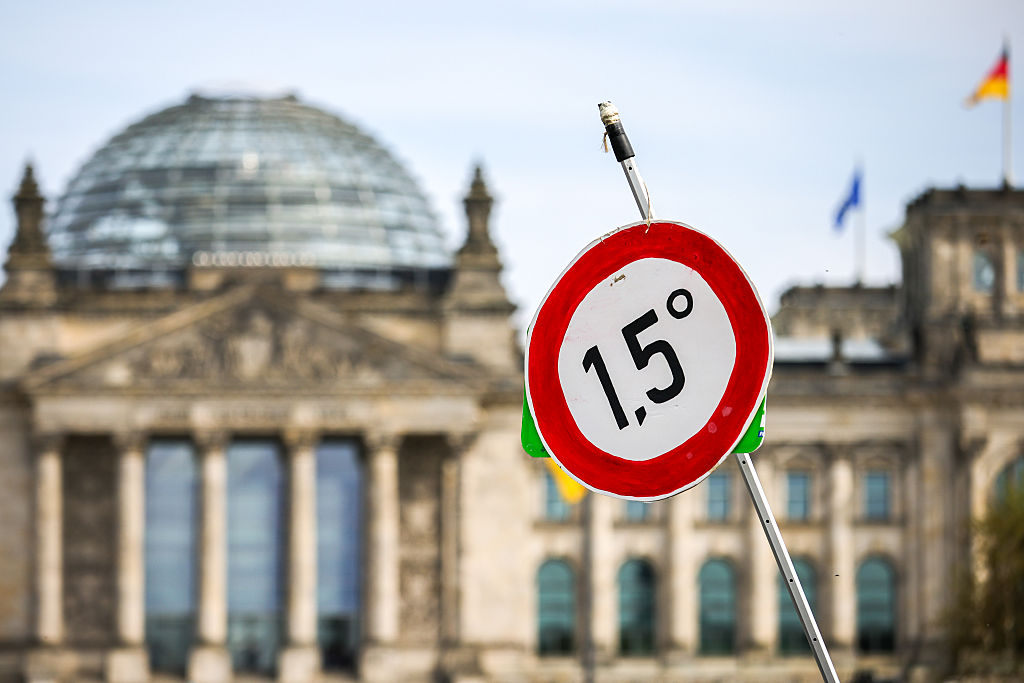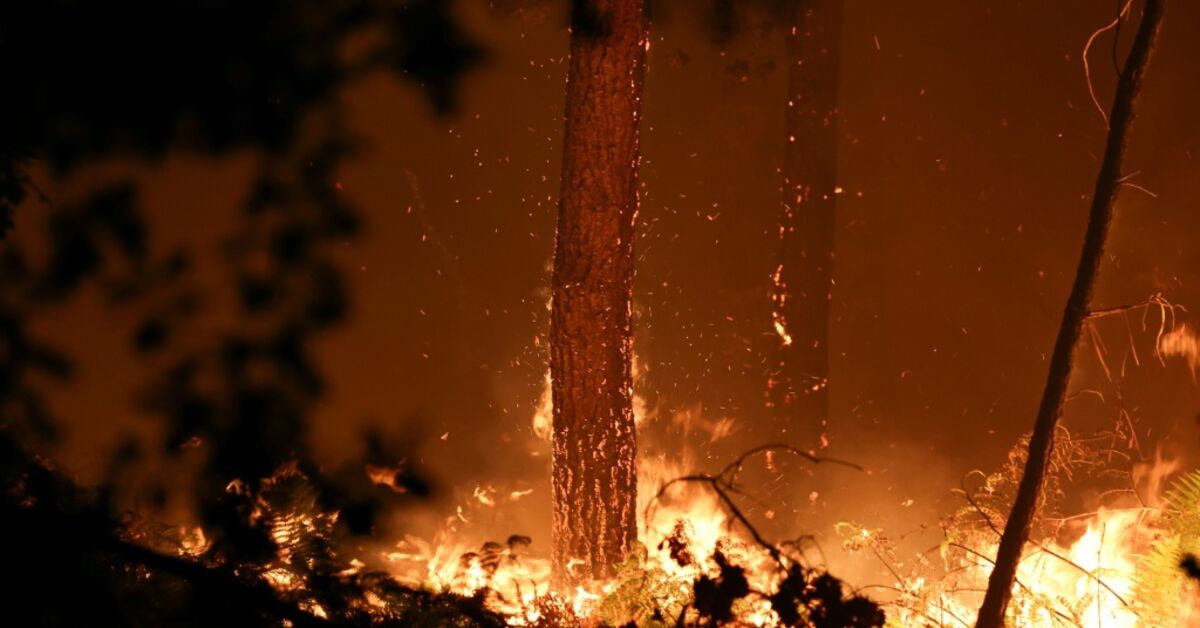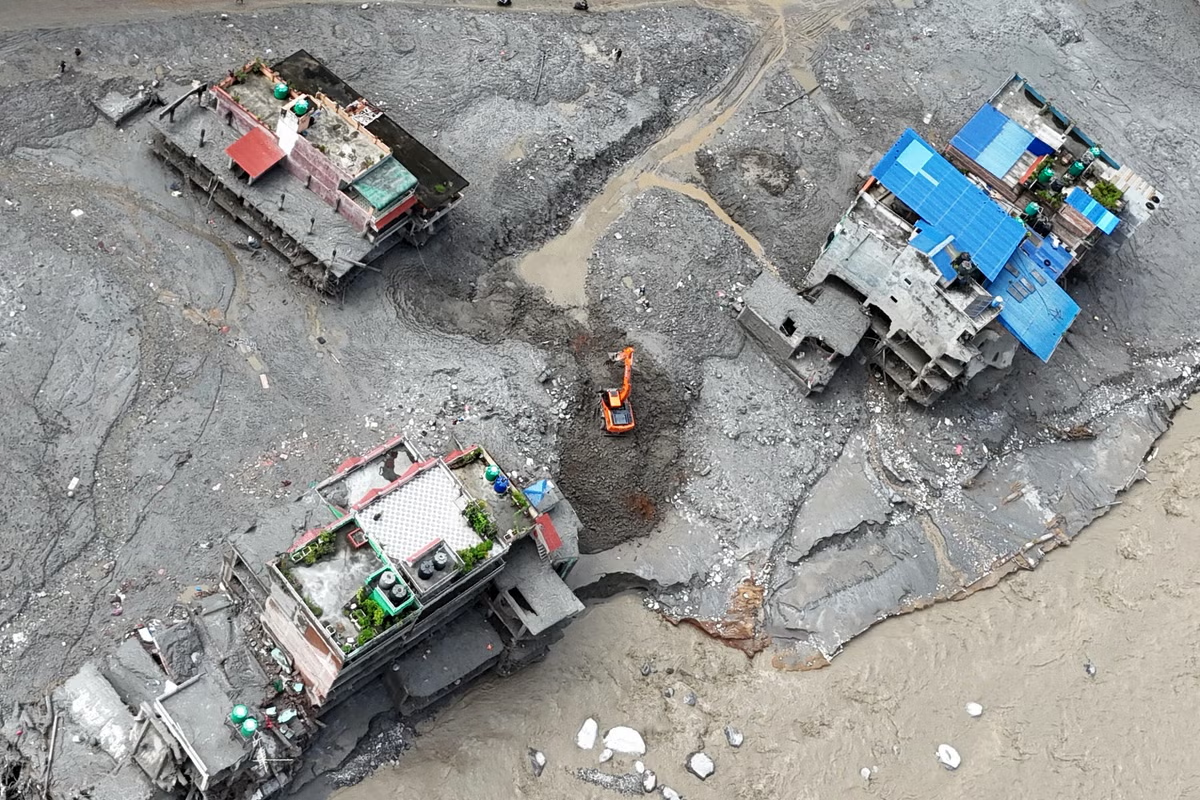
Humanity has lost its chance to keep global warming within the safe limit set a decade ago, the United Nations has said, though it insists temperatures can still be brought back down if countries act with urgency now.The world is set to cross the 1.5C warming threshold agreed under the 2015 Paris climate accord within the next few years, according to a first-of-its-kind report published on Wednesday by the UN Environment Programme. Rather than abandoning the target, scientists and UN officials are now recommending a strategy of "overshoot," in which temperatures are allowed to rise above 1.5C for a period before being brought back down, through a combination of ending fossil fuel use and developing technology to remove carbon dioxide from the atmosphere. However, the report warns of decades of worsening weather disasters, rising seas, species extinctions, and melting glaciers."Humanity is speeding past the limit to avoid climate catastrophe," said UN secretary-general António Guterres.The 1.5C goal became the accepted global benchmark after UN scientists found the impacts of warming grew dramatically worse at 2C compared with 1.5C. The world is already around 1.4C above pre-industrial levels, based on a 20-year average. The report's most optimistic scenario has warming peaking at 1.8C around the middle of the century if governments pursue the most ambitious climate goals available, though current policies are on course to push temperatures to 2.6C above pre-industrial levels by 2100.Houses lie abandoned in the aftermath of flood caused by glacial lake outburst, at Thame village in Solukhumbu district (AFP/Getty)"Let's be very clear, 1.5 target is still the goal. But now we need to approach it differently from above," said Inger Andersen, executive director of the UN Environment Programme. "It's a reality check. We have to live with this warmer world," said Richard Betts, a climate scientist at the University of Exeter and one of the report's authors. "But there's still a lot we can do to limit warming." Andrew Weaver, a climate scientist at the University of Victoria who was not involved in the report, said the 1.5C limit was not "some magical climate cliff" beyond which the situation becomes hopeless. "Every tenth of a degree we avoid still means less damage," he said, adding that the report was "among the bleakest UN climate reports I have read. It carries the unmistakable tone of desperation, frustration and urgency, but not resignation."Every five years of delay in cutting emissions adds at least a tenth of a degree to the eventual peak temperature, said Joeri Rogelj, a climate scientist at Imperial College London and one of the report's authors. Responding to the report, Katie White, the UK's minister for climate transition, said the summer's heatwaves and wildfires showed the climate crisis was already being felt at home. "This summer of heatwaves and wildfires shows that we're living through the climate crisis, and every fraction of a degree that we limit global warming will count in our battle to protect our way of life," she said. "The report reinforces why Britain is acting with urgency and ambition on climate change, both at home and with our partners around the world. We've more than halved our emissions since 1990, set world-leading carbon budgets, and we are accelerating clean homegrown power in a way that is bringing investment to our shores and creating jobs in regions up and down the country."An aerial view shows an excavator clearing sludge next to damaged houses along the Trishuli riverline in the aftermath of flash floods at Trishuli Center in Nepal's Nuwakot district (AFP/Getty)David Waskow, director of the World Resources Institute's international climate initiative, said the report should be read as a warning rather than a reason to give up. "Crossing 1.5C is no longer a distant possibility," he said. "Extreme heat, floods, fires and droughts are already giving us a glimpse of what a hotter world brings, homes under water, harvests wiped out and communities still rebuilding when the next disaster strikes.”“With a developing Super El Niño, the worst may still be ahead. Every fraction of a degree raises the toll." He said moving faster on clean energy and resilience was already proving that countries could protect both people and their economies, but warned that "carbon removal cannot substitute for deep emissions cuts, including rapid reductions in methane. We need both, and much faster."Not every campaigner welcomed the report's emphasis on carbon removal technology. Lili Fuhr, fossil economy programme director at the Center for International Environmental Law, said overshooting 1.5C should be treated as a failure, not a strategy to manage. "Exceeding 1.5C is not a strategy, it is a moral and political failure that locks us into irreversible harm, while those least responsible for the climate crisis are forced to bear its worst consequences," she said. She warned that land and ocean-based carbon removal technologies, which remain under a UN moratorium because of the risks they pose to biodiversity and human rights, were being "rebranded as 'climate solutions' but more accurately understood as geoengineering." Even the most optimistic large-scale use of such technology "would not deliver more than a few tenths of a degree this century, while locking us into decades of additional fossil fuel use, injustices, and harm," she said. "The only way to minimize harm is to cut emissions now, starting with a rapid, just phase-out of all fossil fuels, not to delay action with speculative techno-fixes that shift the burden to future generations and vulnerable communities."Fenton Lutunatabua, of the campaign group 350.org's Pacific office, said the report should harden, not soften, the resolve to cut emissions. "We absolutely have to claw back every fraction of a degree possible," he said. "Just because overshoot is deemed inevitable, that doesn't mean we stop fighting to limit it to as short an overshoot as possible. Every day above 1.5C is another coastline swallowed, another plantation flooded, another coral reef lost." Savio Carvalho, the group's head of campaigns and networks, linked the report directly to last week's disaster in the Himalaya. "We've just watched a glacier collapse bury Himalayan communities under mud and water, and we're watching Pacific nations lose land to the sea in real time," he said. "There is no version of 'limiting overshoot' that doesn't start with ending new coal, oil and gas expansion today."The report warns that climate risks and the likelihood of triggering irreversible "tipping points" intensify with every additional fraction of a degree of warming and every year spent above the 1.5C threshold, including the destabilisation of the West Antarctic and Greenland ice sheets, the degradation of the Amazon rainforest, and the disruption of the Atlantic Ocean circulation system that keeps much of Europe temperate. "Some locations might become more or less uninsurable or even uninhabitable," the report said.On the question of how to bring temperatures back down once they overshoot, the report said planting trees, the traditional approach to removing carbon from the atmosphere, could shave at most a tenth of a degree off global temperatures, meaning more novel carbon removal technology will be needed. Other scientists were sceptical that such technology could be relied upon. "We were unable to stop the runaway train of global emissions to avoid 1.5C of warming," said Rob Jackson, a climate scientist at Stanford University who was not involved in the report. "Now overshoot scenarios require us to stop the train quickly and to back it up. Is it our best hope? Absolutely. Is it likely? Absolutely not." Bill Hare, chief executive of Climate Analytics, said the report did "a good job of describing the hole we've dug ourselves into" but "a poor job of showing us that there's a way out."Additional reporting by agencies.
UN says humanity has failed in key global warming target but all hope is not lost
UN’s most optimistic scenario has warming peaking at 1.8C around the middle of the century if governments pursue the most ambitious climate goals available
1,272 words~6 min read