Audio By Vocalize
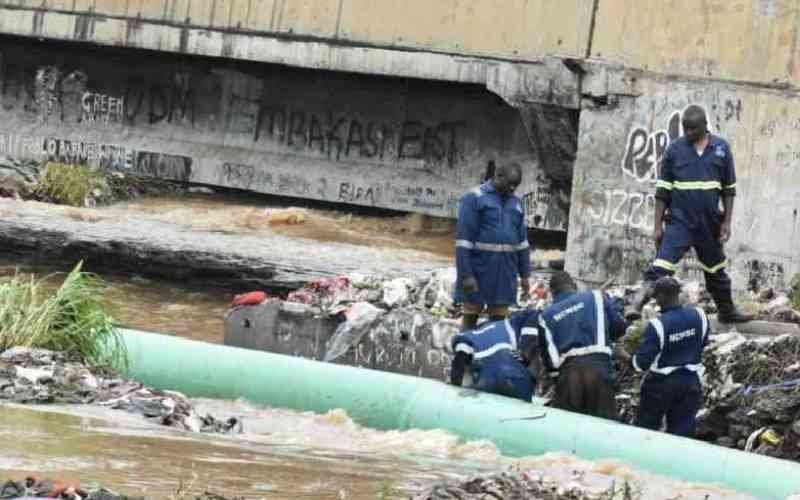
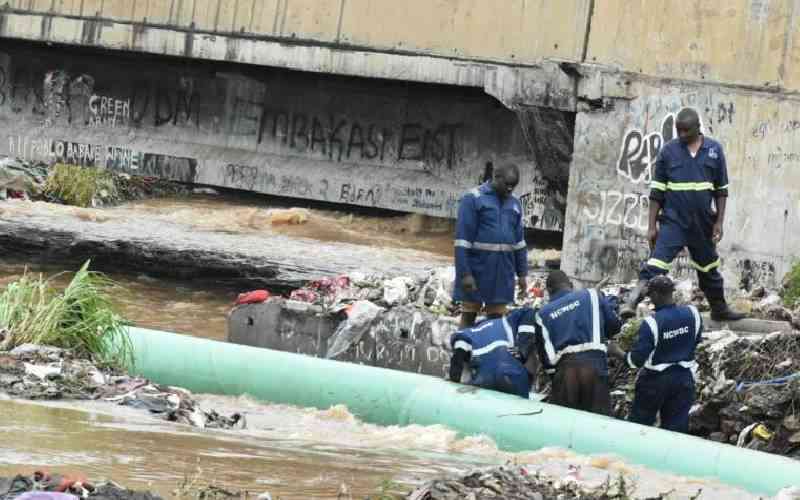
Nairobi and Sewerage Company Officials at the site where Water tunnel supplying to Nairobi Embakasi areas was swept by floods due to high pressure.[File, Standard]
Almost 30 years ago, Kenya experienced exceptionally heavy rains from October 1997 to early 1998. More than 1.5 million people were adversely affected, according to later assessments by the United Nations, and by mid-1998 nearly one million people were still affected by flooding and the associated disease outbreaks. The El Niño rains at the time showed us that the dangers posed by extreme rainfall do not end when the waters rise. Reports from the time describe widespread displacement, isolated communities, destruction of roads and bridges, damage to water systems, and loss of crops and livestock.
Research, however, indicates that forecasts about the 1997/98 El Niño rains were available, including those issued by the Kenya Meteorological Department. At the time, there were no systematic mechanisms that would translate this information into messages that could reach communities, let alone institutional structures that would translate forecasts into preparedness actions. The floods themselves, according to World Bank reports from the time, contributed to damages equivalent to 11 per cent of the country's GDP. The lesson from 1997 was not simply that El Niño could produce devastating rains, but rather that weather forecasts and warnings without preparedness and early action are not enough.