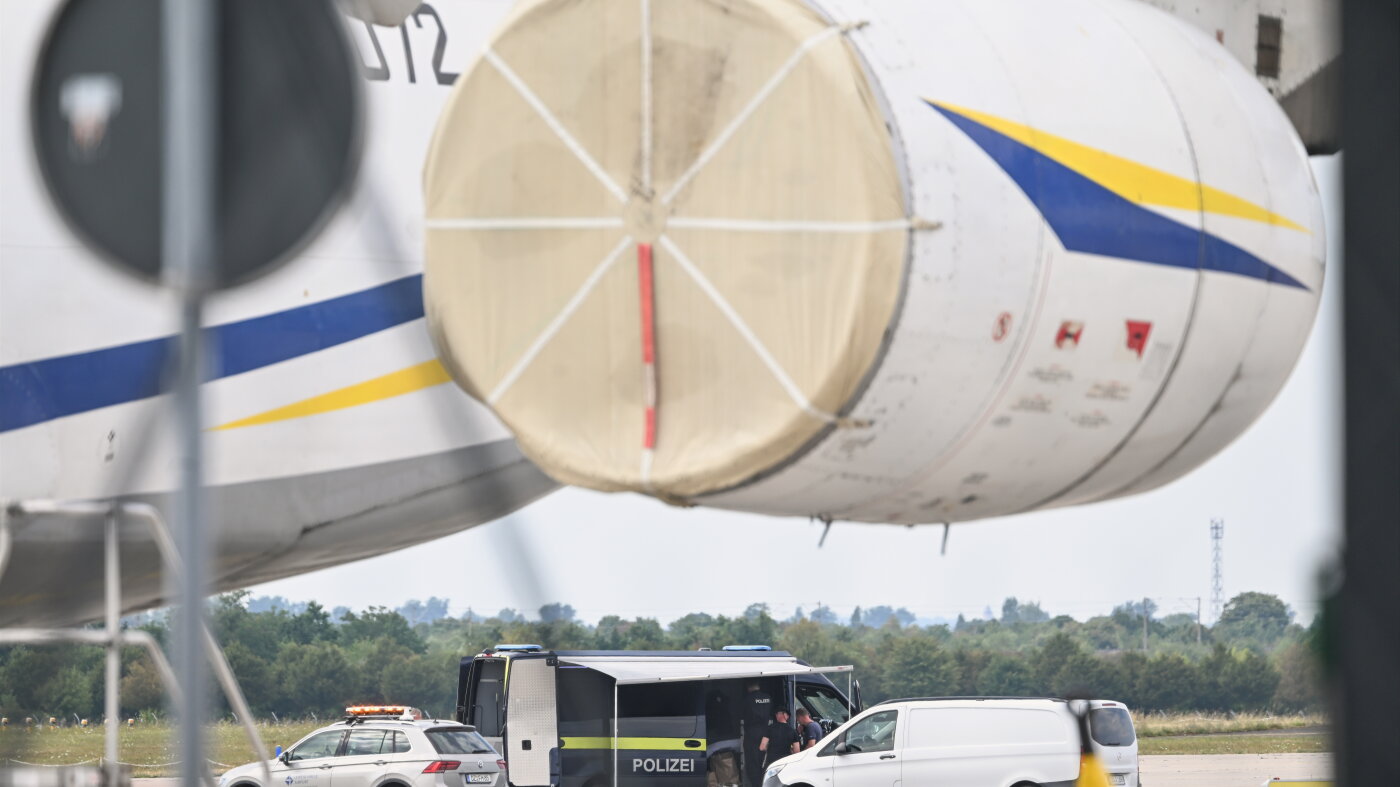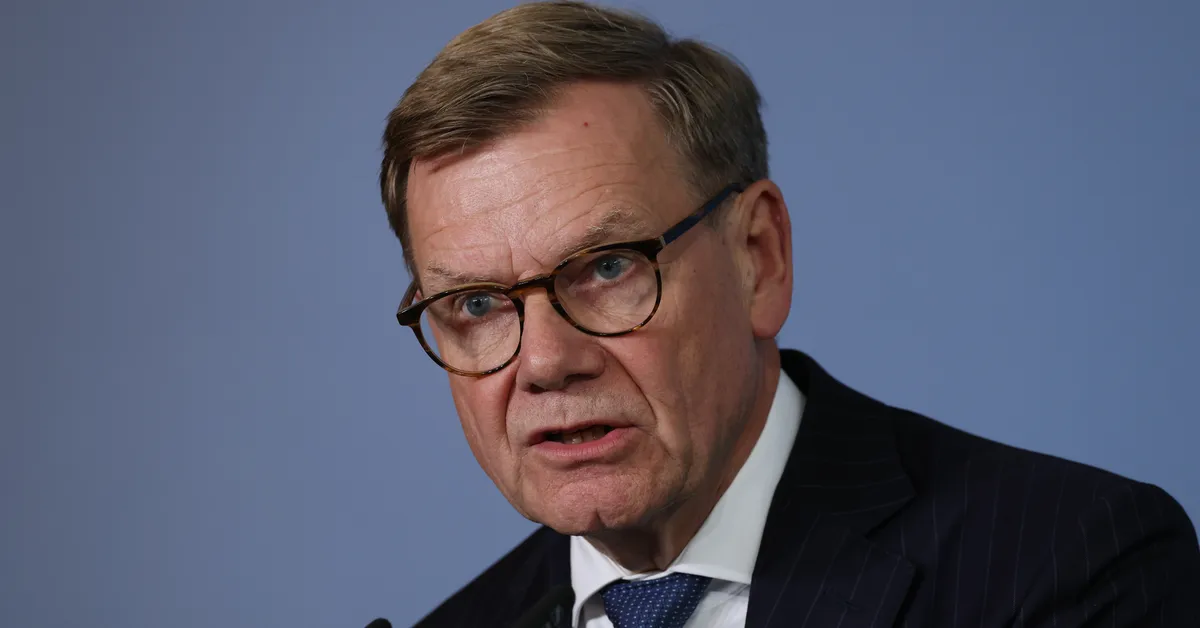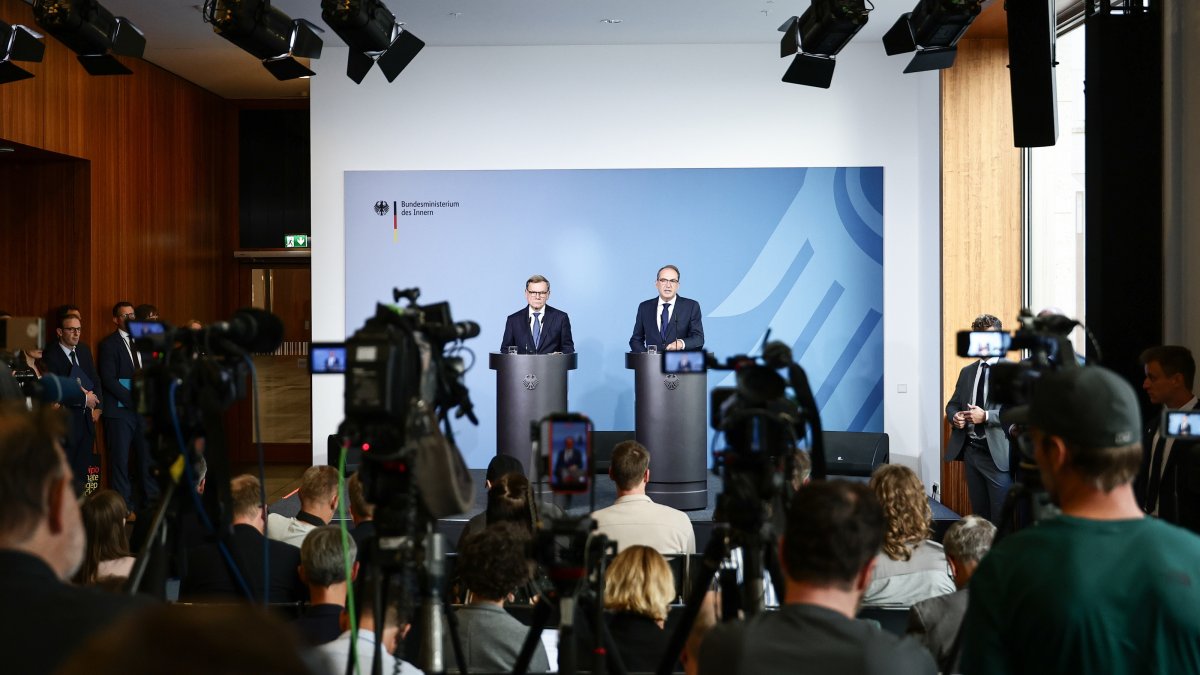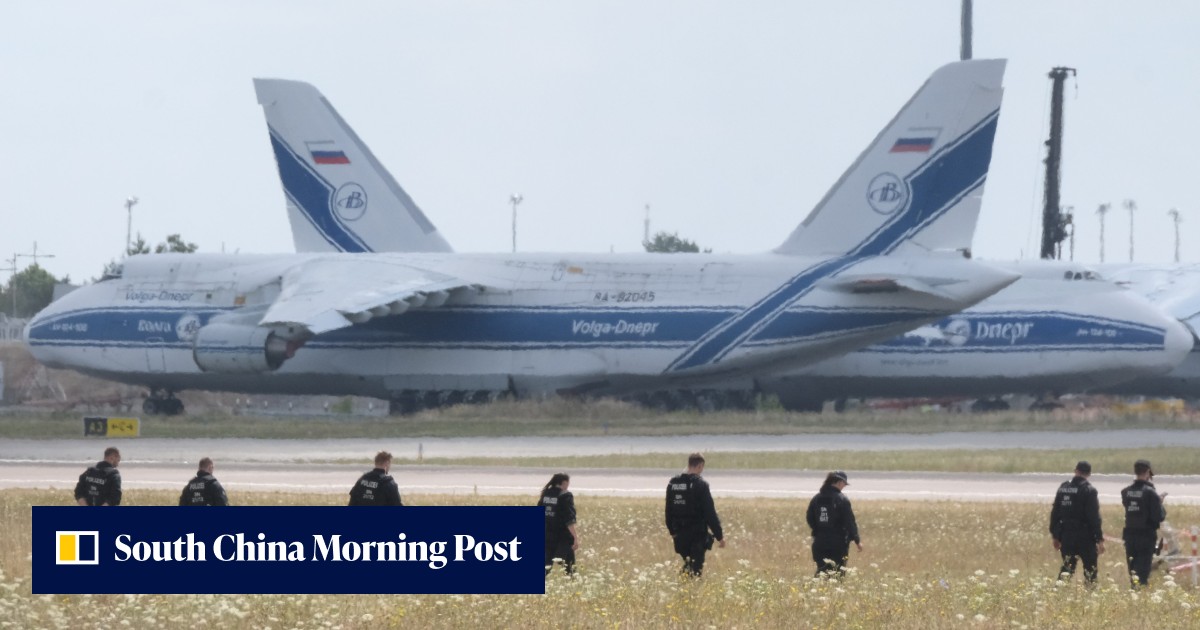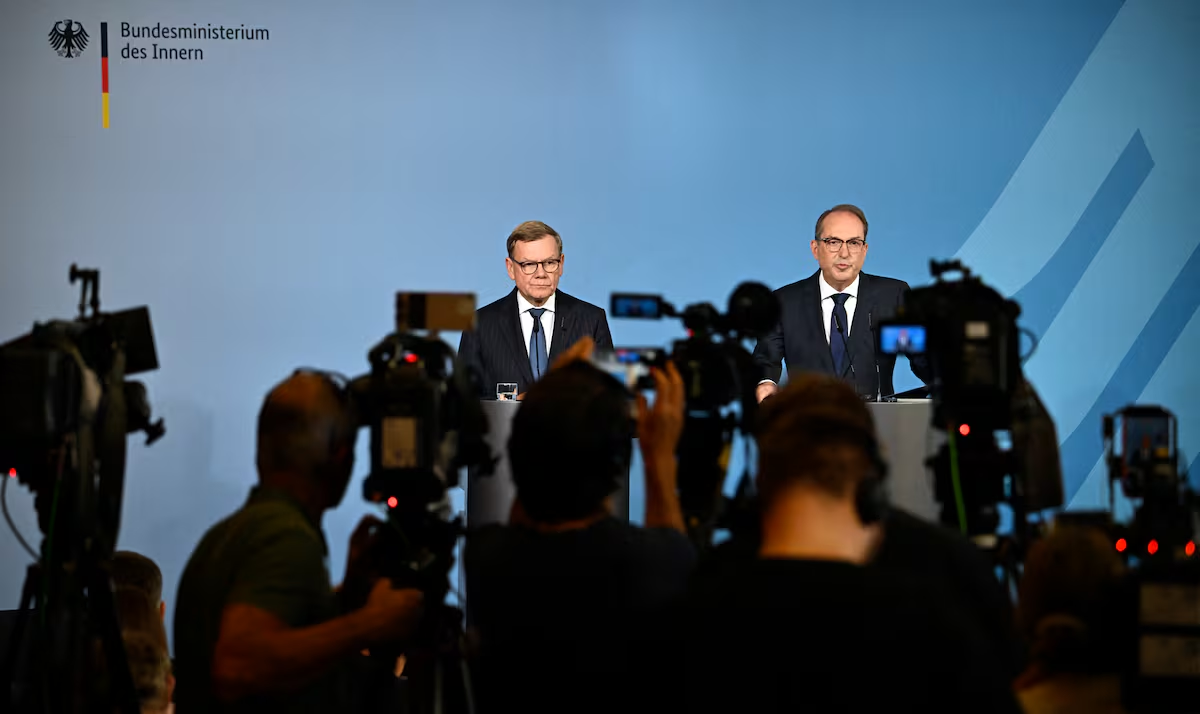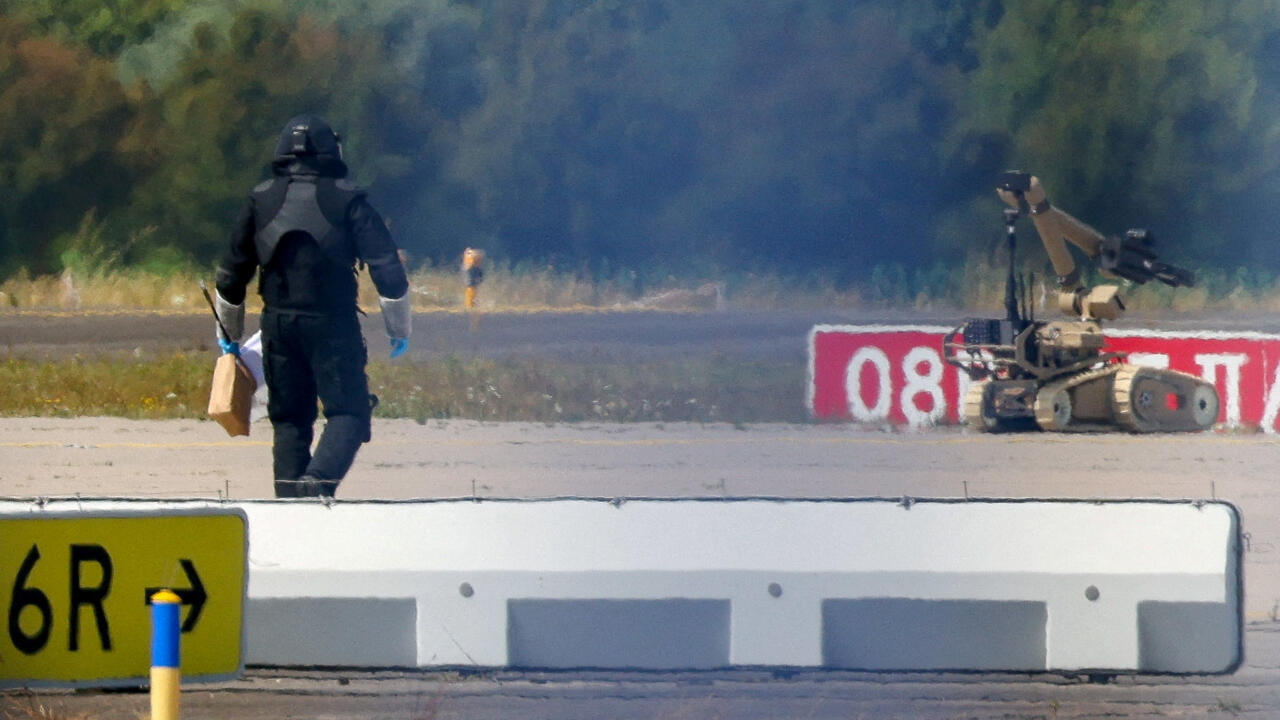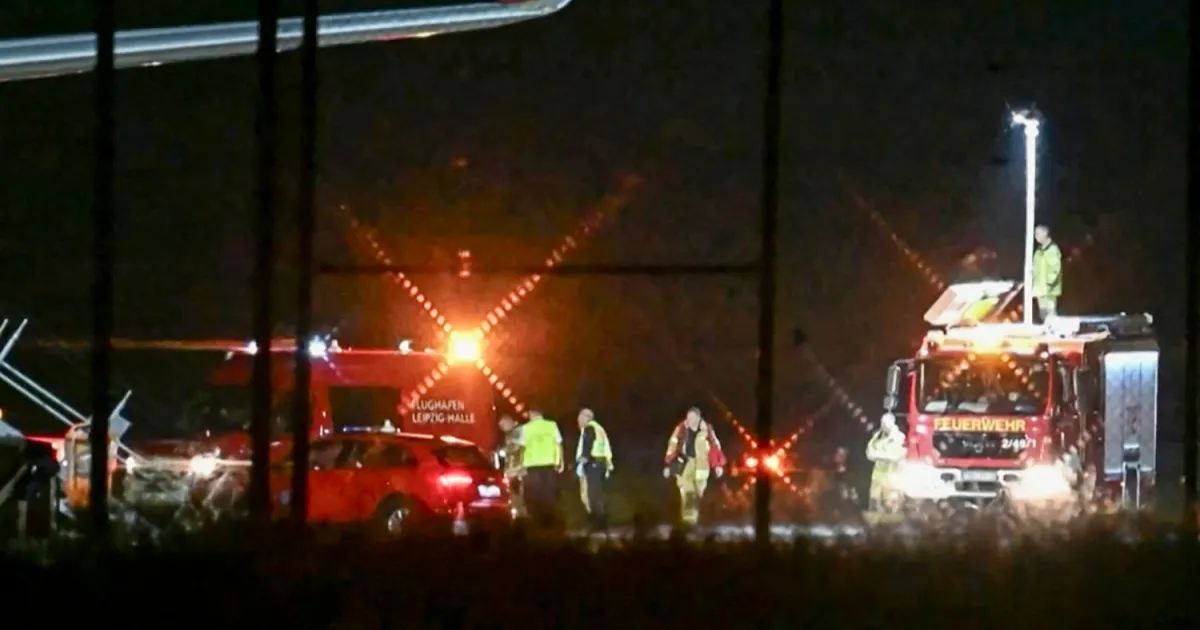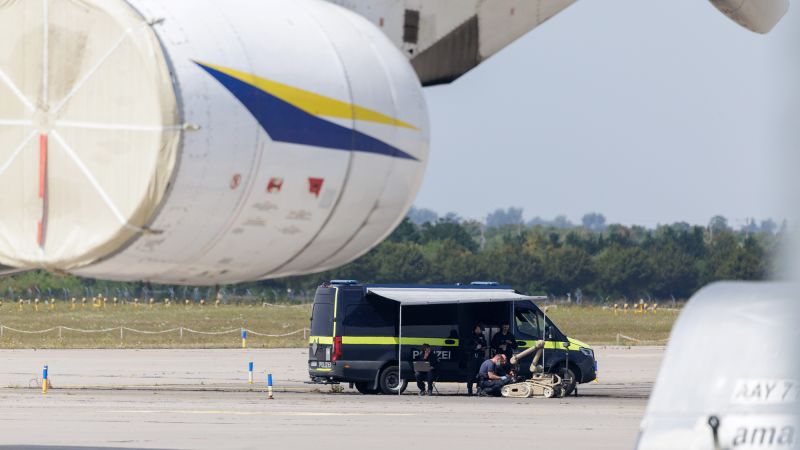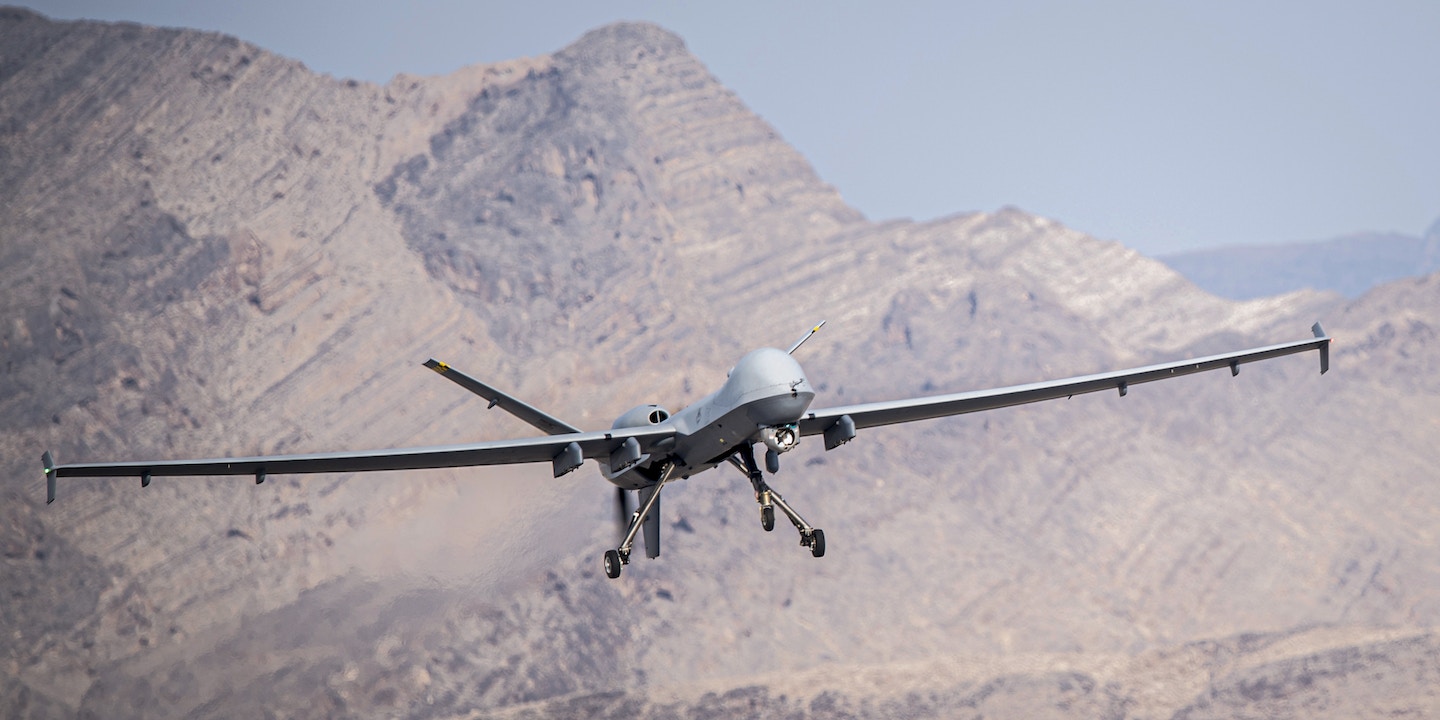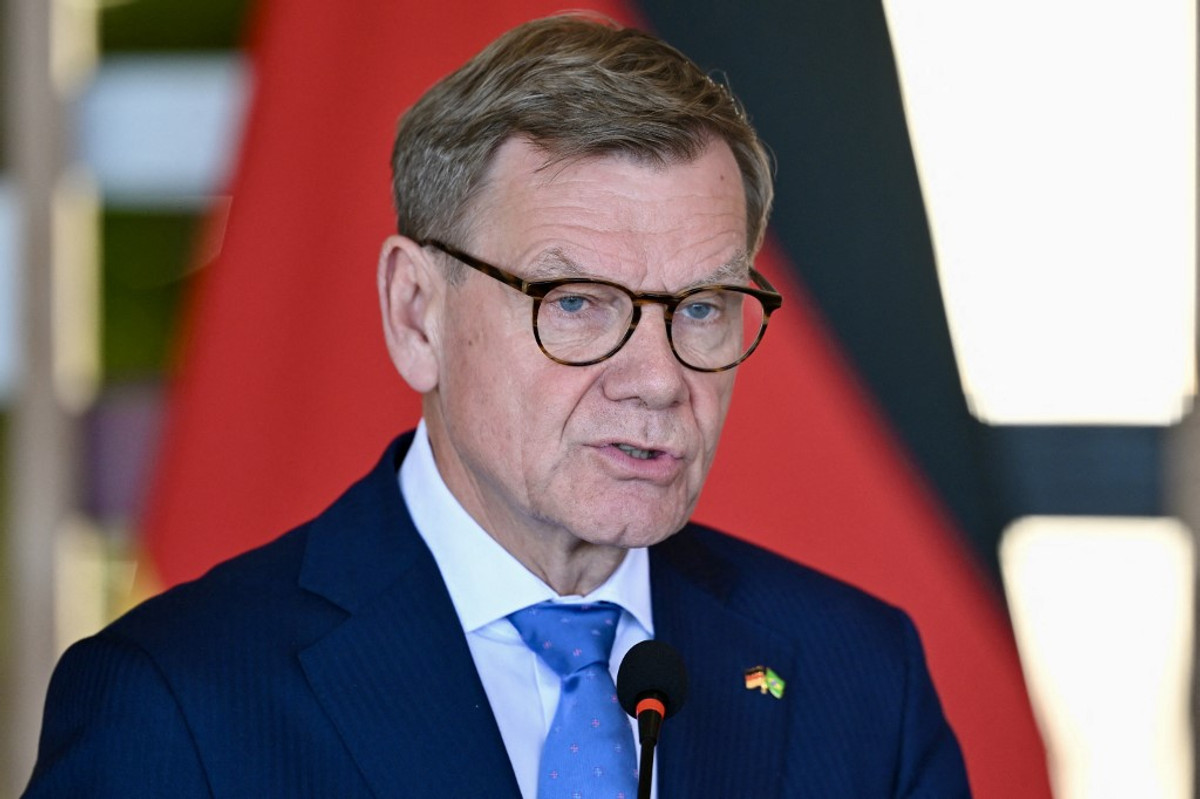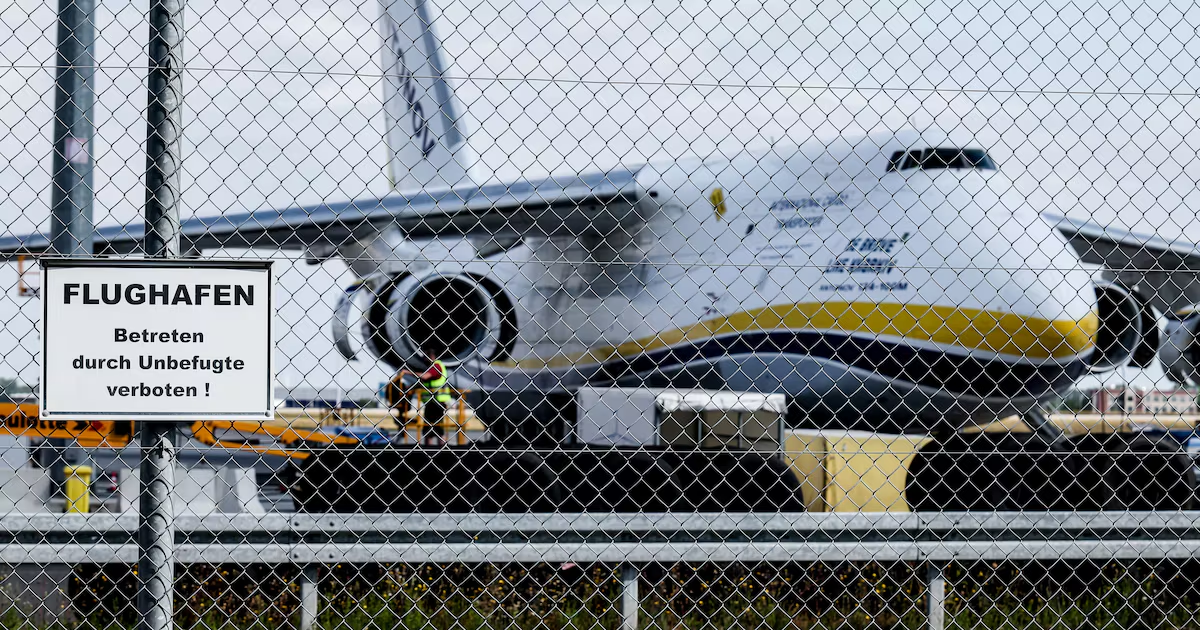
Germany has blamed Russia for last month’s failed drone attack in Leipzig and, in response, will close the Russian consulate in Bonn and a controversial cultural centre in Berlin.Tuesday’s response to the Leipzig incident came hours after a failed rocket attack on a power station in Brandenburg outside Berlin.While the perpetrators of that attack are as yet unknown, German authorities say they have no doubt who was behind last month’s Leipzig attack on Ukrainian military transporter planes.“The federal government concludes that Russia is responsible for the hybrid attack on August 4th,” said Alexander Dobrindt, federal interior minister at a press conference.He said this assessment was based on police investigations, intelligence reports and a recurring pattern of similar attacks across Germany and Europe – with further attacks from Russia likely to follow.German foreign minister Johann Wadephul and German interior minister Alexander Dobrindt after a press conference on the drone incident at Leipzig Airport. Photograph: EPA Minister for Defence Helen McEntee said Russia’s “attempted drone attack” at Leipzig airport was “part of a clear trend”.“I stand in full solidarity with Germany, and with all member states affected by Russia’s reckless and increasingly frequent hybrid attacks,” she said on Tuesday night.“Russia is attempting to divide us and weaken our support for Ukraine. It will not succeed. Ireland stands ready to work closely with our EU partners to prevent, deter and respond to this malicious activity.”On the evening of August 4th, a bus driver at Leipzig airport discovered a drone armed with explosives and a defective detonation mechanism near a Ukrainian cargo aircraft.A second drone is believed to have collided mid-air with an airborne DHL aircraft. Last week, German media reported that a third explosive drone was also discovered at Leipzig airport, Germany’s second-largest air freight hub.At a joint press conference on Tuesday, German foreign minister Johann Wadephul said Berlin’s “proportionate and measured yet resolute” response would be closely co-ordinated with other EU member states.He said the attacks would not weaken Germany’s resolve in assisting Ukraine against its “defensive battle against Russian aggression” and that the first retaliation measures would not be the last. He said he had ordered in the Russian ambassador for a meeting to discuss the closure of the consulate and cultural centre.Immigration restrictions on Russian citizens will be stepped up, he said, as would observation of Russia’s so-called “shadow fleet” of ships. “We will not allow our social cohesion to be divided by Russian attacks,” said Wadephul. “We remain ready to react along with our partners should the protection of our population require it.”While Nato and EU leaders weighed in with their support on Tuesday, security experts in Germany and beyond are already debating whether, given the scale and frequency, the term “hybrid attacks” is now an unhelpful and inaccurate euphemism.Pressure has been growing on Berlin to alter its course of restraint, with the conservative Frankfurter Allgemeine daily warning last week that the drone attack was a Russian operation and that “anyone who doesn’t say that out loud is playing Putin’s game.Prof Phillips O’Brien, head of strategic studies at the University of St Andrews, wrote on X that the Leipzig incident was a “deliberate act of war, and it is important that Germans say that”.Berlin’s shift on Tuesday ends a four-year standoff over the Russisches Haus cultural centre in Berlin, opened in the former East German capital in 1984.As well as cultural events, the centre has been accused of operating as an informal espionage centre and abusing the terms of a 2011 bilateral agreement between Russia and Germany.In response, Moscow is likely to now close Goethe Institut cultural centres in Russia.Meanwhile, police in Brandenburg say at least a dozen improvised rockets were detected at a power plant in Turnow-Freilack near the Polish border.State interior minister Jan Redmann said unknown attackers tried to fire the devices into the plant at 7:30am on Tuesday morning. Two rockets hit their target but caused only a short circuit and not a full outage.Brandenburg officials declined to comment on possible perpetrators. Eight months ago a left-wing extremist group took credit for sabotaging a substation in Berlin and caused a major power outage in the capital.
Germany says Russia was behind last month’s attempted drone attack at Leipzig airport
Minister for Defence Helen McEntee said Russia’s ‘attempted drone attack’ at Leipzig airport was ‘part of a clear trend’
690 words~3 min read