Earlier this year, atmospheric science Ph.D. student Lily Zhang published a letter explaining why she was leaving academia. She hadn’t failed. She hadn’t burned out. She had simply looked clearly at the system surrounding her work—the misogyny, the exploitation, the demand for total sacrifice with no guarantee of return—and decided it wasn’t worth it. As current and recent Ph.D. students ourselves, we recognize her story not as an exception but as emblematic of what it means to be a graduate student in 2026.
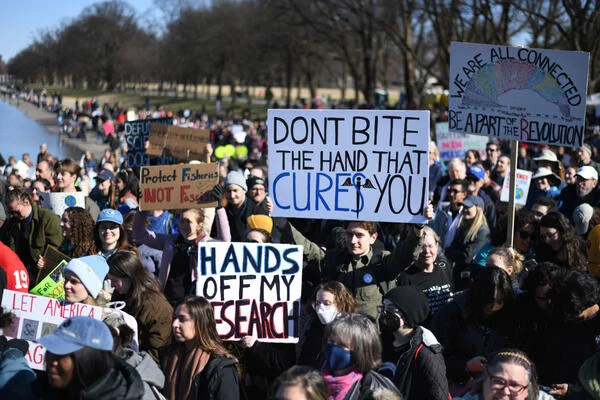
The current moment in American science is genuinely alarming. The Trump administration has doggedly attacked our nation’s top universities. The National Science Foundation’s board was disbanded this April. Federal research funding is contracting, with fewer grants awarded and widespread uncertainty about what comes next. Universities are cutting or pausing Ph.D. admissions. Postdoctoral job losses have surged nearly threefold. More than 10,000 STEM Ph.D.–trained scientists left federal roles in a single year. Those who remain are being told to develop a “plan B.” The message from Washington is blunt and repeated: Research is expendable.
But here is what that framing misses: The funding crisis isn’t breaking graduate students’ faith in academia. Graduate students had already been losing that faith for years, and the current crisis makes the problem impossible to keep ignoring.