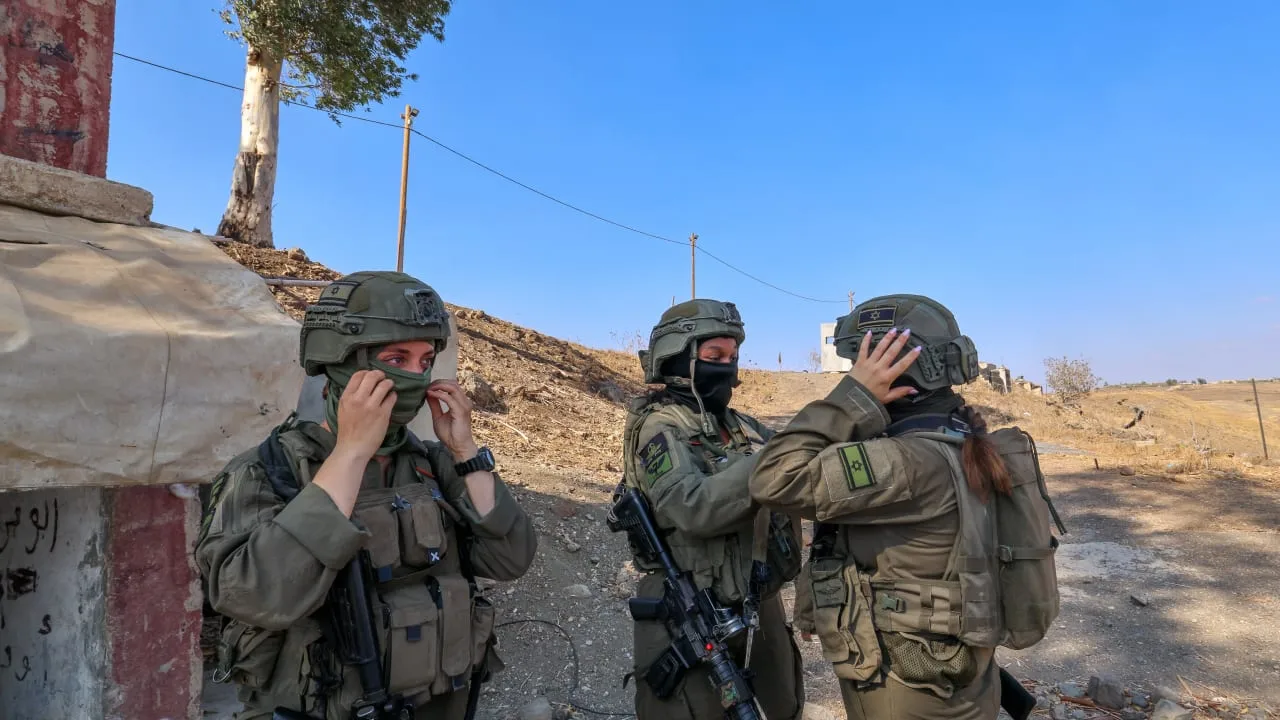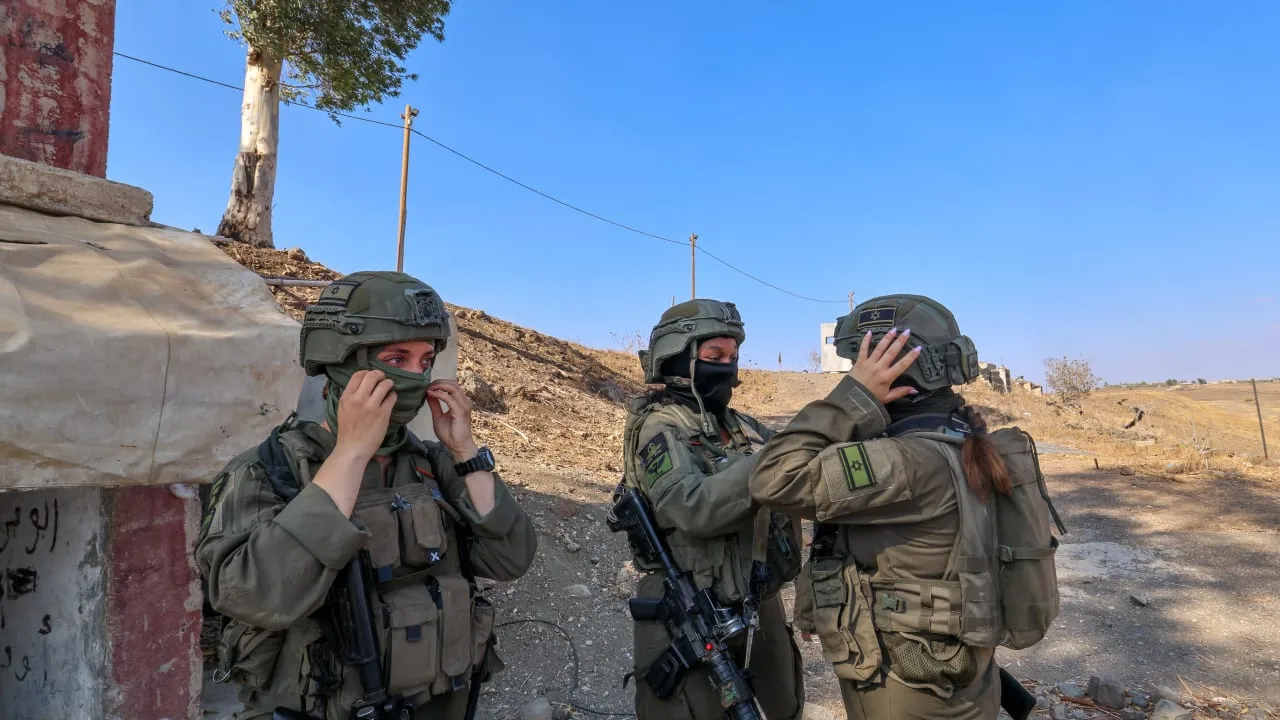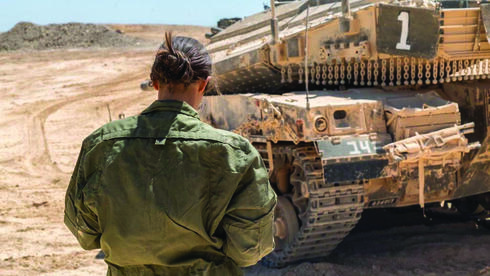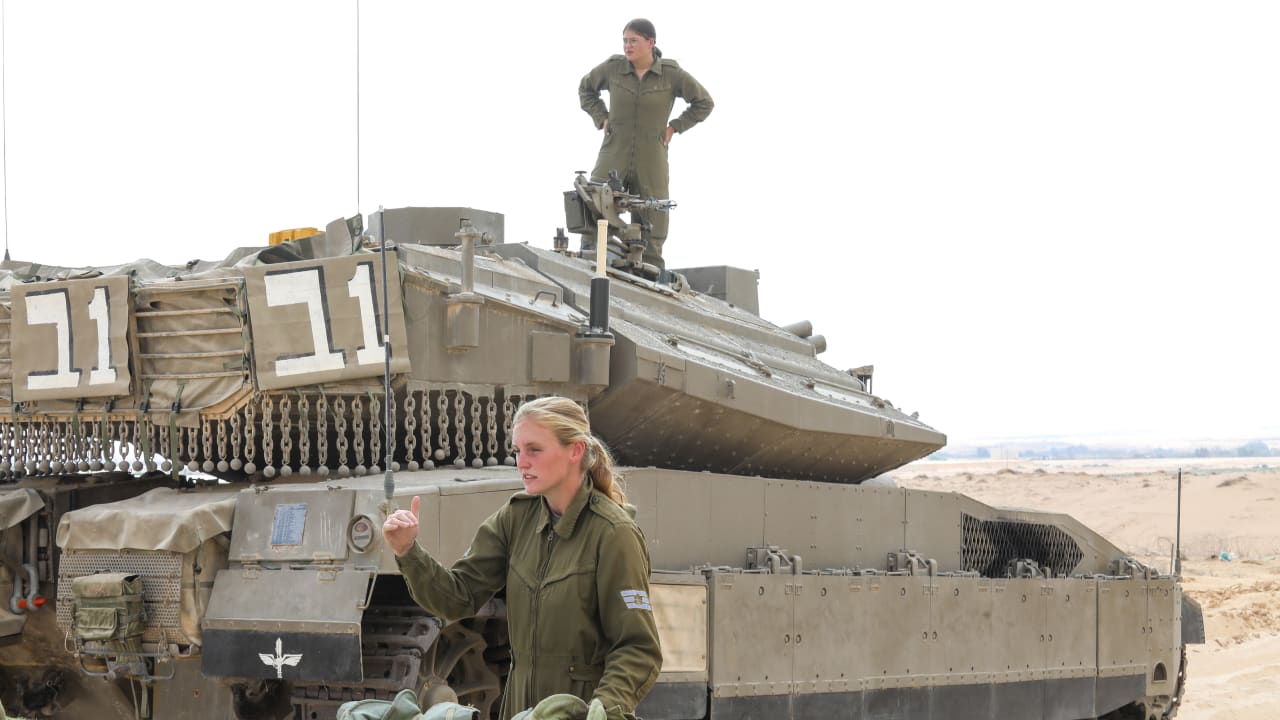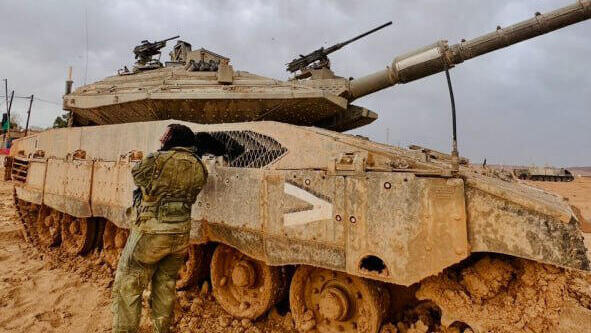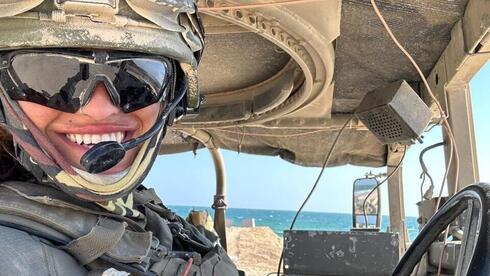
Women who met the course requirements were dropped days before training under a ‘men only’ rule, even after female combat soldiers had completed the program and served operationally during the warFemale reservists were scheduled to attend an operational driving course, but two days before the training was due to begin, they were informed that their participation had been canceled because women were not allowed to take part. A document obtained by ynet reveals that one of the course requirements was that participants be men only. Section F of the admission requirements distributed ahead of the course states that it is intended for “men only.”“More than just wanting to attend, our battalion wanted us to go as well. It was stopped two days before the course, when the guidelines stated ‘men only.’ Only then did they contact us and say we couldn’t come,” said the female reservist whose participation was blocked at the last minute simply because she is a woman.Sgt. Maj. (res.) Naama Tzadok during the operational driving course“There’s no one to talk to, we have no contact with them. It’s infuriating, it’s simply unfair. When it was convenient to call on women during the war, they knew how to call on us. Now it’s no longer convenient for them, and we’ve become unwanted.”The call-up instructions for the operational driving course for reservists require a medical profile of 82 or higher, Rifleman 03 qualification and both military and civilian driver’s licenses — requirements that female soldiers can certainly meet. Yet alongside these requirements is the stipulation based on gender.“The capabilities required for the position are no greater than those of any female combat soldier in the field,” said the reservist, who has already served hundreds of days under emergency call-up orders. “My hope is that they will give us the opportunity to take on any position that there is no reason we shouldn’t be able to fill,” she added.The ability of women to complete the course and actually perform the job is demonstrated by Sgt. Maj. (res.) Naama Tzadok. After completing her mandatory service as a combat soldier in the Lions of the Jordan Valley Battalion from 2016 to 2019, she continued serving in the reserves with a regional medical company of a southern Gaza border brigade.GalleryTzadok during the course, which she completed alongside 30 male combat soldiersIn February 2025, she completed the course in question alongside 30 male combat soldiers.“I got there because of a technical error — they thought I was a man. When the battalion commander realized they wanted to prevent me from attending the course, he insisted that I go. He said, ‘There’s no way you’re not taking the course. We don’t care — a woman can do it too.’ When they asked him what I would do in the field, he laughed and said, ‘This girl has been in Gaza more than you can imagine,’” she told ynet.According to Tzadok, “Obviously, I got some looks, like any new woman who arrives in places like these. But they quickly realized that I was just like any of them. I could get under the Hummer in any situation, get in and drive, and I drove no less well than any man. After I completed the training, I realized that the course had been designated for men only.”After completing the course, which was shortened from three weeks to two because of the war, she performed the role in the field.“People made faces, but when you’re wearing a helmet in the field, they don’t distinguish between a man and a woman. I would get calls of ‘Hey, man,’ and I would correct them and say I wasn’t a man. I’d ask what needed to be done and do it.”Sgt. Maj. (res.) Naama Tzadok during the operational driving courseRegarding the IDF’s decision to prevent women from attending the training, Tzadok said: “During the war, they had no problem integrating us. We were all working toward one goal. Now, when the pressure has eased a little, suddenly they say, ‘Oh, a woman.’ Suddenly it’s impossible. When they needed us, I was there to prove myself. But now, when they ‘remembered I was a woman,’ they decided we were only making things more difficult for them, even though that’s simply not the case in the field.”Regarding the exclusion of women from positions in the IDF, she added: “I’m not saying women should do every job. Physiologically, we are built differently. But there are positions we can do — and this is absolutely one of them. There’s no reason I can’t do it. Like any man, I managed to lift the Hummer. There were moments when I changed a Hummer tire and all the men were looking at me. Coming along and saying a woman can’t do A, B or C is a mistake. Most of the people who say that simply haven’t been in the field or in the military.”The IDF confirmed that women were integrated into the course during the war, but said it has now decided to return to a men-only format.An IDF spokesperson said: “The operational driving course was intended for infantry battalions in accordance with the battalion’s structure and organization for combat. During the war, due to operational needs and in accordance with requirements that arose from the field, the training was expanded to additional forces in the IDF. As part of this, in a few isolated cases, female combat soldiers participated in the course according to operational needs and the readiness requirements of the unit. In individual cases in which the training is required, the request will be examined and individual approval will be granted accordingly.”Regarding the exclusion of women from combat positions, it should be noted that after the IDF halted its previous trial integrating women as infantry combat soldiers specializing in operational driving, it decided to launch a new pilot program this November. However, the military has been dragging its feet on the issue and, two months before the planned launch, the IDF has yet to say whether the pilot will actually go ahead.
IDF bars female reservists from operational driving course despite wartime service
Women who met the course requirements were dropped days before training under a ‘men only’ rule, even after female combat soldiers had completed the program and served operationally during the war
1,009 words~5 min read