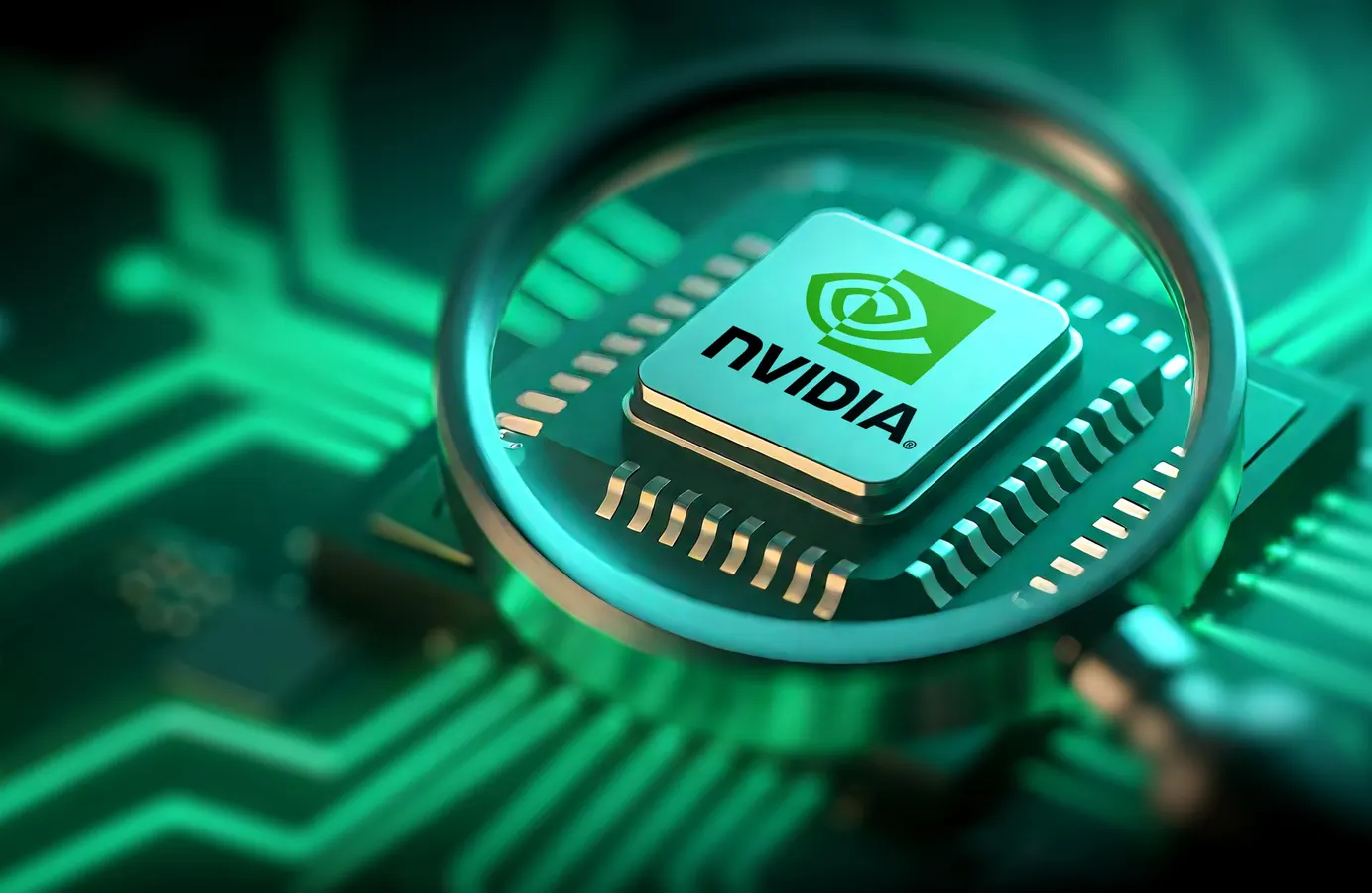
BEIJING, CHINA - AUGUST 01: In this photo illustration, an Nvidia chip is seen through a magnifying glass on August 1, 2025 in Beijing, China. (Photo by VCG/VCG via Getty Images)VCG via Getty ImagesNvidia’s newest deal isn’t about funding a chip designer. It’s about locking in the fabric that custom AI chips will have to run on. The company said Monday it will invest $3.5 billion into convertible bonds issued by MediaTek, the Taiwanese designer whose chips power much of the world’s phones, televisions, and Wi‑Fi gear — nearly the whole of a record $3.9 billion offering, the largest convertible MediaTek has ever brought to market.Alongside the money, MediaTek will adopt NVLink Fusion, the platform that gives other companies a prevalidated route to design custom AI accelerators that plug directly into Nvidia's rack-scale systems. The partnership also extends across DGX Spark personal AI computers and MediaTek's automotive line. Read together, the terms describe Nvidia buying a tollbooth on the one trend that is supposed to hurt it.Why The Bear Case Misses The PointThe most durable bear case on Nvidia has never been competition from AMD. It is the custom chip — the idea that Nvidia's largest customers, tired of paying its margins, will design their own accelerators and walk away. Every hyperscaler now runs such a program, and the market treats each new in-house chip announcement as a small defection from the Nvidia ecosystem.Monday’s commentary adds a second worry, that AI companies keep funding each other, so a chip giant handing billions to another chip designer looks like demand propping itself up. The skeptical read writes itself. It also misses what the money actually purchases.What Fusion Actually SellsA custom accelerator does not exist alone. It needs interconnect to reach other chips, networking to scale across racks and a validated system design to run in production. NVLink Fusion sells exactly that layer. MORE FOR YOUReuters describes it as the route by which hyperscalers, cloud providers and model developers build custom chips — the industry calls them XPUs — that connect into Nvidia's rack-scale infrastructure. MediaTek matters here because it designs semi-custom silicon for companies that lack Nvidia-scale engineering teams, which makes it the arms dealer of the custom chip era.The historical rhyme is x86. Intel stayed central to computing for three decades partly because it owned the platform standards, so even rival silicon ended up strengthening the Intel ecosystem it plugged into. Owning the standard mattered more than winning every socket.If the deal works, every escape from Nvidia's margins gets built on Nvidia's plumbing.The customer that swaps a GPU for its own XPU still buys the fabric, the networking and the rack. And its chip-design partner is now part-financed by Nvidia.The choice of convertible bonds is the tell. A straight equity stake buys exposure; a convertible buys protection plus exposure. If MediaTek's custom-silicon business stalls, Nvidia holds a bond. If it booms, the bond converts into equity in that boom. Nvidia structured the trade so the custom-chip era pays it twice, once through Fusion adoption and once through the conversion.That structure also answers the demand-propping worry. This money finances a supplier whose success would put more non-Nvidia chips into the world, on the condition that those chips speak Nvidia's language when they arrive. Platform companies have subsidized their edges this way for as long as platforms have existed.What Would Confirm The ReadThe evidence to watch is specific. Each hyperscaler that announces a Fusion-based accelerator through MediaTek is signing a toll agreement, not a defection. A second supplier taking Nvidia capital in convertible form would show Monday was policy, not opportunism. And MediaTek’s custom-silicon wins over the next few quarters will show whether the prevalidated route actually shortens the path to deployment, which is the whole pitch.The bear case assumes the moat is the GPU. Monday's deal shows Nvidia acting on a different belief, that the durable moat is the fabric connecting whatever chips win. For investors trying to price the custom-silicon era, the useful question is no longer who designs the accelerator. It is where the toll sits.
Nvidia Turns $3.5 Billion MediaTek Deal Into A Toll On Custom AI Chips
Nvidia’s $3.5 billion MediaTek deal positions the company to control the infrastructure behind custom AI chips, turning the shift to custom silicon into a toll business.
677 words~3 min read