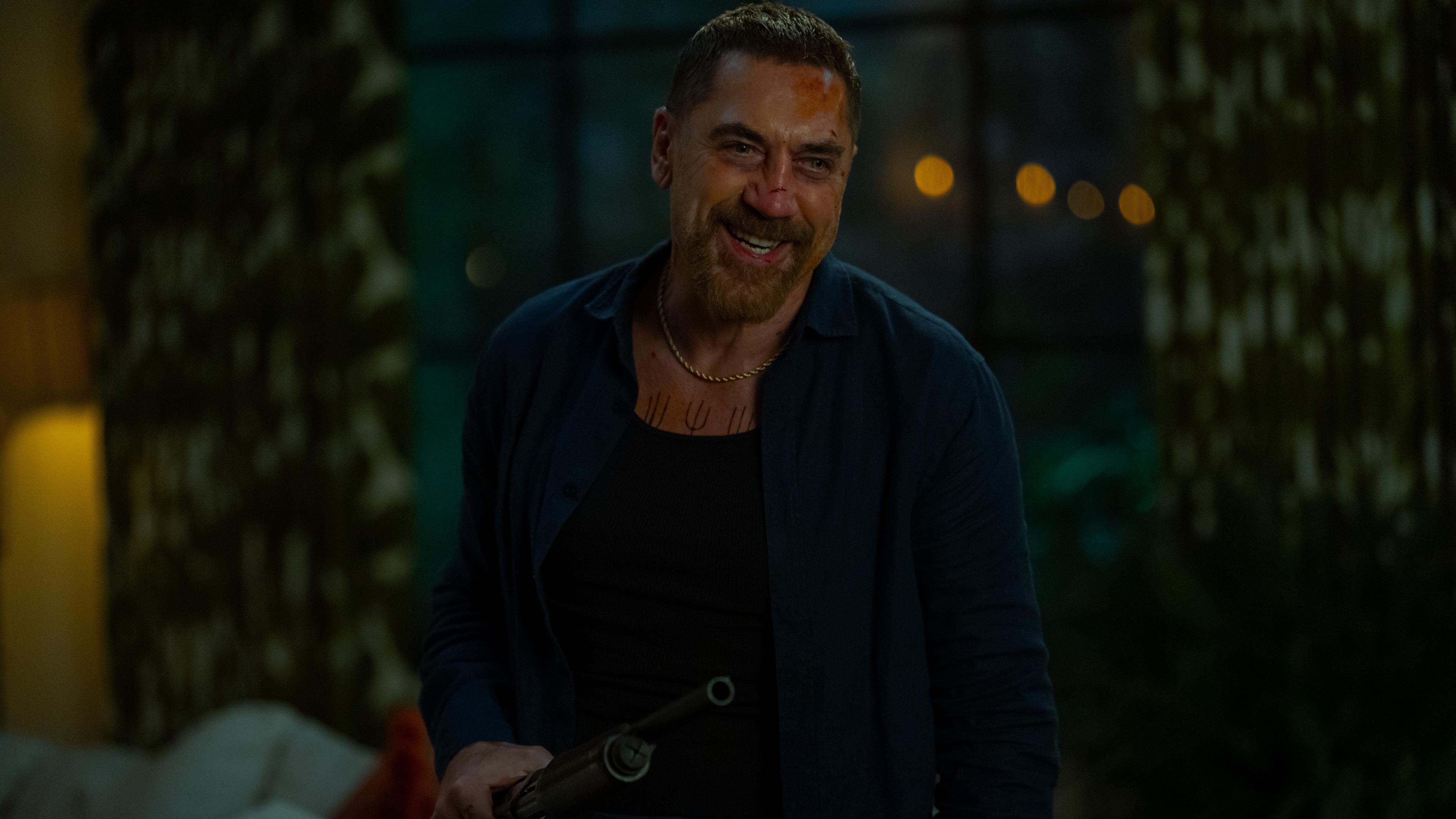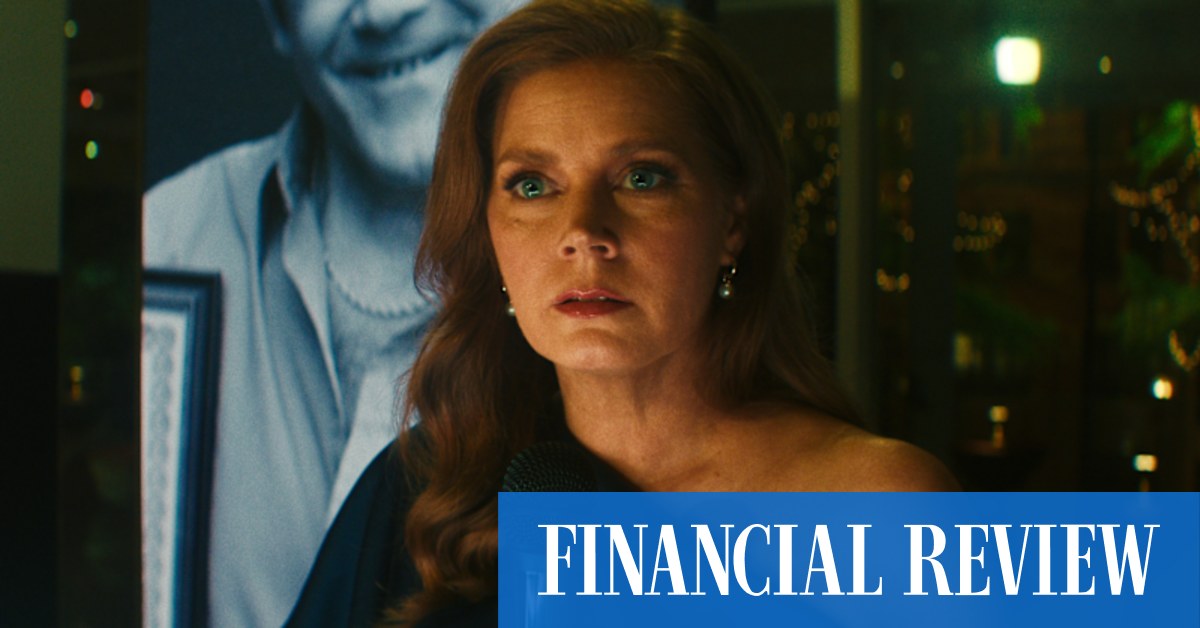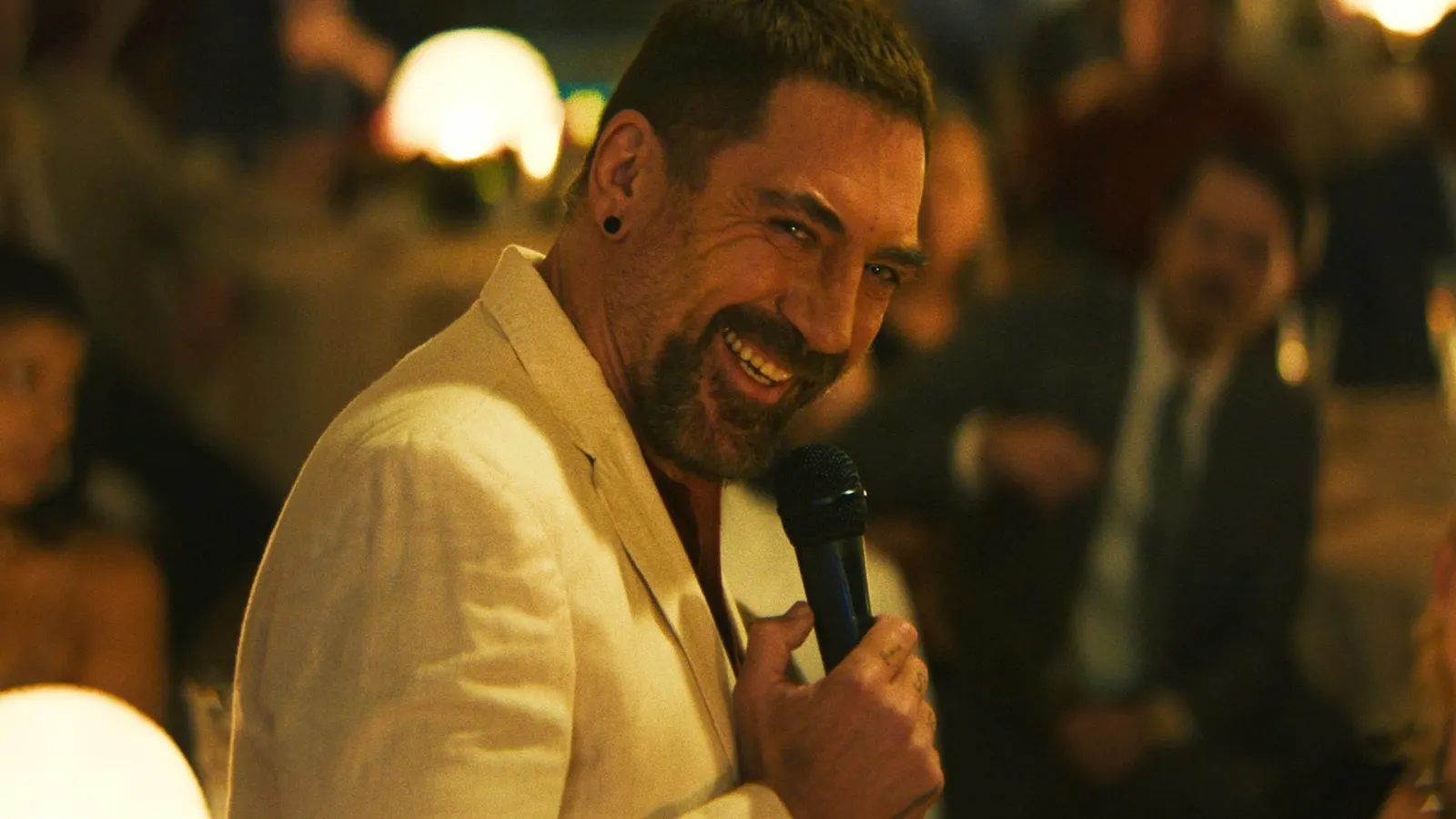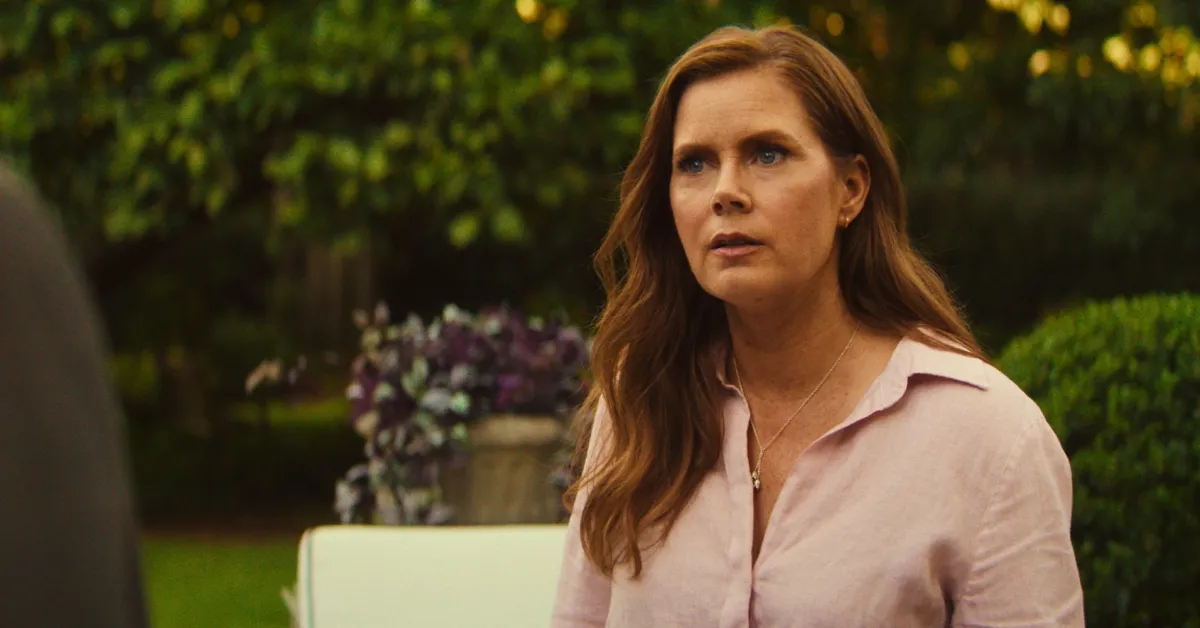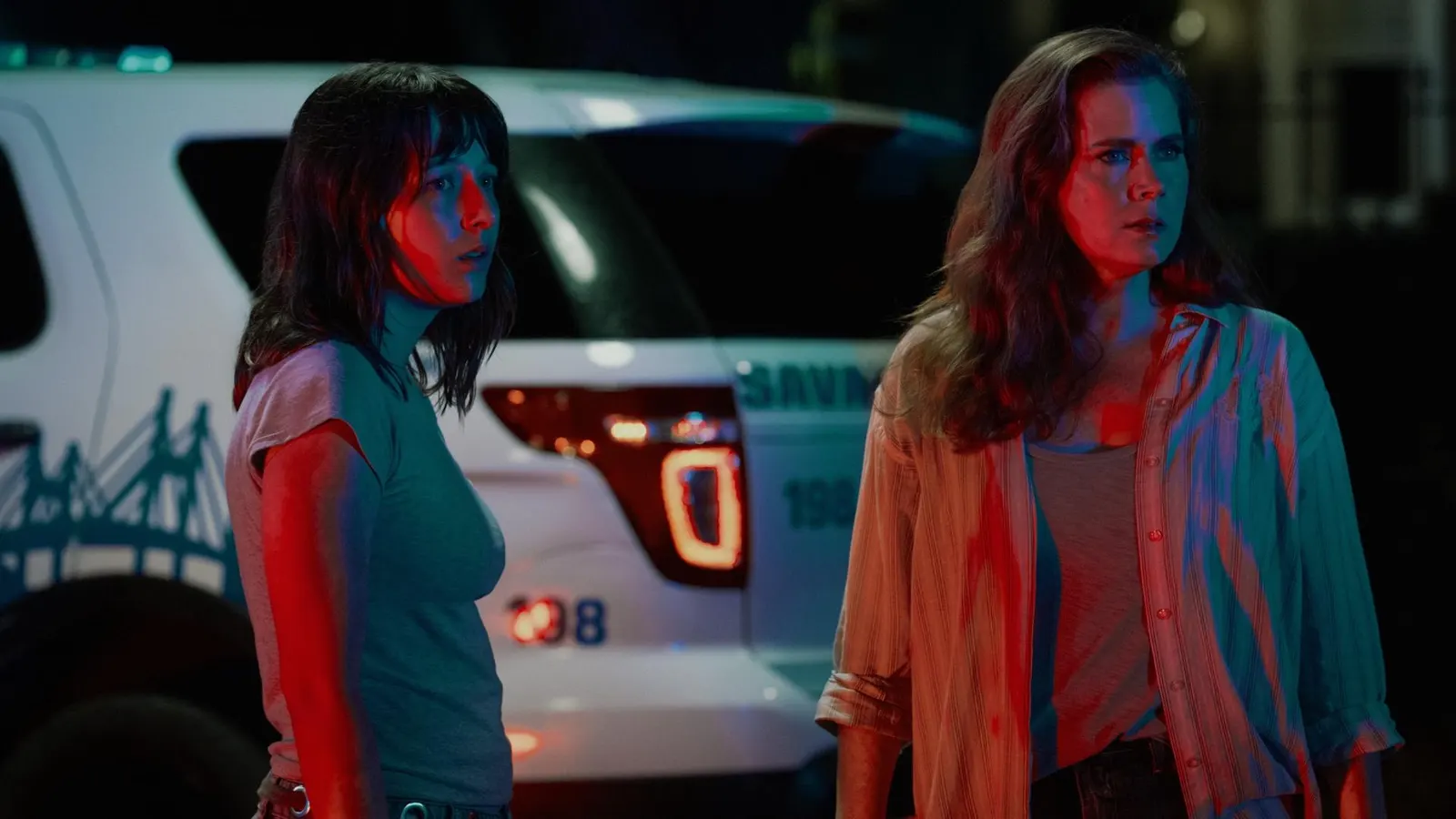
Lily Collias and Amy Adams star in "Cape Fear."Source: Apple TVSavannah in late spring hides nothing. The greens arrive lush and various, the skies go flat blue, the flowers pop brightly, and the sunlight falls hard and stays there. Celiana Cárdenas photographed five hours of Apple TV’s mesmerizing and brilliantly realized Cape Fear in that light, and what she wanted out of it was a trap."They're trapped in this beautiful world, but it's a trap," she told me. "It's feverish. Hot. It's sticky, humid reality."Forbes‘Cape Fear’ Rotten Tomatoes Reviews Say Fear Remains Intact In RemakeBy Tim LammersThat’s the challenge this latest critically acclaimed Apple TV project handed to its cinematographers. Cape Fear wants the sensibilities of noir, and noir runs on concealment, on shadow and withheld knowledge and people who know more than they’re saying. But this version takes place in daylight, in a gorgeous city built to be photographed, with characters who carry cell phones and post to social media and record one another constantly. Nothing in it is hidden, and this time that’s precisely where the menace lays in wait.Cárdenas (AMC) shot episodes two, four, six, eight, and ten, alternating across the season with Eben Bolter (ASC, BSC) who shot the odd-numbered hours. Cárdenas’ half of Cape Fear carries the black-and-white prison flashback, the episode six sequence in which the Bowden family unwittingly drinks LSD, and the series finale (which is titled "The Executioners," after the John D. MacDonald novel all three screen versions come from). The season’s photographic baseline was an Alexa 35 with Atlas Mercury anamorphic lenses at 2.35:1, but her episodes break that baseline on purpose.Cárdenas trained as a director of photography at the Centro de Capacitación Cinematográfica in Mexico City, shot both seasons of Diggstown and earned a Canadian Screen Award nomination for it, and won the Borsos Award for cinematography at Whistler in 2019 for The Cuban. Cape Fear is her third series with creator Nick Antosca, after Brand New Cherry Flavor and A Friend of the Family.ForbesInterview: ‘The Pitt’ Simran Baidwan On Care And Grace Under PressureBy Mark HughesI had the honor of speaking with Cárdenas about photographing Cape Fear, as she worked through how a bright, wet, over-photographed Southern city became a place of dread, what black-and-white had to accomplish amid all of that color, why the camera eventually stops observing the family and joins them, and where the camera chooses to stand when it views a young woman the community has already condemned.Cárdenas shot in Savannah before, on A Friend of the Family, so she knew what a Georgia spring and summer would provide, and also what it wouldn't. Hard light and color aggressive enough to resist any attempt at gloom and traditional noir. So she and Bolter stopped expecting the sky to help. Production designer Jamie McCall gave them a Bowden house with dark walls and rooms still under construction, a space whose geography you can never quite get a hold of in your head, and Cárdenas photographed it as a labyrinth. Wet-downs went in even during bright daylight, so the cars and the streets stay slick and the actors' skin stays shiny with heat. The dread migrated into negative space, into the edges of the frame where something might be moving, and into ordinary rooms the family gradually loses the ability to understand.This escalation transpires through the camera itself. Episode one watches from a distance, the way an animal watches. By episode two, directed by S.J. Clarkson, the camera has closed the gap and started to move in, with whip pans and dolly zooms and rack focus that speak to Martin Scorsese's 1991 film adaptation. By the middle of the season it has stopped being merely a witness. "The camera now starts becoming also a character," Cárdenas explains.ForbesHillary Fyfe Spera Helped Turn ‘Daredevil’ Into Street-Level Resistance StoryBy Mark HughesAs the Bowdens lose their hold on their house and each other, the framing goes with them, all canted angles and disorienting approaches to rooms the audience thought it knew. Then comes episode six, where Cárdenas and director Trey Edward Shults abandon the objective camera altogether in favor of handheld, change the shape of the frame, and put the audience directly inside the family's perception. "We're not looking from afar," she said. "We're with them."Cape Fear ran nine directors across ten episodes. That’s a whole lot of different creative visions for one show to hold, and it leaves the cinematographers responsible for keeping the series recognizable as a completed whole. "We become the guardians of the visual language," Cárdenas said.Forbes‘Ted Lasso,’ ‘Widow’s Bay’ And ‘Severance’ Get Expensive As Apple TV Raises PricesBy Paul TassiCape Fear - The InterviewWithout further ado, here is the first part of my extended conversation with Cape Fear cinematographer Celiana Cárdenas…MARK HUGHES: Thank you for taking time to talk to me. I loved the show. I was struck by how Cape Fear doesn't treat its history as something simply to reproduce. It feels as though the series is in conversation with the 1962 film, Scorsese's 1991 version, Southern Gothic horror, noir, and a very contemporary sense of paranoia. I wanted to begin with how you found your own visual way into that.CELIANA CÁRDENAS: Absolutely. As you probably know, I did the five episodes -- two, four, six, eight and ten. One of the things that I think was very important for all of us as a team, and as a concept of the series and the aesthetics of the series, is how the horror, the paranoia, starts progressing. Of course we took some things from both films, the 1962 and the 1991. What we really tried to do was grab the spirit of the film of 1991, right?So saying this, it was the question of how we can do this. As you probably noticed, in episode one we are more about-- it's the animal, in a way, right? Hunting. It starts moving into the prey. It starts looking and searching.By episode two, that is the episode that I did with S.J. Clarkson, we went in a different direction. We make an homage to some of the shots that Scorsese did in 1991. We wanted to start feeling how this starts destabilizing the mind of our characters, right? The hunting and the looking from far away to the prey is now getting closer, and the camera now starts becoming also a character.And so we start introducing some movements that Scorsese did in the movie in 1991. We start doing whip pans, dolly zooms, rack focus, whip focus. We start doing a lot of movements to show this kind of game that he starts making into the mind of the characters.And another thing that was introduced in episode two is this flashback in black-and-white. This flashback is when we as an audience see for the first time the capacity of violence that Max Cady has. We see him brutally kill two or three inmates in the gym of the jail.How were we going to do this, and also go into black-and-white after seeing all the colorful, saturated world that we created for the Savannah world? I went into, "What if we do a black-and-white that is very stark? Very overexposed highlights, but blacks that are deep?"And also, I don't know if you remember, but in the 1990s, early 2000s, we started using this treatment in the negative when we used to shoot in film called bleach bypass. So the bleach bypass would allow us to create this desaturation in the color.But I thought, "Why don’t we do it in black-and-white?"I just couldn’t do a black-and-white that was very subtle, because the color was so vibrant and so alive that the black-and-white, for me, had to be something similar, that it didn't feel that suddenly you are in another world.MH: Right.CC: So when we proposed it to Nick [Antosca], the showrunner, he was like, "I think I love it," because it was something that was just happening, Mark, as we were shooting. So we created a lot in the moment, and then of course in the color timing we refined the kind of idea that we had.And I think from the 1962, also in episode four, for example, we homage some of the scenes there. The treatment that we did also to Max Cady was very similar to the 1962. It’s more psychological. It’s less camera moves and everything, but it becomes more psychological. In episode four, the shots linger in the tension. So that's the kind of thing that I can come right now to your question about how we took these two movies and created this series.Also, one of the things that I think is very different from these two movies is how Nick introduces social media. How he introduces the young characters, who now depend on this, and how much these video games, phones and social media can-- I think it plays a big part of this new adaptation of Cape Fear.MH: I really appreciated how fluidly the series incorporates news, social media and multimedia. It never draws attention to itself, it just feels embedded in the world.You mentioned the black-and-white, and that leads into something I really love about the way the show handles noir. Classic noir often depends on concealment, on shadows, secrets, compromised people, the sense that somebody is withholding what they know. But this Cape Fear exists amid phones, social media and endlessly reproducible images, and Savannah itself is bright and colorful.How did you translate noir’s older visual logic of hidden knowledge into a world where the danger can come from too much visibility, where everything they’re doing is captured? Even Cady, his sister has him on camera. It's like everybody is privy to it.CC: Everybody. Exactly. Yes, you're right.I have shot previously in Savannah. I did another series with Nick called A Friend of the Family. So when he said it was going to be during the spring-summer time in Savannah, we knew that we would be -- Eben [Bolter] and I -- facing hard light.Also, the colors are incredible in that time of the year. The greens are so lush, and you have so many different kinds of greens. Also the color of the flowers, the blue skies, et cetera. So everything was like, "And now how are we going to do noir here?"But at the same time, if you notice, the house where the Bowdens live was created to create the noir without us trying too much, because it had very dark walls. It had parts in the house that are in construction, so you always have these hidden places where somebody can be looking at us, or somebody can be there. So the house felt a little bit like a labyrinth sometimes. You don't quite know really well the geography of the home, so we could play a lot with that.It was always something in the darkness, in that part that you don’t-- you feel that it’s not light. That’s where we, too, can approach it in that way, thinking, "Well, if the days are going to be in bright light, and our enemy, let’s say, is not going to be hidden in the shadows, he's going to be in the sunlight, then what is hidden? What is looking at them?"I think Brian De Palma makes it so masterfully, this voyeurism that you always feel like you have to look behind your shoulder. And we wanted to play with that too.So I think with all this going on and the house, of course, thanks to our amazing production designer, Jamie [McCall] -- Eben [the other DP], the pilot director [Morten Tyldum], Nick the showrunner, and I were invited to the conversations about how this house, and how Savannah itself, starts becoming a trap. They're trapped in this beautiful world, but it's a trap. It's feverish. Hot. It's sticky, humid reality.I don't know if you noticed, but even in the bright daylight we have a lot of wet-downs. Everything is wet. The cars are wet. It's the feeling of this storm that is coming, or maybe just passing. So we wanted to use it also as a motif in every element that we could have.In the skin, in the actors, probably you noticed that, very different from other series, it’s not so opaque. It’s shiny. You can feel the sweating, the humidity. And it’s just everything, Savannah and the houses start closing walls and start becoming this trap. So that's how I think we approached it.And also in framing, we play a lot with the negative space in the frame, allowing that the eye sometimes feels something, a little something moving in the darkest part of frame. Then suddenly your eyes catch maybe just a silhouette moving or a shadow moving. So we play with that a lot too.I don't know if this answers your question, but that's how we approached it, knowing the circumstances that we were going to play with.MH: Definitely. I hadn’t really thought about that in relation to this question, but I remember watching it at one point when we’re going into the attic, back and forth through the series. The attic and the kitchen are two locations they end up in a lot, but I noticed that when we would come into it, it would be a different angle. You weren’t repeating the same shots and the same angles, so the same place would seem different, and you weren’t oriented to it, so you were like, "wait, where are we?” for a minute. Even the geography within the same locations in the house became something where it took a minute to orient yourself, and it was so clever. In particular, the attic is where I really noticed it and was like, oh man, you feel so disoriented. It's just the kid sitting in the attic, but even that can be disorienting because of how you were shooting it.I also love that sense of humidity in the air. Obviously from my accent, I’m from the South, and where I lived it’s very humid. When you’re outside, everything has either a gray tone or a blue tone, and there’s that constant sense of wetness and moisture in the air. Even when there’s not, it kind of feels like it anyway, and you really captured that so well, which then fed into, for me, the noir, you are pulling so much noir into this with the setting and the natural landscapes and the house and everything else. It was just very impressive to watch and to see it play out like that.CC: Yeah. I think also it would have been easier to do it if it was all night, and we were playing all the time to make these very deep, clean shadows.But I think this gives us an opportunity to explore the thriller-horror in a different approach, with different eyes, in a different way. And I think it worked. I think, Mark, it worked.And what you talk about with the house, and mostly the area that you’re talking about, it was also part of the plan. As they start getting, again, destabilized in their mind, everything starts shifting too. Everything that looked very perfect, settled, controlled, control is what they start losing, right? Controlling their environment, controlling themselves, in their thoughts, in their feelings, the lies, the secrets. So everything starts destabilizing.And in our part, Eben and I as the DPs, we start going into different languages, how we approach canted shots sometimes, dolly zooms. Sometimes it was just the way that we framed things differently to help give this idea of how their minds start playing games on them, and games between each other. They start being against each other. They start not recognizing each other. So that was the plan.MH: And that disorientation leads beautifully into episode six. Most screen depictions of hallucinogens reach for cartoonish distortion, and they ring false. This sequence felt perceptually honest.What fascinates me is that you worked the change through the optics themselves, shifting lenses and aspect ratio against the show's anamorphic baseline. What was it about the character of the glass and the shape of the frame, rather than an effect laid on top, that let altered perception read as true?CC: Yeah. When the director, Trey Edward Shults, who is the director of episode six, and I were looking at these scenes, the scene where the whole family has drunk acid in the iced tea, we went in like, "I don't want to go into the cliché of distortion, and then use the Lensbaby."When I read the script, I went to Trey and I said, “Trey, tell me if I’m wrong, but I feel that this is internal to it.” It’s something internal starts coming up. They start seeing different things, but it’s not about, "Oh, I’m seeing colors." No, it's about how suddenly things that they have hidden in themselves start coming out.But also, we have the element of the air conditioning being broken. So they are with heat. They're hot, they're sweating, all that kind of thing that I think is like a nightmare feeling that I wanted to give.And then I said to them, “What if we change the aspect ratio?” What if we go from 2.35:1, which is the aspect ratio that we have, because the Atlas Mercury have a squeeze that is 1.5. So instead of giving us the 2.39:1 normally in anamorphic, this will give us a 2.35:1. And we go to 1.85. Let's go to something more vertical, less horizontal, and also the feeling we can change it.So I proposed to Trey the Super Baltars. The Super Baltars are very creamy, soft, a different feeling from the Atlas Mercury. So he loved it. I presented to him a test, and he's like, "Celi, do it. We go."And then, crazy as I am, I went like, “But I want to feel the heat. I want to feel the hot environment that they’re in.” They’re also helping them to kind of, like when you relax and you start just-- [mimes extreme relaxation and relief].And I’m like, “I’m going to flare the lenses.” And I had this light. I started flaring the lens with this kind of, it starts with bluish, and then went into yellow, and then I finished with orange. And it’s just me, just flaring at the moments that I felt it was right. And that's how we did it.And incredibly enough, it works so well, Mark, because it happened the same to me when I saw it all put together. I was like, "I’ve never done acid," but the feeling that I was hoping to get with what the characters were going through, I think it works so well. I was proud. I was proud of that moment, because everybody remembers that part of the episode. For some reason, that's what people are like, "But that acid trip!"And I, like you say, I think the characters and the ideas and the camera-- and also the camera, we introduced for the first time handheld. We took the stability of the Steadicam and everything. We went handheld with them.And also we became subjective. It was not an objective camera for the first time. We’re not looking from afar. We’re with them. It's a subjective, internal trip. So that's how we did it.MH: I won’t say whether I've done LSD, but it felt remarkably true to the experience, including the terror of realizing you've been dosed while also being unable to stop laughing. That sense of perception collapsing inward was exactly right. You nailed it.CC: Good. Thank you.MH: You mentioned Brian De Palma, and when I saw Scorsese's 1991 Cape Fear, I remember thinking how much visual territory it shares with De Palma and that whole subjective-thriller tradition.I also kept thinking about The Night of the Hunter, not as a literal source necessarily, but in its Southern Gothic sense of a predatory adult entering a family's domestic world. Was that film part of the visual conversation?CC: Of course. But definitely it was an inspiration, yes.MH: That makes sense. There's a thematic connection as well. The Night of the Hunter is remarkably progressive in the way it thinks about women, social judgment, sin and the Adam-and-Eve imagery that the preacher weaponizes.Cape Fear touches some similar territory, so I was interested in how that Southern Gothic or Expressionist tradition and its nightmare logic shaped the series visually.CC: I think it was a very important inspiration, definitely.I can tell you something that was also incredible about this, and hard at the same time: We have nine directors in ten episodes.MH: [Laughs.]CC: So each director, and we have great directors all over the series, tried or wanted to make their vision of that episode. But also they knew very well these movies. Everyone.I used things from Taxi Driver, The Night of the Hunter. I used so many references. Again, Brian De Palma, Body Heat, Hitchcock. So every one of them had different ideas, which was a lot of fun, a lot of fun to put into practice.But also, when you have so many people, so many directors, the DP is kind of-- we become the guardians of the visual language. So we could guide them too, to certain ideas that they have, but sometimes we have to say, "Well, this is not in our language, but let's go over here."And definitely, all these movies were big, big, big inspirations for us.Also, funny enough, the feeling of the heat. I remember Do the Right Thing, for example, for me was a big inspiration of how that movie made me feel. The heat, the sun always present. The spaces always felt hot and suffocating, and I like that. That's why you need to go outside, right?So definitely, what you felt, you're right. And that was, of course, one of the biggest inspirations to do the show.MH: We haven’t really talked about your formation in Mexico City and the CCC [the Centro de Capacitación Cinematográfica]. You’ve worked alongside the generation of Emmanuel Lubezki and--CC: Rodrigo Prieto.MH: Prieto, and I’m probably mangling this-- Grobet?CC: No, don't worry. Xavier Pérez Grobet.MH: Xavier Pérez Grobet. Mexican cinematography carries its own deep tradition of Expressionist light and moral dread, Gabriel Figueroa above all. Did any of that tradition travel with you into Southern Gothic?CC: Absolutely.I think we’re a culture that is very rich visually, right? The muralists also, Diego Rivera, [David Alfaro] Siqueiros, but also all our pre-Hispanic art that we have.And funny enough, if you have come to Mexico City, you could understand how this city is very challenging at the moment of framing, because it has contrast with color, but contrast in architecture. It's a lot of things.For some reason, now that you mention it, I was looking the other day, and in film, the position that is more exported from Mexico is DPs, directors of photography. And I think it has to do with that. Our education, our eyes.My mother was a sculptor and a painter, for example, so my closeness to visual art, it was at home. My mom was there. I used to go with her as a kid, when I was six or seven, and we used to go to the art school. You know how they put the people into these rotating tables, so they're drawing and they turn, so they see the contrast and the volume in the body?My sisters used to be running around all the room and everything, and I would stay and look at how my mom would translate that into the paper, and see how the body would change with the light. And I was six years old.So it’s something that always got to me. Everything -- color, texture -- it's always something that attracts my attention.And I went to the CCC from 1987 to 1992. And I didn’t know, Mark, that I was going to be the first female DP graduating from the CCC, right? And for many people, I'm considered the first female DP of film in Mexico because of my career.But I can tell you that if it wasn’t for El Chivo [Emmanuel Lubezki], Rodrigo Prieto, Xavier Pérez Grobet and many others, I couldn’t be here talking to you. Because I couldn't work in Mexico because I was a woman, and the union didn't accept me.So thanks to them -- El Chivo and Xavier, a friend of mine since I was 14 years old, before we were filmmakers -- thanks to them allowing me to be their camera assistant and allowing me to become, in a world where it was not possible and not normal to see a woman.It was very funny to me that I collected American Cinematographer since 1987, and I couldn’t find a reference. I couldn’t find [one]. And then I'd find articles this big with Ellen Kuras, for example, and [others] I forget right now, but I had like three or four female DPs.But I didn’t have pictures of them. So I didn’t know how to behave, what to do. So my friends were my reference. And I have to tell you, I had very good references, because they're lovely people.And I learned with them that, through all the mistreatment that I suffered and all the ugly things that happened to me during my career, I learned that there is a different way to lead people. And it’s through love and respect. And that's how I make people feel respected and human and creative and collaborating.So that’s, I think, I'm very thankful to the teachers that I had, in a way.MH: That’s a wonderful answer. Congratulations, but also I'm sorry you had to endure that kind of exclusion and mistreatment.[That] actually leads into one last question… I wanted to ask about photographing the women, and the gaze.The series routes a lot of its perspective through the two young women, the Bowden daughter and Cady’s daughter, and both get branded and judged by the people around them. When you photograph a young woman whom a community has decided to condemn, does the camera join that judgment or refuse it? How do you use light, proximity, and whose point of view the frame adopts to place the audience?CC: Yes. I think one of the things that we wanted to do with both, it was about: Don’t make a statement about somebody because you don’t know what is behind their story. You didn't know the father that Anna [Bowden] had. You didn't know that she was an alcoholic. You didn't know that she suffered abuse. You don't know.So it was also this beautiful woman that lives in a perfect life, in a perfect house. It had all this inside her. And I think Anna, at the end, fights not to be defined by others, but defined by herself. Her strength, her virtues, they come because she makes them happen, not because somebody gave it to her.That's, I think, for me, one of the important things that I discovered with her.And for me it was how, yeah, the camera, the angle, the shots. If you notice, we’re very respectful in the sexual scenes with women. We don’t show any violence in a way that can be offensive. We did it because it was necessary for the character, but not because we needed to show it.And I think respectfully, and giving them their power, I think that was one of the things that was important to me: to define who they are by themselves, not by a society, not by the husband, not by the kids. Because we can be all that, but we’re also us, we’re individuals.Thank you to Celiana Cárdenas for taking time to speak with me about her work on Cape Fear. My conversation with her continues in the second part of this interview, which publishes later this week.
Cape Fear Cinematographer Celiana Cárdenas Talks Noir Without Shadows
How Cinematographer Celiana Cárdenas, whose work on the series includes a black-and-white prison flashback and an acid trip, turned Savannah into a trap.
4,652 words~21 min read