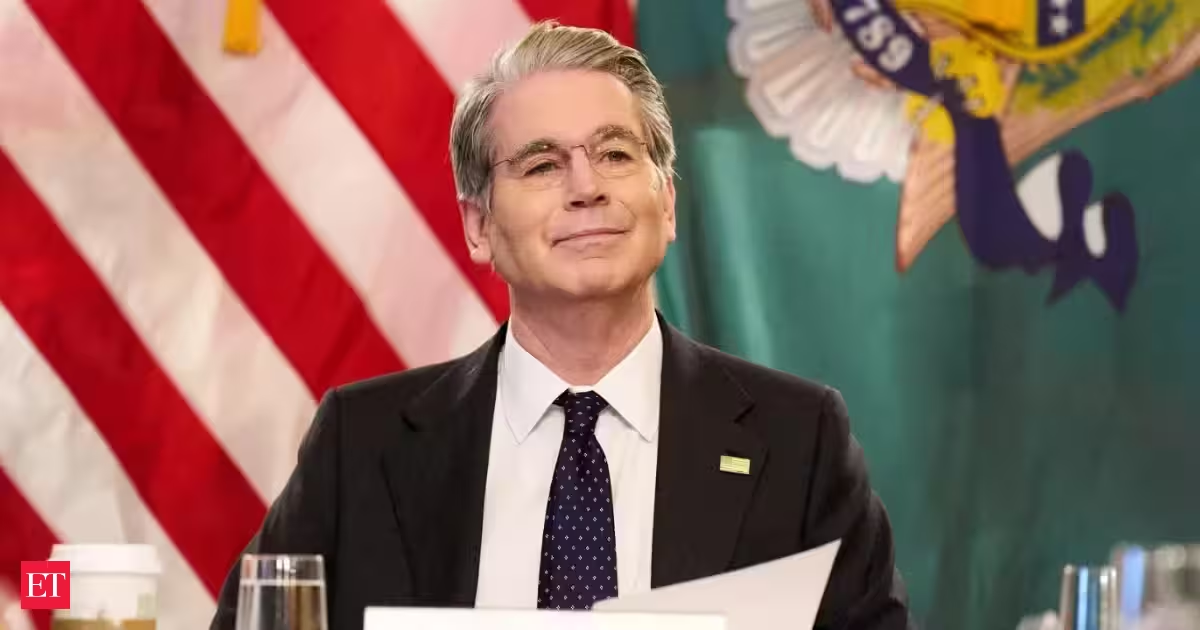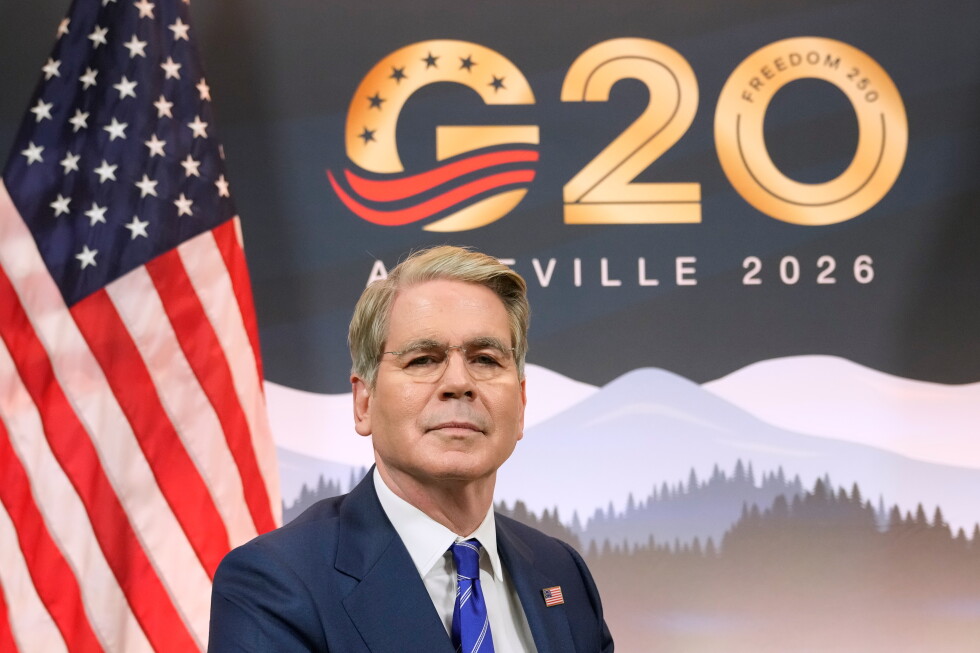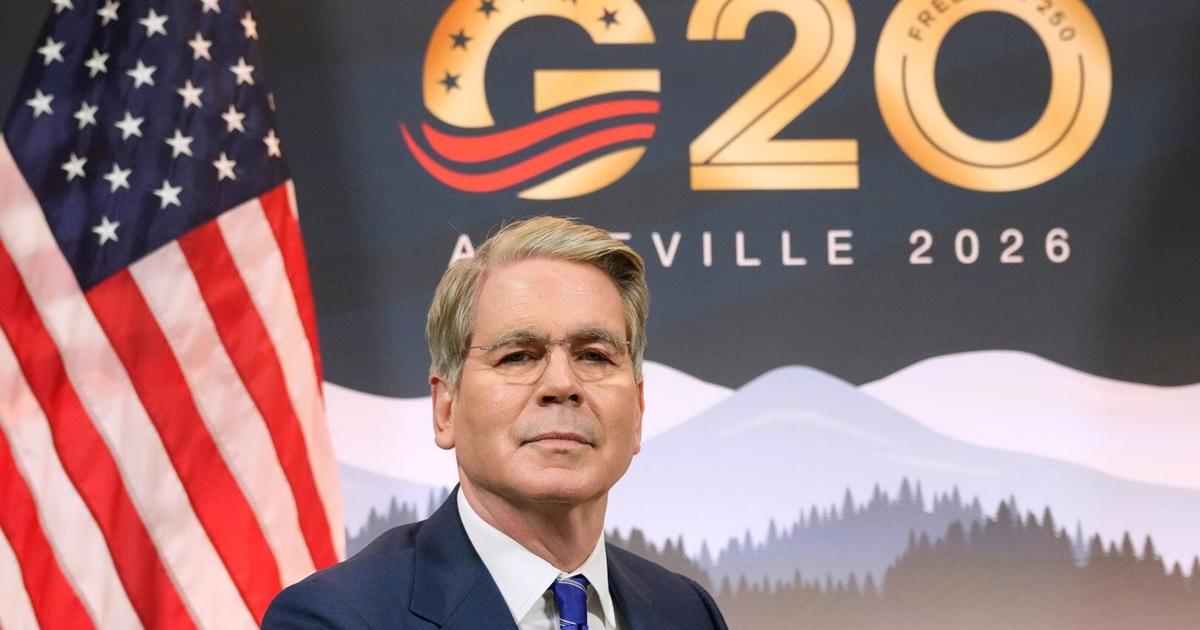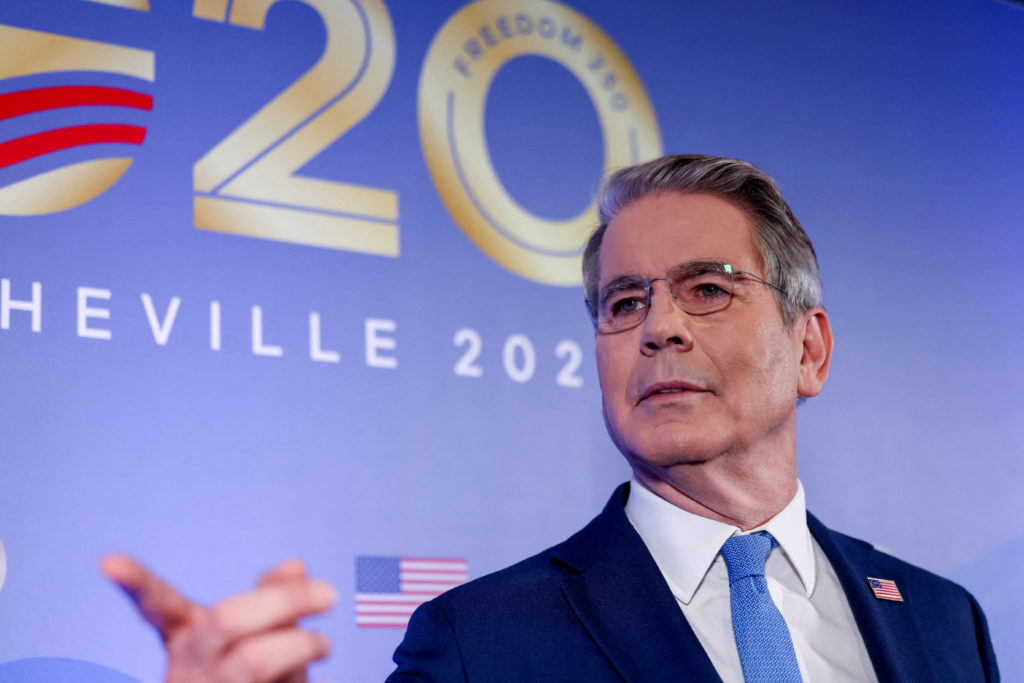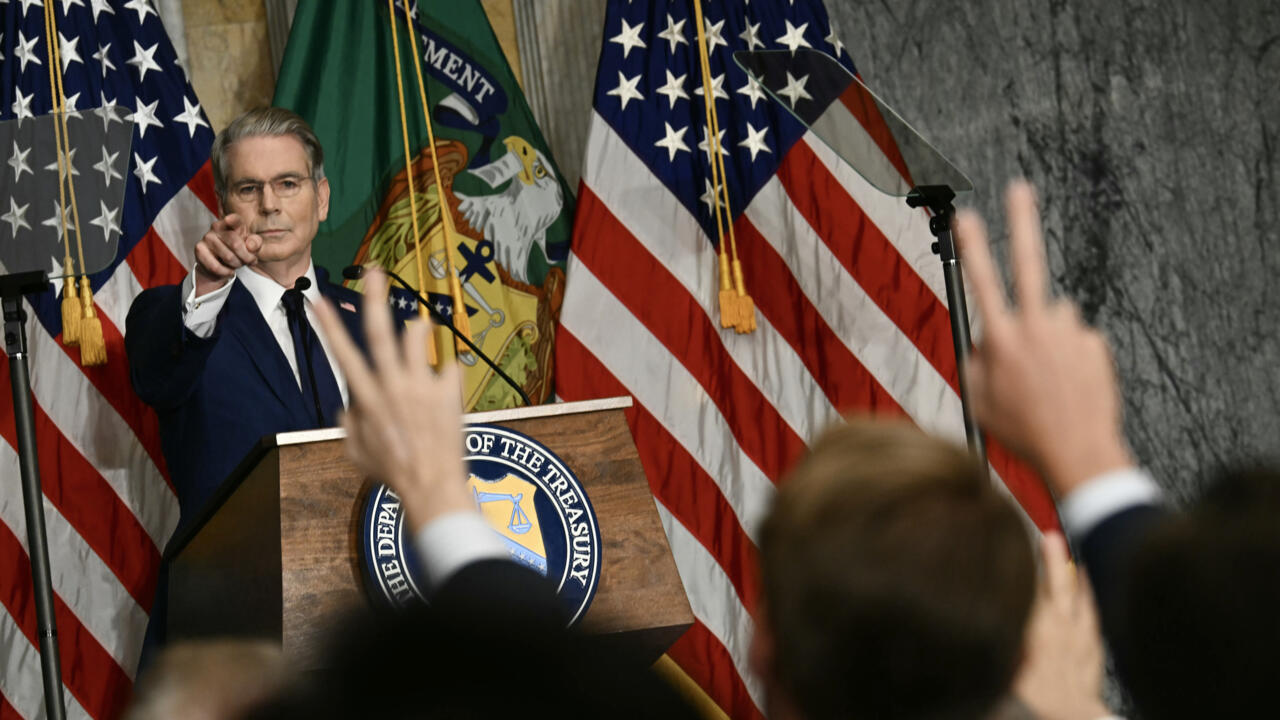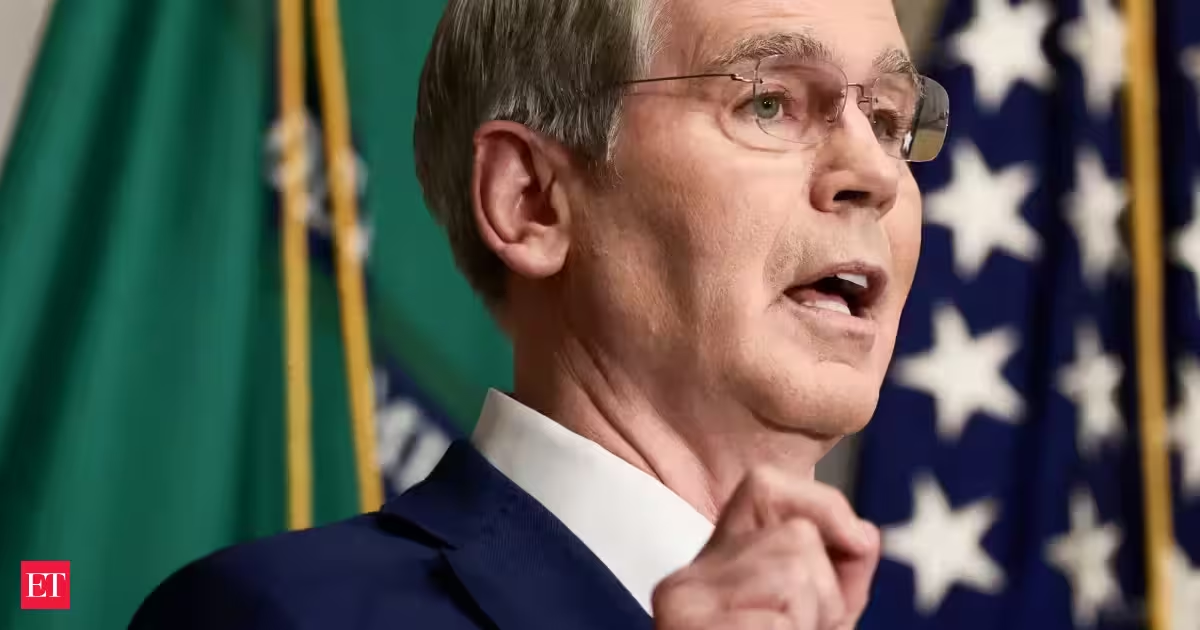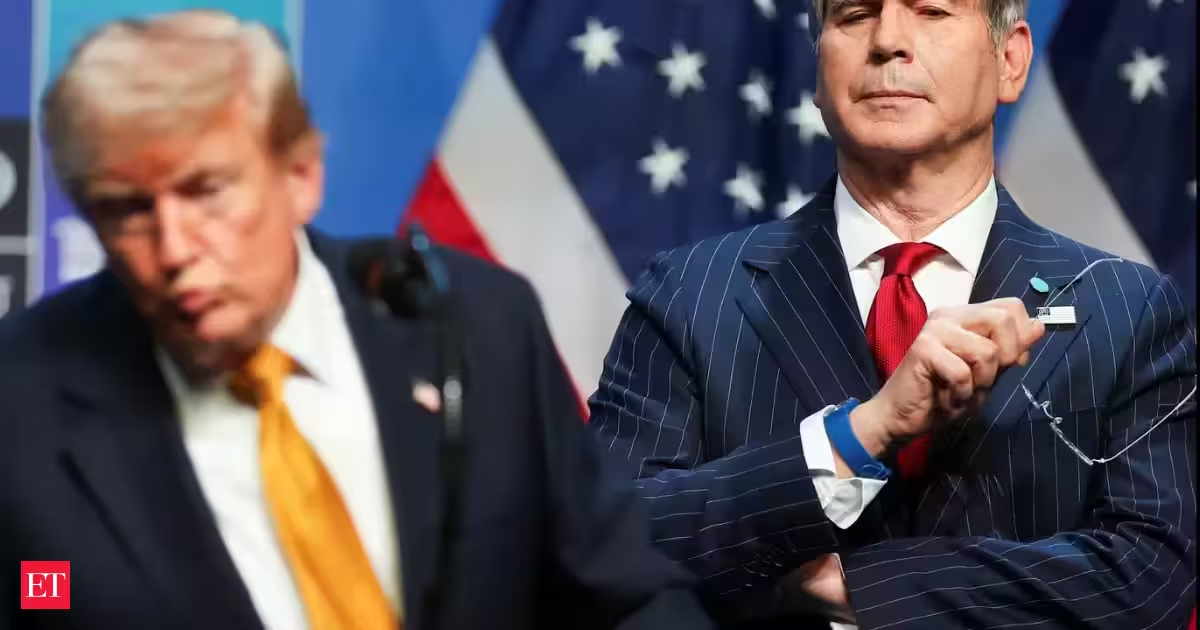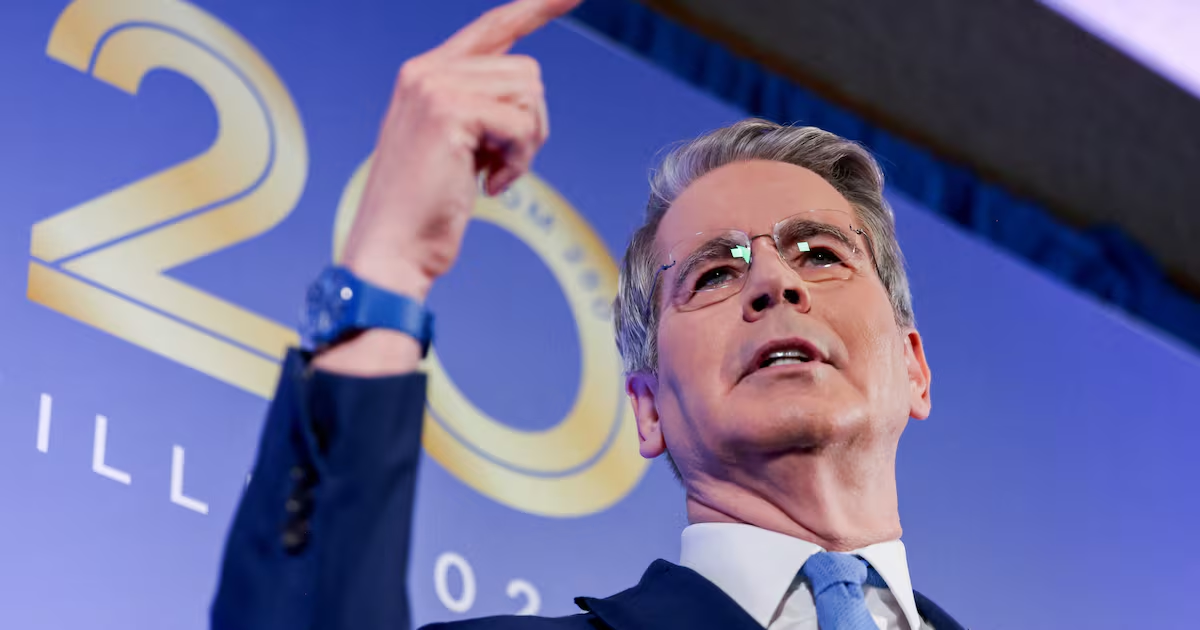
The G20's finance ministerial kicked off in Asheville, North Carolina, on Monday, as Treasury Secretary Scott Bessent sought to rally counterparts to join US efforts to cut off Iran's financial lifelines.Mr Bessent was expected to make a direct case to ministers at the group's gathering in the Blue Ridge Mountains after unveiling the latest US economic pressure campaign against Iran last week. President Donald Trump's administration is aiming to tighten the screws on Iran's economy after military operations and a naval blockade failed to force the regime's capitulation.“We have the blockade, and we are going to continue exerting pressure, and we’ve had very good discussions here already,” Mr Bessent told reporters.The new front, called “Operation Economic Outcast”, broadens the scope of secondary sanctions the US can place on countries and businesses that engage with Iran. The Treasury Secretary warned that those who engage with Tehran risk being cut off from the dollar-based financial system.In a statement delivered to the G20, the European Commission said the EU welcomed recent US moves to apply economic pressure on Iran, adding that the bloc remained ready to take additional action.Play00:55Bessent says Iran lashing out amid economic pressure“I want to thank the EU and the ECB [European Central Bank] for their strong statement of support for our economic operations against the Iranian regime, and together, this group will end this 47-year horrendous reign that they have had,” Mr Bessent said in opening remarks before a plenary session.The UAE halted trade and financial ties with Iran last week after two Iranian missiles were directed at the emirates.'Robust meeting'While the Treasury department has placed sanctions on China's independent “teapot” refineries, which purchase Iranian crude at a discount, it has so far held back on sanctioning financial institutions, which could create tensions before President Xi Jinping's visit to Washington in September.Lin Jian, spokesman for China's Foreign Ministry, has said Beijing would “take all necessary measures to firmly safeguard its own rights and interests”.Mr Xi met the Russian President Vladimir Putin in Kyrgyzstan on the sidelines of the summit of the Shanghai Co-operation Organisation (SCO), a group that presents itself as a counterweight to US influence. The Indian Prime Minister Narendra Modi also attended the events in the Central Asian country.Speaking to CNBC, Mr Bessent said he had a “very robust meeting” with China's central bank governor Pan Gongsheng on Sunday. He declined to provide further details, saying some things are done “better in private”.The US and China reached a trade truce last year, easing tariffs and helping restore rare-earth exports. Mr Trump's administration has long complained of China's global imbalances. Mr Bessent is also urging G20 members to rethink their trade relationships with Beijing.“The world cannot have a China with a $1.2 trillion trade surplus,” he told Reuters.Mr Trump has sought to rebalance US trade with China and other partners through his tariff campaign. AP reported last week Mr Trump is considering establishing an additional 7.5 per cent tariff rate on China to penalise it for pouring cheap goods into markets.Setting conditions for talksMr Bessent said recent Iranian attacks suggested it was taking the threat of US sanctions seriously. “I would think that they are lashing out kinetically because they are losing economically,” Mr Bessent said.The Treasury chief said US sanctions are meant to set the conditions for Iran to come to the negotiating table, as diplomatic efforts to end the six-month war remain at an impasse.On Sunday, the US and Iran exchanged strikes for the first time since July, with US forces striking two rocket launchers on Larak Island in the Strait of Hormuz.Ships anchored in the Strait of Hormuz near Larak Island, Iran. Getty ImagesShow caption: Ships anchored in the Strait of Hormuz near Larak Island, Ir…Iran responded by attacking Jordan with missiles and the UAE with a drone on Monday. The UAE Ministry of Defence said an Iranian drone was intercepted over territorial waters.The attacks mark a dramatic escalation after a framework agreement between the US and Iran expired on August 17. The agreement was meant to establish safe shipping lanes in the Strait of Hormuz, through which roughly 20 per cent of the world's energy supplies transited before the Iran war broke out on February 28.IMF PortWatch data showed the seven-day moving average for tanker traffic through the waterway remained at five for the week ending August 23, well below prewar levels.
Bessent seeks to rally G20 on severing Iran financial ties | The National
US Treasury chief says Tehran's actions show it is taking sanctions threat seriously
728 words~3 min read