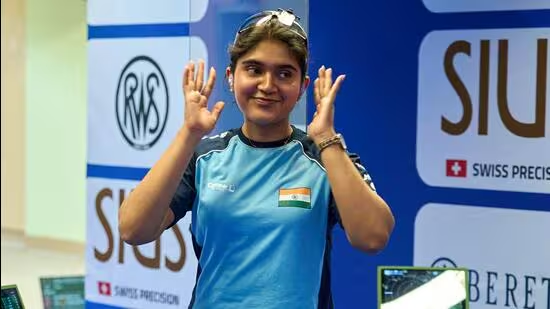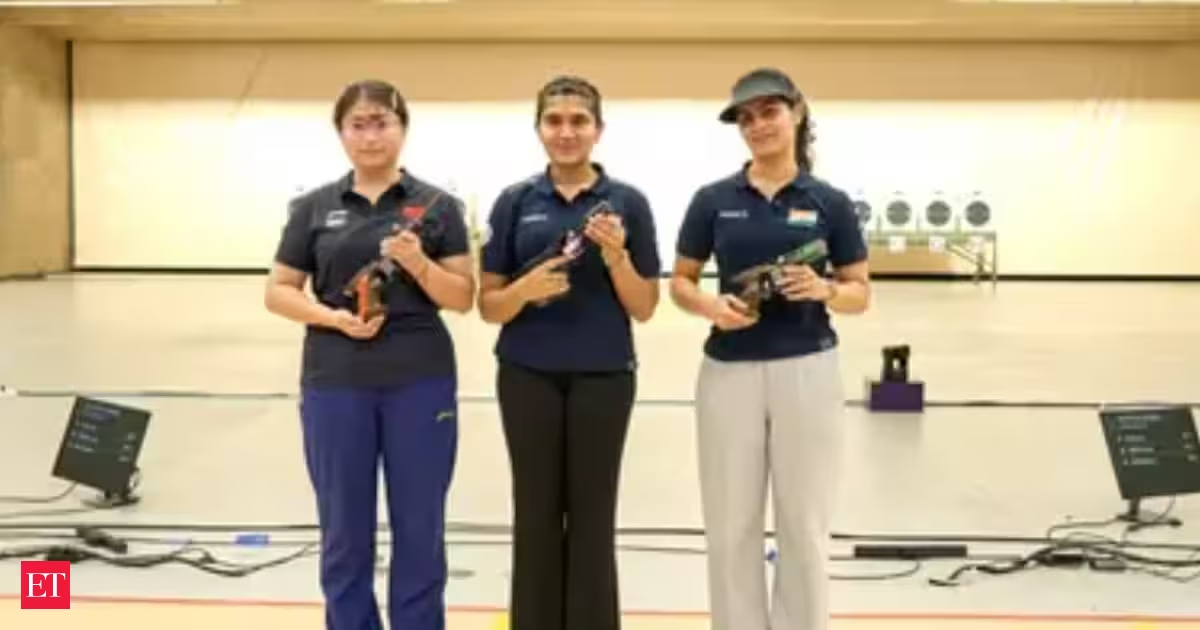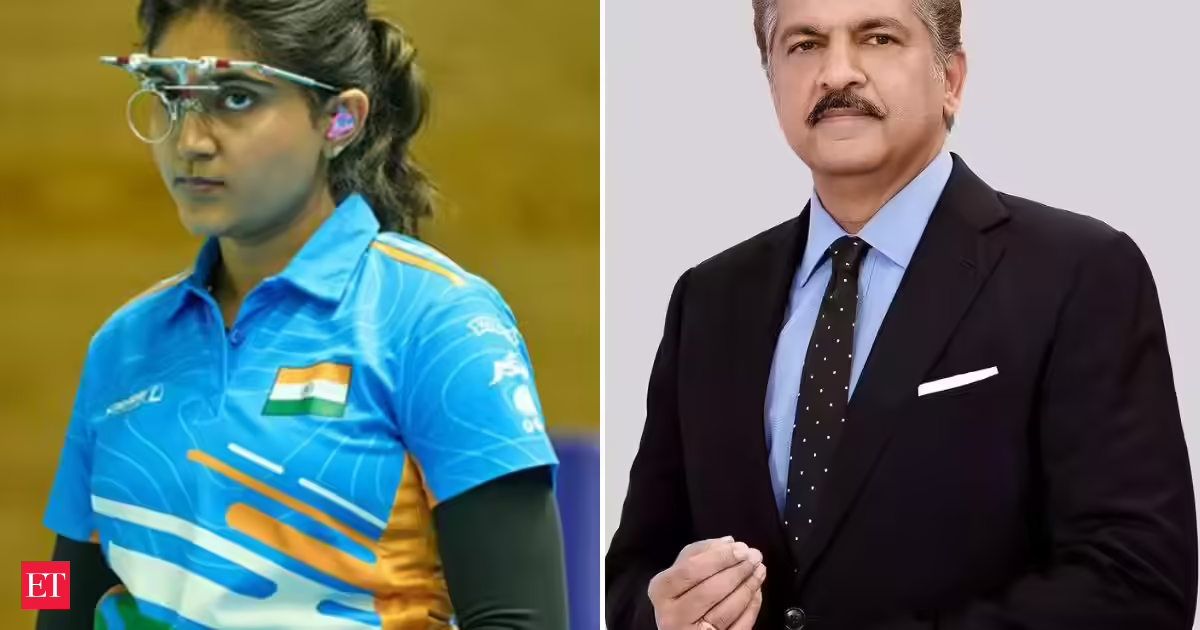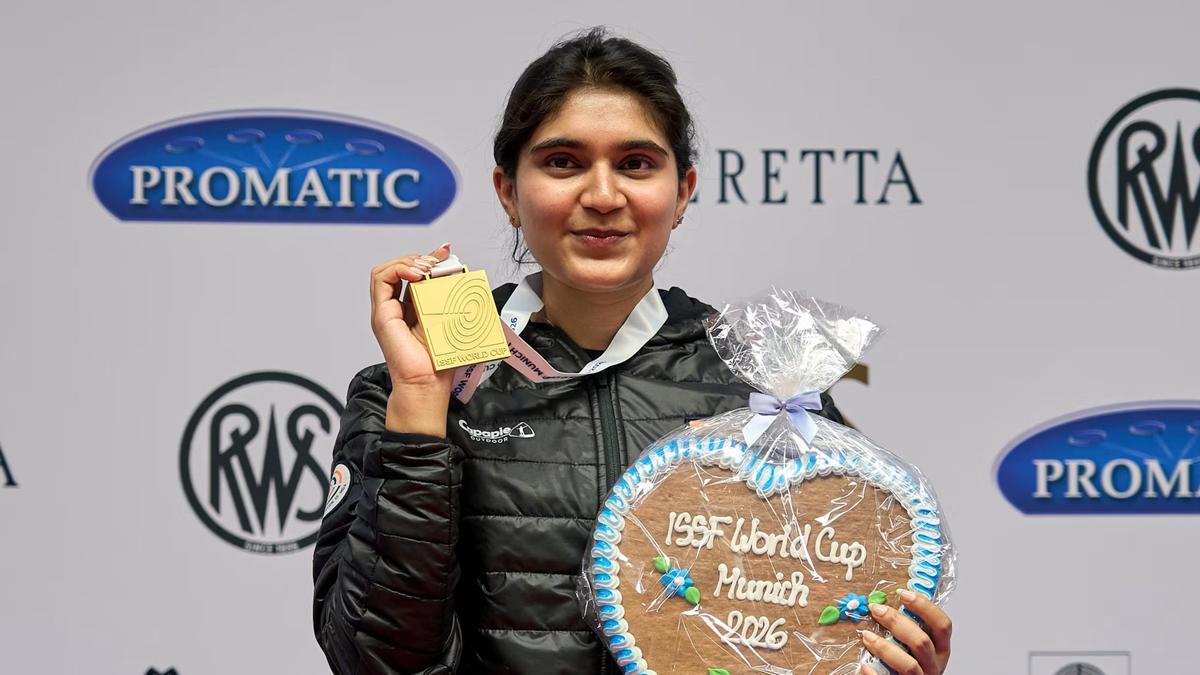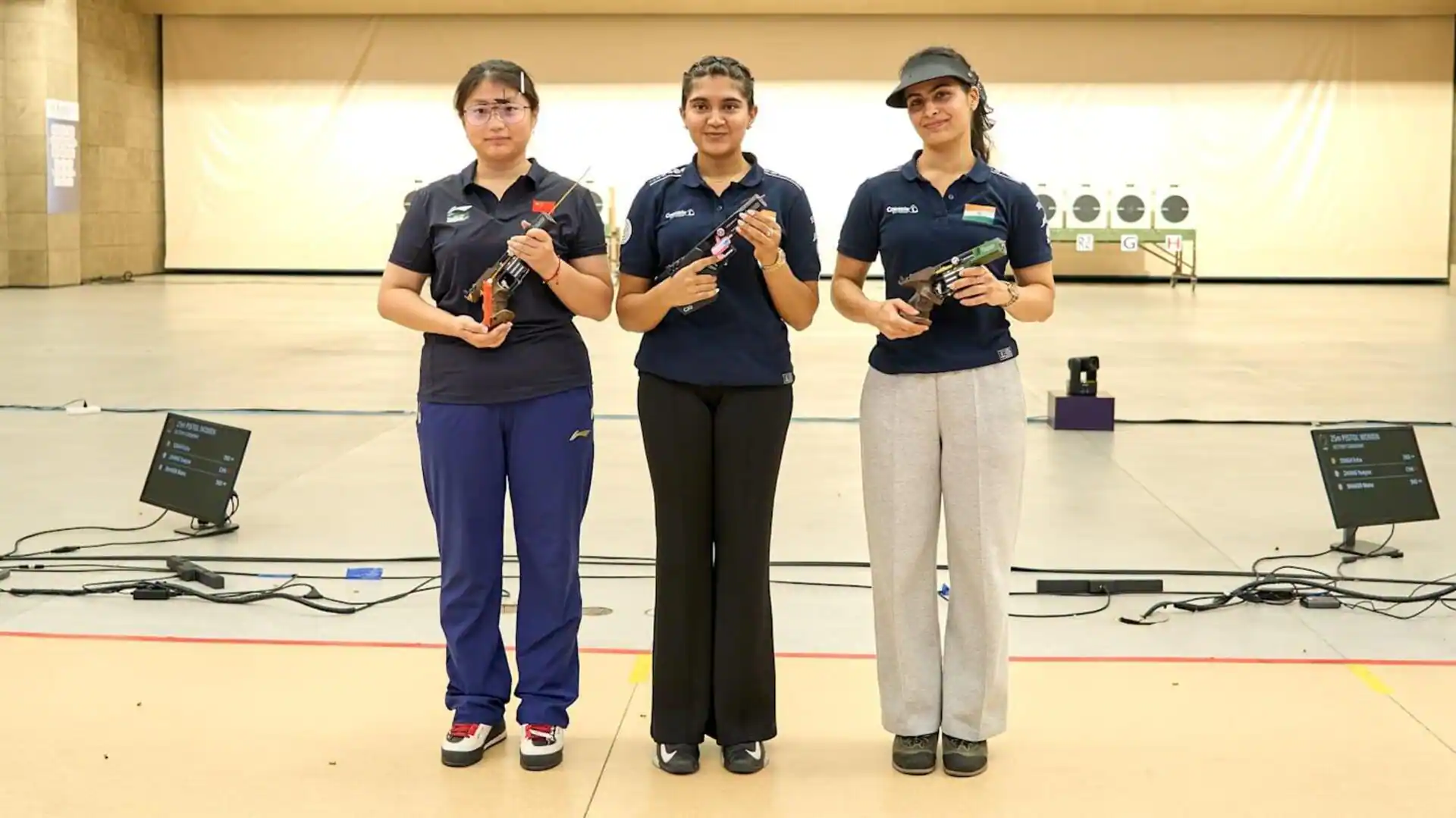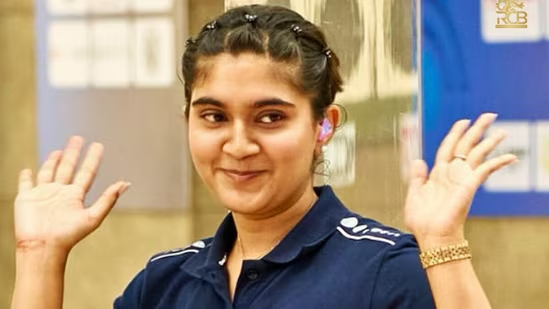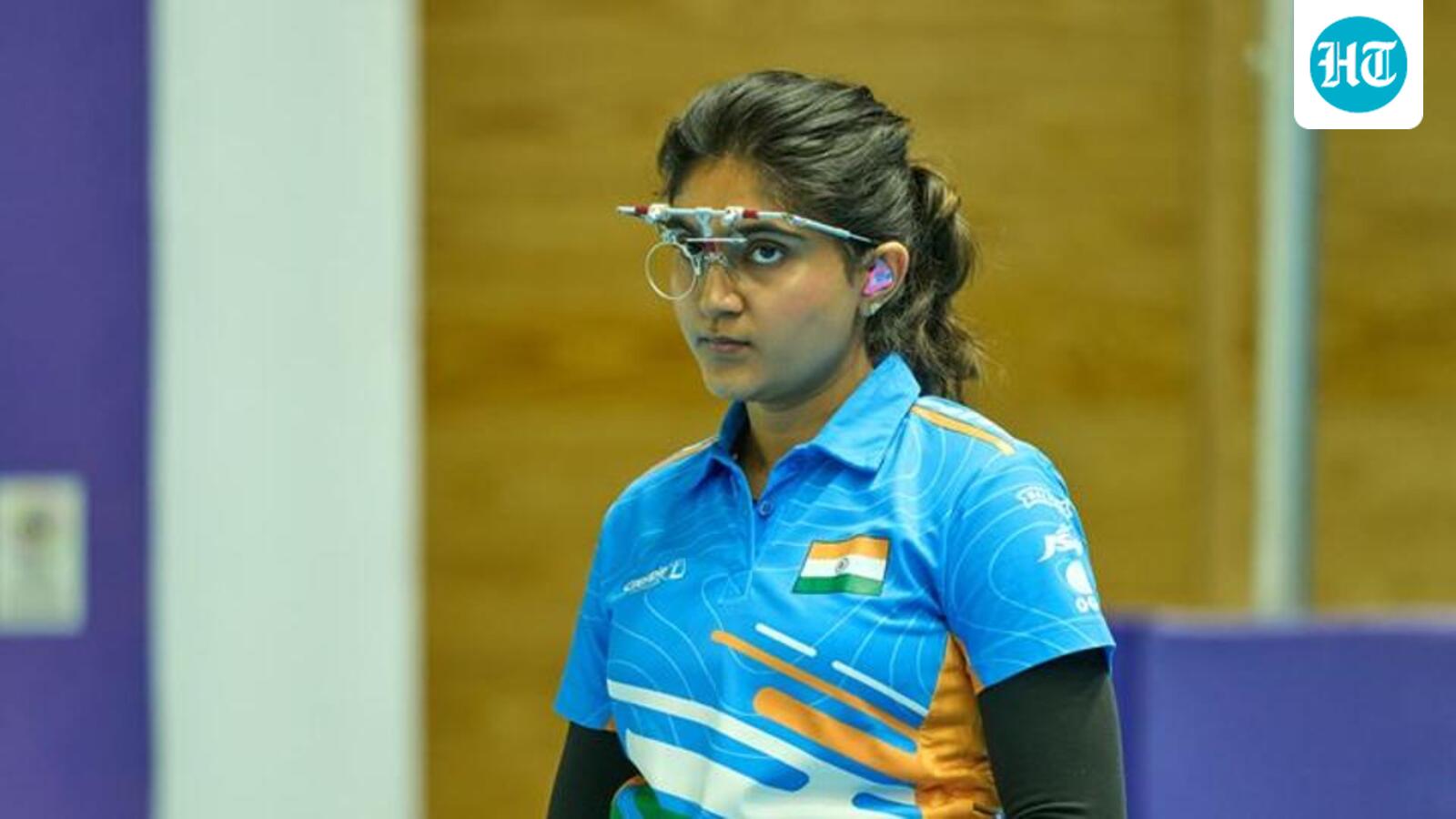
New Delhi: Three years ago, pistol shooter Esha Singh returned from the Hangzhou Asian Games with four medals —1 gold, 3 silver — and a soaring reputation.Esha Singh will be India’s brightest medal hopes at the Asian Games in Japan. (HT)Then 18 and at the start of what would shape into a prolific senior career, the dual-discipline shooter (10m, 25m) was remarkably equanimous in dealing with sudden fame. Standing outside Fuyang Yinhu Sports Centre in Hangzhou on a humid September afternoon shortly after claiming her first Asiad medal, Esha credited God, her father and her coach for bringing her that far. The real journey, however, was just beginning to unfold.An Olympic debut, a clutch of World Cup medals, and a world record score in 25m event later, Esha will be among India’s strongest medal bets in both her events when the 30-member shooting squad begins its campaign at the Asian Games. There’s Suruchi Singh (10m), Manu Bhaker (10m, 25m) and the experienced Rahi Sarnobat (25m) in the squad as well, but Esha arrives in Japan with perhaps the strongest run of form.“Ultimately, it is down to training and preparation. There’s no secret sauce,” she said, when probed on her consistency.In a sport that’s determined by unforgiving millimetres, consistency is brutally difficult to achieve. Esha appears to have found a way, though. Over the past 10 months, she has added two World Cup gold medals in 25m, a 10m World Cup silver, and an individual bronze at the World Championships (25m) to her burgeoning CV. She is the current world No.1 in 25m and world No.2 in 10m.“I don’t read much into this. This sport can humble you very easily,” she says. Which is what makes her consistency even more admirable. The competition in Munich gave a measure of her quality. The eight-shooter final featured reigning Olympic champion Yang Ji-in of South Korea and former world champion Doreen Vennekamp of Germany. Compatriots Manu Bhaker — a double Olympics medallist — and Rahi Sarnobat — a 2018 Asiad gold medallist — couldn’t make the final.At the Hangzhou World Cup in July, Esha beat China’s Yueyue Zhang, the 2025 Asian champion, by three hits to win gold, with Manu taking bronze.“Competition helps me find a higher gear, I guess,” she said, slightly bemused at her own streak. “I guess something changed after the Paris Olympics. Although I managed only an 18th-place finish, the exposure to such high quality, high intensity competition changed the way I look at this sport.”That means she has come to appreciate the uncertainties and variables of her sport besides learning to dissociate herself from the results.“It’s a decision we took consciously,” her coach Ronak Pandit said.“The world may measure her consistency through her scores or medals, but for us, it is measured by performance,” added Ronak, who has been mentoring Esha for five years.And performance, Ronak says, is measured by the process. The many moving parts that decide and define performance have been distilled to two key metrics — clean triggering and the ability to thrive when the pattern is broken.“There are 50-60 little things that constitute what we call a process, right from the way you breathe to calibrating your pistol to the point you pull the trigger. But ultimately, triggering and adaptability form the meat of it,” Ronak said.“By clean triggering, I mean ensuring the gun does not move at the point of pulling the trigger. The 25m event is shot from a firearm that produces a recoil. So, to adjust to that is the key.”Ronak has carried the same philosophy to Esha’s 10m game, although the two disciplines are vastly different. The 10m air pistol is a test of stillness and precision; 25m tests speed, recoil and the ability to reset between rapid-fire sequences.“At the core of it, the two pistol events demand the same control, concentration and technique. Our training plans are tailored to her requirements. Also, breaking the pattern in training is equally important. You can’t let the mind relax,” the coach said. That means countless match simulations and scenarios, right from pistol malfunction to suddenly telling his ward that the next 20 hits are the competition shots.“The idea is to not let her be too comfortable. So, I may ask her to switch to the reserve gun. That means calibrating the weapon, adjusting to its touch and feel, getting the grip right, and ensuring a clean trigger release. The focus is on getting a decent grouping all over again.”“And then, in the middle of training shots, I’ll tell her that the next 20-30 hits are competition shots. That trains her to switch off and switch on, on command. The idea is to prepare her to shoot well on a bad day,” Ronak explained.Esha maintains she’s still the grateful teenager at heart who courted success in Hangzhou, but on the range and with a pistol, she has developed a happy habit of transforming into an unerring machine.That said, she is not nearly the unflappable shooter she appears on the outside. “Oh, I am a very nervous shooter. In fact, I feel nobody feels so much pressure as me in a match. The more important the match, the more nervous I get. But rather than fighting it, I have come to embrace the pressure. It’s part of the process too,” she said.
This sport can humble you very easily: Esha Singh
Esha Singh, a top Indian pistol shooter, excels with multiple medals, embracing pressure as she prepares for the Asian Games, aiming for gold.
887 words~4 min read