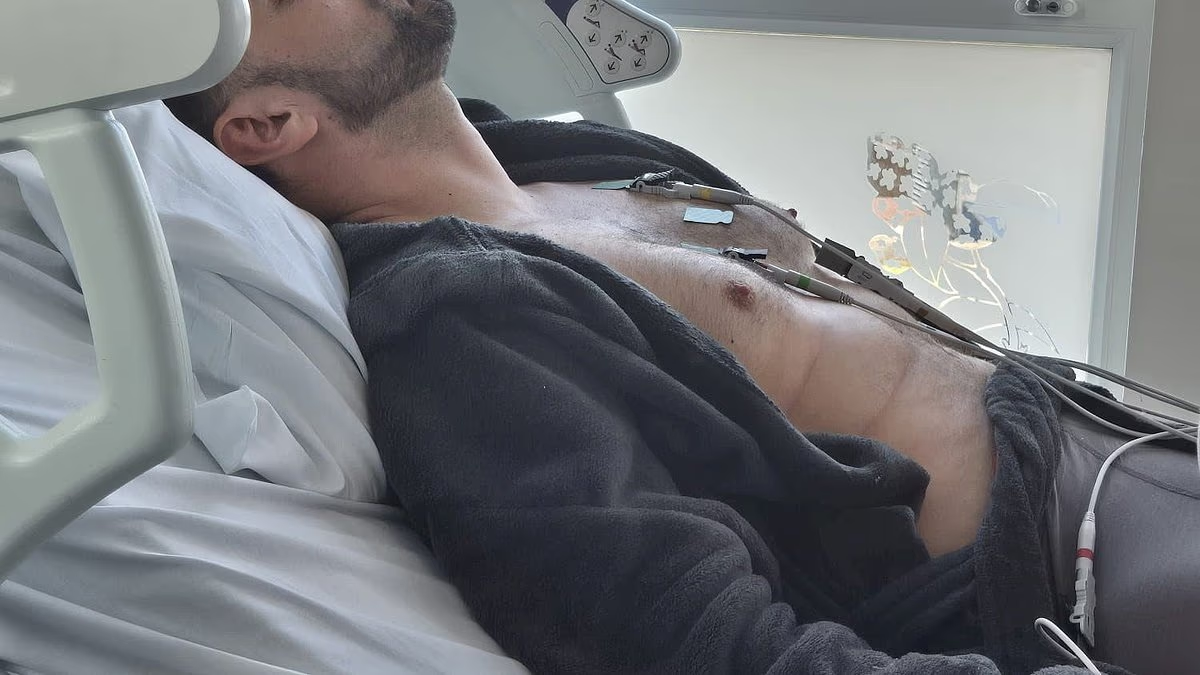
A Yorkshire man has warned ADHD sufferers of the side effects of a commonly-taken treatment - after the tablets made him 'violently sick'.Ryan Swain, 36, from Malton, was hospitalised in 2010 after just a few months of taking the nonstimulant drug atomoxetine - otherwise known as Strattera.The DJ suffered what doctors described as a 'violent allergic reaction', which resulted in projectile vomiting.'I was vomiting for hours and hours and hours,' he said. 'The doctor said he'd never seen anything like it in his life.'Mr Swain claimed the sickness resulted in the rupture of his stomach lining, causing him to vomit blood. He added that he 'flatlined for a second' and had to be resuscitated. 'I felt like I had been led down a garden path to take this medication,' he said, adding that doctors told him the medication was the cause of his symptoms.Allergic reactions to atomoxetine are very rare, according to European drug safety watchdogs. The frequency of such reactions is unknown. Mr Swain claims to have suffered an allergic reaction, however these usually involve rashes and swelling. Vomiting and nausea are known side effects of the medication.Typical signs of allergic reactions include a rash, hives, facial and lip swelling, wheezing and throat tightness. According to UK medicines watchdog NICE, vomiting is one of the most common side effects of atomoxetine along with abdominal pain, lack of appetite and constipation.Mr Swain said that he stopped taking medication entirely following the ordeal as he 'didn't have a lot of faith in the system'.Roughly 270,000 people in England are currently taking ADHD medication.Stimulant drugs like methylphenidate are the most commonly prescribed, but some patients are offered non-stimulant types, such as atomoxetine.Atomoxetine increases a hormone involved with mood, focus and alertness called norepinephrine, rather than directly producing the stimulant effect associated with methylphenidate or amphetamine. Some patients prefer this medication as it takes effect gradually throughout the day. Mr Swain now dedicates his time to teaching ADHD sufferers of alternative remediesMr Swain tried methylphenidate before he began taking atomoxetine but found it 'turned me into an absolute zombie, a shell of myself'.Atomoxetine, 'worked very well' at first, and had little impact on his personality. 'But I didn't realise how much of an impact it was having on my body,' he said.Mr Swain was first diagnosed with the condition in 2010, aged 20, after a nine-month wait and three specialist sessions. He said the signs of ADHD included 'impulsivity, difficulty planning ahead, seeking an immediate reward, executive-function challenges and not always fully processing the future consequences of a decision'.'I’ve avoided looking at bills because dealing with them felt overwhelming. Small decisions became bigger problems.'Emotionally I can also be intense and reactive. I have spoken before thinking and sent messages in the heat of the moment.'I wish I’d understood at 16 what I understand now.'Mr Swain manages his ADHD through skateboarding, music and creativity. He also relies on alarms and calendars to help him stay organised.He currently works with young people and their families through his free business You, Me & ADHD, which helps show there are alternatives to medication for managing the condition.He said: 'I still have good days, bad days and absolutely terrible days. 'ADHD has not disappeared from my life. I have just stopped spending my life trying to make my brain behave like everybody else's.' Mr Swain was diagnosed with the condition aged 20, after seeing three different specialistsReferrals for ADHD have soared 20-fold since the turn of the century, NHS figures show. There are 800,000 people waiting for an ADHD assessment in England.NHS England also estimates that around 2.5million people in England are living with ADHD, including many who have not yet been formally diagnosed.Last month, experts warned that ADHD patients taking medication may be at risk of death, because doctors are failing to conduct heart tests that spot a defect which makes the pills particularly risky.Undiagnosed heart problems affect around one in 300 people – according to the charity Cardiac Risk In The Young.The warning followed an inquest that concluded a 28-year-old City finance worker’s death was linked to his stimulant ADHD medication.Jacob Wooderson, from London, suffered sudden arrhythmic death syndrome – when a young and seemingly healthy person dies of cardiac arrest – shortly after his dose of Elvanse, also known as lisdexamfetamine, was increased.Elvanse was listed as a cause of his death. He had been diagnosed with ADHD six months earlier.At the time, coroner Sarah Bourke called on the Government to launch an inquiry into the tablet’s safety, which is ‘increasingly being prescribed in the NHS’. However, no such inquiry was ever commenced.Dr Steven Cox, chief executive of Cardiac Risk In The Young, said that all ADHD patients should be offered an electrocardiogram (ECG) – a test that records the electrical activity of the heart – before any medication is administered.‘The vast majority of people with heart defects do not know they have one until something goes wrong,’ said Dr Cox.He explains that ADHD medication can impact the heart and put those with underlying issues at risk. However, as prescriptions for ADHD drugs rise, a higher population is being exposed to their dangers.‘Offering all patients an ECG before they begin treatment is a sensible and easily achievable policy,’ he added.
Common ADHD pill leaves 34-year-old 'needing resuscitation'
A Yorkshire man has warned ADHD sufferers of the risks of a commonly-taken treatment for the disorder - after the tablets made him 'violently sick'.
874 words~4 min read