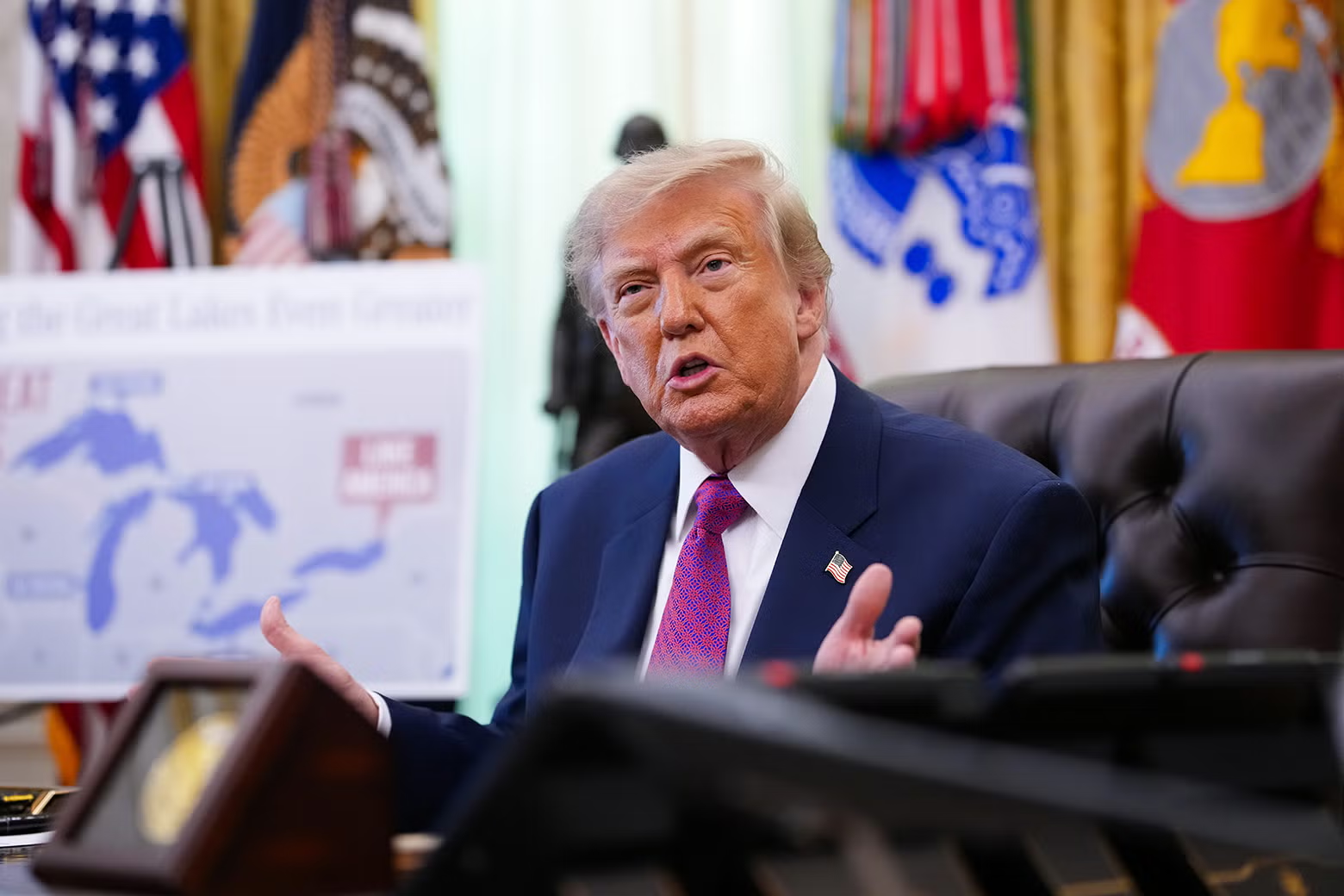
Donald Trump must look back at the start of 2026 with a wistful sigh. The U.S. president rang in the new year with a grand bash at Mar-a-Lago, his private club in Florida, attracting guests such as Israeli Prime Minister Benjamin Netanyahu and Emirati billionaire Hussain Sajwani. At the party, Vanilla Ice pumped out “Ice, Ice, Baby.” A live speed painter conjured up an image of Jesus Christ. Since Christ himself wasn’t around to do the honors, Trump promised to autograph the painting and then personally auctioned it off for $2.75 million. The first year of the president’s second term was largely going to plan. Trump had assembled a cabinet of loyalists, signed more executive orders in his first 100 days than any other U.S. president, and deployed the Justice Department to go after his enemies. He had ordered the bombing of Iran’s nuclear facilities in June 2025 while simultaneously cosplaying as a statesman who could end all wars. He had even orchestrated a vibe shift in Silicon Valley: The world’s richest men were now flying to the White House to kiss the ring.
Then, on Jan. 3, Trump launched Operation Absolute Resolve. The world’s mightiest military swooped into Caracas to capture Venezuelan leader Nicolás Maduro. The mission was daring and impressive. It was also illegal, unconstitutional, and lacked long-term payoff. But for Trump, it was an affirming display of strength. He was belatedly realizing the full extent of the awesome power wielded by a commander in chief—and what good was power that couldn’t be exercised? It could not have escaped Trump’s notice that his actions generated limited national or international blowback. Maduro was a corrupt dictator; he had no real allies, and his arrest did little more than provide yet another example of a growing void in international law. An emboldened Trump proposed taking Greenland, a Danish territory, next. It was a threat that could have destroyed NATO, the world’s biggest military alliance. And as CEOs and world leaders gathered in Switzerland for the World Economic Forum later that month, there was little else one could discuss. Will he, or won’t he? On everyone’s lips, it was Trump, Trump, Trump. A burgeoning cottage industry of lobbyists doled out expensive advice on how to navigate an administration that had concentrated so much power in one person. The most common prescription was a mixture of flattery and gifts.