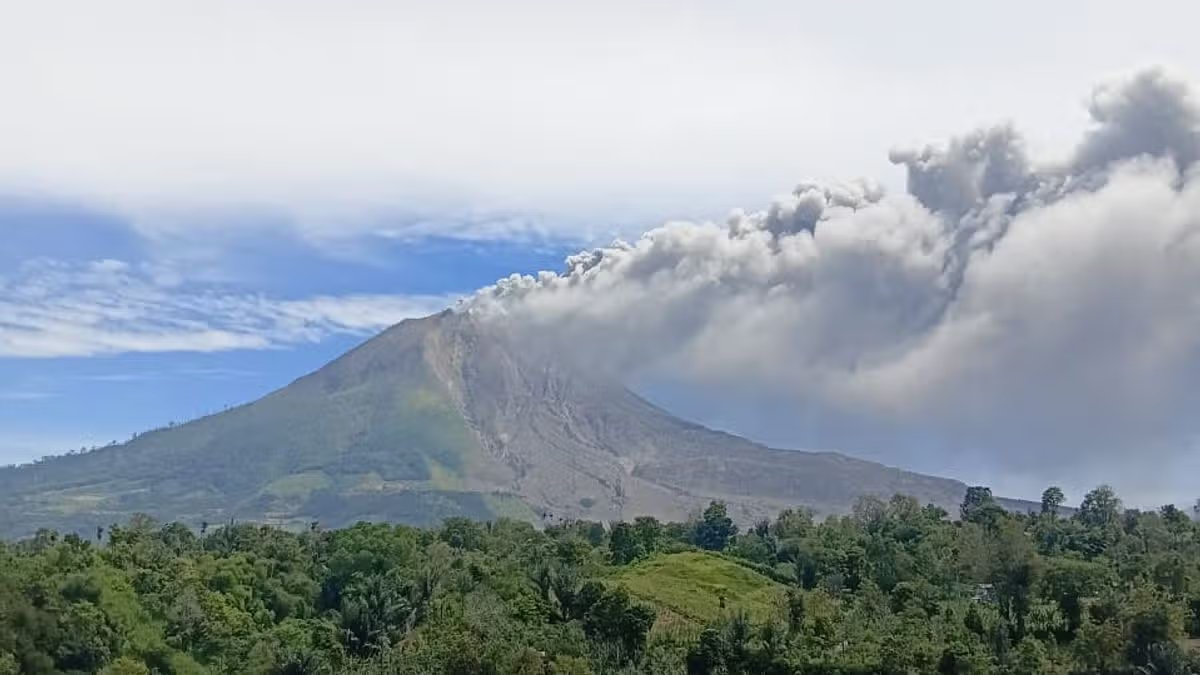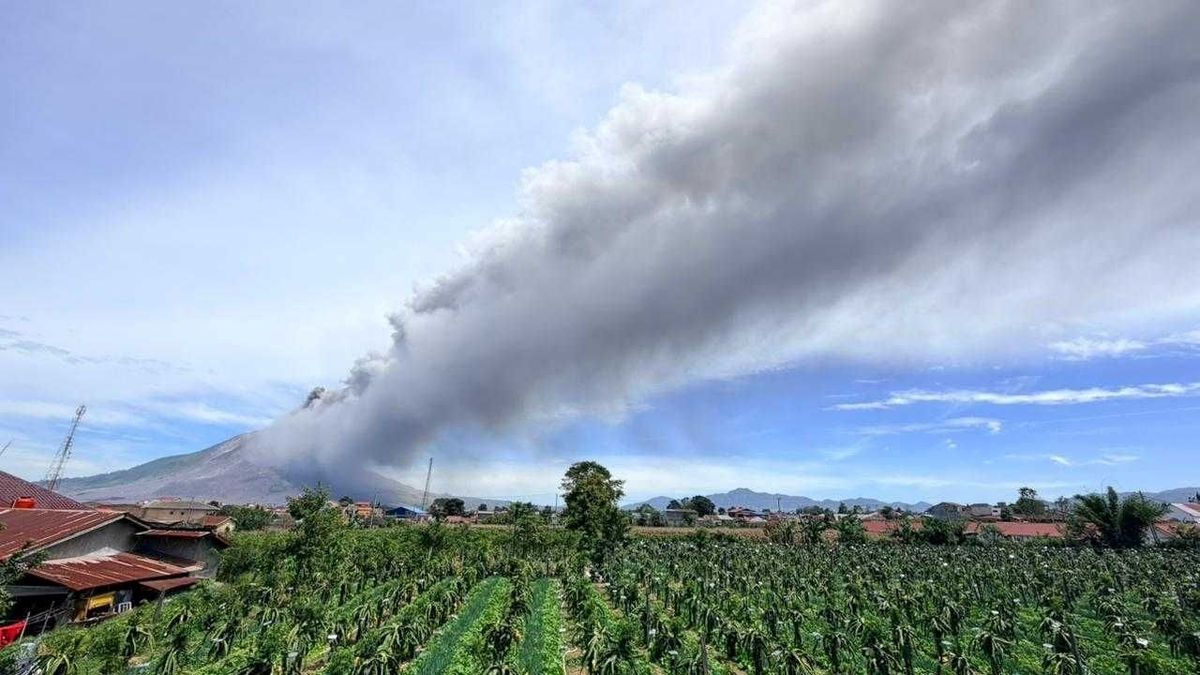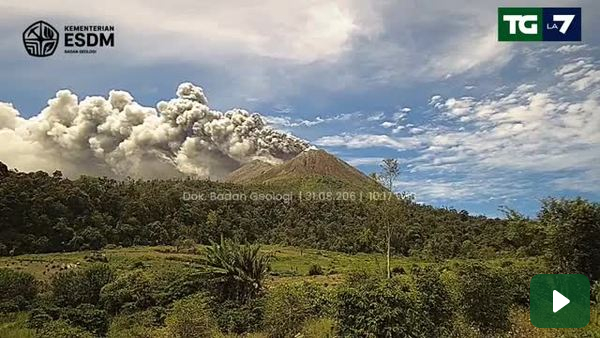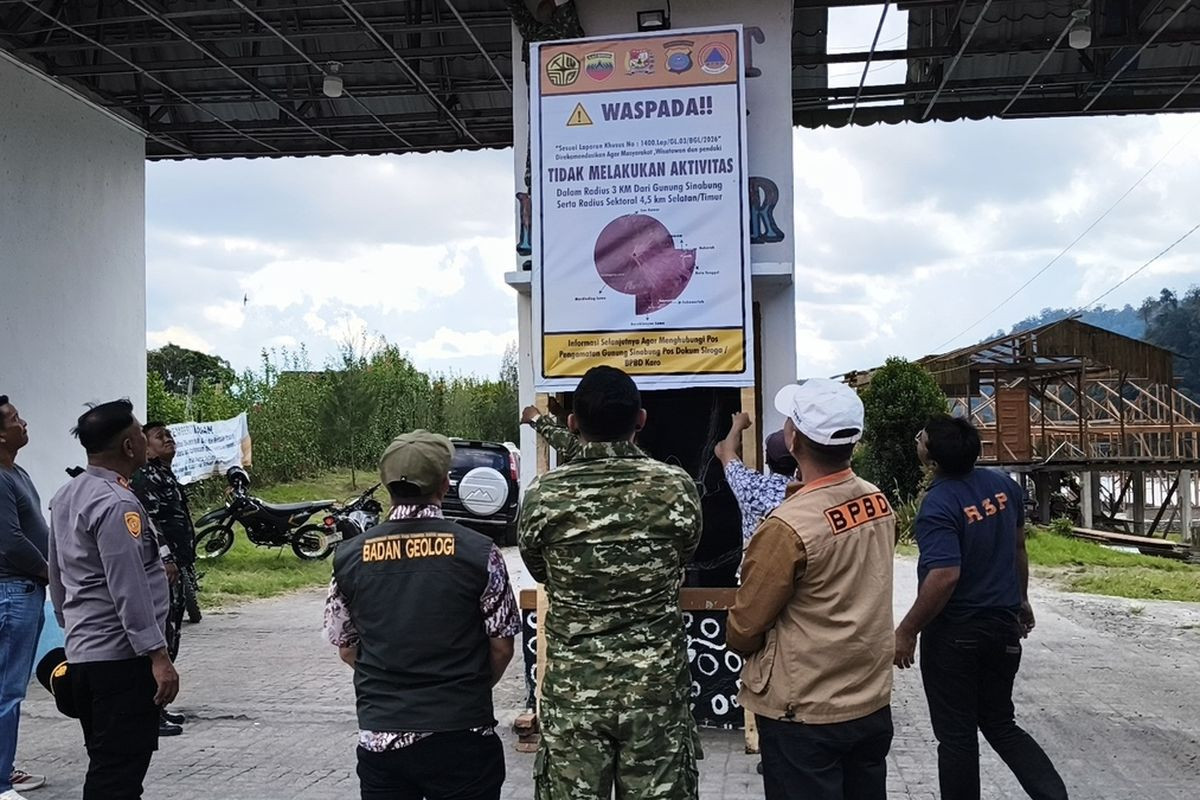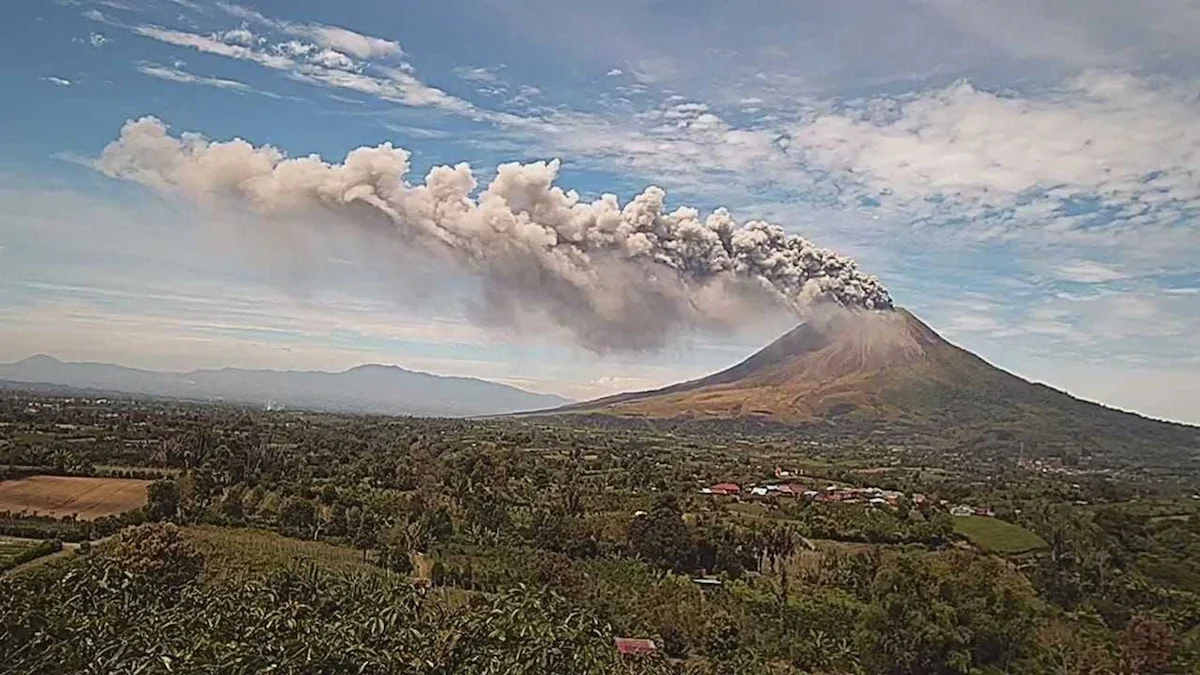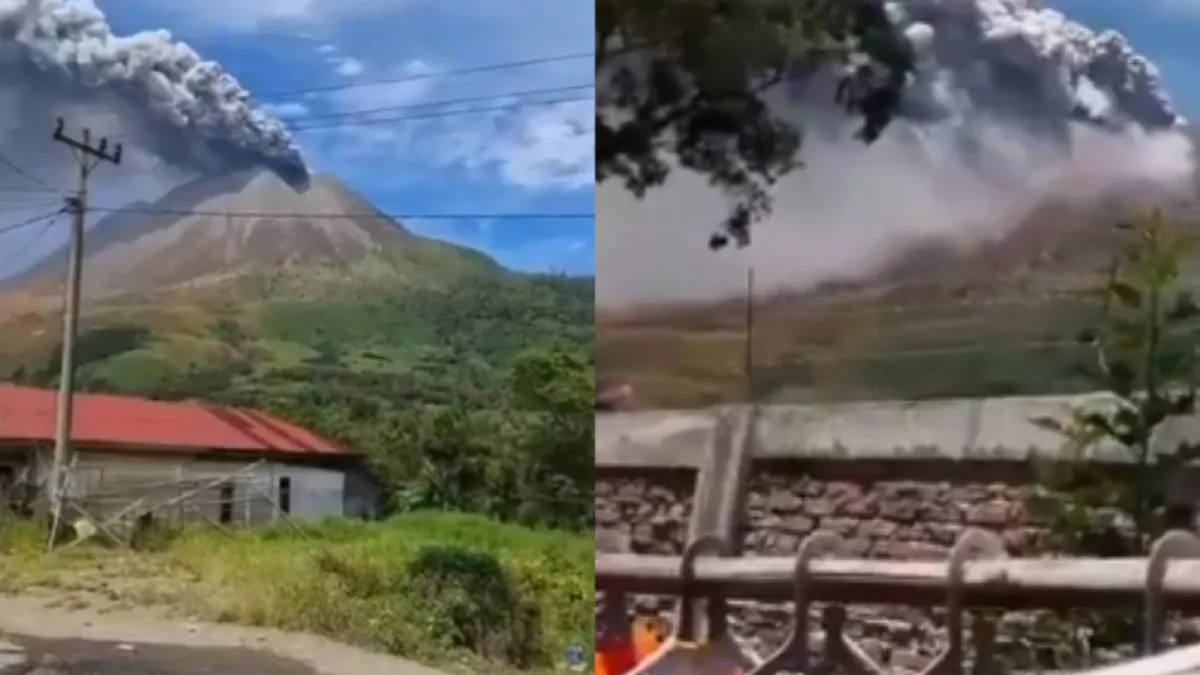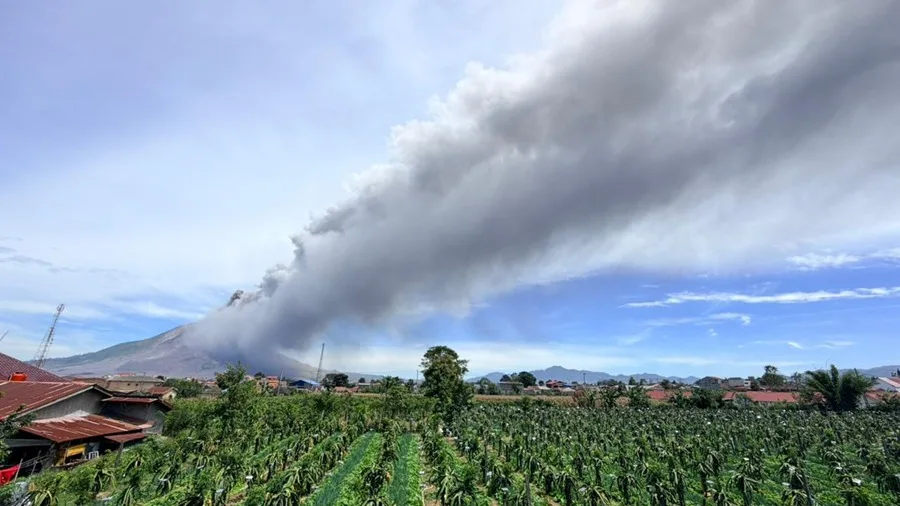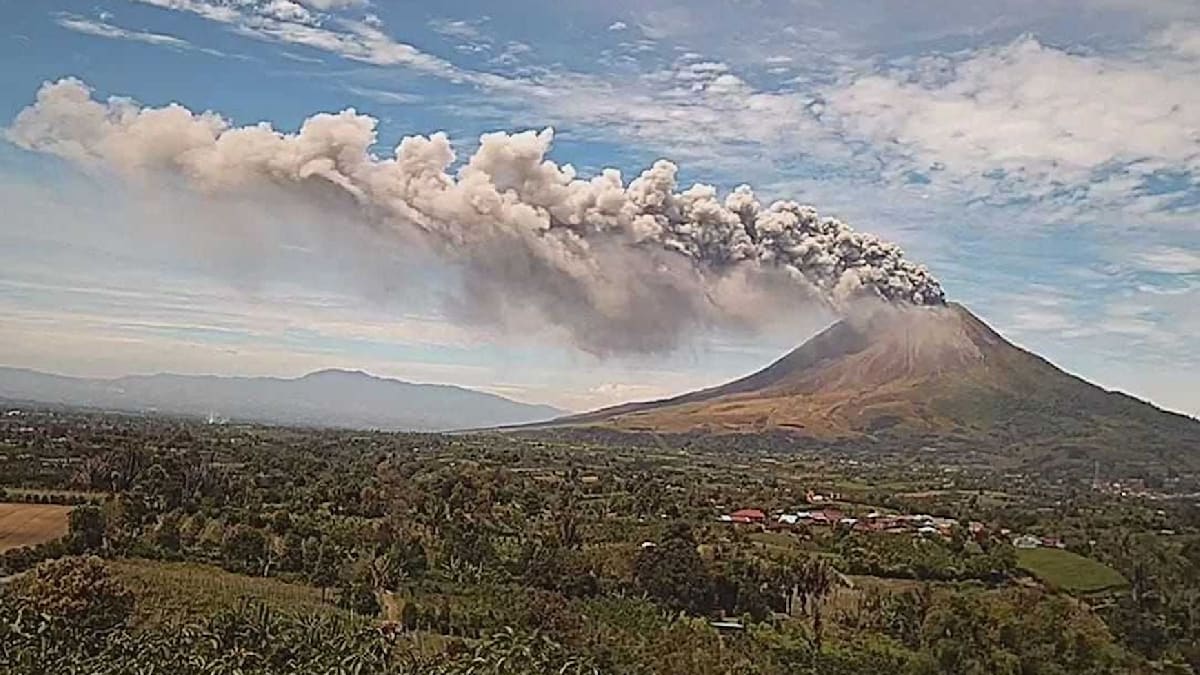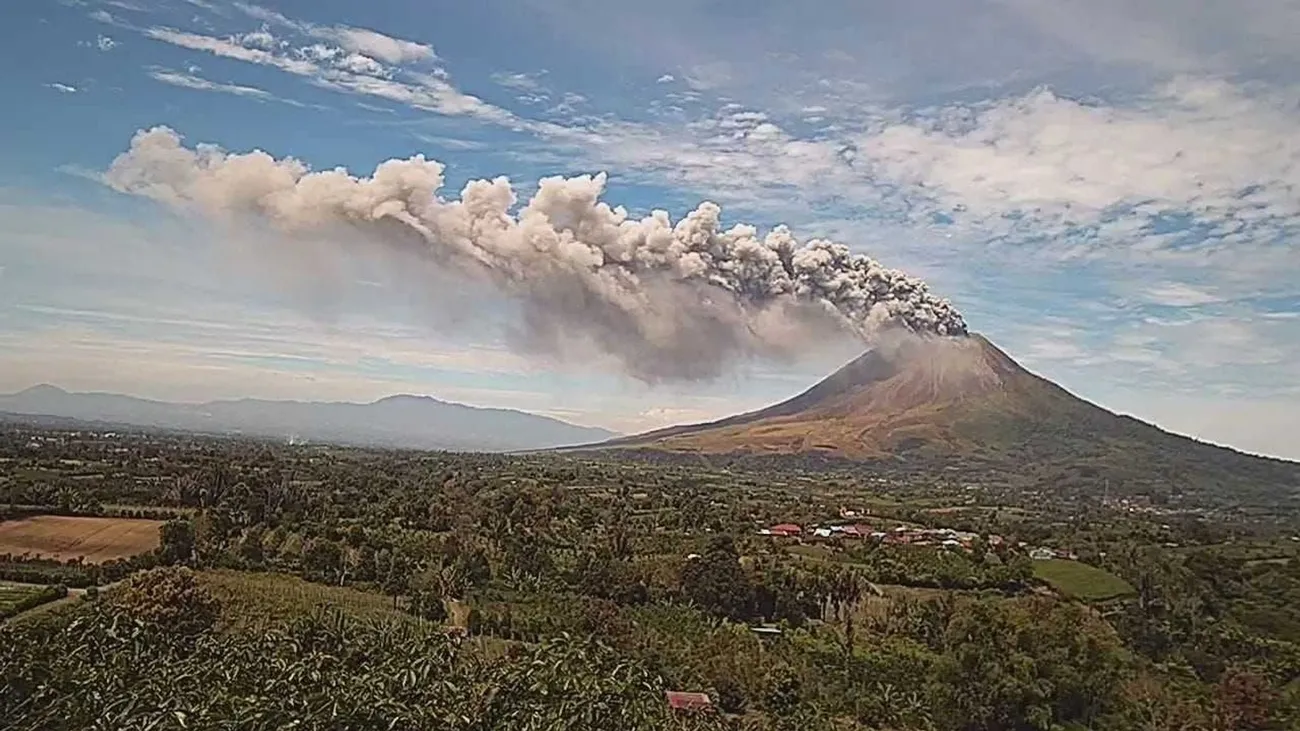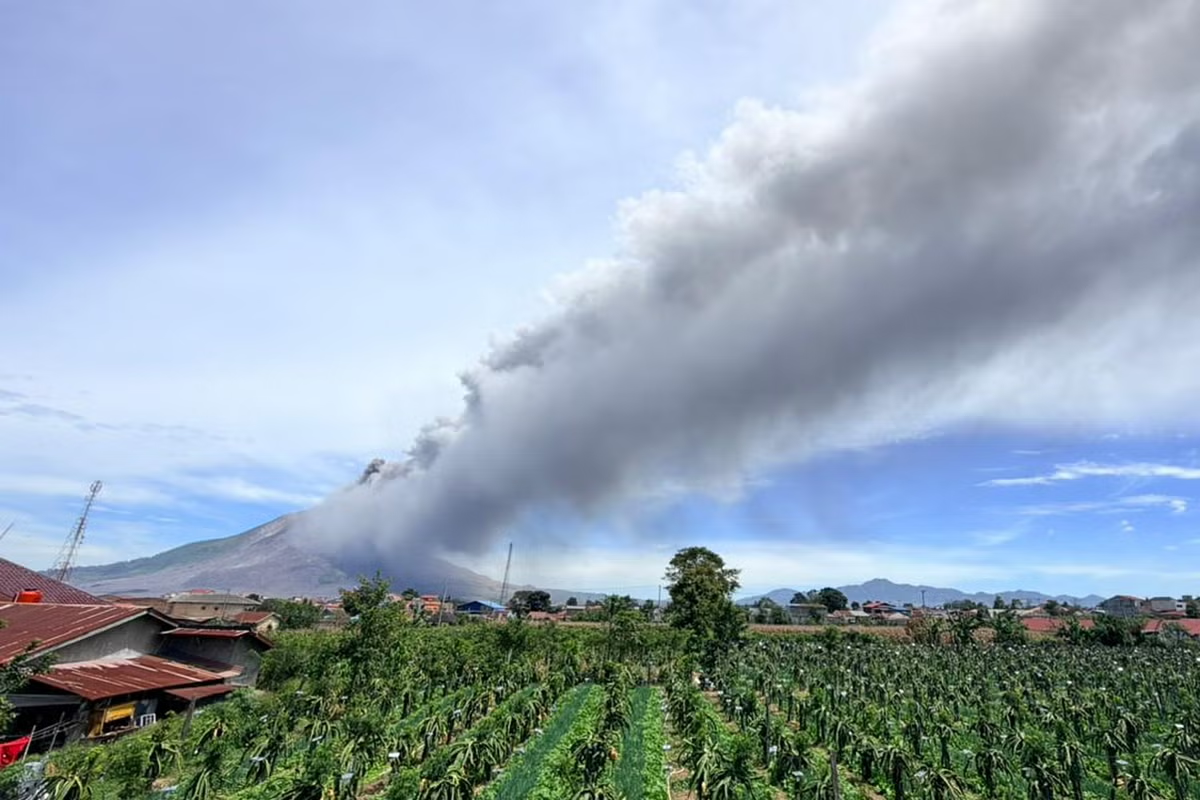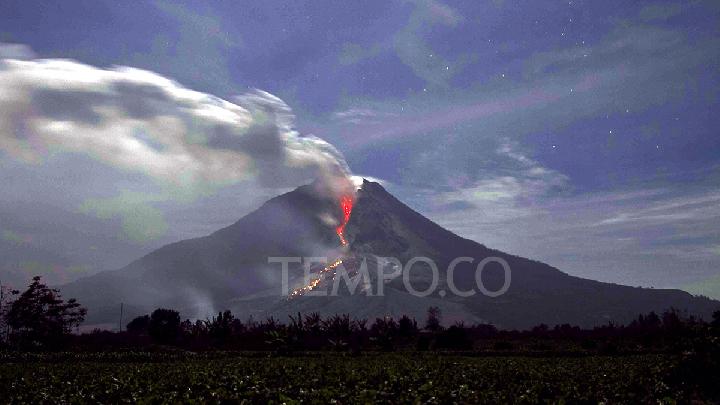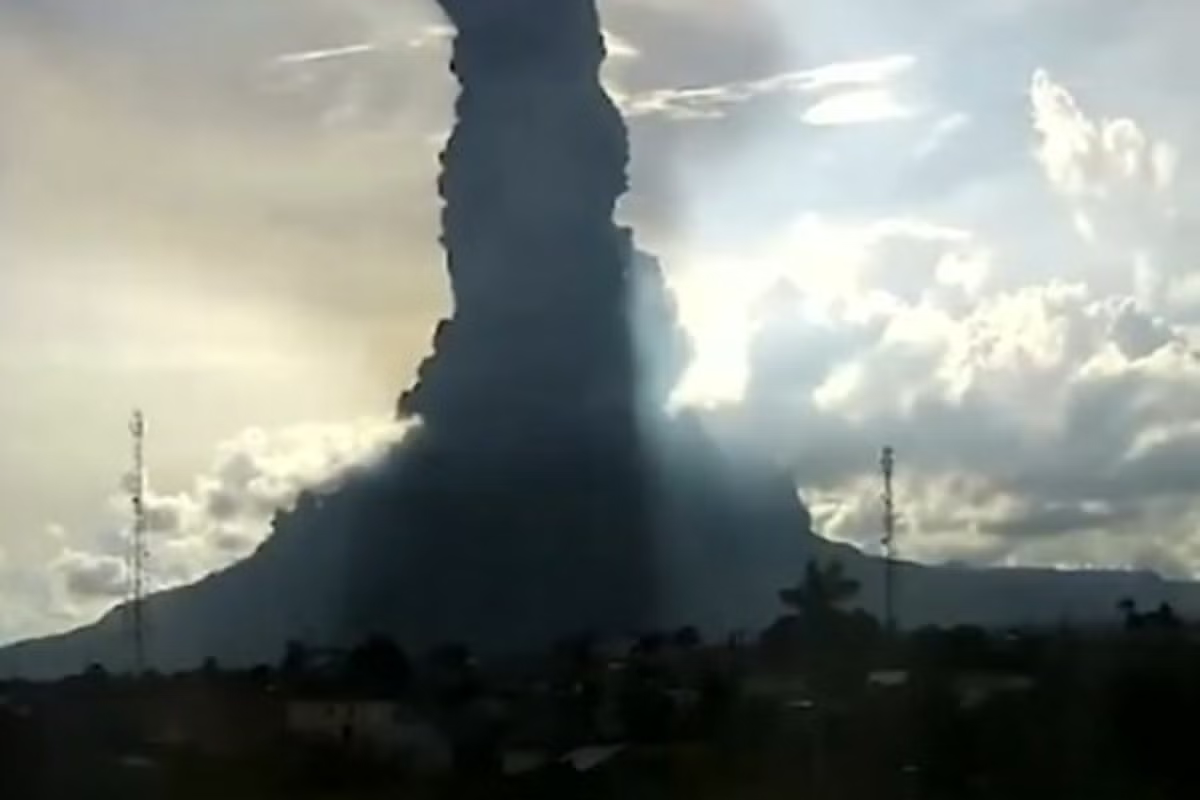
Mount Sinabung erupted on Monday, sending a dense plume of volcanic ash around 3.5km into the sky and prompting Indonesian authorities to warn residents and tourists to stay away.The volcano, located in Karo regency in North Sumatra, began erupting at 10.17am local time, Lana Saria, head of the national geological agency, said. “The ash column appeared black and thick, tilting towards the east and southeast,” she said. “This eruption was recorded on a seismogram with a maximum amplitude of 120mm and a temporary duration of approximately 1 hour, 1 minute, and 48 seconds.”The geological agency urged people to avoid activities in villages designated for relocation and warned them against entering the volcano’s danger zone. Authorities had earlier prohibited all activities within 3km of the summit and within a 4.5km sector extending towards the southeast.In this photo released by the Geological Agency (Badan Geologi) of Indonesia's Ministry of Energy and Mineral Resources, Mount Sinabung releases volcanic materials into the air during an eruption in Karo, North Sumatra, Indonesia, Monday, Aug. 31, 2026. (Badan Geologi via AP) (AP)People living near rivers originating from Mount Sinabung are under an advisory to stay alert for any cold lava flows, which occur when heavy rainfall carries volcanic material downstream.The Karo regency government was asked to maintain close coordination with the Mount Sinabung Observation Post and the Centre for Volcanology and Geological Hazard Mitigation as federal and regional officials continued to monitor developments at the volcano.Sinabung, which rises 2,460m above North Sumatra’s Karo Plateau, was considered to be dormant for centuries before it suddenly erupted in 2010. It subsequently entered a prolonged period of activity, with major eruptions in 2013 and 2014, and a deadly eruption in May 2016 that killed at least seven people. The Centre for Volcanology had earlier noted that seismic activity at Sinabung was intensifying, with a marked rise in deep volcanic earthquakes and emission signals recorded between 1 and 12 August. Scientists had also reportedly detected several low-frequency and hybrid earthquakes during this period.As the day wore on, the volcano’s emissions grew denser and turned greyish-white, reaching a height of up to 1km above the summit.
Indonesia’s Mount Sinabung volcano spews ash 3.5km into air after major eruption
Sinabung on North Sumatra’s Karo Plateau was considered to be dormant for centuries before it suddenly erupted in 2010
355 words~2 min read