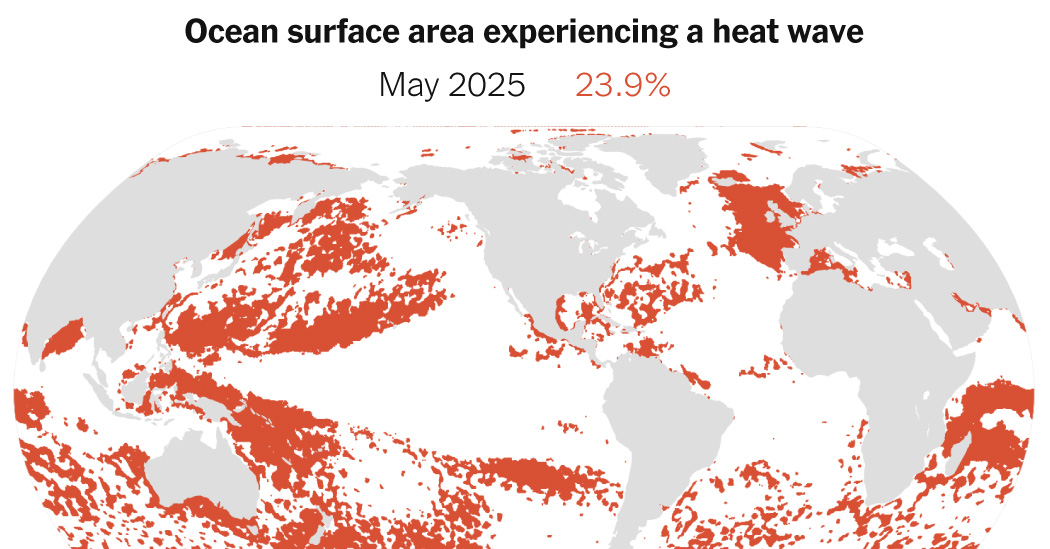
In 2024, an interdisciplinary team of social and marine scientists set out to examine whether the prevalence of marine heatwaves — prolonged rises in ocean temperatures that are becoming more frequent and more intense because of climate change — has any impact on child and maternal health outcomes. “I was very ready to find nothing,” said Clark Gray, a human geographer and professor at University of North Carolina at Chapel Hill, who led the research.
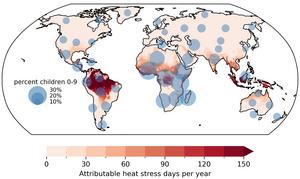
The researchers published their report this month, which revealed some distressing results. The team discovered that for every standard deviation increase in the number of marine heatwaves in a 24-month period — or roughly three more marine heatwaves than normal — child mortality increases by 5.4 percent. Child wasting and child stunting, which can result from malnutrition, also increased — by 6.5 and 8.8 percent respectively.
The ways in which marine heatwaves might influence extreme weather on land are still being studied. This study, published in the Proceedings of the National Academy of Sciences, is not without its limitations. The authors specifically looked at health data from low and middle-income countries. The data analysis also only demonstrates a correlation between marine heatwaves and health; the authors are still not sure why or how child malnutrition and mortality spikes when oceans warm.