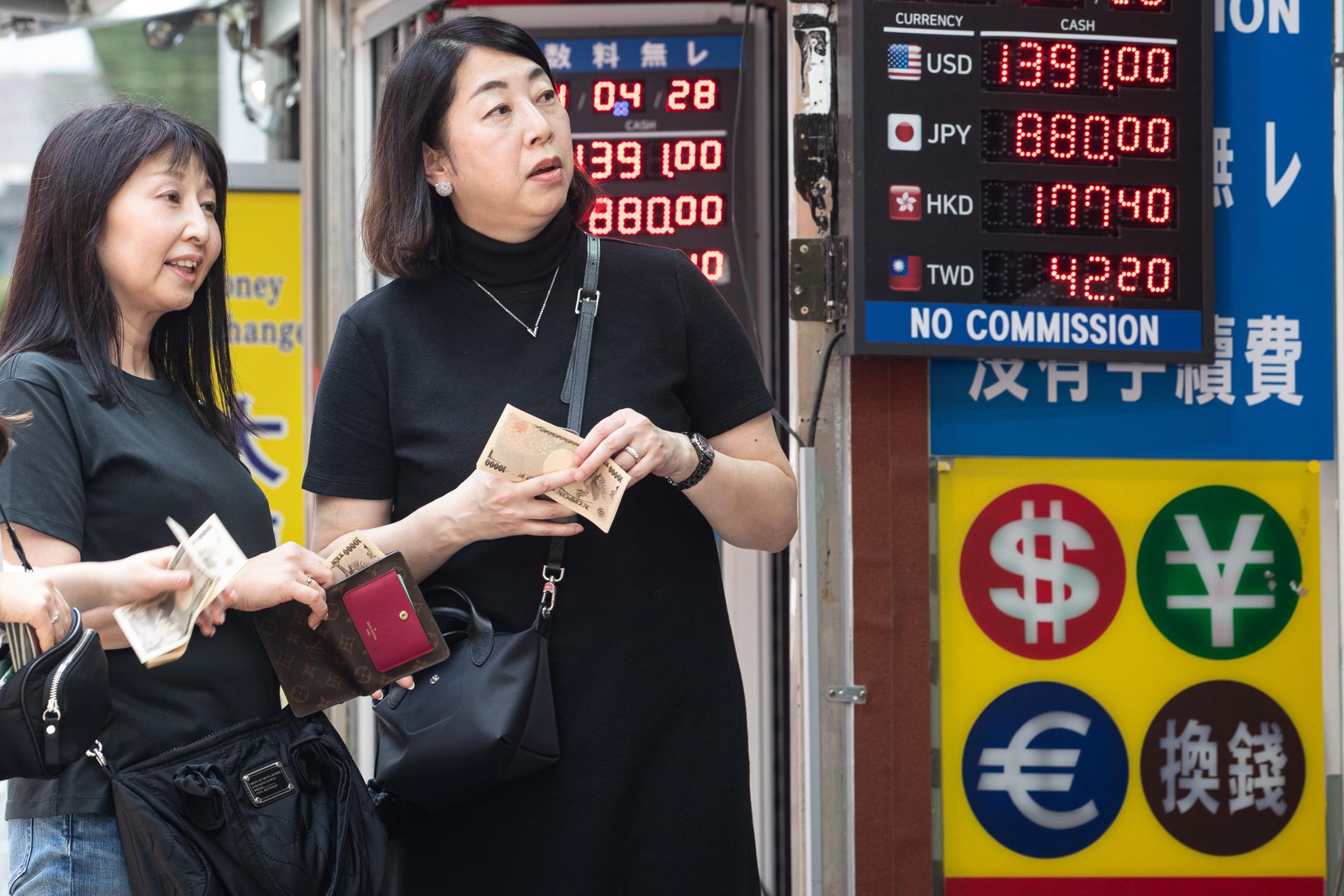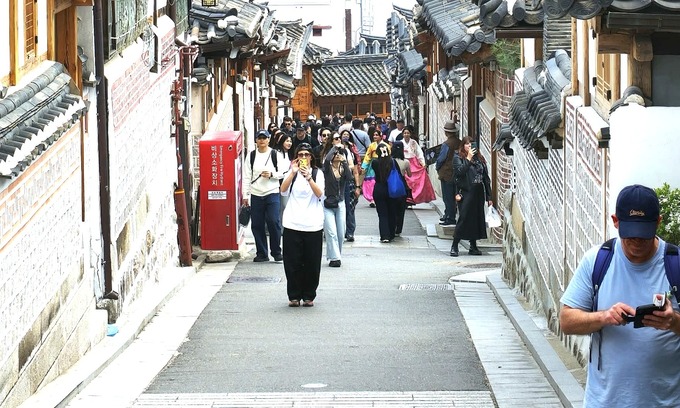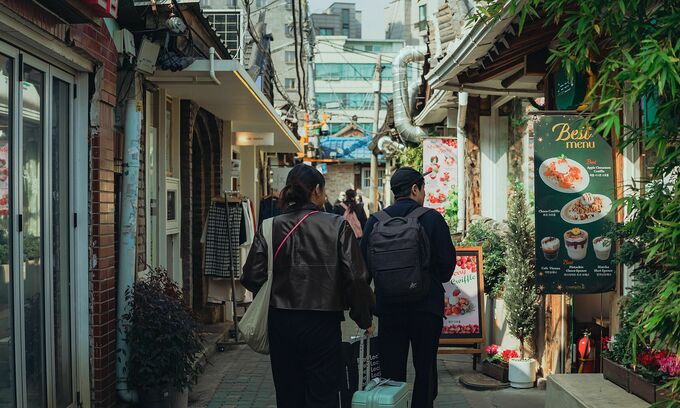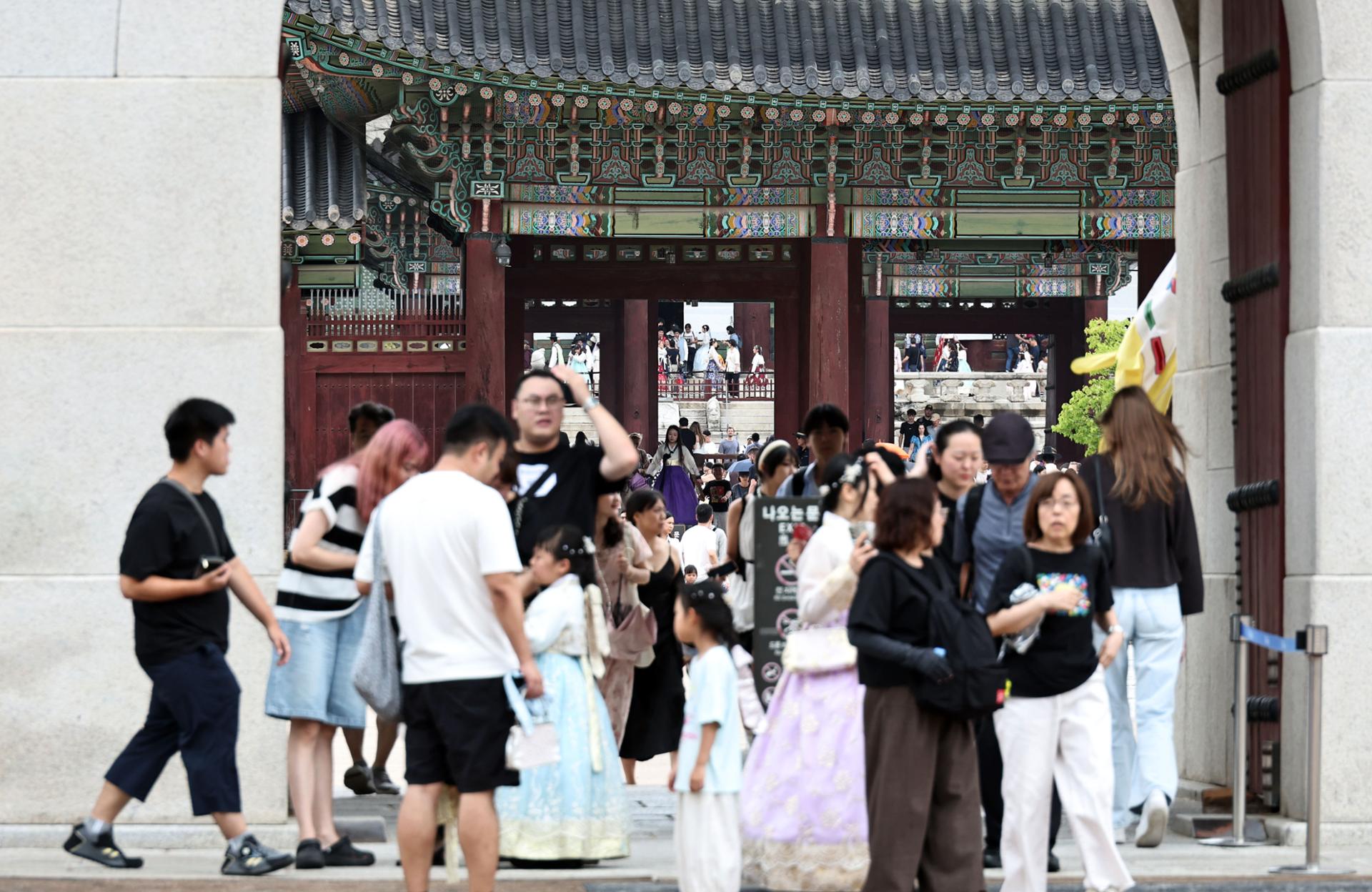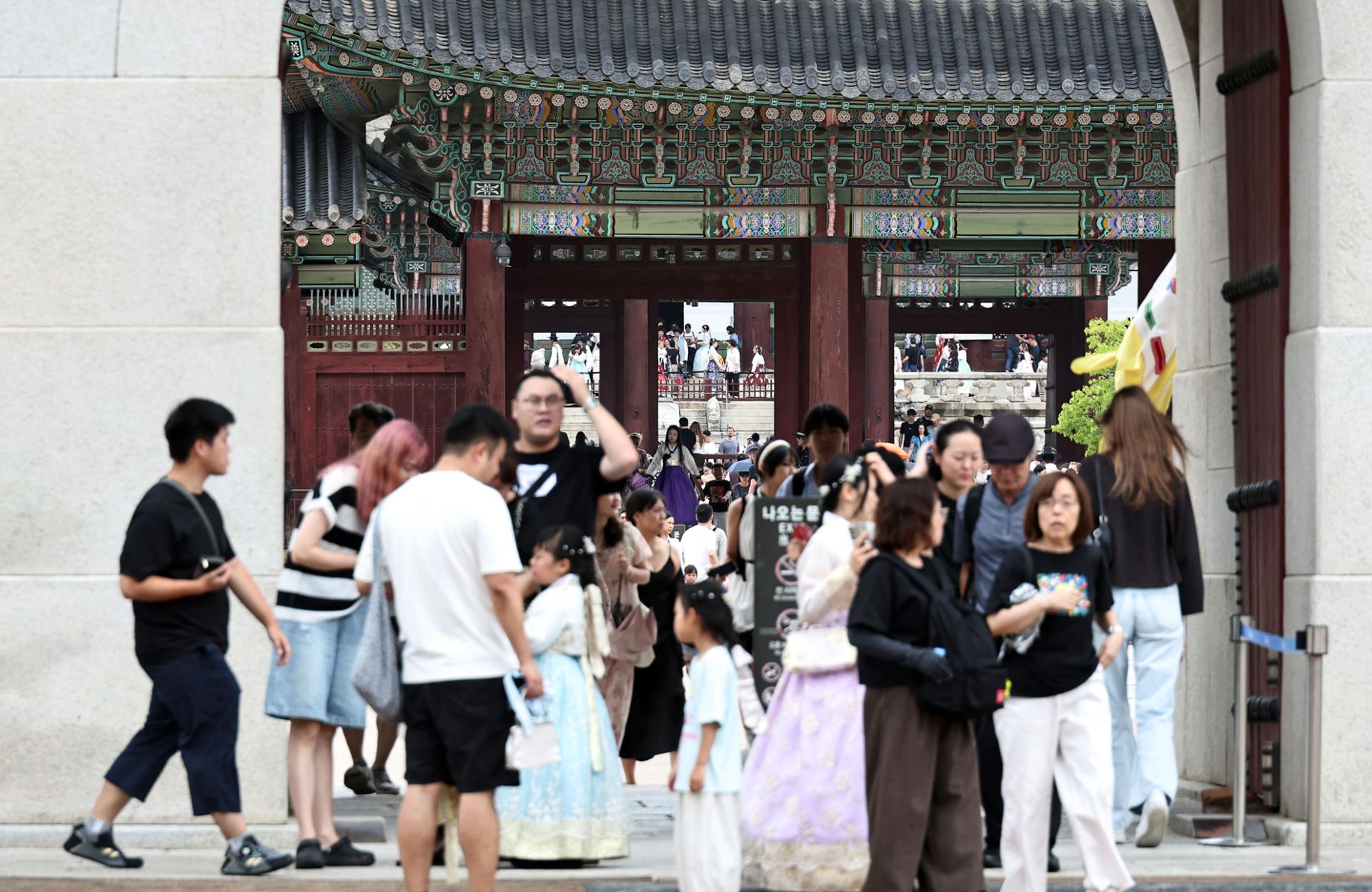
Foreign arrivals to Korea rose 21.3% to 12.8 million through July, with card spending up 48.3% to W12.09tr Visitors watch the changing of the guard ceremony at Gwanghwamun in central Seoul on Sunday. (Yonhap) South Korea was the top overseas destination for Japanese travelers by market share, as a weak yen and the country's growing cultural pull draw record numbers of visitors, the Ministry of Culture, Sports and Tourism said Monday.Japanese arrivals reached 2.28 million in the first seven months of 2026, up 18.8 percent from 1.92 million a year earlier, the ministry said. That growth far outpaced the 4.1 percent rise in Japanese overseas travel overall, which totaled 8.14 million people through July.South Korea accounted for 28 percent of Japan's outbound travel market, up 3.5 percentage points from a year earlier and the highest share of any destination. The United States followed at 13.1 percent, Taiwan at 9.4 percent, Thailand at 6.8 percent and Vietnam at 6.1 percent, according to tourism data cited by the ministry.The affection has run both ways since roughly the same moment. Japan has been Koreans' most-searched overseas destination since 2023, according to an official at the Tourism Ministry, and remained their top pick through 2025. South Korea, in turn, has topped Japanese travelers' destination rankings for the same three-year stretch.The pull is not symmetrical, however. Koreans made a record 9.46 million visits to Japan in 2025, according to the Japan National Tourism Organization, more than double the 3.65 million Japanese visits to Korea that year, according to Korea Tourism Organization data. Visitors watch the changing of the guard ceremony at Gwanghwamun in central Seoul on Sunday. (Yonhap) Japanese visitors are part of a broader surge in foreign arrivals to South Korea, which totaled 12.8 million through July, up 21.3 percent on-year. Foreign credit card spending rose 48.3 percent to 12.09 trillion won ($8.8 billion) over the same period, the ministry said.Japan's distinction lies elsewhere: No other country sends a larger share of its own outbound travelers to Korea specifically, even though China and several other markets outnumber Japan in total visitor count.China remained the single largest source of visitors by raw numbers, sending 3.99 million tourists to Korea through July, up 27.5 percent from a year earlier.Officials pointed to three main drivers: expanded air capacity between the two countries, the continued popularity of K-pop, K-beauty and Korean food, and a weakening yen that has made Korea relatively more affordable. From December to July, the yen fell 4.2 percent against the dollar and 4 percent against the yuan, compared with a 2.2 percent decline against the won.Weekly air capacity between Korea and Japan rose 2.4 percent to 348,751 seats as of July, even as some airlines shifted long-haul capacity to shorter routes amid high oil prices. Regional airports saw the sharpest gains, with Japanese arrivals jumping 52 percent through Gimhae International Airport near Busan, 60 percent through Jeju International Airport and 93 percent through Cheongju International Airport in North Chungcheong Province."Rising flight capacity, the popularity of K-culture and currency conditions are energizing the market," Kang Jung-won, the ministry's director general for tourism policy, said in a statement. Korea and Japan's tourism authorities are set to meet in September to mark the 40th anniversary of their bilateral consultative council.
Japan and S. Korea remain each other's top destination
South Korea was the top overseas destination for Japanese travelers by market share, as a weak yen and the country's growing cultural pull draw record numbers o
544 words~2 min read