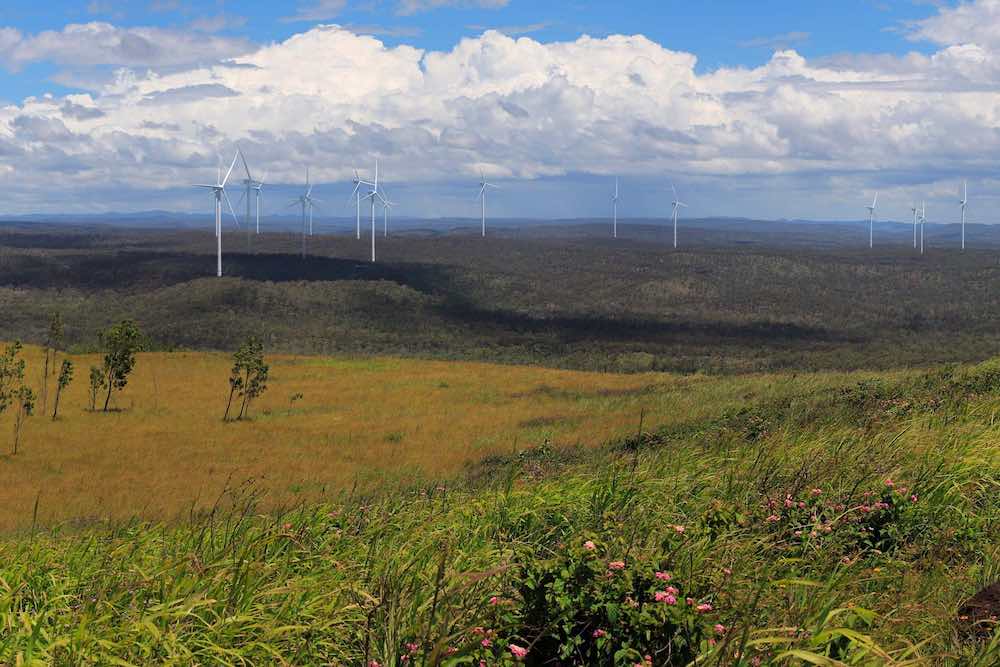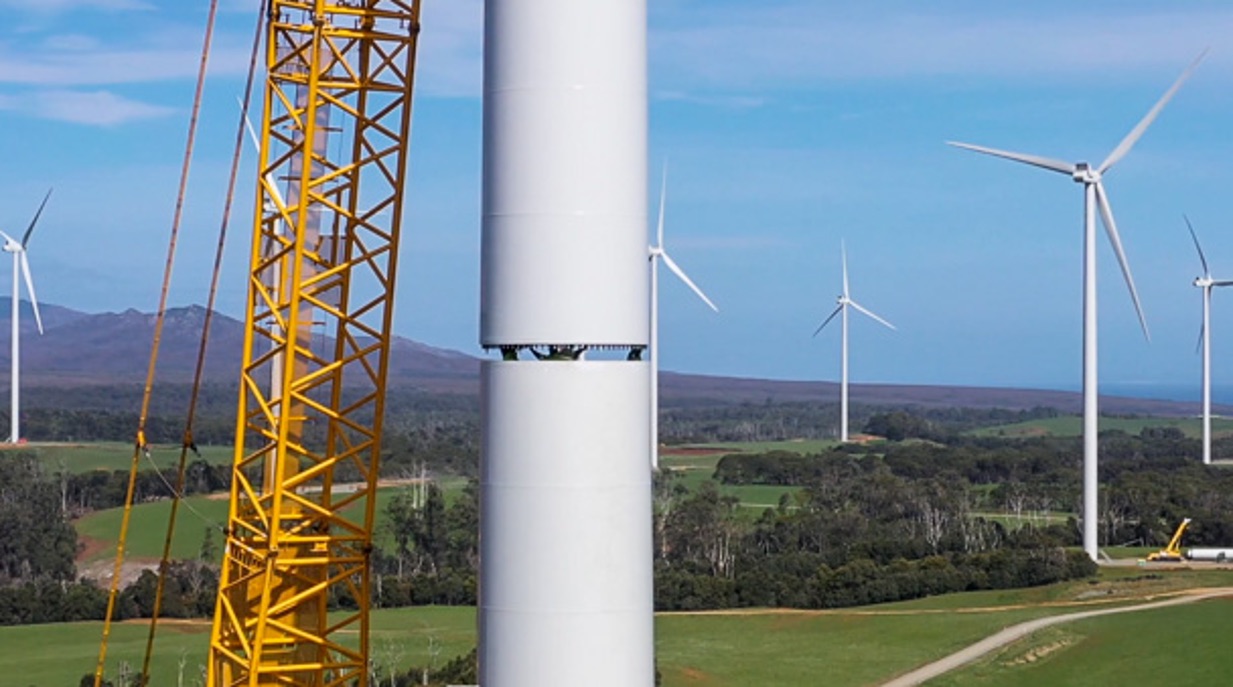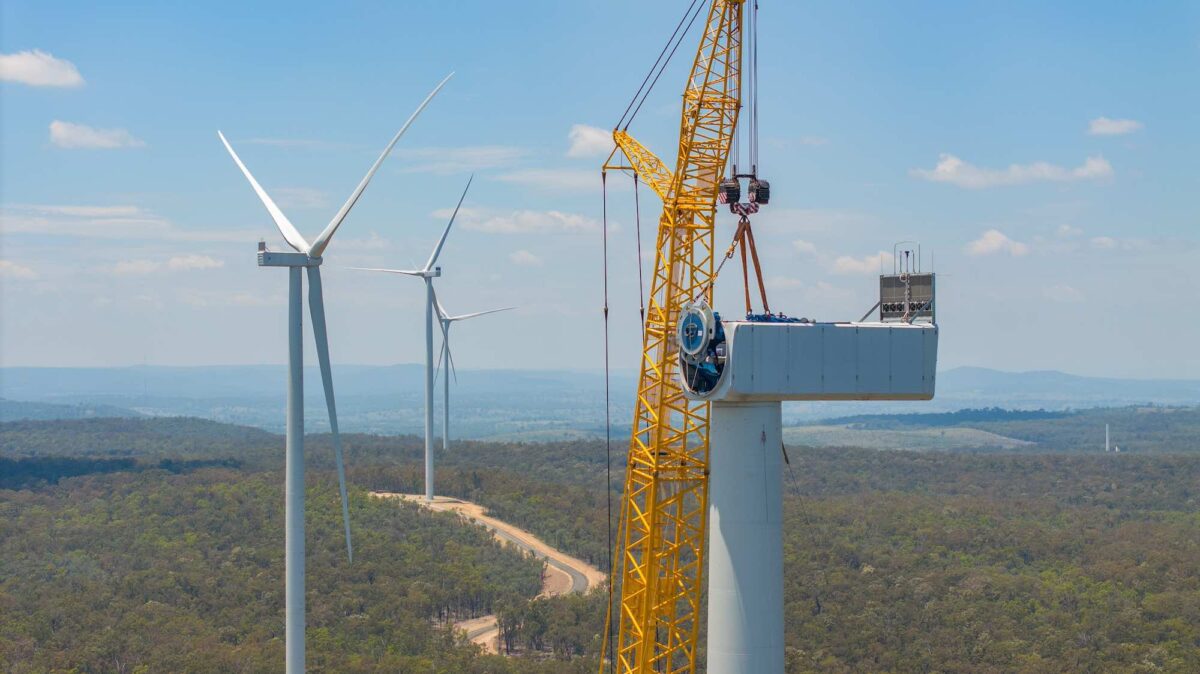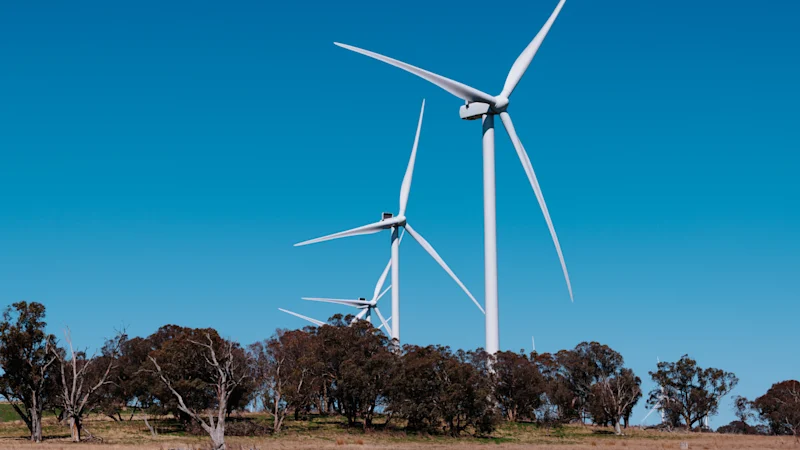
August 31, 2026 — 5:31pmA decision to greenlight the eastern seaboard’s largest wind farm in more than two years has provided a much-needed boost to Australia’s renewable energy ambitions, helping to break an investment drought that has stalled the rollout of wind turbines and threatened the nation’s 2030 climate targets.Danish investment giant Copenhagen Infrastructure Partners on Monday said it had acquired the Gawara Baya wind farm in North Queensland – a project combining up to 69 wind turbines with a battery storage system – and would begin constructing it imminently.An impression of the Gawara Baya wind farm, to be located on pastoral land 65 kilometres from Queensland’s Ingham.The $1.7 billion project, with 408 megawatts of wind power capacity, will be the biggest wind farm in eastern Australia to lock in financing since 2024. Only three other smaller wind projects across the grid gained the green light in the 2026 financial year, including the Delburn wind farm in Victoria, and the Palmer and Carmodys Hill projects in South Australia.Australia recently notched a milestone in its shift to cleaner electricity, as contributions from renewables and batteries supplied an average of more than 50 per cent of nation’s main grid for a three-month period. At the same time, more than half of the remaining coal-powered generators on the eastern seaboard are scheduled to be retired in the next decade, as their ageing, emissions-intensive equipment becomes less reliable and competitive.However, the renewable rollout continues to lag the trajectory that experts say is needed to keep within striking distance of the Albanese government’s target for 82 per cent of the grid to be green by 2030.To hit that goal, roughly 8 to 9 gigawatts of utility-scale solar and wind projects would need to come online each year, according to David Dixon, a senior renewables analyst at research firm Rystad Energy.“The most we’ve ever started construction on in a single year is approximately 4 gigawatts – most years it’s closer to three,” Dixon said. “So the pace is a long way off where it needs to be.”The shortfall of wind generation is a particular concern. While solar farms have become cheaper as the cost of panels has fallen, major financial pressures loom over wind developers amid surging costs of steel, concrete, labour and financing, as well as heightened levels of community opposition in key regional areas and long connection delays due to a congested transmission network.Origin Energy chief executive Frank Calabria earlier this year noted that building a wind farm today was 50 per cent more expensive than it was in 2020. “Every cost line is moving in the wrong direction,” he said.The Clean Energy Investor Group – representing developers holding a combined $41 billion in Australian renewables assets – said the government’s recent backdown from plans to extend 30 per cent capital gains tax to foreign investors in the industry would help “crowd in” more international capital like Copenhagen Infrastructure Partners’ investment in Gawara Baya.“An Australian project is now actually going to have legs thanks to an international funder, and one of the major reasons why is that the government has set up the right framework on tax,” the investor group’s chief executive, Richie Merzian, said.Federal Energy Minister Chris Bowen on Monday said the green light for Gawara Baya showed that the government’s flagship renewable energy underwriting program, the Capacity Investment Scheme, was working.“Today’s announcement is further proof that the Capacity Investment Scheme is working – using Australia’s sun and wind to shield our grid from global energy volatility and put downward pressure on energy bills,” he said.Copenhagen Infrastructure partners bought Gawara Baya from Windlab, a wind developer previously majority-owned by billionaire Andrew Forrest’s Squadron Energy.Yi-Hua Lu, a partner at Copenhagen Infrastructure Partners, said the project marked a significant addition to its Australia portfolio, which also includes the proposed Star of the South offshore wind farm, off Victoria’s Gippsland coast.“The Gawara Baya project represents a significant long-term investment in Queensland, supporting regional jobs, infrastructure development and the reliable energy supply needed to underpin the state’s continued economic growth,” he said.The Business Briefing newsletter delivers major stories, exclusive coverage and expert opinion. Sign up to get it every weekday morning.Nick Toscano is a business reporter for The Age and Sydney Morning Herald.Connect via X or email.From our partners
Danish giant steps in to help break Australia’s wind farm drought
A decision to greenlight the eastern seaboard’s largest wind farm in more than two years has provided a much-needed boost to Australia’s renewable energy ambitions.
712 words~3 min read