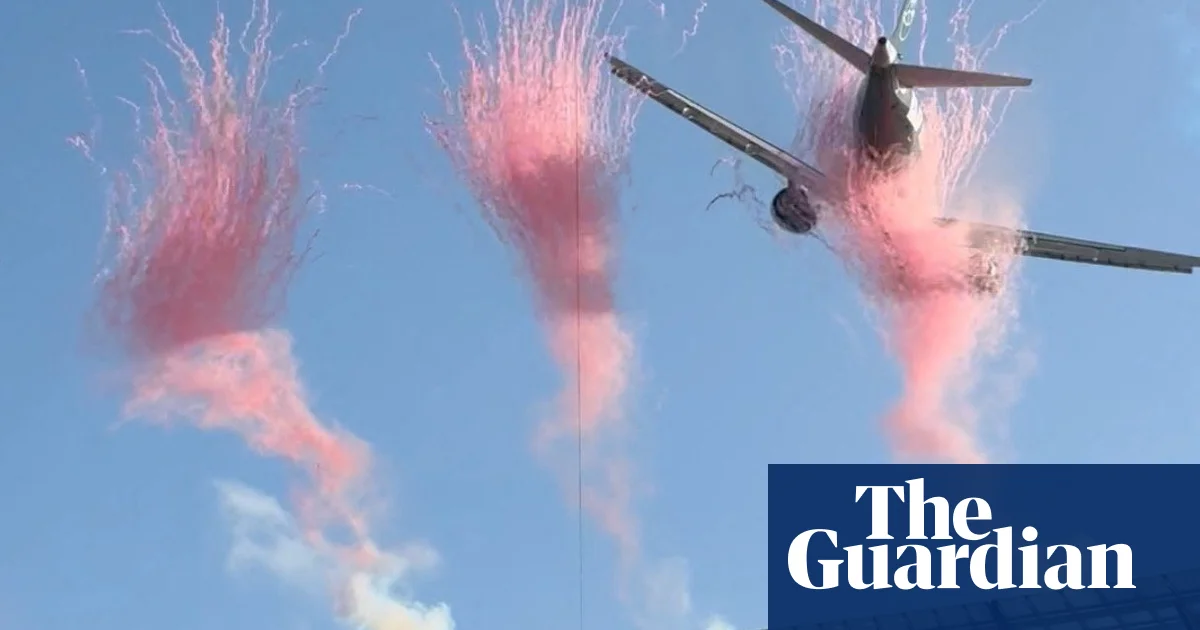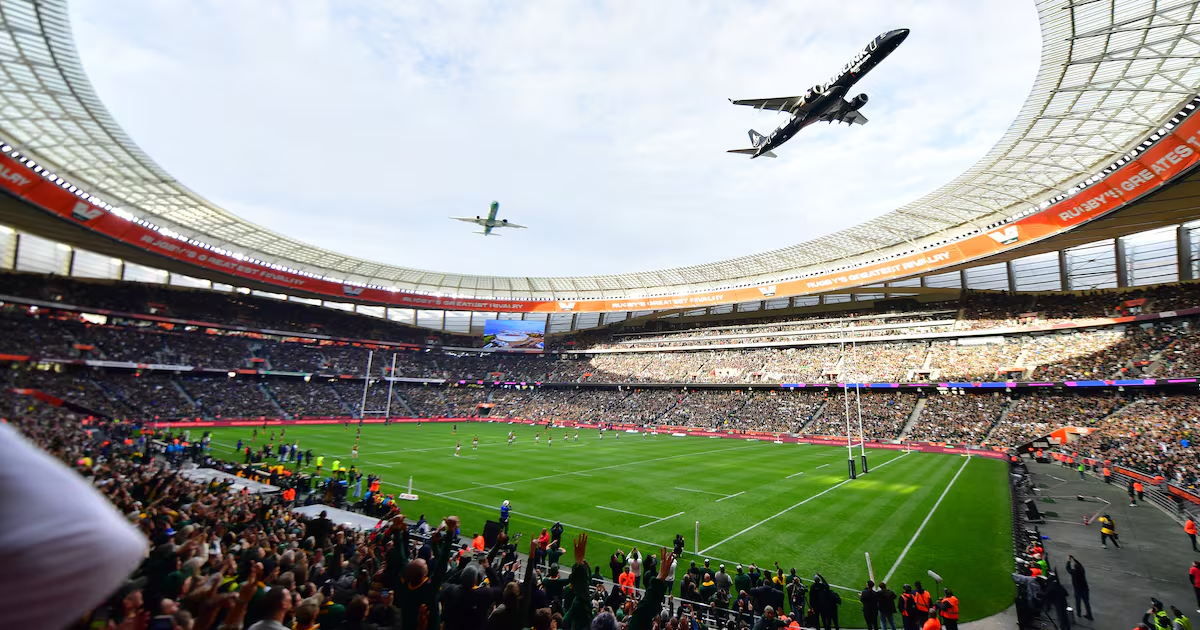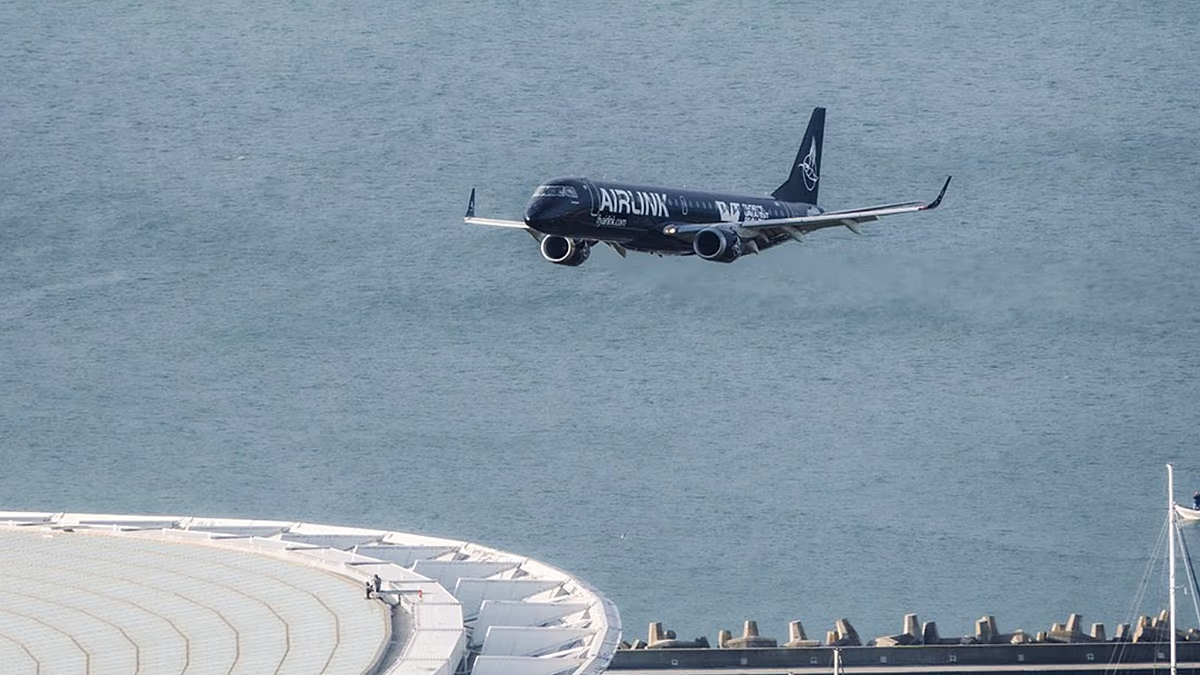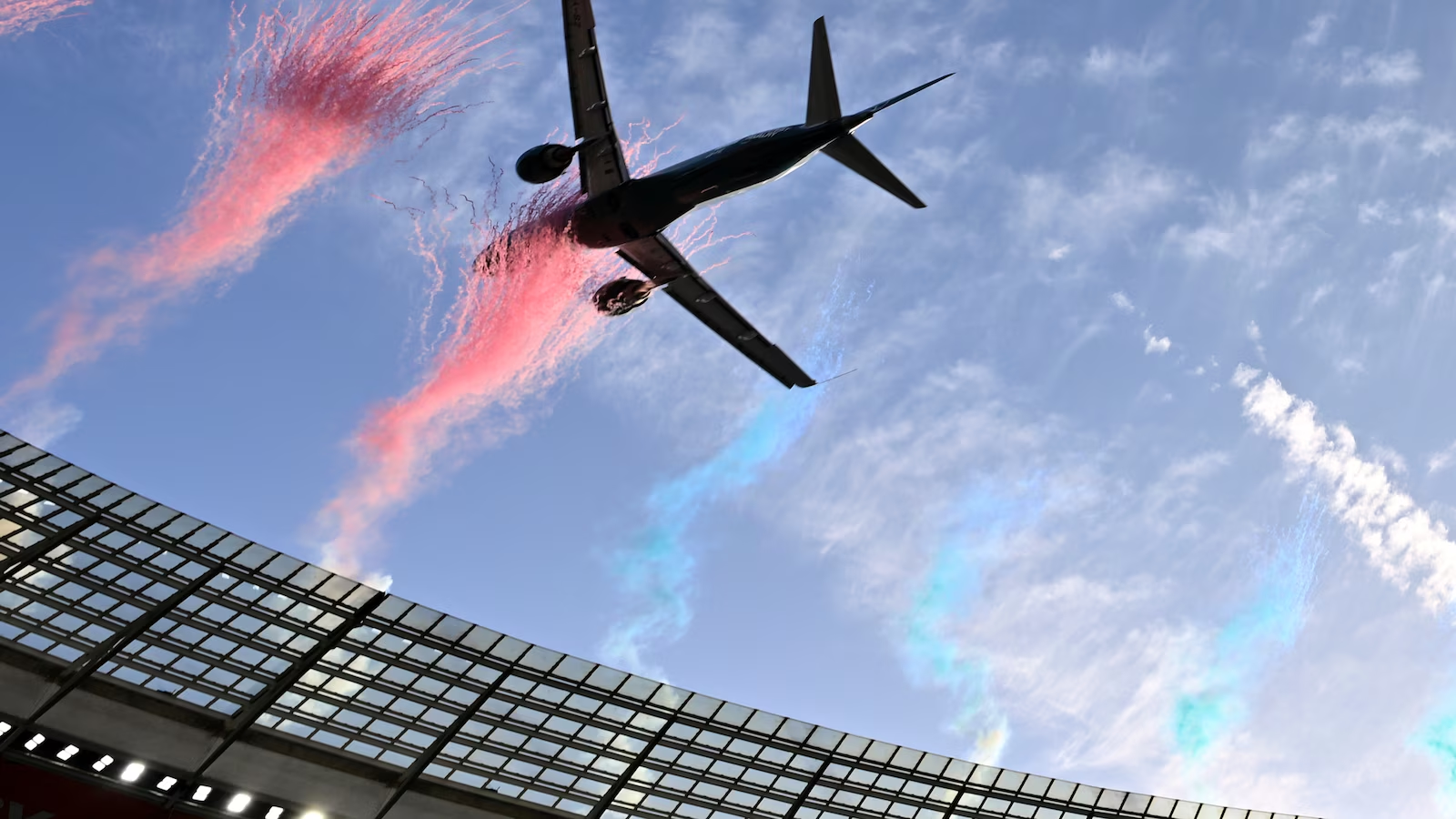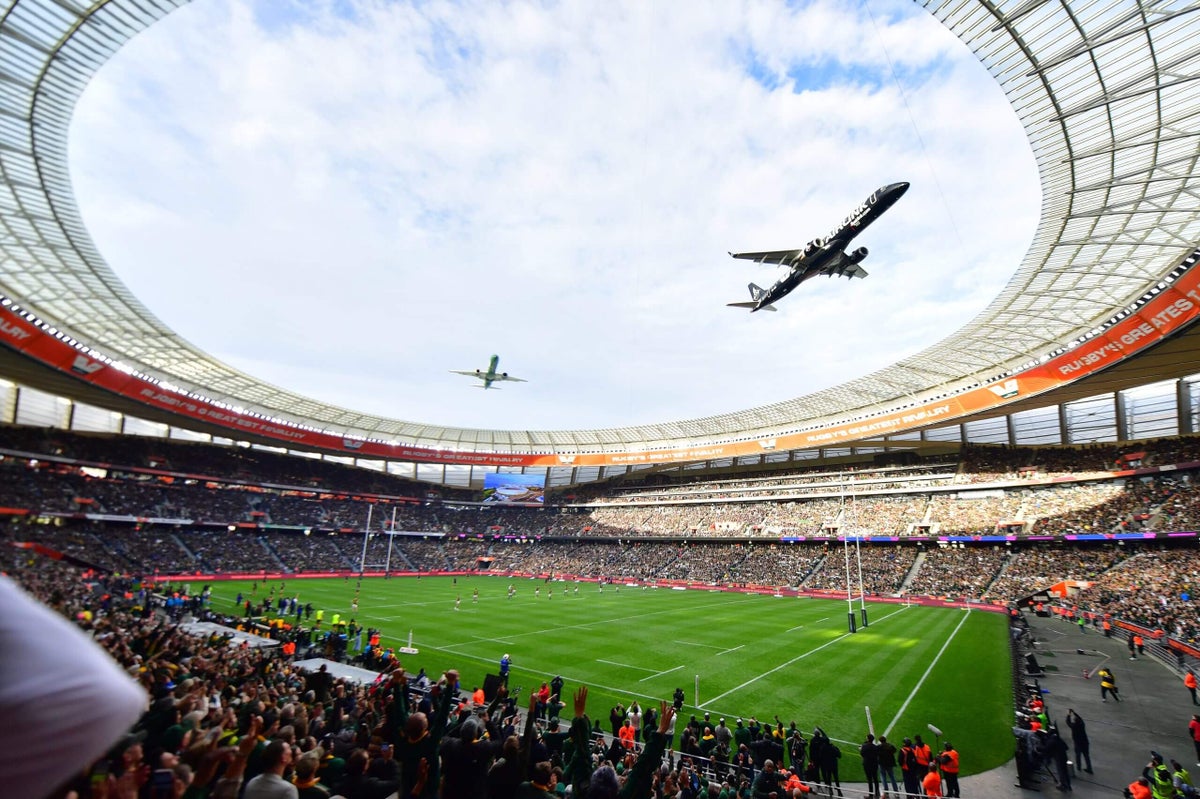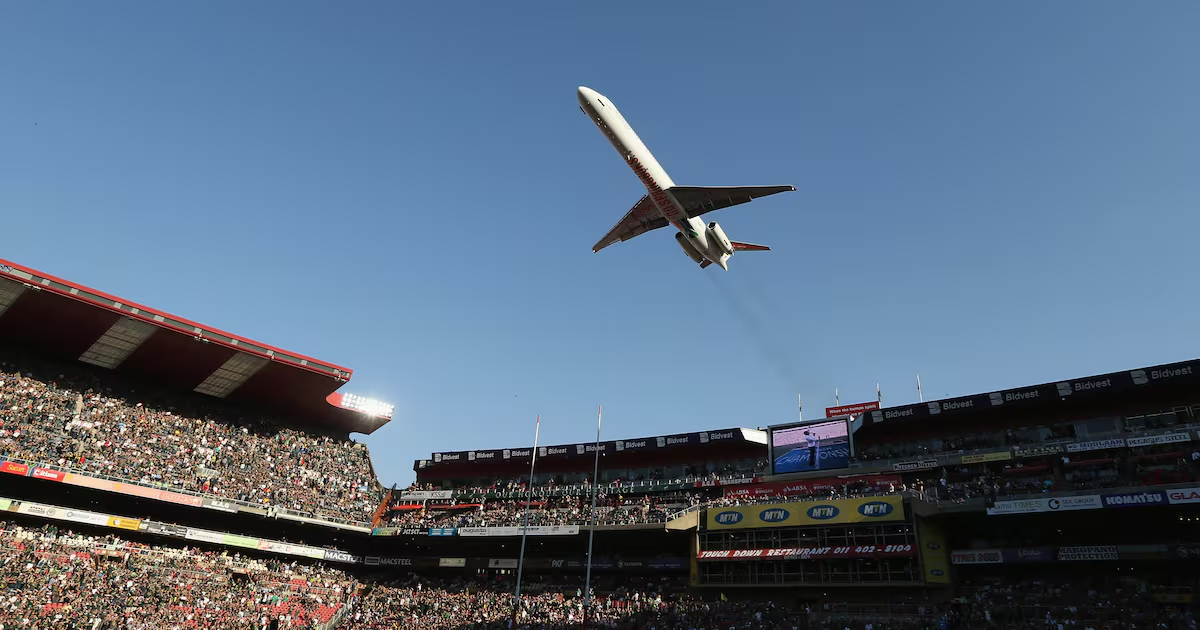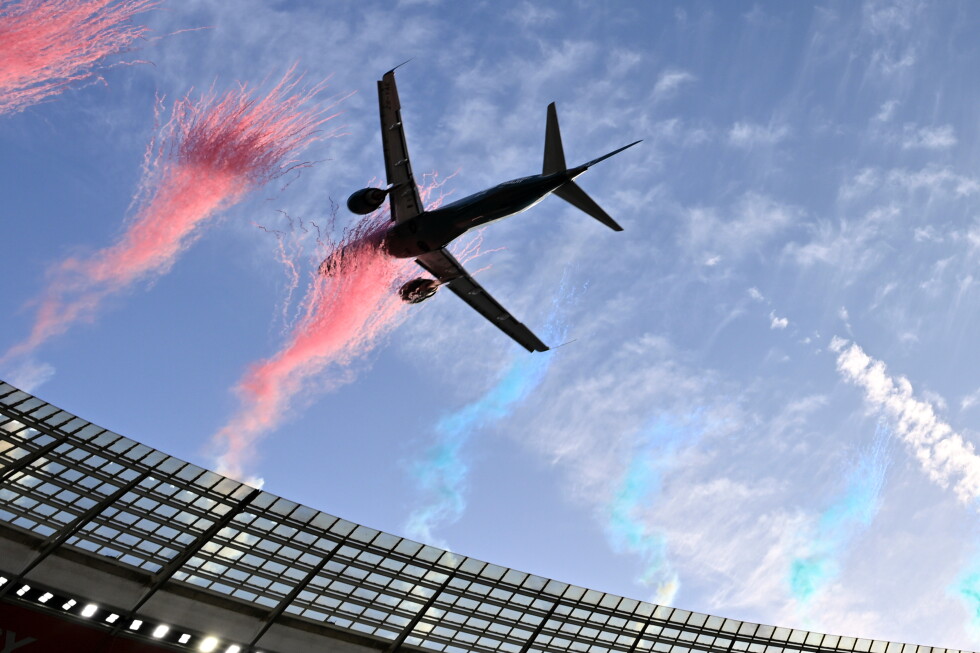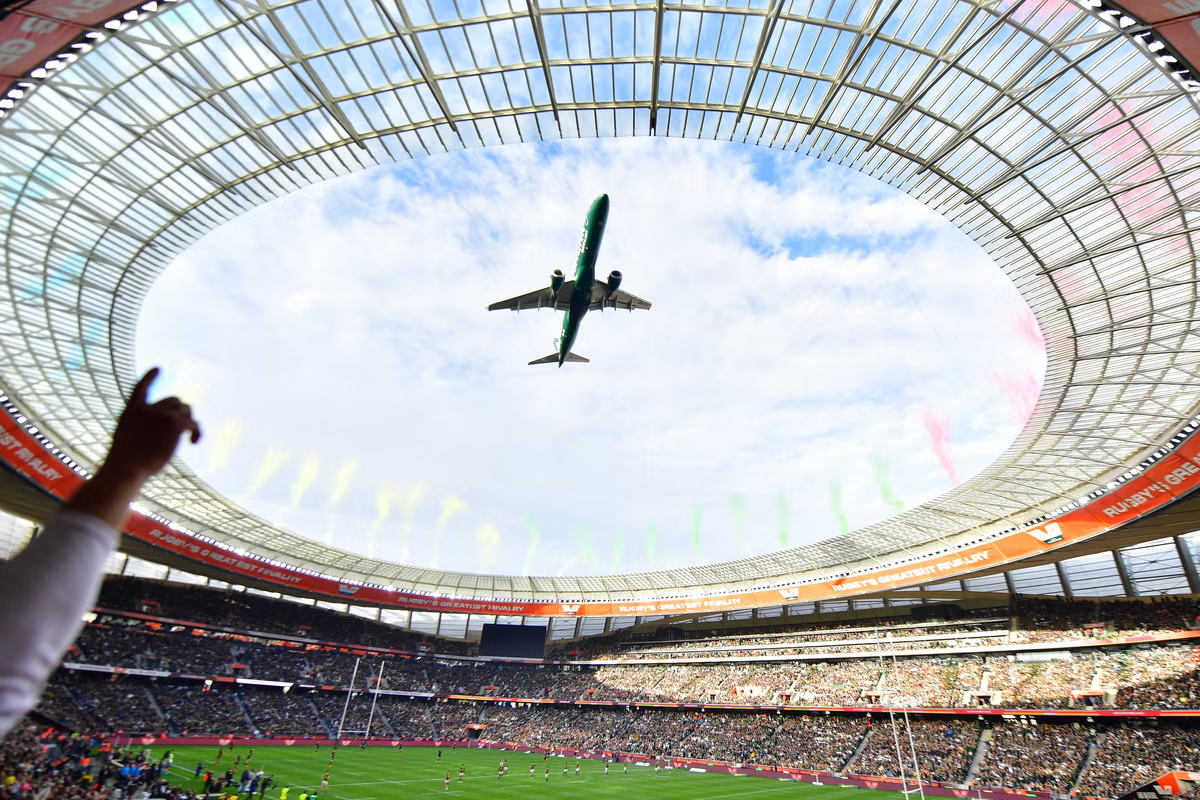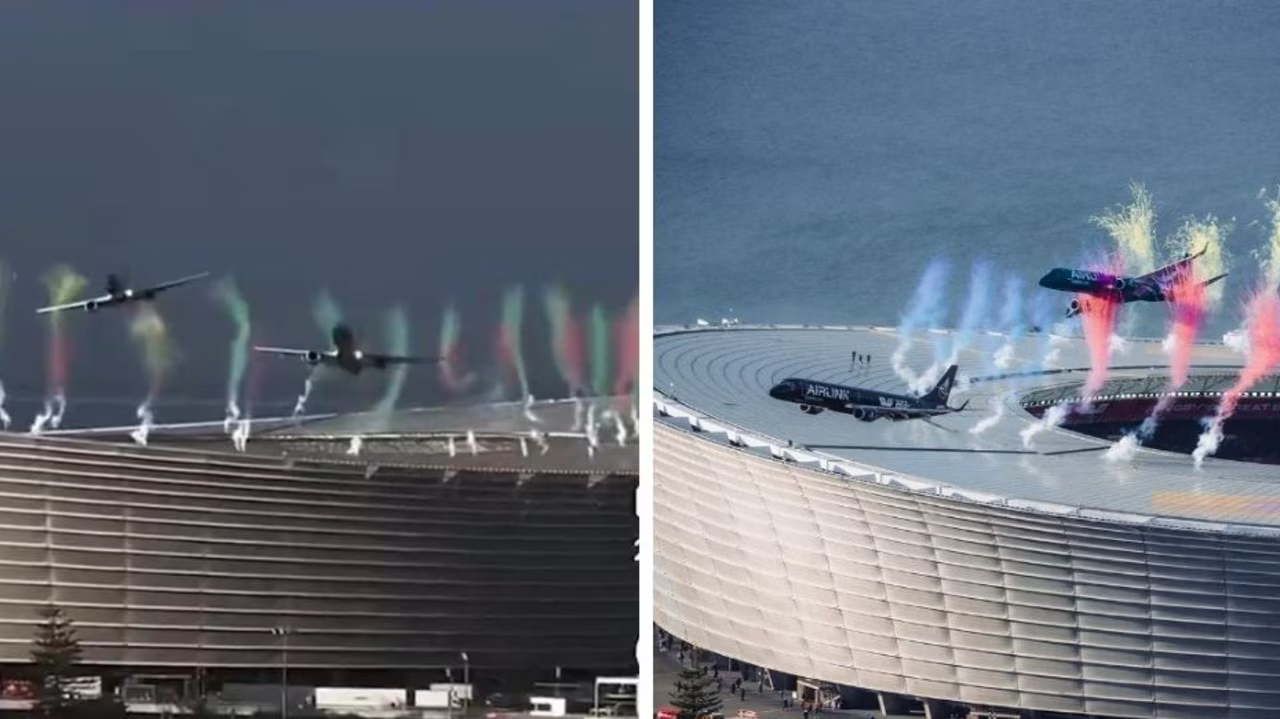
Pilots from Australia and beyond have questioned the wisdom of a daring stadium flyover before a rugby match in South Africa that shocked spectators around the world.The extraordinary scene of two passengers planes buzzing Cape Town’s DHL Stadium before a test match between South Africa and New Zealand alarmed viewers on Sunday.Such flyovers before rugby matches are a longstanding tradition in the Rainbow Nation – but there have been eyebrows raised at whether this one was too close for comfort.Images and videos taken from multiple viewpoints showed one of the planes flew significantly lower than its counterpart, coming within metres of the stadium roof.Flight Radar 24 calculated the lead jet cleared the stadium roof by between 41 to 46 feet (12.5 to 14 metres).The second plane, although higher, could be seen flying through coloured pyrotechnic smoke sent up from the roof as the aircraft passed.Keith Tonkin, an Australian aviation expert, said the event was no doubt “spectacular” but he could not imagine a similar scenario being allowed here.He brushed off suggestions from some commentators that an unexpected gust of wind could have led to disaster, saying pilots and logistics staff “almost certainly would have thought of those things”.“And they satisfied themselves that they had sufficient margin of safety, across all of those issues,” Mr Tonkin said.“(But) like I said, I probably wouldn’t expect to see that happen in Australia or to see aeroplanes that big, quite so low to the ground across a big stadium full of people like that.”Airlink, the airline involved in the flyover, on Sunday responded to the “concerns expressed” amid the fervent international debate over the incident.The airline has not publicly revealed what the approved height of the flyover was.“Airlink notes the concerns expressed in various social media and online forums regarding yesterday’s formation flyby over Cape Town’s DHL Stadium,” the airline’s statement said.“The flight demanded careful planning and rehearsal, as it required navigating at low altitude, at around 150 knots. The South African Civil Aviation Authority and Air Traffic Navigation Services provided valuable guidance, approval and support to ensure a safe flyby.“The two aircraft were flown by highly-experienced crew, with each comprised of three senior captains operating in the roles of commander, co-pilot and safety/technical officer.“The flight data recorded by both aircraft confirms that the flights were performed within the SACAA’s approved and rehearsed safety altitude and speed limits for the flypast.”Mr Tonkin was confident Airlink and its pilots would have carefully planned the flyover but thought the aircraft did not need to be so low.“The views from above showing those aircraft so low to the stadium, I thought you probably just don’t need to be that close to provide the same spectacle for the people on the ground,” he said.Other experienced aviators, however, have pushed back on Airlink’s assertions and say the sight of the lead aircraft’s height as it passed the stadium rang alarm bells.Scottish pilot Scott Bateman wrote on X he was left “aghast” and expected many of his colleagues to feel the same.Mr Bateman acknowledged the scene appeared to be considered “a moment of national pride” for South Africa but was uncomfortable with what he saw.“The lead aircraft reportedly cleared the stadium roof by around 40–50 feet,” he said.“Hundreds of professional aviators around the world have looked at those images and expressed concern.“That deserves more than ‘nothing to see here’.”He said it was important to raise these questions “because aviation didn’t become one of the safest forms of transport by defending everything that worked”.“It became safe by relentlessly examining the things that nearly didn’t. And this is wholeheartedly one of those times,” Mr Bateman said.“Every time pilots challenge something, file a report, admit an error or question an accepted practice, somebody flying tomorrow is a little safer because of it.”Kiwi expert Vaughan Davis, a former air force pilot, wrote on social media he was sceptical the lead aircraft had flown at the height planned before the event.Mr Davis said the “safety margins in this stunt were insufficient. The aircraft were too low”.“Paradoxically, the crowd will have had a better view and seen the aircraft for longer if they’d been higher,” he said.“Despite the airline’s statement, this won’t have been the planned and authorised altitude. If there’s a flyover at the next match, see if it’s as low.”South Africa’s leading airline Airlink boasted of the “incredibly low flyby” on its social media, saying the occasion was “something truly special”.“The accuracy and discipline required from the crews to bring the two sunbirds, so low and in such tight formation is a real testament to the professionalism and skill of Airlink’s pilots and ops team,” it said.Flyovers have been a common feature at Springboks matches since the 1995 Rugby World Cup, with one also taking place before the first test against the All Blacks last week.South Africans on social media have laughed off or even become defensive at foreign criticism of the latest flyover.A fan who was at the previous match at Ellis Park, Johannesburg, commented on one of Airlink’s posts to say the shock at Cape Town’s flyover was misguided.“All the posts coming outta cape town saying it was too close. It's the angles people!” she said.“Last week it felt like they were gona (sic) take off the top of Ellis Park, but then you see the drone view and realise just how much space there was!”
‘Aghast’: Pilots lead backlash after jet flyover
Pilots from Australia and beyond have questioned the wisdom of a daring stadium flyover before a rugby match in South Africa that shocked spectators around the world.
894 words~4 min read