India’s auto market is entering the festive season on sharply different trajectories: TVS, Bajaj and Hero are riding 18-20% two-wheeler retail growth, while Ashok Leyland and Tata Motors CV benefit as MHCVs grow 14-16%. M&M Auto’s estimated August wholesales are up 38% year-on-year, Ashok Leyland’s 31% and TVS Motor’s 30%, even as M&M and Escorts face a tractor market slowing to mid-single-digit growth.
| Photo Credit:
REUTERS/RUPAK DE CHOWDHURI
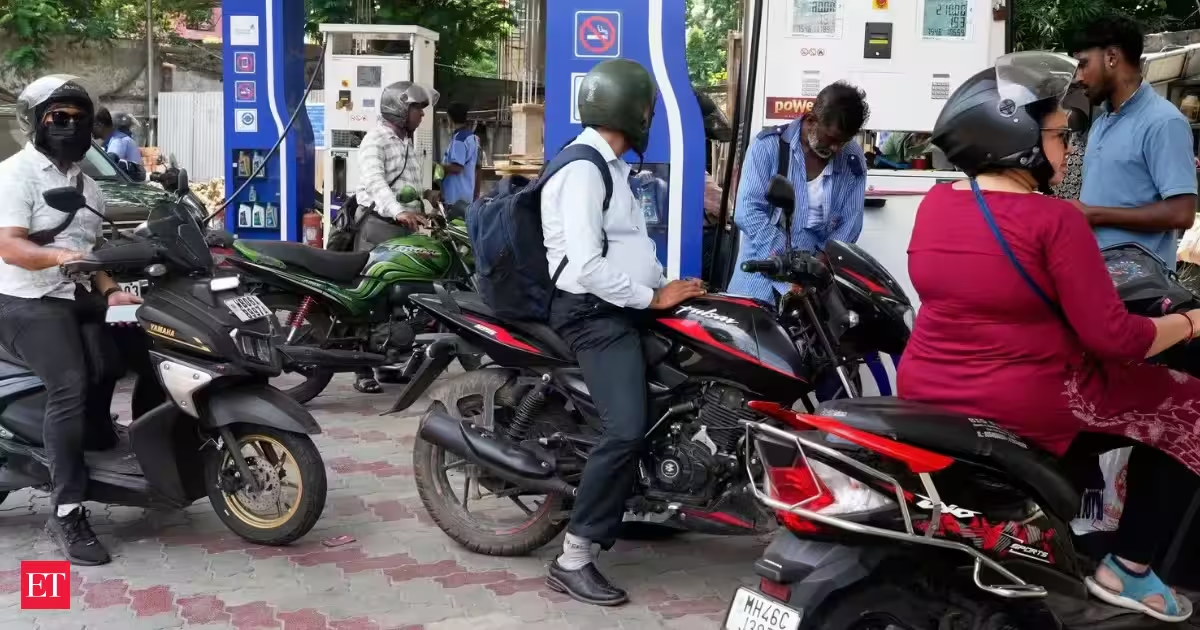
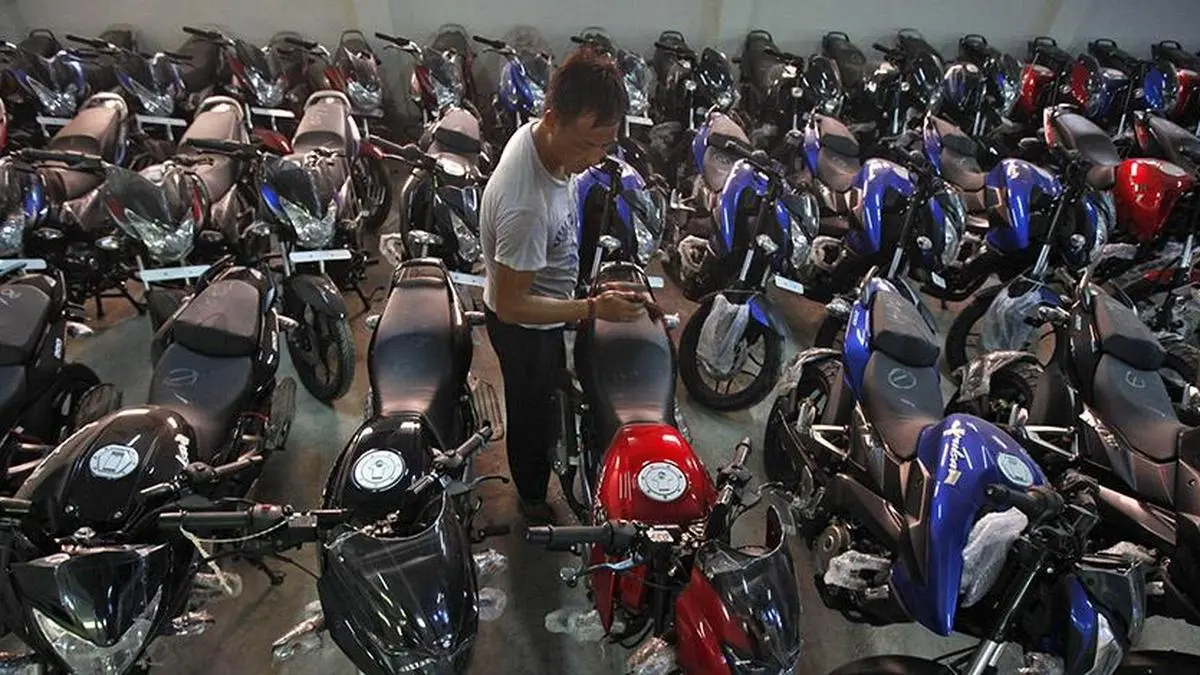
India’s automobile market is entering the festive season with two-wheeler retail growing an estimated 18-20% year-on-year and medium and heavy commercial vehicles (MHCVs) 14-16% in August, while tractor growth slows to mid-single digits after expanding about 18.5% in FY27 so far.The split is sharper at the manufacturers. M&M’s automotive wholesales are estimated at 107,000 units, up 37.9% YoY and 1.6% from July; Ashok Leyland at 20,000, up 31.2% and 2.1%; TVS Motor at 660,500, up 29.6% and 4.9%; Tata Motors CV at 38,300, up 28.3% YoY despite slipping 3.4% sequentially; and Bajaj Auto at 524,800, up 25.7% and 10.6%, according to YES Securities.Hero MotoCorp is making the sharpest sequential festive ramp-up among the large two-wheeler makers covered: its estimated 650,000 August wholesales are 21.8% above July and 17.4% higher YoY. Royal Enfield is seen at 128,600, up 8.8% and 12.8%, respectively. Honda, for which the brokerage house does not provide an August estimate, is increasing ICE supply after July dispatches hit a record 176,800 units, up 27% YoY.Underlying two-wheeler enquiries are growing 10-12%, with demand particularly healthy for above-125cc ICE motorcycles and scooters. Royal Enfield continues to see strong demand for its Classic 350, Bullet 350, Hunter 350 and Meteor 350, while capacity added since July is improving availability and retail conversion. TVS is seeing healthy demand for Apache and Ronin motorcycles and select Jupiter variants.Honda is attempting to regain ground after a period of underperformance. Shine SP availability has improved 10-15% YoY in FY27 so far, with increased ICE supplies helping the company gain urban share, according to YES.The stronger demand has not prevented price increases. TVS raised prices by a blended 1-1.5% in August, while Honda increased Activa prices by ₹250-300 and motorcycles by ₹500-600. Dealer inventory remains at four-five weeks.Replacement keeps trucks rollingTruck growth is being driven primarily by smaller fleets and retail buyers, even as large operators remain cautious and buy largely on need.Better total cost of ownership, financing availability and high utilisation are encouraging replacement, while festive demand for intermediate commercial vehicles and vehicle carriers is providing additional support.VECV, the other major manufacturer covered, is estimated to dispatch 8,460 vehicles in August, up 18% YoY and 2.7% from July. CV inventories remain lean at 20-22 days and financing conditions have not tightened.A second replacement trigger arrives in November, when restrictions on BS4 vehicles entering Delhi-NCR take effect. YES Securities expects the measure to encourage replacement of older trucks, potentially aided by road-tax waivers, interest subvention, discounts and scrappage benefits.“Improved total cost of ownership from buying a new BS6-compliant truck rather than continuing to operate older BS3 or BS4 vehicles is now driving replacement demand,” Ashok Leyland said, expecting the trend to remain a growth driver for several quarters.Tractors slow after strong startTractors are moving in the opposite direction. M&M’s estimated 32,000 August wholesales are up 13.8% YoY but 7% below July, while Escorts Kubota’s 9,260 are up 9.5% YoY and 6.1% sequentially. M&M’s FY27-to-date tractor volumes remain 17.6% higher at 224,461 units.But the industry’s early-FY27 pace is proving difficult to sustain. YES Securities expects tractor growth to slow sharply in the second half as the comparison base rises, taking full-year growth towards mid-single digits.Escorts Kubota said sustaining the nearly 20% industry growth of the first four months would be difficult from August. Uneven monsoon distribution and rising farmer input costs are additional risks, while manufacturers are holding prices through the peak kharif season to protect affordability.Published on August 31, 2026