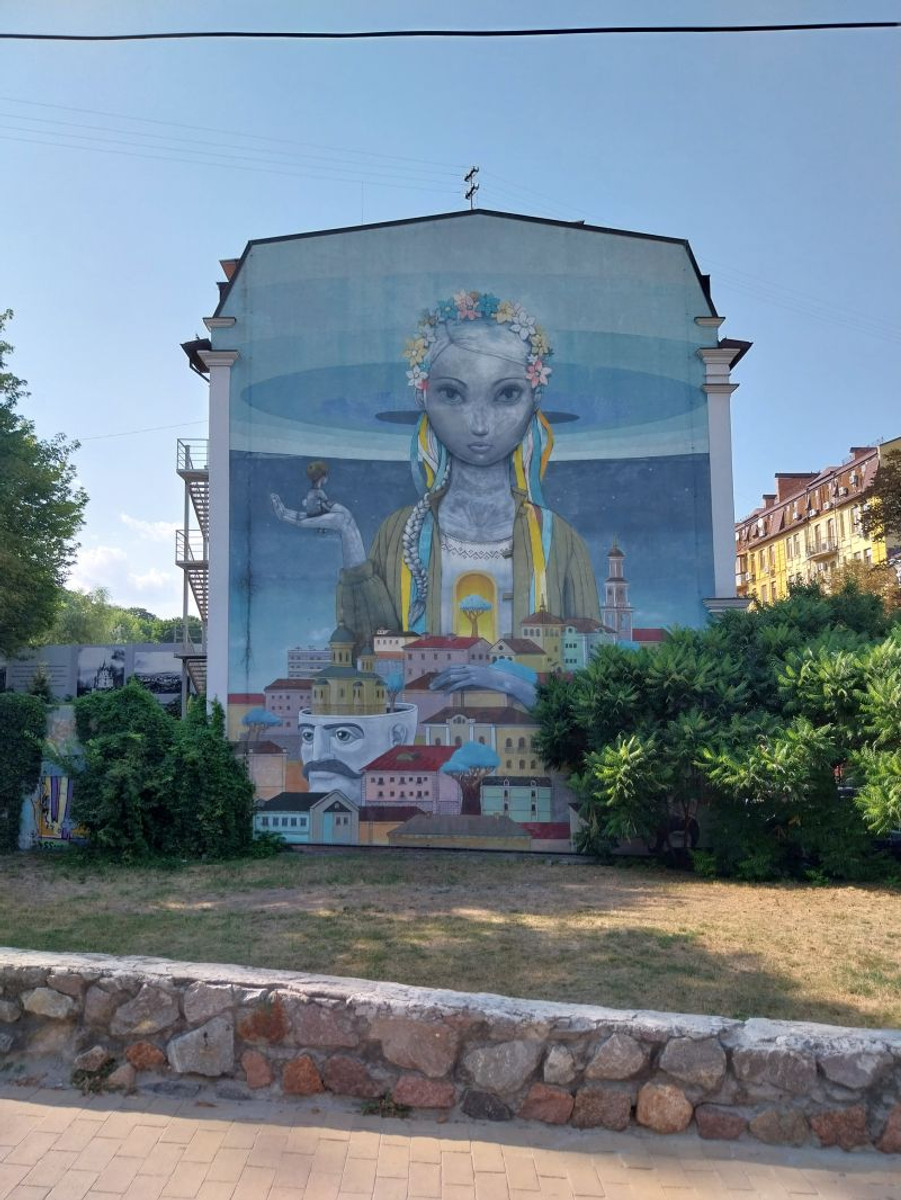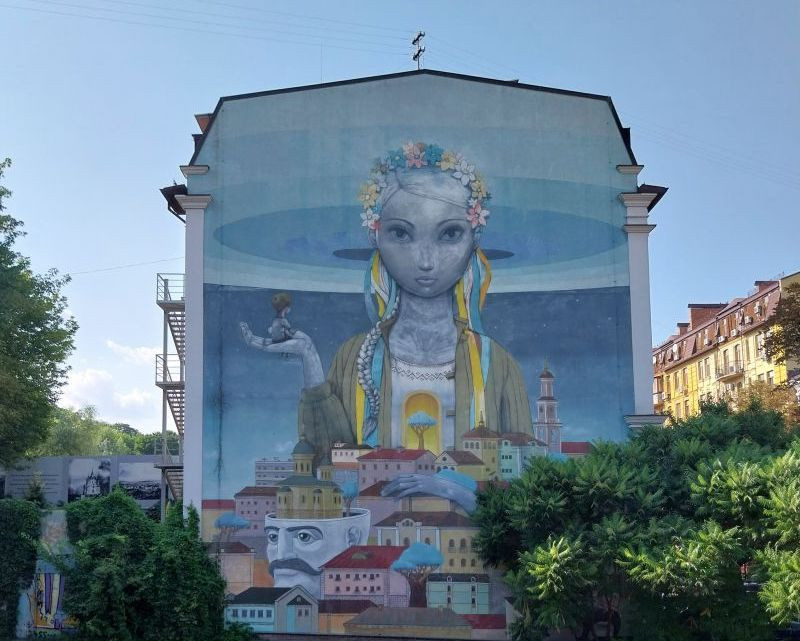
When I walk down Andriivskyi Descent in Kyiv toward the Podil district, I pause for a moment to admire the prominent exquisite mural, titled “Renaissance,” by French artist Seth Globepainter and Ukrainian artist Aleksey Kislow. Its message is unmistakably about Ukraine’s renaissance as a nation. In the palm of a young woman’s hand, the future in the guise of a small child. Apparently, the painters were strongly inspired by the architecture featured in the early Renaissance frescoes of Masaccio and Pierro della Francesca. Her body is beautifully intertwined with the image of a town: a Romanesque arch extends into her robe, while her left hand protectively embraces the houses. JOIN US ON TELEGRAMFollow our coverage of the war on the @Kyivpost_official. Also striking is the surreal motif of the two Cossack heads, from which buildings rise (might these be architects?). “Don’t mess with this lady,” was one of the thoughts that crossed my mind. Sadly, she does not have the means to protect the Kyivans from the harsh reality of ballistic missiles. Even so, her intense, focused gaze reminded me of the story of a former Latin teacher who joined the Armed Forces of Ukraine in 2022 and reportedly became one of the best snipers – call sign Panoushka – taking out Russian invaders (who had killed her beloved) from up to 1.6 kilometers away. As for the Renaissance: its essence was articulated in 1486 in the “Oratio de Hominis Dignitate” (Oration on the Dignity of Man), the humanist manifesto by the Italian scholar and philosopher Giovanni Pico della Mirandola (1463–1494). In it, a brilliant young man, barely 23 years old, argued that God, having created the heavenly globes and the earthly world teeming with all manner of animal life, still longed for a creature that could give meaning to His creation, be moved with love at its beauty, and be smitten with awe at its grandeur.
Ukraine’s Renaissance Spirit: From Kyiv’s Iconic Mural to Pico’s Humanist Legacy
How Ukraine’s Renaissance spirit comes alive in a Kyiv mural blending human dignity, history and resistance.
699 words~3 min read