Your agent passed its tests. It ran clean in the demo. You shipped it.
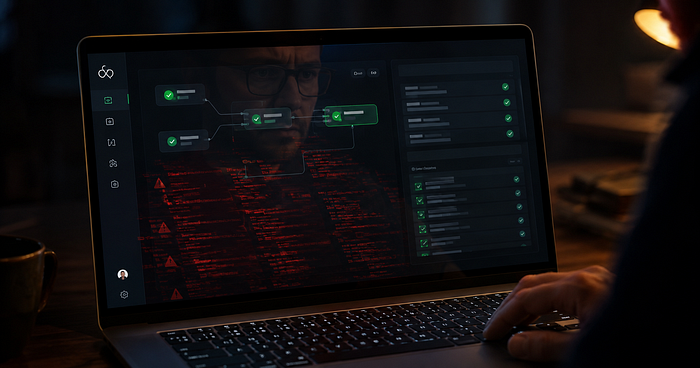
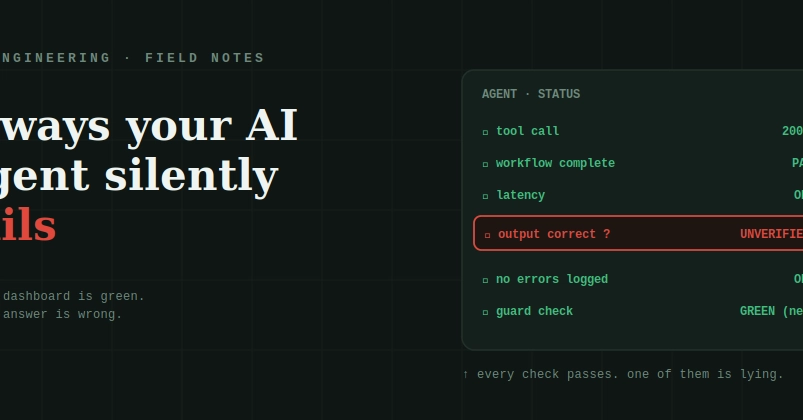
Two days later it's confidently returning wrong answers to real users — and your dashboard is still green. No error code. No stack trace. No 500. Nothing to grep for. The workflow completed. The response looks great. It's just wrong, and it has probably been wrong the same way a few dozen times already.
This is the thing nobody warns you about when you move an agent to production: agents don't fail like normal software. A database fails with an error code. An API fails with a 500. A bad LLM call fails with an obviously low-quality response you can spot. An agent fails by completing the task and handing you a confident, well-formatted, plausible answer that happens to be false — and by the time a downstream consequence makes it visible, hours have passed and the root cause is buried.
There's a name for this from classic reliability work: differential observability. The application suffers, but the observer designed to notice reports health. Gray failures. Fail-slow. The monitor stays green while the thing it's watching quietly rots.
Every failure below is a version of that same gap — a place where "success" and "correct" quietly come apart, and your monitoring only sees the first one. Here are nine of them, each with the symptom, why it stays invisible, and how to actually catch it.