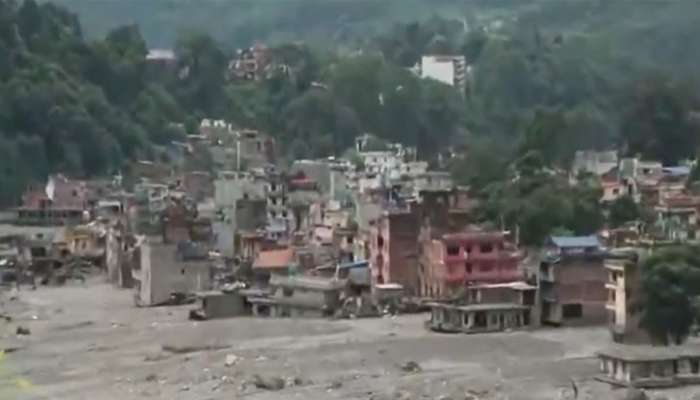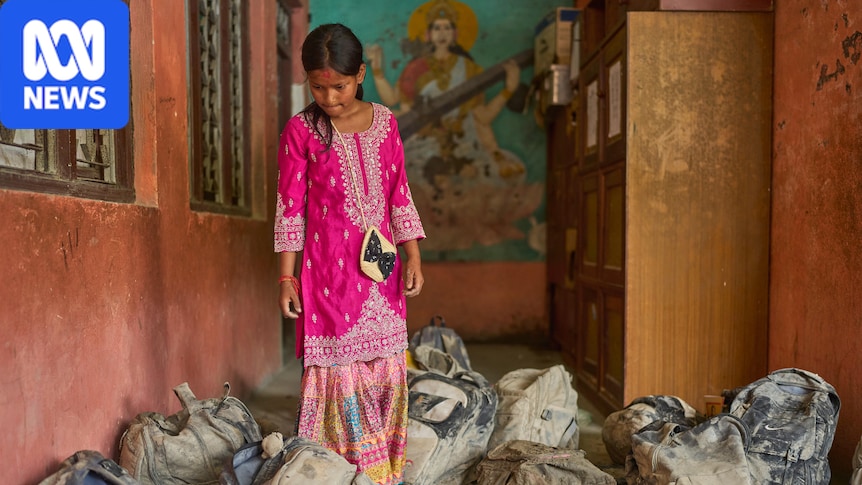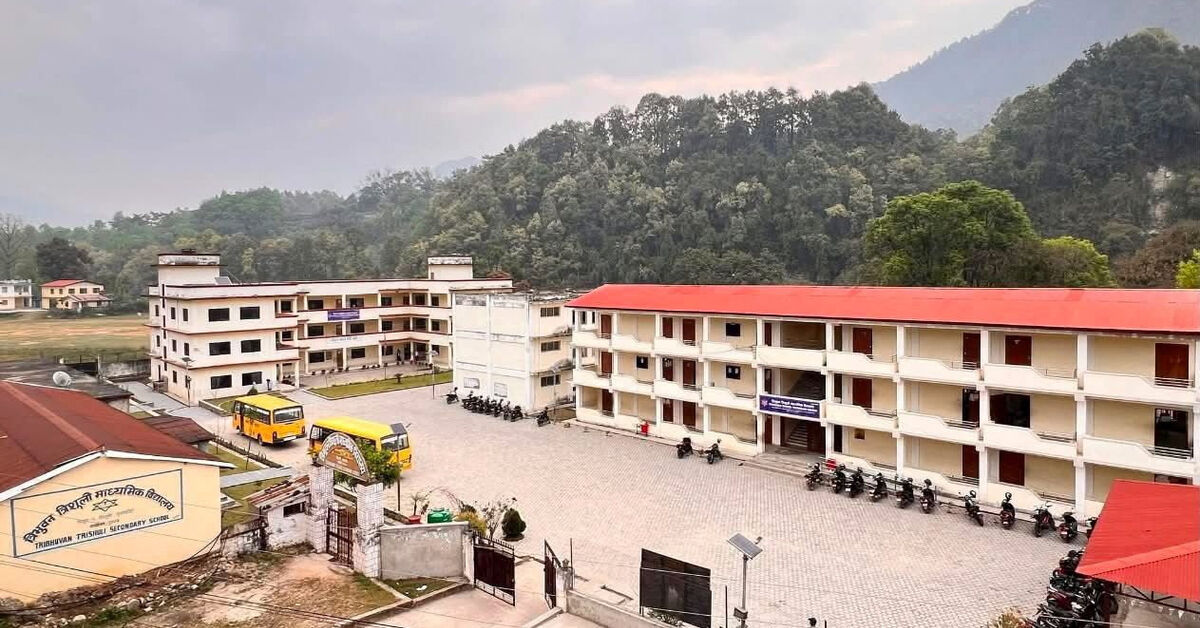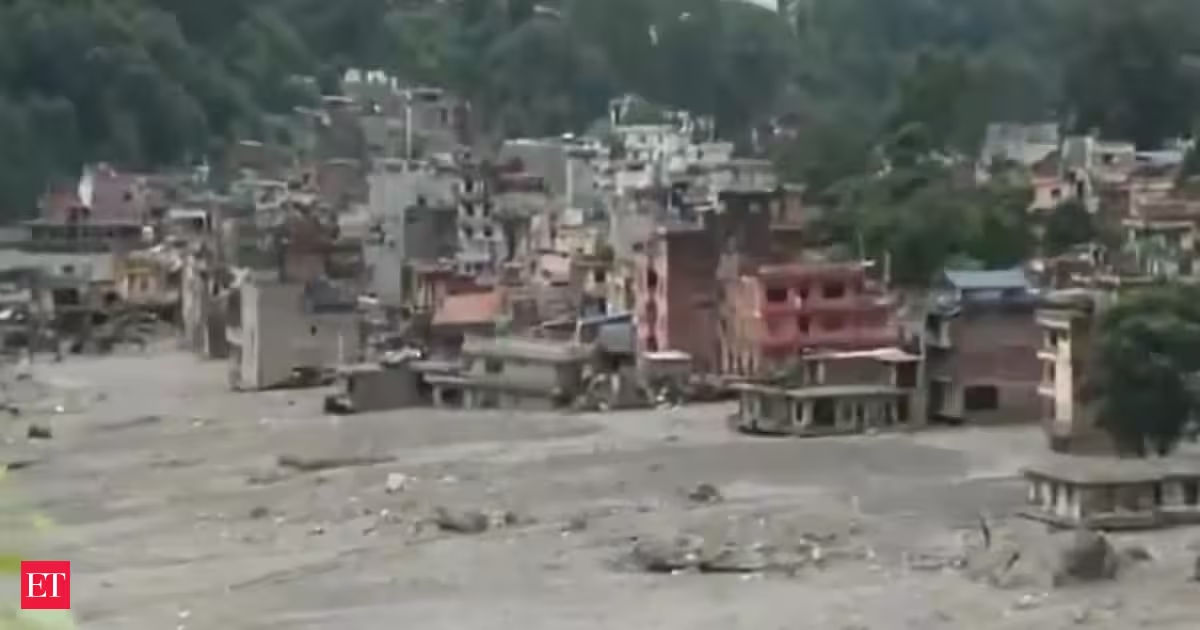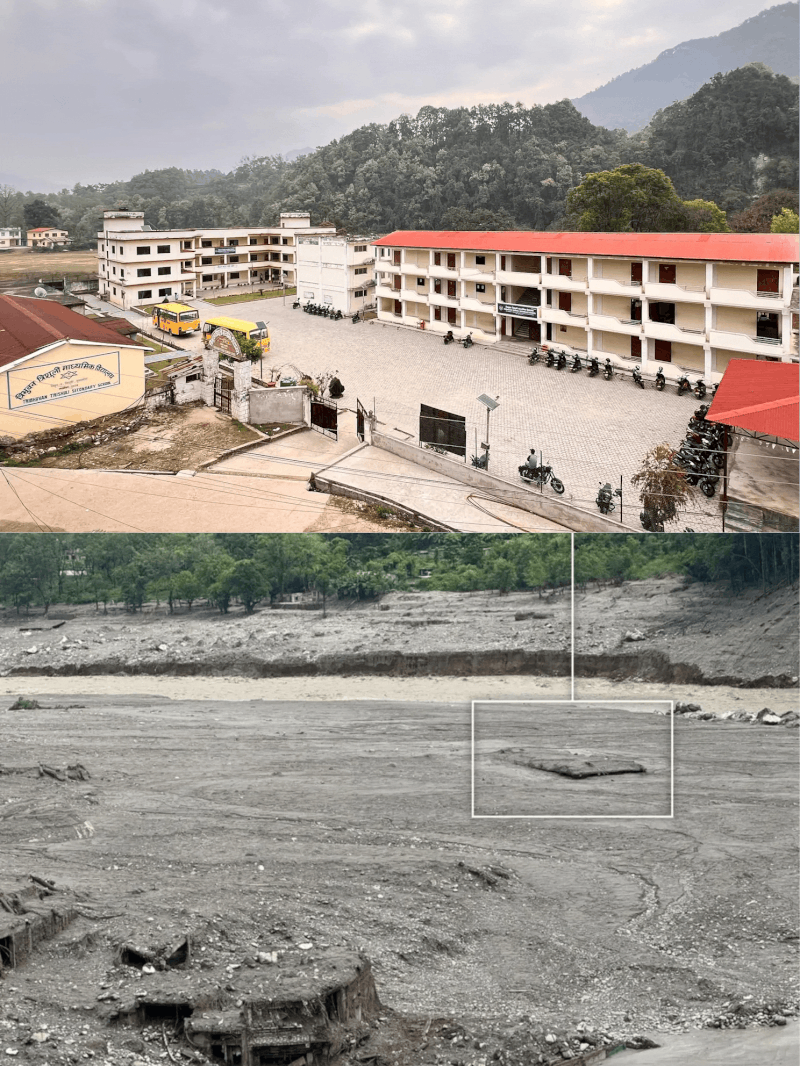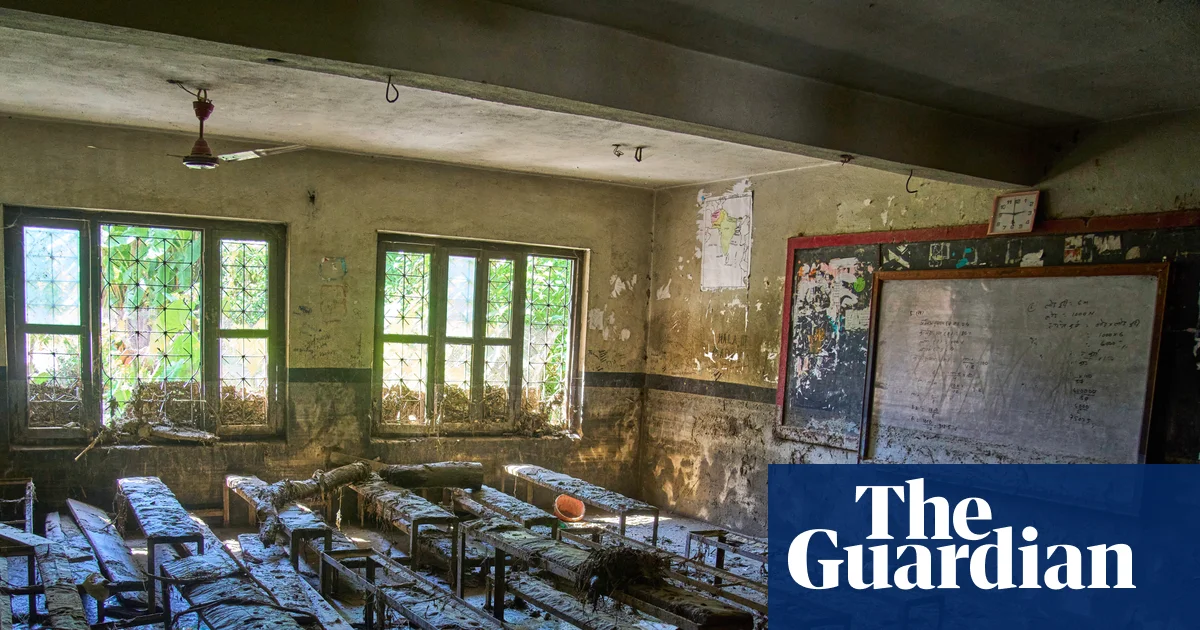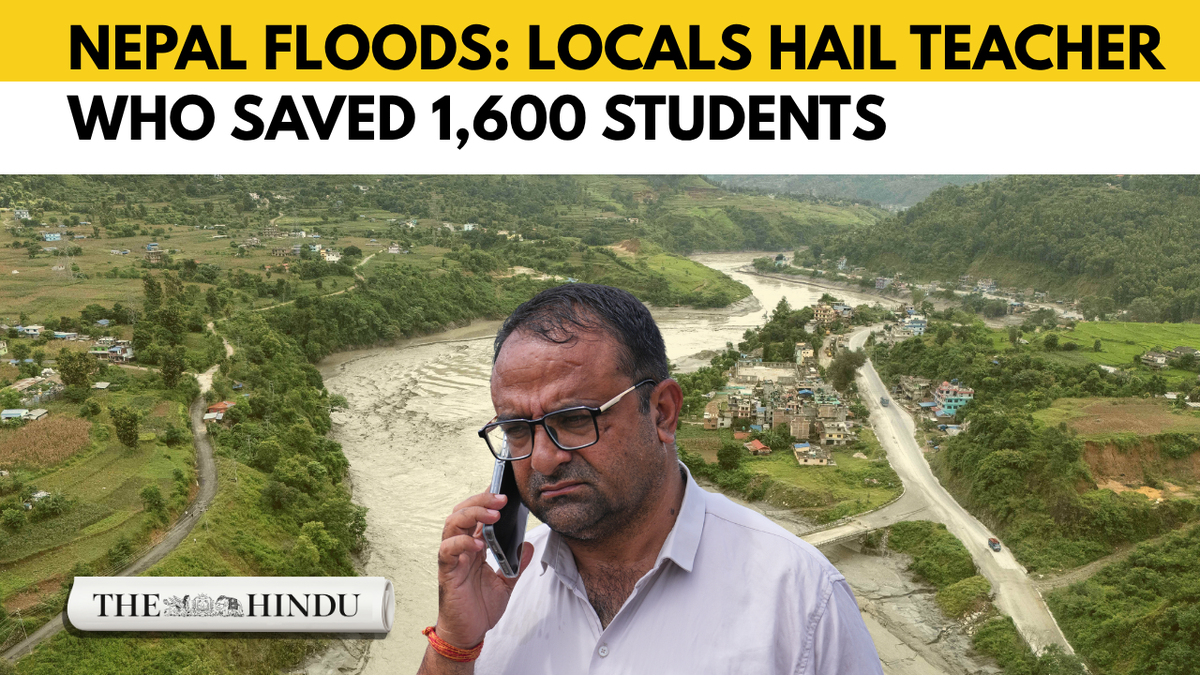
Under a tree on a hillside overlooking Nepal’s Trishuli valley, more than 1,600 schoolchildren waited in fear as the place they had studied in for years disappeared beneath mud, ice and floodwater. Minutes earlier, they had been inside Tribhuvan Trishuli Secondary School in Nuwakot, preparing for their morning classes and assembly.Then the warnings came. A phone call from upstream. A frantic parent. Water rushing towards the school. Principal Rajendra Dawadi did not wait for certainty.The 47-year-old rang the school bell and ordered teachers to evacuate the classrooms. Around 900 students already at the school were moved towards higher ground, while buses carrying hundreds more were turned around before they could reach the danger zone.Read more - Rotating garbage island bigger than many countries is floating in Pacific: This 1.6 million sq km patch contains 1.8 trillion pieces of plastic & is causing serious harm to natureWithin minutes, the three-storey school building was engulfed. All the students inside survived. The school itself did not.Rajendra Dawadi’s warning saved more than 1,600 childrenThe disaster struck on August 26, when a sudden surge of water, mud, ice and rock tore through the Trishuli river system after a massive collapse in the high Himalayas.Dawadi was at the school at around 9.20 am when a friend from Betrawati, several kilometres upstream, called him.The message was alarming: the area had been overwhelmed by the river and people needed to run.Soon afterwards, a parent arrived at the school and warned that the water was rising rapidly. Dawadi immediately acted.Read more - In 2020, 10-year-old Murphy picked up a tiny spider from a remote Australian island; he took it to experts, who later identified a completely new species & named it after himHe ordered a non-teaching employee to ring the school bell as teachers began clearing the classrooms. Staff members helped children who were panicking, while students were directed uphill and away from the river.Around 900 children were already on the school grounds. Another 700 were travelling towards the school, many in buses carrying about 80 students each.Dawadi called the drivers and instructed them to turn back. That decision proved critical.Thirty girls were also staying in the school hostel. With their homes too far away to reach safely, they followed Dawadi and the teachers towards higher ground. All students inside the school escaped.School disappears under mud and floodwaterThe 76-year-old school campus was almost completely destroyed by the flood.The institution had 1,643 students and was one of the oldest schools serving the flood-hit areas of Rasuwa, Dhading and Nuwakot.Its 18-room, three-storey building had been constructed with assistance from the Embassy of India following the 2015 earthquake. The school also had two buses. One had been provided with Indian assistance.Almost everything else was swept away. “Everything is washed away by the flood,” Dawadi told TOI.He said the school had received Indian government assistance in the past and hoped for help again to rebuild.“Previously, at the time of many disasters, Indian govt helped us. We are also hopeful this time that the Indian govt will help us re-establish our school.”Dawadi said India's association with the school predated the 2015 earthquake. The proposal for the new building had already been approved before the quake, after which the three-storey block was constructed with assistance from the Indian embassy.Two school staff members remain missingThe evacuation saved the students, but two members of the school staff remain missing.Non-teaching employee Chulrim Lama was reportedly behind Dawadi during the evacuation and may have gone back towards the school, possibly to close a door.Lower-secondary teacher Santos Parihar was believed to have been in his room in the teachers’ quarters.Dawadi said the disaster had left students, teachers and other staff deeply frightened by the river.“The children, even some of our teachers and domestic staff, are scared of the river.... it is a snaking ghost,” Dawadi, 47, told TOI. “When they look at it, they feel afraid.”The school principal has been widely praised for his quick response, but he has played down the description of himself as a hero.“I decided I shouldn't delay any more. Even if the flood was not coming, it was just a matter of a single day's classes,” he told the BBC.Students watched their school vanishFor the children, the evacuation remains a terrifying memory.Class 10 student Sunita Tamang told TOI that students had been preparing for the morning assembly when teachers suddenly began shouting at them to run towards the hill.“We were getting ready for the morning assembly when teachers started screaming for us to run up the hill. I left my backpack and books behind in the classroom. Looking back down from the ridge and seeing the river wash over our playground was terrifying, but I am just glad all my friends made it safely,” she said.Class 12 student Rohan Shrestha said the children heard the flood before they could see it.“The roar of the river sounded like a low thunder before we even saw the mud coming. The teachers moved fast getting everyone out of the hostels and to higher ground. The school is completely covered in mud now, and we don't know when we can go back to class, but we are looking after each other in the temporary camp,” he told TOI.What caused the Nepal flash flood?The disaster was not a conventional monsoon flood caused simply by heavy rainfall.A large section of glacier and rock near Langtang Lirung, a mountain rising more than 7,000 metres near the Nepal-China border, collapsed on August 26.The falling mass crashed into the Lhende Khola river, generating a huge debris flow of ice, rock, mud and water. The surge then travelled downstream through the Bhote Koshi and Trishuli river systems, causing devastation across a vast area.Reuters reported that satellite imagery showed a large section of the glacier near Langtang Lirung had broken away. The resulting debris flow travelled rapidly downstream and altered river channels more than 100 km away.The event was initially recorded as a magnitude 4.4 earthquake. The US Geological Survey later revised its assessment, indicating that the seismic signal had been generated by the collapsing ice and rock rather than by an earthquake.Scientists are still examining precisely why the glacier and mountainside collapsed. Researchers have pointed to the growing instability of high-altitude ice and rock as the Himalayas warm, while cautioning against attributing any single event solely to climate change.Nepal school to restart classes on safer groundFor Dawadi and the students, the priority now is to get back to school.The principal believes classes should resume as soon as possible, even if that means using a rented house, banquet hall, government building or another temporary facility.“The children needed to see their friends and teachers again and return to some routine after the trauma,” Dawadi said.But there is one condition. The temporary school must be away from the river and on higher ground.“In a safe area, we will start the temporary school or temporary learning centre. If possible, we will take rented houses and think about how to continue their learning,” he said.Destroyed bridges threaten students’ return to schoolReopening the school will not be easy. Dawadi said around 65-70% of the students lived on one side of the Trishuli river, while 30-35% lived on the other. Others depended on buses, rented accommodation or the school hostel.The destruction of bridges and other crossings has effectively separated children who were studying together only days earlier.For the principal, restoring connectivity is therefore just as important as finding classrooms.“Connectivity is more important. If a Bailey bridge is established here, then we can restart very soon,” Dawadi told TOI.The school may have vanished, but its community is determined to return.For the 1,643 students of Tribhuvan Trishuli Secondary School, the next classroom may be temporary. Their next campus may stand far from the river.But the first lesson from the disaster has already been learned: when the warning comes, acting before certainty can save lives.
How Nepal school principal saved 1,600+ children minutes before flood swallowed entire school in mud, ice & water
Nepal principal saves 1,643 students: A principals swift warning saved more than 1,600 students from a devastating flash flood. Tribhuvan Trishuli Secondary School was destroyed by mud and ice following a massive mountain collapse. Two staff members remain missing after the sudden and powerful river surge. Students watched their school disappear as they fled to higher ground and escaped safely. The community now plans to restart classes at a temporary school in a safer location.
1,310 words~6 min read