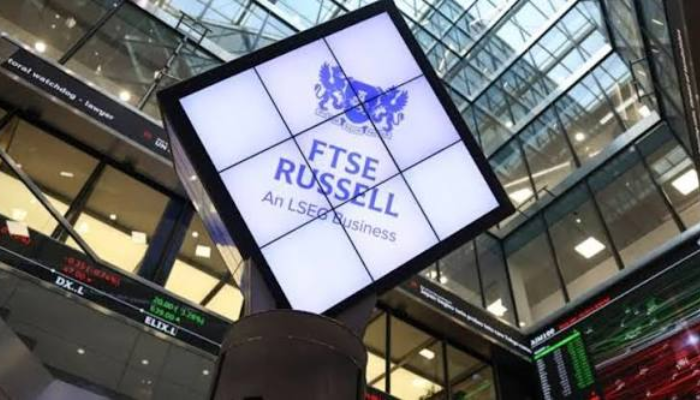
Nigerian stocks have experienced a resurgence following FTSE Russell’s decision to upgrade the local bourse to Frontier Market status after a three-year wait. Ending a stint in the “unclassified” wilderness, this long-awaited reinstatement serves as an independent vote of confidence in the nation’s sweeping macroeconomic and structural reforms.
The development is a welcome relief for a capital market that recently endured a broader 20-day downturn in August, driven by heavy profit-taking and market correction. The positive shift began almost immediately, with the All-Share Index (NGX-ASI) rallying just hours after the global index provider confirmed the upcoming upgrade on August 27.
Despite opening in the red on Friday, August 28, the market routed northwards as buyers outweighed sellers. By 1:18 pm on Friday, the NGX-ASI had risen by 0.41 percent, moving from 239,302.36 points at noon to 240,136.10 points. It eventually closed the week at 241,298.47 points, according to data from the NGX. Consequently, the total value of listed stocks climbed by N1.29 trillion from N154.536 trillion on Thursday to close the week at N155.825 trillion, strengthening the market’s positive outlook.
The upgrade reverses Nigeria’s September 2023 exclusion, which was originally triggered by severe foreign exchange bottlenecks and capital repatriation hurdles that made the market inaccessible to international investors. Now, as foreign portfolio investors (FPIs) and index-tracking funds reposition themselves for entry, the local bourse stands at a critical juncture to turn short-term speculative momentum into enduring capital formation.