No Kyung-min
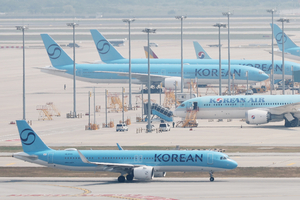
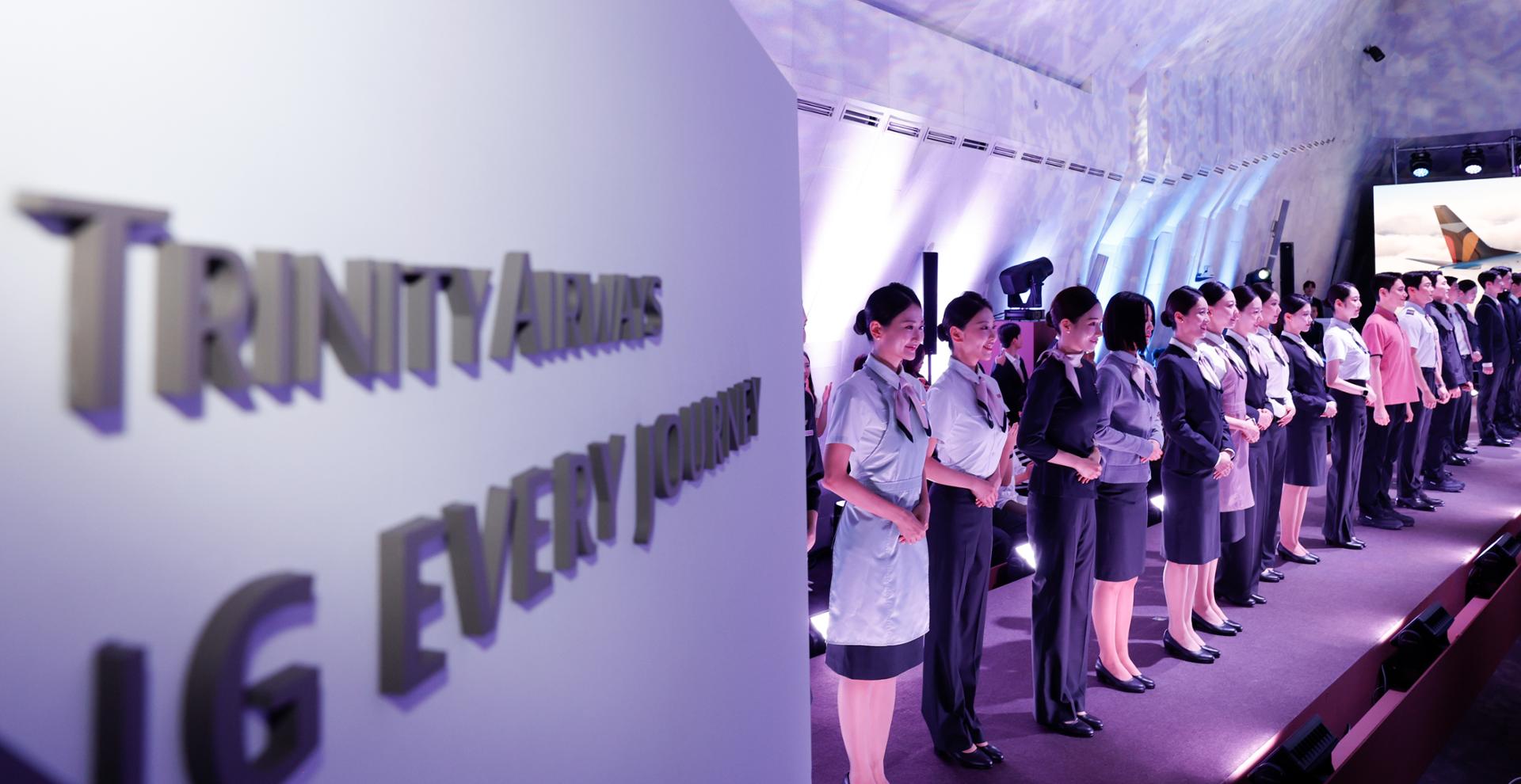
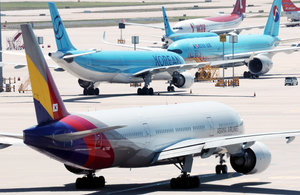
Landmark merger, sweeping rebrand, new route wave reshape Korea's skies Aircraft operated by Korean Air, Asiana Airlines and Trinity Airways are parked at Incheon Airport on Aug. 12. (Newsis) Korean Air's merger with Asiana Airlines, set to close in December, has dominated headlines about the country's aviation industry. But it is only one piece of a wider recalibration now remaking the market.Smaller carriers are reshuffling in its wake, not just shedding their low-cost identities but breaking into medium- and long-haul markets altogether, each charting its own path to survive.Birthing biggest budget airlineBesides the merger at the top, a parallel shift is unfolding on the budget end.Earlier in August, the boards of Jin Air, Korean Air's low-cost affiliate, and Air Busan and Air Seoul, both under Asiana, approved a three-way merger, clearing the way for a combined low-cost carrier that will control 59 aircraft, the largest low-cost airline fleet in the country.Jin Air will absorb the other two under the agreement, with the integrated airline expected to launch as early as March 2027, pending shareholder and regulatory approval.The logic behind the deal is straightforward: Pooling the three carriers' routes, fleets and resources broadens the network and lifts service quality. Combining staff and operations spreads fixed costs across a bigger network and gives the merged airline more leverage in buying, leasing, insurance and maintenance in bulk. Meanwhile, consolidating facilities and IT cuts duplicate costs.The savings will not come cheap up front, however, given that Air Busan and Air Seoul bring their losses into the merger along with their fleets and staff. The three carriers' aggregate debt stood at 2.51 trillion won ($1.82 billion) at the end of 2025, and the merged entity's debt ratio is projected to reach 602 percent."Redistributing overlapping routes efficiently and pushing up passenger load factors, along with other operational gains, will determine whether the merger truly pays off," one industry official said. "Once integration is complete, the carrier's priority should be routes that only an LCC (low-cost carrier) can serve."Trading scale for service A refurbished Trinity Airways aircraft (Trinity Airways) Betting against scale, T'way Airlines rebranded in August as Trinity Airways, unveiling a selective service carrier model that wedges it between full-service and budget competitors.Fares stay competitive on short-haul routes while long-haul flights add upgraded lounges, entertainment and meals. Under its new brand mission, “Relaxed and Reliable,” the airline emphasizes safety and trust while drawing on Sono Trinity Group's hotel and resort infrastructure."Scale competition will intensify with the merger of the full-service carrier and the LCCs, but scale alone won't determine customer choice," said Trinity Airways CEO Lee Sang-yoon. "We will cut unnecessary services and focus on what customers value most."Trinity said it would add the next-generation A330-900neo by the end of the year, alongside more B737-8s, part of a push into medium- and long-haul routes. It now flies 58 international routes, including long-haul services to Paris, Rome, Frankfurt in Germany, Barcelona in Spain, Croatia's Zagreb, and Vancouver in Canada.Trinity's real challenge is how quickly it can raise per-seat earnings and its aircraft utilization rate. First-half revenue rose 31.2 percent to 1.08 trillion won on strong international demand, but operating losses more than doubled to 162.8 billion won, dragged down by fuel costs.Charting a course of their ownMeanwhile, other carriers are expanding route by route.Jeju Air, for instance, is prioritizing fleet efficiency, adding 737-8s while retiring older jets. It is chasing US passengers through an interline deal with Air Premia, a hybrid carrier flying long-haul routes like New York and Washington, priced below full-service carriers.Parata Air is charting a similar course, pairing full-service comfort with budget fares, launching Incheon-Los Angeles next April before adding Las Vegas, San Francisco and Vancouver.Closer to home, Eastar Jet is building out its Busan network to fill the gap left by Air Busan, flying 11 domestic and international routes from the city and adding Busan-Fukuoka, Japan, and Busan-Taipei, Taiwan, flights through October.Aero K is diversifying around its Cheongju International Airport base, running charter flights to smaller Japanese cities while preparing its first China routes, with Cheongju-Chengdu set to launch in November and Cheongju-Beijing following in December.As existing budget airlines stake their claim in medium- and long-haul territory, industry observers say competition will hinge less on fares and more on routes and service, with steady cash flow the key to sustaining aircraft investment and operations over the long run."Even with solid travel demand, high fuel prices, currency swings and geopolitical risk aren't going away, so the real test will be whether carriers can turn their expanded routes into stable profits," one industry official said. "Those that can't will likely be the ones swept up in the next wave of mergers."