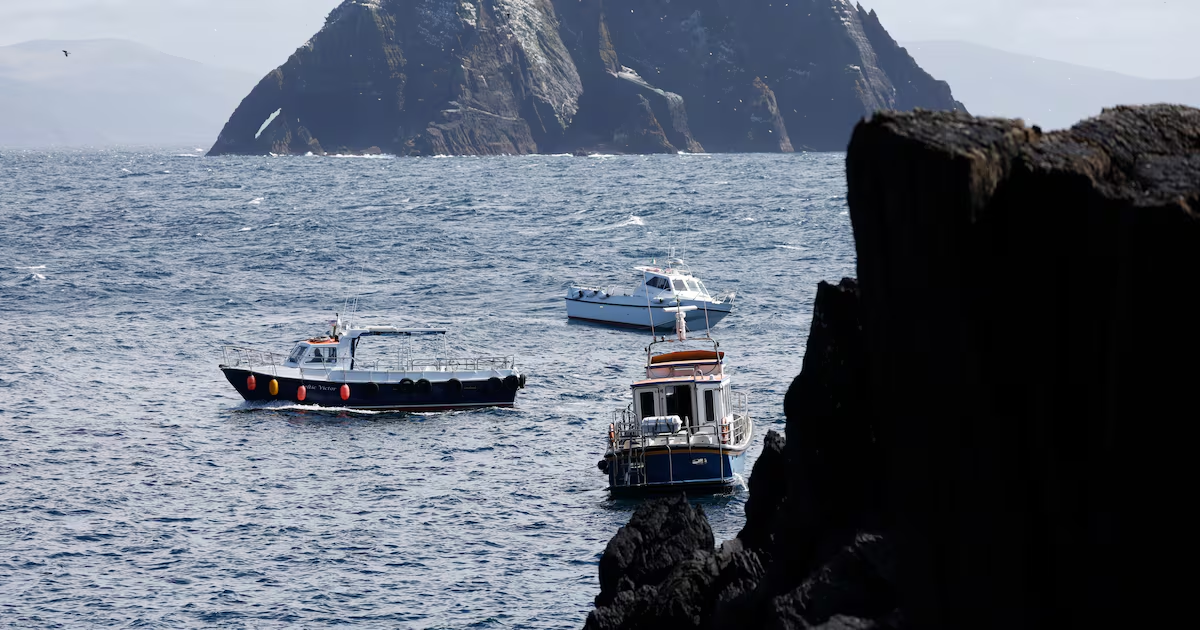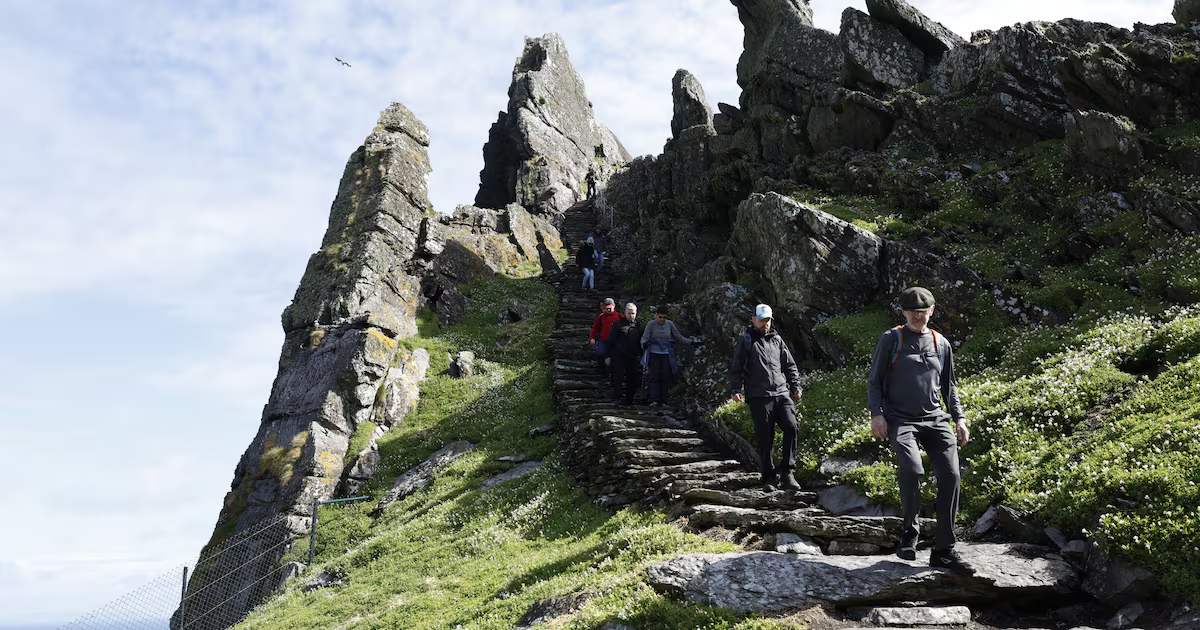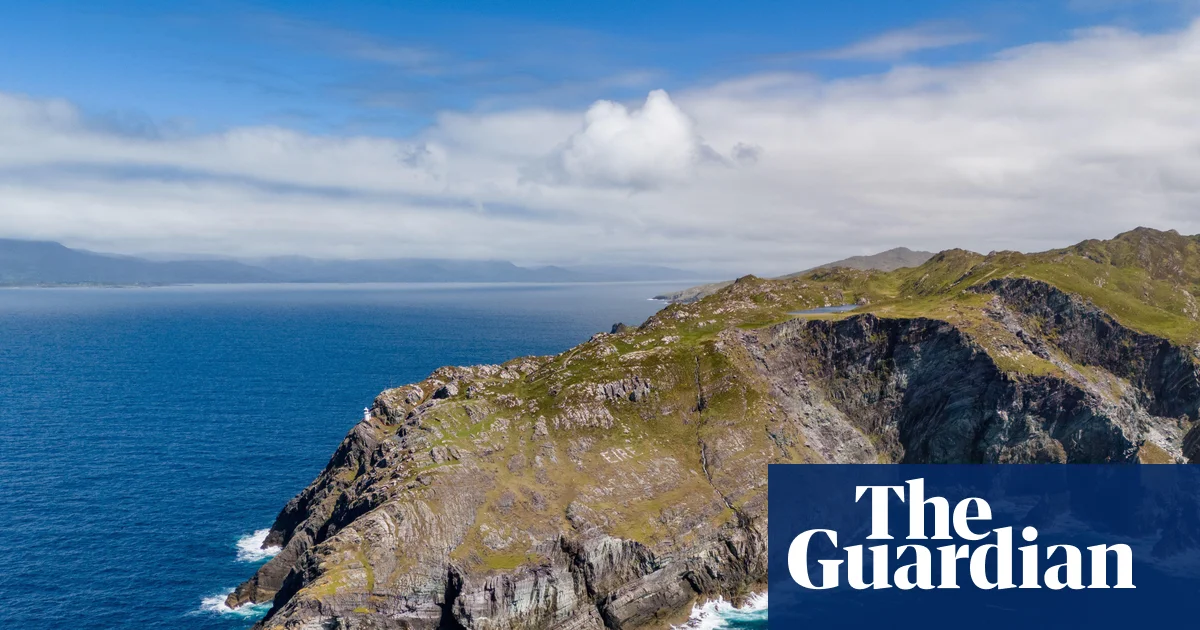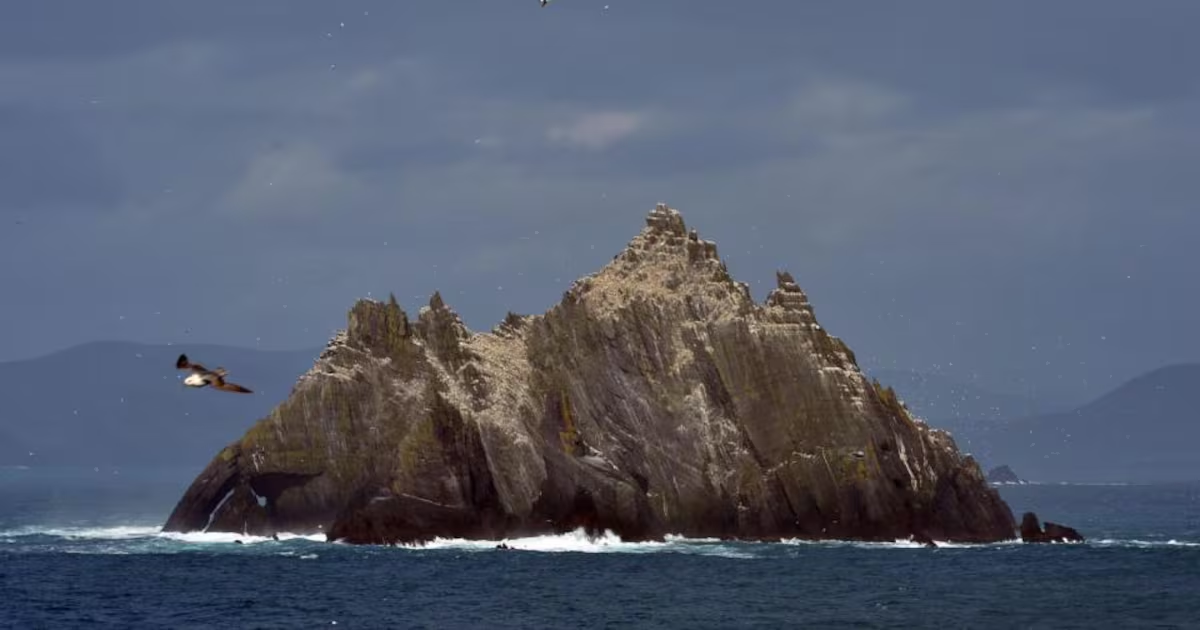
A heavy morning mist sat over Portmagee, Co Kerry. It was as if the long hot summer was ending and we had no cause to complain. We feared a boat trip to Skellig Michael might be off due to unsuitable sea conditions – a not-infrequent occurrence due to it being so far out in the Atlantic. Our hopes took a turn for the better; there was no 7am email from our skipper Sandra O’Connor to say the trip was off. So we ventured across the bridge to the Valentia Island side of the harbour and our berthing spot.Soon the mist lifted and there were no white horses atop waves suggesting likely turbulence on the way to our destination 18km away. We diverted northwards as pods of common dolphins could be seen. Gannets were diving for fish, wings back like a missile and plunging from a huge height above the ocean. Seeing nature up close underlined why the designation of Ireland’s first marine national park – Páirc Náisiúnta na Mara, Ciarraí – spanning 300sq km of land and sea (our location) is so important.The history is superbly told by our skipper and Office of Public Works guides at the bottom and at the top, having negotiated 618 steps. For a first-timer, it is astounding. Monks inhabited the Skellig for 600 years until the 12th century. Up to 12 at a time; their average lifespan just 40 years. Their ability to survive in such a hostile place, what they perceived to be the edge of the known world, is incredible.Their diet was more varied than you would expect. Food was grown in small terraced areas. As photographer and writer Peter Cox noted, “excavations from 1986 to 2010 recovered the butchered remains of goat, sheep, cattle, pig and seal. Seven species of fish were identified in the bone assemblage, with sea bream the most common.” [ Photo essay: Skellig Michael reopens for summer visitors to sun, swells and puffinsOpens in new window ]Manx shearwater and puffin bones were found charred by roasting – they were eating seabirds as well as their eggs. Grain was probably brought from the mainland along with wood and charcoal, since there are no trees on the island. Monks required high-level mathematical and astronomical knowledge to compute complex shifting dates of Easter using ancient Christian calendars. There was a preference for those who were physically strong; craftsmen and stonecutters. But it was a place of education too; wealthy and noble Gaelic families sent sons to be taught at the world’s most unlikely medieval boarding school.With no fresh water on the island, the monks gathered rainwater in channels and grooves carved into rock, directing it into cisterns beneath the monastery at the North Peak. The system was ingenious: interconnecting basins allowed water to flow from one to the next, with a depression in the first basin to collect silt – a basic filtration system still working a thousand years later.The monastery survived three Viking attacks, though any warrior would be nuts to think it could be easily conquered. Deploying the likes of Luke Skywalker or Kylo Ren from the Star Wars films The Force Awakens and The Last Jedi – which featured Skellig Michael (as the planet of Ahch-To) – might have been a different matter.In AD 821 the abbot Étgal was seized and soon died of hunger while held captive. The island’s three flights of steps, carved to give the monks landing options in different seas, had become a vulnerability. The monks built a remote hermitage on the precarious South Peak hoping to stave off raids.A mist suddenly returned. The place immediately had a mystical look and feel, revealing its contemplative aspect. Coming down was a problem, with the dreaded possibility that my fear of heights resulting from my aunt dangling me by the legs over the Cliffs of Moher as a boy would return. Those who have summitted Skellig Michael know the stretch. You look out to sea and it’s as if the steps descend almost vertically before you. Time for a strategy of step-by-step and no looking out to admire the view (and sheer drop of several hundred metres). This unsettling affliction can suddenly affect the most athletic of visitors, we were advised; descending gingerly on your backside is perfectly acceptable.Back on board our boat, a loop of the island and Little Skellig illustrated their remarkable birdlife, though nesting puffins had departed since early August. The massive colony of noisy Gannets dominated, while grey seals lounged on rocky outcrops on the shore.The sight of a plastic bottle bobbing up and down on the surface of the deep black sea many kilometres from land was all that jarred, a reminder of our incessant ability to contaminate nature at its most triumphant. The predominant view, however, was that Skellig Michael should not only be a Unesco world heritage site, it should be designated a wonder of the world, to be visited and minded always.
Rock on: Kevin O’Sullivan gets a much sought-after tour of Kerry’s Skellig Michael
Coming down was a problem, with the dreaded possibility that my fear of heights resulting from my aunt dangling me by the legs over the Cliffs of Moher as a boy would return
825 words~4 min read