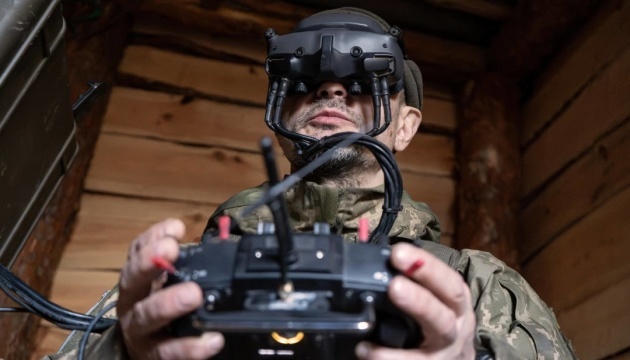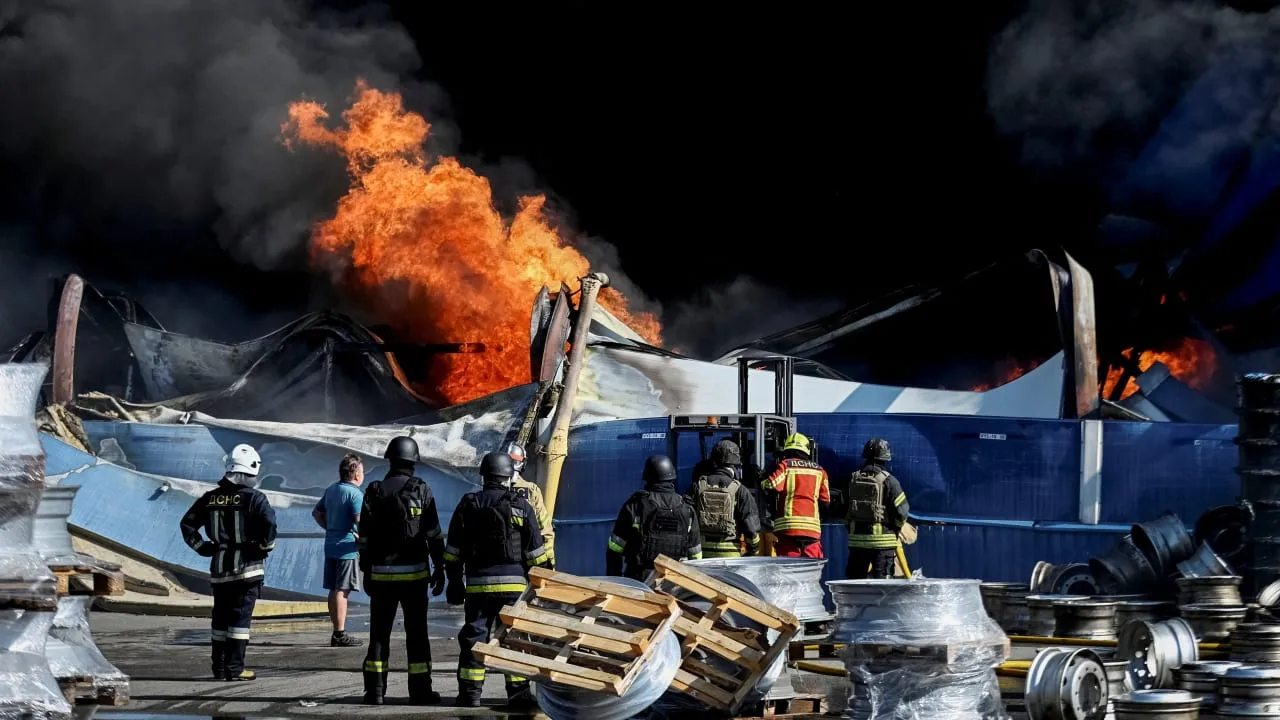
ByDR. ANAT HOCHBERG-MAROMAUGUST 30, 2026 20:52Updated: AUGUST 30, 2026 20:54The absence of celebrations marking Ukraine’s 35th Independence Day this week underscored the depth of the tragedy facing the country. Since Russia’s full-scale invasion in February 2022, the war has moved far beyond a territorial dispute. It has become a struggle over the shape and the future of the international order, the limits of Moscow’s influence, and the ability of the international community to defend national sovereignty.The protracted conflict has shattered Europe’s longstanding assumption that economic interdependence could serve as a substitute for military deterrence. It has exposed the limits of the Western deterrence and turned Ukraine into a strategic testing ground.Europe is once again preparing for high-intensity conflict, protecting critical infrastructure, expanding military production, and accelerating the arms race. The consequences extend well beyond the battlefield. They reflect a fundamental shift in the global balance of power - reshaping global security, economic stability, food and energy markets, trade routes, and supply chains.Europe’s strategic map is changing Viewed through a broader geostrategic lens, the war has become a two-sided existential struggle. For Kyiv, it is a fight for national independence, identity, and survival. For Moscow, Ukraine is regarded as an integral part of Russia’s historical and strategic sphere of influence.British Prime Minister Andy Burnham interacts with the President of Ukraine, Volodymyr Zelensky, during their visit to Portsmouth Naval Base to meet UK and Ukrainian troops, July 27, 2026. (credit: Simon Jones/Pool via REUTERS)Europe’s security architecture has been transformed. NATO has been significantly strengthened, in part by the accession of Sweden and Finland. Their membership has expanded the alliance’s borders and its direct area of contact with Russia - Finland alone shares a border of approximately 1,300 kilometers with Russia - while reinforcing Europe’s northern flank.At the same time, despite political tensions with the Trump administration, Europe’s dependence on the United States has deepened in the areas that matter most: strategic deterrence, intelligence, air defense, and nuclear capabilities.The war has also triggered a sharp increase in defense spending. European countries and Canada have raised their combined defense expenditures by more than $90 billion - approximately 20 percent above 2024 levels. NATO has set a long-term target of 5 percent of GDP for defense and security by 2035.Over the past decade, NATO members increased their combined defense spending from 1.4 percent of aggregate GDP in 2014 to 2.3 percent in 2025 - more than $570 billion. Yet, the most important change is conceptual.The era of “small and efficient armies” is giving way to a recognition that modern warfare demands vast material reserves: large ammunition reserves, air-defense systems, drones, missiles, logistics networks, industrial capacity, and the ability to mobilize society on a national scale.Ukraine as a laboratory of modern warThe war in Ukraine has revealed new patterns of hybrid warfare, combining conventional military operations with cyberattacks, sabotage of undersea infrastructure, disinformation campaigns, political interference, pressure on energy systems, and the weaponization of migration. Repeated damage to fiber-optic cables in the Baltic Sea illustrates how vulnerable critical infrastructure has become, even far from a conventional battlefield.Ukraine’s own adaptation has been equally significant. Facing a shortage of Patriot air-defense batteries, it developed advanced technologies for detecting and intercepting drones. It has also emerged as a leading drone manufacturer, exporting systems to countries including Japan.Russia, meanwhile, has expanded its military activity across Europe’s air, maritime, and land domains. Large-scale military exercises, airspace incursions near Poland, Romania, Estonia, and Latvia, the deployment of advanced missiles, and the nuclear positioning of Russian capabilities in Belarus - all form part of a broader campaign to project power and normalize permanent pressure along Europe’s eastern flank.The Kremlin is deliberately blurring the distinction between routine military activity and open conflict. Its goal is not necessarily to trigger a direct confrontation with NATO, but to keep European governments ‘on the edge’, namely, under constant pressure and uncertainty.Russian attacks on railways, logistics hubs, defense facilities, and transport corridors also target Ukraine’s energy infrastructure, including nuclear and hydroelectric power stations and gas-production facilities. They are attacks on the functioning of the state itself. By targeting power stations, industrial sites, and transportation networks, Moscow seeks to disrupt supply chains, paralyze military assistance, and dramatically increase the economic cost of the war for Europe.The lesson for NATO is clear: military readiness can no longer be separated from industrial capacity, technology innovation, infrastructure resilience, and private-sector preparedness.Kremlin’s strategy of coercionIn 2025, Russia launched approximately 55,000 attack drones - five times the number recorded in 2024 - as well as roughly 2,400 missiles. These attacks led to the loss or shutdown of approximately 8.5 gigawatts of Ukraine’s electricity-generation capacity.The combination of sustained airstrikes and ground operations represents more than a war of attrition. It is a strategy of coercion aimed at paralyzing Ukraine’s economy, undermining public confidence, and generating mass displacement.According to UNHCR data, approximately 5.86 million Ukrainians were registered as refugees outside the country at the end of 2025, including 5.3 million in Europe.Russia - which allocates approximately 40 percent of its budget to defense and security, has suffered an estimated 1.2 million casualties, and remains internationally isolated - is likely to continue combining military force with economic pressure, psychological warfare, cyber operations, and attacks on critical infrastructure.The strategic goals are straightforward: increase pressure on President Volodymyr Zelenskyy’s government, deepen political divisions within Europe, and weaken Western support for Ukraine.From the Kremlin’s perspective, persistent subversion erodes Western resolve, while calibrated coercion discourages Europe and the United States from responding decisively. Moscow also interprets Western assistance as evidence that the strategic threat to Russia is growing.The European Union’s cumulative support for Ukraine has reached approximately €220 billion. On August 24, an additional aid package of roughly €6.1 billion was approved for the purchase of ammunition, drones, and air-defense systems. For Russia, the war is therefore not only about territory. It is also about testing the political endurance of the West.The energy geopolitical weaponThe war accelerated Europe’s dramatic effort to reduce its dependence on Russian gas, oil, and coal. What began in 2022 has evolved into a strategic decoupling process, including a complete ban on Russian gas imports by the end of 2027.The reality, however, is far more complex. Since the beginning of 2026, European countries have continued importing Russian LNG worth approximately $6.8 billion, equivalent to roughly 9.9 million cubic meters, largely amid the disruption of the crisis around the Strait of Hormuz. At the same time, Europe has expanded imports from the United States, Norway, and Algeria and increased investment in renewable energy.This has transformed energy into a geopolitical weapon with direct consequences for economic stability. Gas and electricity prices remain volatile, heavy industry has been hit particularly hard, and production costs have risen. Competition with Asian markets has intensified, particularly during periods of supply disruptions from the Gulf. Europe is therefore more dependent on global shipping routes, maritime chokepoints, and suppliers located far beyond its borders.The consequences are also visible in markets. Damage to logistics infrastructure around Black Sea ports has disrupted food-supply chains and pushed wheat and fertilizer prices more than 20 percent higher than in 2025. Vulnerable economies across the Middle East and Africa have been particularly exposed.Israel’s strategic lessonsFor Israel, the war in Ukraine is a living laboratory of modern warfare. It demonstrates how a local conflict can evolve into a prolonged, multidimensional campaign characterized by mass attacks on critical infrastructure, sustained economic and psychological pressure, and persistent strategic uncertainty.Iran and its network of proxies have already adopted some of these methods. The implications for Israel are immediate: long-term military and technological preparedness must become a national priority. This requires expanding stockpiles of interceptors and other defensive systems, increasing domestic production, strengthening intelligence and cyber capabilities, and protecting critical infrastructure against simultaneous attacks from multiple fronts.Yet the rising defense burden is narrowing Israel’s economic room for maneuver. Growth forecasts have been revised downward, with the Bank of Israel projecting growth of approximately 3.5-4 percent. The debt-to-GDP ratio is climbing, and pressure is mounting for higher taxes and cuts to civilian spending. A prolonged conflict would also raise the cost of government borrowing and create a tangible risk to Israel’s credit rating. As of July 2026, Moody’s rates Israel at Baa1.Global demand for Israeli defense technologies may boost exports in the short term. But even a stronger defense sector cannot offset the broader macroeconomic cost of a protracted war: lost output, reduced investment, labor-market disruption, higher public debt, and mounting pressure on civilian infrastructure.The war in and around Ukraine is not merely a battle over the fate of one country or the future of Eastern Europe. It is reshaping the global threat environment, redefining the pace and the structure of the arms market, and rewriting the rules of the geoeconomic order. Israel cannot afford to observe these changes from the sidelines.It must build comprehensive national resilience - industrial, financial, technological, infrastructural, and societal.Moreover, it must plan for a world in which conflicts are longer, threats are more interconnected, infrastructure is a battlefield, and economic resilience is inseparable from national security.Dr. Anat Hochberg-Marom is a global geostrategist advisor at the Israel-GCC Chamber of Commerce & Innovation.Follow us on Google
Ukraine war transforms European security architecture and global balance of powe | The Jerusalem Post
The protracted conflict has shattered Europe’s longstanding assumption that economic interdependence could serve as a substitute for military deterrence.
1,523 words~7 min read