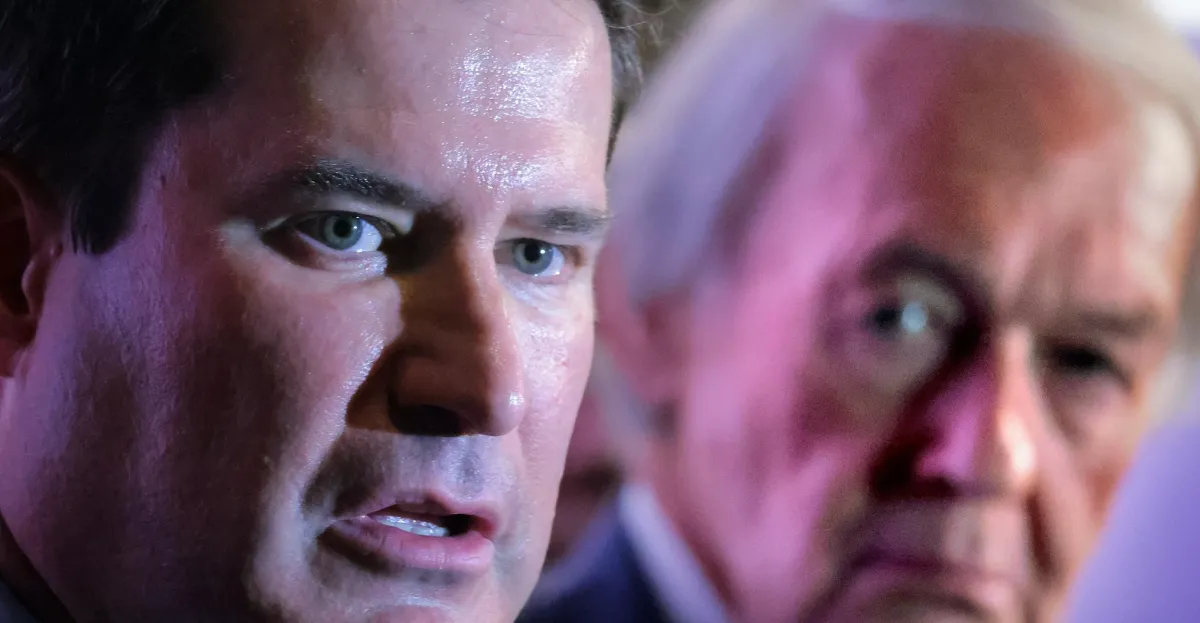
In a race that has centered on whether Ed Markey, 80, is too old for another U.S. Senate term, the Massachusetts Democrat’s answer to a recent debate question was especially striking.
When asked whether he uses AI platforms like Claude or ChatGPT in his work, Markey seemed unclear on the topic. He responded that he uses “whatever is inside of my iPhone or my iPad — whatever comes up” and added that he doesn’t know “what companies my iPad may be using.”
For Arsen Bagdassarian, an 18-year-old supporter of Markey’s rival, 47-year-old U.S. Rep. Seth Moulton, the answer reinforced a concern that has become central to Moulton’s campaign to unseat the incumbent in Tuesday’s party primary: that Markey, who would be 86 at the end of another term, is too old to represent a generation confronting problems that didn’t exist when Markey entered Congress 50 years ago.
“To be frank, I didn’t expect him to be as clueless as he really was on that topic,” said Bagdassarian, an incoming freshman at Boston’s Northeastern University. Artificial intelligence is “a major concern,” he said, and the country needs leaders “who understand what they’re being asked to regulate.”
The 2026 midterms have brought a number of generational challenges like the one Moulton is waging against Markey, with younger Democrats taking on — and in some cases unseating — longtime incumbents. There are signs that Democratic voters, especially, are looking for change, and some young voters argue older politicians can’t truly understand a world transformed by artificial intelligence, rising housing costs and student debt.