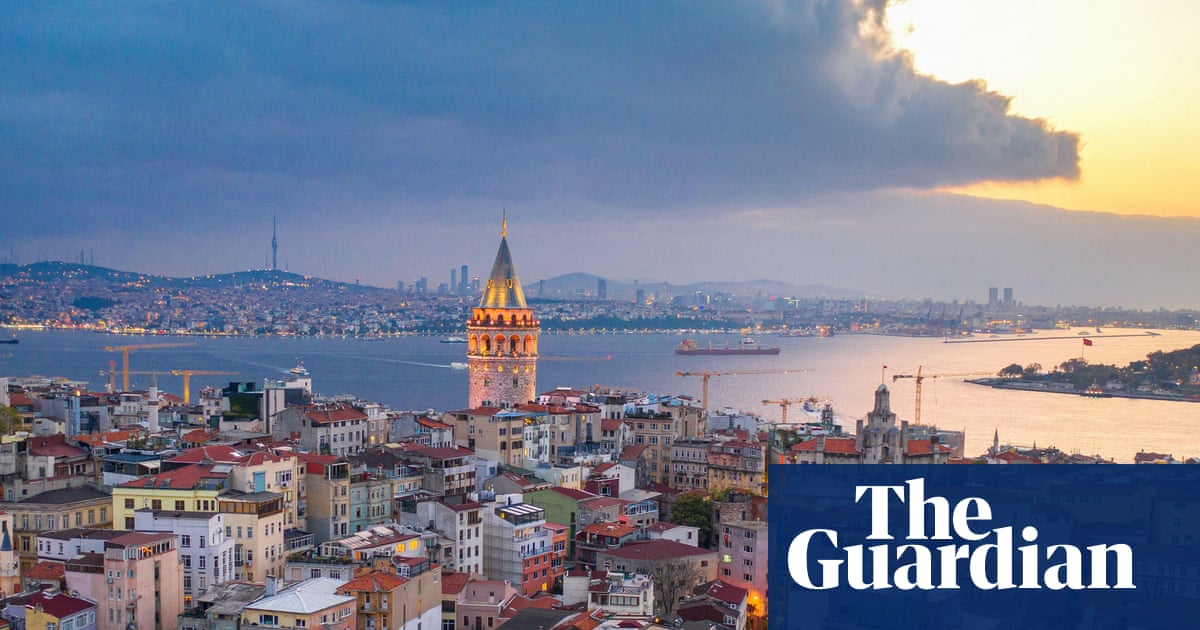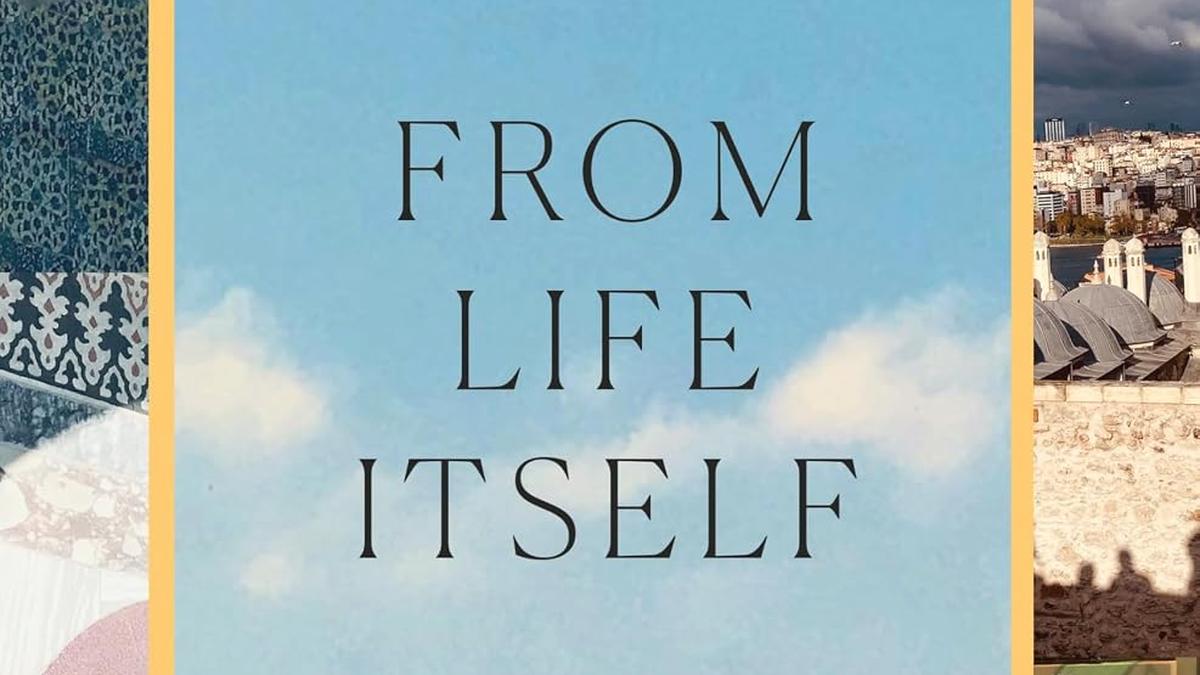
Brave New World, a 1932 dystopian novel by English author Aldous Huxley was set in a futuristic world state, whose citizens were environmentally engineered into an intelligence-based social hierarchy. It anticipated extraordinary scientific advancements in reproductive technology, sleep-learning, psychological manipulation and classical conditioning that are combined to make a utopian society that gets challenged by an outsider, John the Savage. Later, George Orwell’s Nineteen Eighty-Four (published in 1949), gave an early warning for totalitarian virtue.And that future seems to be here. Pulitzer Prize finalist Suzy Hansen in her non-fiction book “From Life Itself – Turkey and Istanbul in the Age of Erdoğan” presents a gripping portrait of a crisis-ridden Turkey in the backdrop of a global unravelling and deepening fault lines. Recep Tayyip Erdoğan, who has been ruling Turkey since 2003 (as Prime Minister from 2003-14;,and President from 2014 after pushing through for a major constitutional change for a presidential system) has remade Turkey in his own image.The book chronicles Turkey’s shift — from once being a shining portal that straddled the cultures of the East and West to a place where its streets swarm with narrow nationalistic fervours. The book is all about this shift as well as the global unravelling at large that is keeping the world order unstable and challenged.Suzy Hansen’s search for truth about modern Turkey is through a deep dive into one single neighbourhood — the Ottoman neighbourhood of Karagümrük. Through its inhabitants and their everyday lives, Hansen shows how local conflicts are spiralling into regional and international crises, deepening the grave fault lines now fracturing Europe, Middle East and West Asia in unprecedented ways.Historic crossroadsHer book offers a dazzling account of a foundational civilizational nation that once effectively bridged Europe and Asia, serving as a historic crossroads for human society, diverse cultures and empires. Notably, Erdoğan came to power as a liberaliser with promises of greater social, political and economic reforms. Once he succeeded in ingraining his belief system at a mass level with his “Justice and Development Party (Adalet ve Kalkinma Partisi (AKP)”, he cracked down on dissent and following the expansion of his presidential powers in 2018, he has been regarded as authoritarian and unwilling to relinquish power.Cihan Tuğal’s quote at the beginning of the book’s Part-III says it all, “In the early twentieth century, the main political momentum was democracy. In the late neo-liberal era, it is autocracy”. On page-180, Suzy Hansen makes an important point on the radical thinking and action of Erdoğan, “Now Istanbul was also being transformed by globalisation and global capital. Erdoğan’s obsession with remaking the city was not only about money, though that was a lot of it. It was about how Erdoğan envisioned a whole new country. His conceptual framework for eradicating Kemalism in Turkish society, while still celebrating Turkishness, Turkish Islam, and Turkey’s Eastern roots, involved an emphasis of the Ottoman Empire, Turkey’s Imperial history, and its caliphate-like role as guardian for the entire Arab Middle East.”Keeping her narrative rational and free from any forced nostalgia, Hansen writes on page-314, “The idea that Turkey became more authoritarian during his reign was the flaw in the conventional narrative about Erdoğan. Autocracy always ran through Turkey’s politics and state structure, from Ottoman times to Atatürk’s one-party rule to the long twentieth century of its military interference. What Turkey’s experience shows is that countries ostensibly democratic have much deeper autocratic or repressive underpinnings than they like to acknowledge.”The book is majorly about Erdoğan and Turkey’s changed profile in the last two decades, but it also deals with the bitter truth of our time—what and how an adulterated democratic culture can cast its dark shadow over humanity?In this shattered Middle East, Erdoğan has situated Turkey in a ‘post western’ position. The book concludes with a query that can haunt people in Turkey and beyond its boundary too: What happened to the opposition during these long two decades?Crisis in democraciesAs a reference document, a report (The Crisis of Democracy: A Trilateral Commission Report on Governability; 1975) authored by Michel Crozier, Samuel P Huntington and Joji Watanuki, examined the challenges faced by democratic governments in North America, Western Europe and Japan. The authors argued that democracies face issues like economic instability, declining public trust and the overloading of government, requiring a re-examination of basic premises to ensure the viability of democratic systems. The report has high relevance in 2026 when the crisis of democracy is more or less the same everywhere and with a greater geographical spread. As a psychological concept but undeniably with more frequent uses in pure politics, ‘The Power Paradox’ remains an enigma and that should be attempted to be understood well as a functional democracy finally rests on votes and representations through popular will.Hansen doesn’t miss the essence as she offers a final few words on her book’s last page: “By now, Erdoğan’s pursuit of some perceived loss of Turkish dignity has curdled into bitterness and endless retribution. Someday he will lose the love he once inspired in people, and he too will go, leaving behind for his people a painful inheritance. He and his loyalists never made peace with the society or with the world. They never made peace with themselves.”Readers may find author and essayist Pankaj Mishra’s endorsement of Hansen’s book quite appealing as he says, “Hansen is able to diagnose a global unravelling by abandoning the assumptions and expectations of Western journalism that posited a clear division between ‘us’ and ‘them’, achievers and stragglers. While ostensibly writing about a foreign society, she bracingly enables us to understand our own.”Suzy Hansen has penned a daring book. It is unputdownable and should be long-remembered as a major work on crisis-ridden Turkey and the crisis-ridden world at large. This is a book that deserves to be read and debated widely.The reviewer is a policy professional, columnist and author. He most recently co-authored “Kathmandu Chronicle: Reclaiming India-Nepal Relations”.About the bookTitle: From Life Itself – Turkey and Istanbul in the Age of ErdoğanAuthor: Suzy HansenPublisher: Hachette IndiaPrice: ₹599Published on August 30, 2026
Turkey’s authoritarian turn
Explore Suzy Hansen's insightful examination of Turkey's authoritarian shift and its implications for global democracy in "From Life Itself."
1,004 words~5 min read