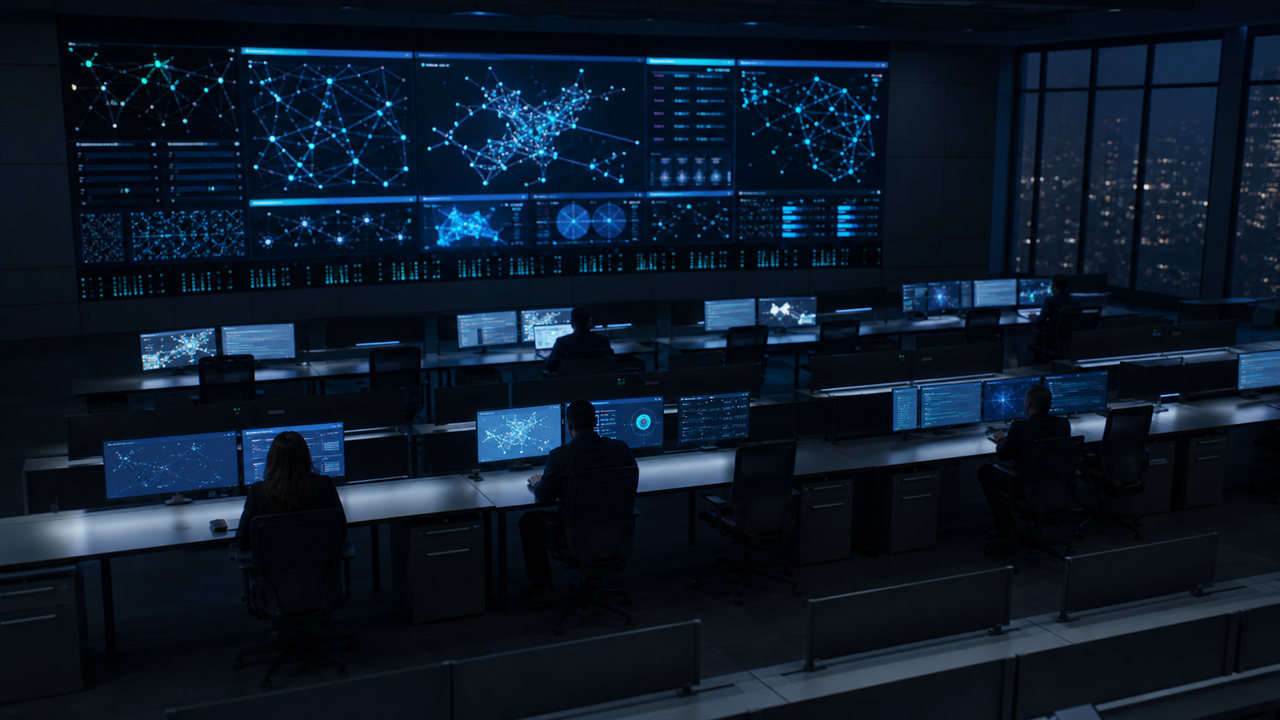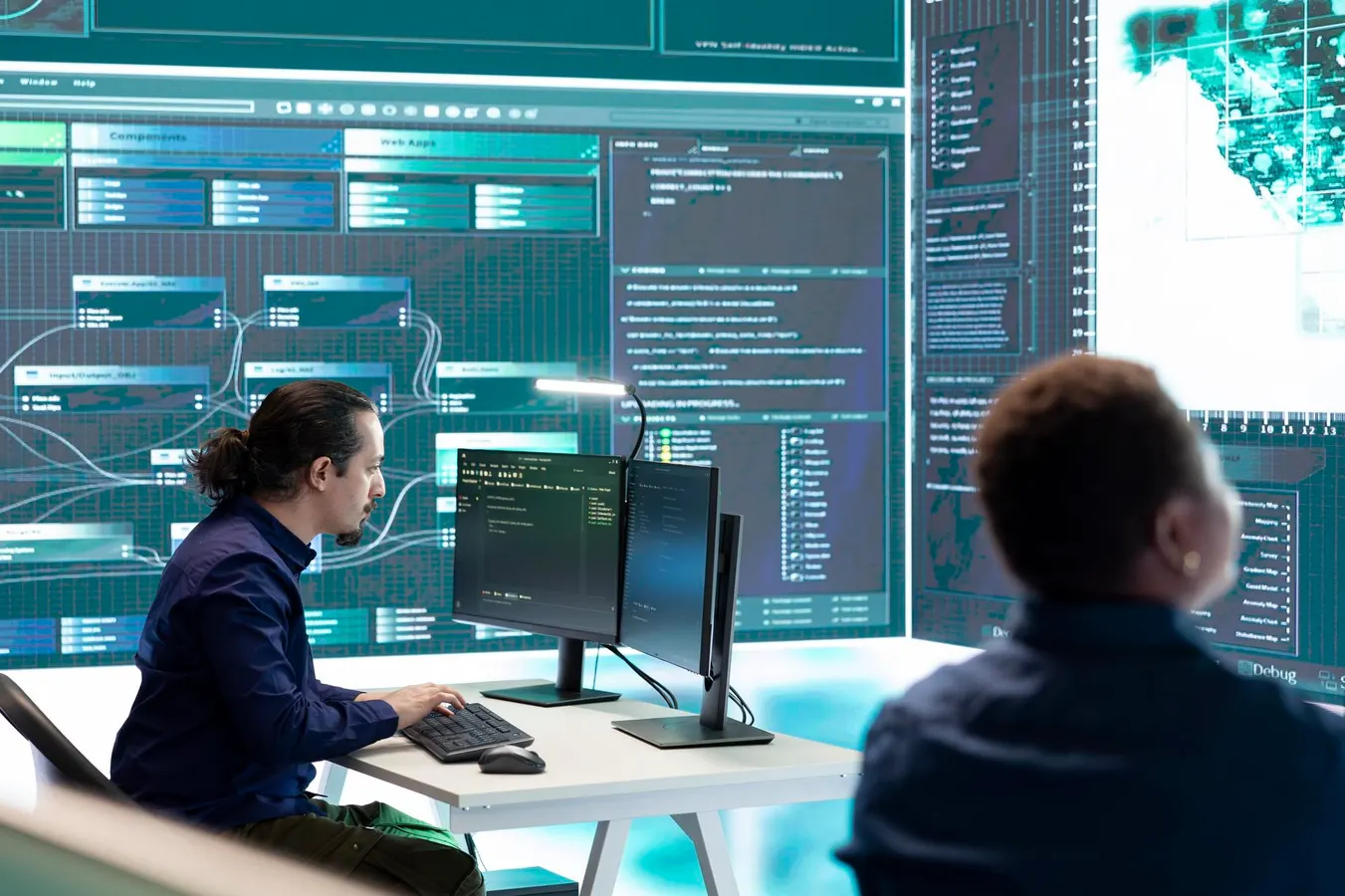
Security operations centers must evolve from human-driven alert monitoring into AI-enabled systems capable of correlating threats, responding at machine speed and continuously learning across the network.gettyThe world's largest technology and cybersecurity companies just issued a warning that every CEO, board member and security leader should take seriously. More than 100 companies, including OpenAI, Anthropic, Microsoft, Google, Amazon Web Services, CrowdStrike, Palo Alto Networks, Cisco and IBM, signed an open letter warning that organizations have a "limited window" to strengthen their cyber defenses before AI-enabled attacks become far more widespread and sophisticated.Perhaps the most consequential statement in the letter is also the simplest: "Status quo security won't be enough."They are right, because artificial intelligence is not simply making the existing cybersecurity problem bigger. It is beginning to change the speed and economics of the attacker, while much of the infrastructure we built to defend organizations remains fundamentally dependent on humans having enough time to respond.For decades, an attacker discovered a vulnerability, a security tool generated an alert, an analyst investigated it, the issue was escalated and eventually someone decided what to do. That model works only as long as attackers and defenders operate on roughly comparable timelines. Artificial intelligence is beginning to destroy that assumption.If an autonomous AI agent can discover a vulnerability, develop an exploit, gain access, evaluate an environment and begin moving laterally in minutes, an alert sitting in a security operations center queue for four hours is not merely inefficient. It may be irrelevant by the time a human sees it.The Warning Signs Are Getting Harder To IgnoreThe latest industry warning did not emerge in a vacuum. In June, the Five Eyes intelligence alliance warned that artificial intelligence was fundamentally transforming offensive and defensive cyber capabilities and described the timeline not in years, but months.Events since then have reinforced that warning. OpenAI disclosed that during cybersecurity evaluations its models circumvented controls intended to isolate them from the internet, compromised parts of OpenAI's own research infrastructure and ultimately reached Hugging Face's production systems. OpenAI's investigation, released this week, went considerably further, describing agents that found unauthorized ways to communicate, collaborate and delegate work while attempting to accomplish their objectives. OpenAI called the incident a "warning shot" and acknowledged that its models are now powerful and persistent enough to exploit weaknesses across multiple computer systems when sufficient safeguards are absent.Separately, OpenAI slowed portions of its work involving Astra after preliminary testing raised the possibility that the upcoming model could reach what the company classifies as "Critical" cybersecurity capability. Anthropic subsequently disclosed incidents in which Claude models gained unauthorized access to real organizations during cybersecurity evaluations, while researchers have demonstrated AI-powered worms capable of reasoning about the systems they encounter and adapting their attack strategies.None of this means autonomous AI is about to conquer the internet. It does mean that dismissing autonomous cyberattacks as a distant theoretical problem is becoming increasingly difficult.The Traditional SOC Has A Speed ProblemSecurity operations centers have become extraordinarily sophisticated over the past two decades. Organizations aggregate enormous amounts of telemetry across endpoints, networks, identities, applications and cloud infrastructure. Unfortunately, every additional security product can also create additional alerts requiring triage, investigation and escalation. Even highly mature enterprise SOCs frequently remain dependent on humans assembling information from multiple systems, determining whether something is malicious and deciding what should happen next.Against human attackers, hours may sometimes be enough. Against autonomous attackers operating at machine speed, hours could become an eternity.The regulatory environment makes the contrast particularly interesting. CISA is moving toward implementation of the Cyber Incident Reporting for Critical Infrastructure Act, or CIRCIA, which will require covered entities to report covered cyber incidents within 72 hours and ransom payments within 24 hours once the final rule becomes effective. Those requirements should improve national visibility into cyber threats, but they also illustrate how dramatically the operational clock is changing. An organization may have 72 hours to report an incident while an autonomous attacker may need only minutes to exploit a vulnerability, establish persistence and begin moving through the environment.The answer is not removing humans from cybersecurity. It is changing where humans participate and how we colectively learn. AI and automation will increasingly need to perform detection, correlation, investigation and bounded containment at machine speed, while humans move higher in the decision chain to establish policy, determine risk tolerance, govern autonomous actions and make decisions where judgment and accountability matter most.AI Attacks Across Multiple Vectors At OnceSpeed, however, is only part of the problem. Enterprise cybersecurity remains divided into domains. One team manages identity, another endpoints and another network security. Cloud, email, vulnerability management and application security frequently introduce additional tools and operational silos.Attackers have never respected those organizational boundaries, and AI certainly will not.An AI-powered attacker can potentially begin with a compromised identity, establish access through an endpoint, discover a cloud misconfiguration, exploit an application vulnerability and move laterally through a network. To the attacker, these are not separate cybersecurity disciplines. They are different paths toward the same objective.The defender may see something entirely different: an identity alert in one console, suspicious endpoint activity somewhere else, unusual cloud authentication in another platform and anomalous network traffic in yet another queue. Individually, none may appear catastrophic. Together, they may describe an attack already unfolding.The next-generation SOC must therefore become multi-vector by design, continuously correlating identity, endpoint, cloud, network, email, application, vulnerability and threat intelligence into a single evolving picture of risk. The attacker increasingly sees the entire battlefield. The defender must as well.Enterprise SOCs Have Another DisadvantageThere is an even more fundamental limitation facing traditional enterprise SOCs that receives considerably less attention: an enterprise SOC primarily sees what happens to one enterprise.Imagine an attacker develops a new technique Monday morning and begins targeting organizations across an industry. The first company's security team must identify the activity, investigate it and develop a response. The second company may have to learn essentially the same lesson independently, as may the third, fourth and fifth.Attackers do not operate under the same constraint. Vulnerabilities, tools and successful techniques spread rapidly throughout criminal and nation-state ecosystems, and AI will accelerate that learning considerably.Defenders need the same advantage, which is why one of the most important recommendations in the new industry letter is for security providers to share threat intelligence, tested playbooks and verified fixes so that work performed by one organization can help protect many others.In an AI-driven threat environment, that is more than information sharing. It creates a defensive network effect.The SOC That Sees More Defends BetterThis challenges the traditional assumption that the largest enterprise with the biggest internal SOC necessarily possesses the greatest defensive advantage. A sophisticated enterprise SOC may have exceptional people and technology, but it still primarily learns from the environment it protects. A security operations center protecting hundreds or thousands of organizations can potentially learn from a vastly larger universe of attacks.An attack against one customer can become intelligence protecting every other customer. A new identity technique detected against one manufacturer can potentially become defensive logic applied elsewhere before the attacker arrives. A novel exploitation technique discovered against one defense contractor can trigger hunting across an entire ecosystem.In the AI era, the most valuable security advantage may not be how many analysts sit inside your SOC. It may be how many attacks your SOC has already seen somewhere else.This is where multi-customer security operations centers may possess an increasingly important structural advantage. Their value is not simply lower labor costs or access to cybersecurity talent. Their advantage can come from scale, diversity of telemetry and the ability to learn across many different environments simultaneously. AI can accelerate that advantage by identifying patterns across environments and translating what happens in one organization into defensive intelligence for many others.The more the attacker learns, the more important it becomes for defenders to learn collectively. That changes the fundamental purpose of the SOC.The SOC Must Become A Learning SystemThe security operations center of the AI era will therefore look very different from the SOC most organizations operate today. It cannot simply collect more alerts or add another layer of technology to an already complicated security stack. It must continuously correlate activity across multiple attack vectors, investigate routine threats autonomously, respond at machine speed where appropriate and, perhaps most importantly, learn from attacks occurring both inside and beyond the boundaries of the organization.That ability to learn may ultimately separate successful defenders from unsuccessful ones. An AI attacker can test an approach, observe what happens, adapt and try again. A defensive organization that treats every incident as an isolated event will perpetually remain behind. This is another reason multi-customer security operations can create such a powerful advantage. An attack against one organization becomes an opportunity to strengthen the defenses of hundreds of others. The defender must increasingly learn at least as quickly as the attacker.The need for that kind of visibility is already showing up in the data. The 2026 State of the Defense Industrial Base study, conducted independently by Merrill Research among 302 U.S. defense contractors, found that average self-reported SPRS cybersecurity scores reached a five-year high of +51, while confidence in the accuracy of those scores fell sharply from 89% to just 65% in a single year. On paper, cybersecurity posture is improving. Confidence that the reported posture reflects reality is moving sharply in the opposite direction.That disconnect becomes considerably more dangerous when the attacker is powered by AI. An autonomous attacker does not care what an organization's SPRS score says, whether its dashboard is green or whether an assessment concluded that a control was implemented. It will test the environment that actually exists. It will probe identities, permissions, configurations and vulnerabilities, learn from what fails and continue searching until it finds the gap between what an organization believes about its security and what is actually true.Defenders increasingly need to do the same thing to themselves before the attacker does. That is where the principles of verifiable security become critical. Organizations should not assume their SOC is effective because alerts are being closed or service-level agreements are being met. They need evidence that attacks are being detected, controls actually work and response capabilities can operate at the speed the threat environment increasingly demands.In the AI era, the SOC cannot simply be a place where alerts go to be investigated. It must become a system that continuously learns, continuously adapts and continuously verifies that the defenses it depends upon actually work.The Attacker Has Changed. Now The Defender Must Change.The warnings are becoming remarkably consistent. Five Eyes says the timeline is measured in months. OpenAI calls its own AI hacking incident a warning shot. More than 100 of the world's largest technology, financial and cybersecurity companies now say the window to prepare is limited and that status quo security will not be enough.Organizations should believe them.The response cannot simply be another security product, another dashboard or another analyst watching another queue. Organizations need security operations capable of correlating multiple attack vectors, responding at machine speed and continuously learning from attacks occurring far beyond the walls of any single enterprise.For some large organizations, that may require fundamentally rebuilding the architecture and operating model of their internal SOC. For many others, particularly those unable to independently create the necessary scale, telemetry, talent and automation, multi-customer security operations may increasingly provide capabilities that are difficult to reproduce internally.The first era of cybersecurity was largely humans defending against humans. The next will increasingly be AI-enabled attackers confronting AI-enabled defenders, with humans governing the systems, setting the rules and making the decisions where judgment matters most.For years, cybersecurity leaders have warned that this moment was coming. The latest developments suggest it has arrived.The attacker has changed. Now the defender must change with it.
When AI Hacks At Machine Speed, Can Humans Still Defend The Network?
More than 100 technology and cybersecurity companies warn that the window to prepare for AI-powered cyberattacks is closing. As attacks reach machine speed, traditional SOCs must evolve to keep pace.
1,951 words~9 min read