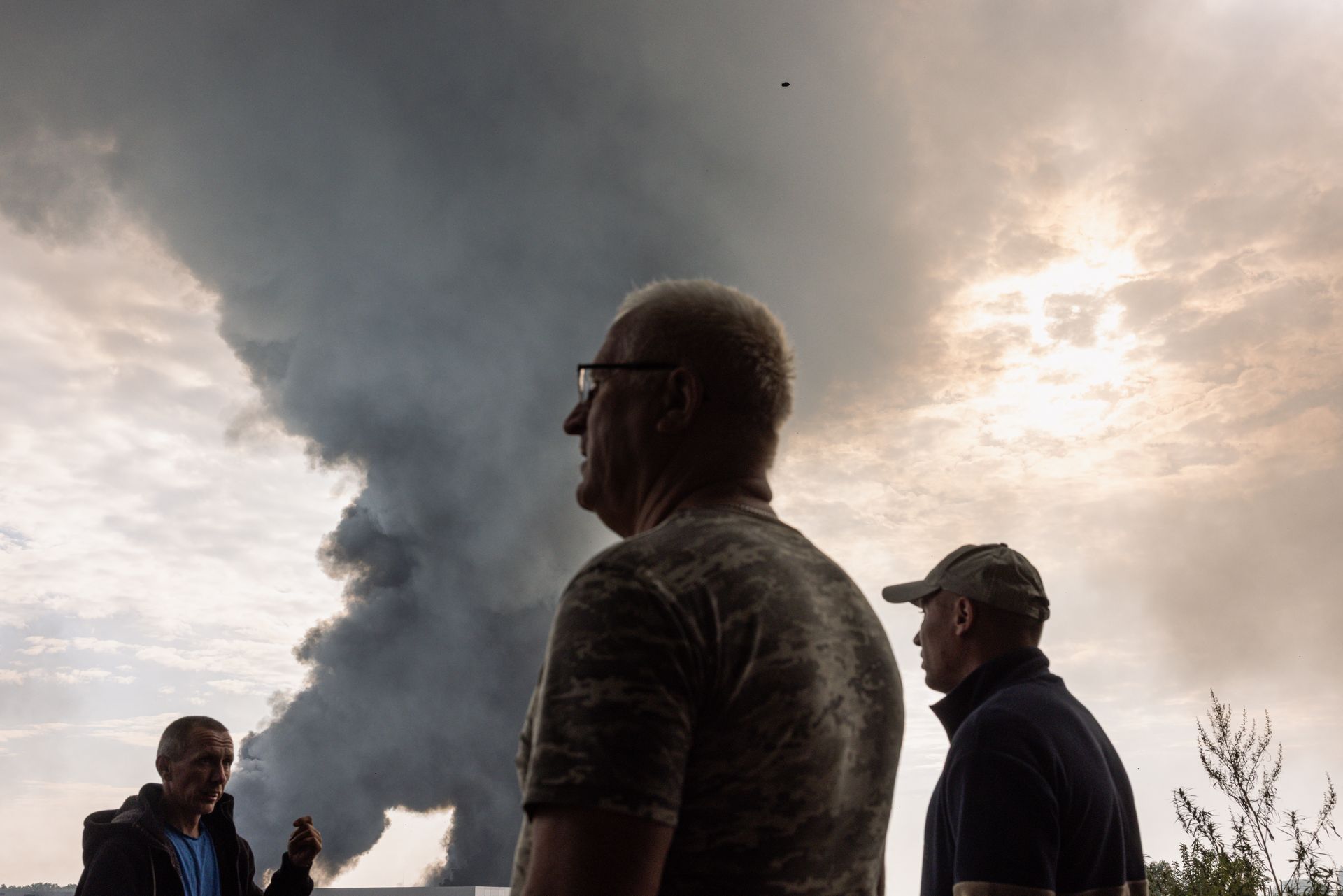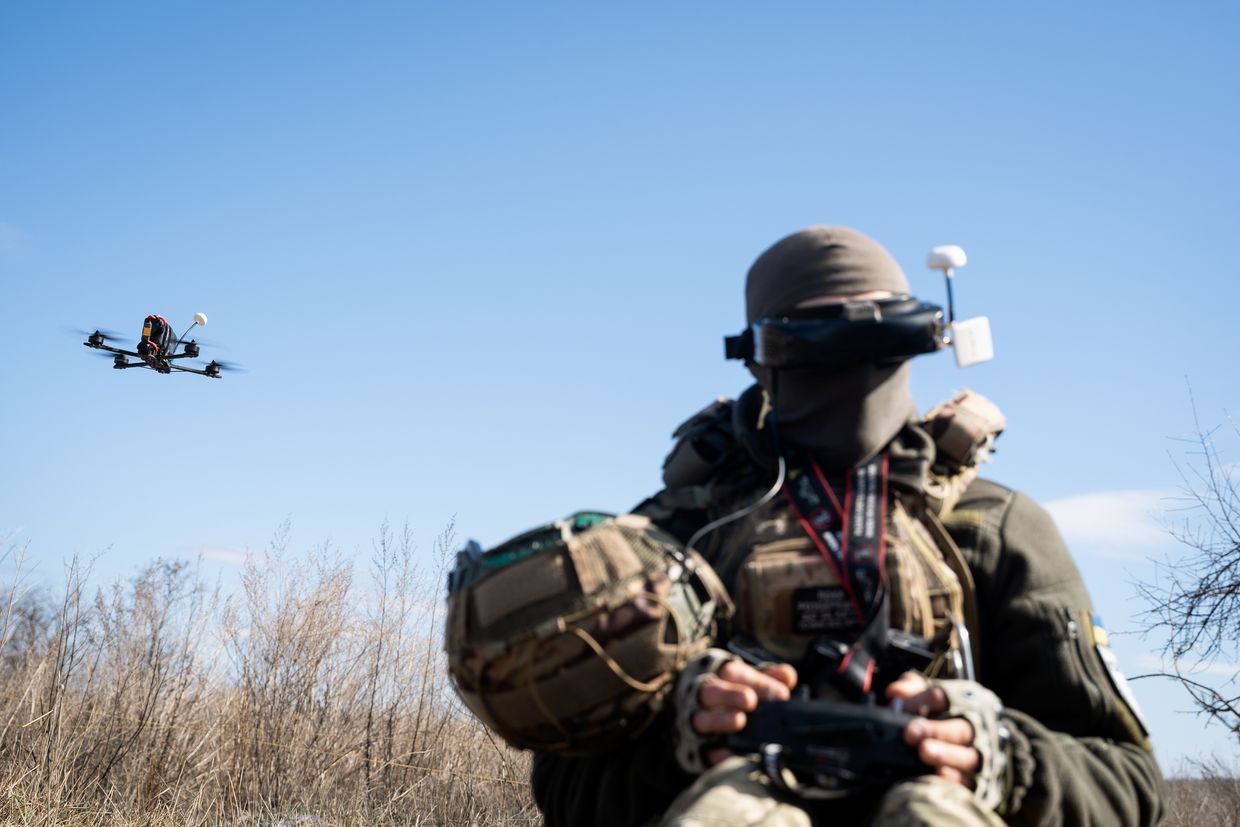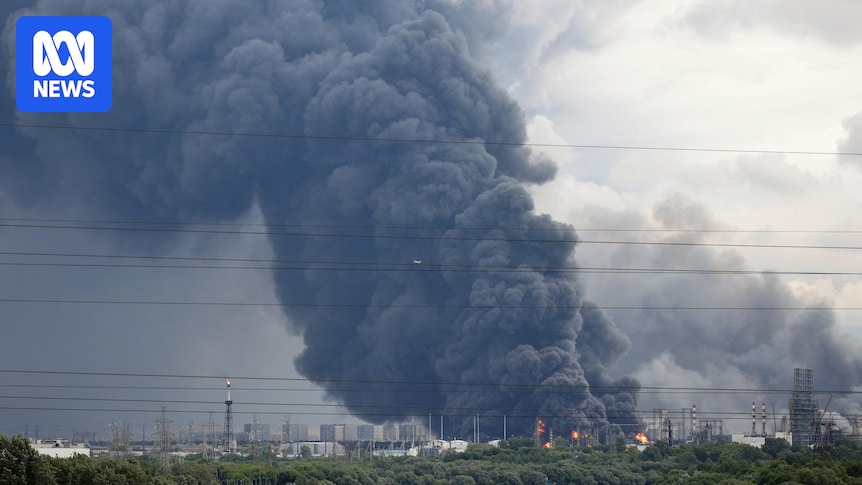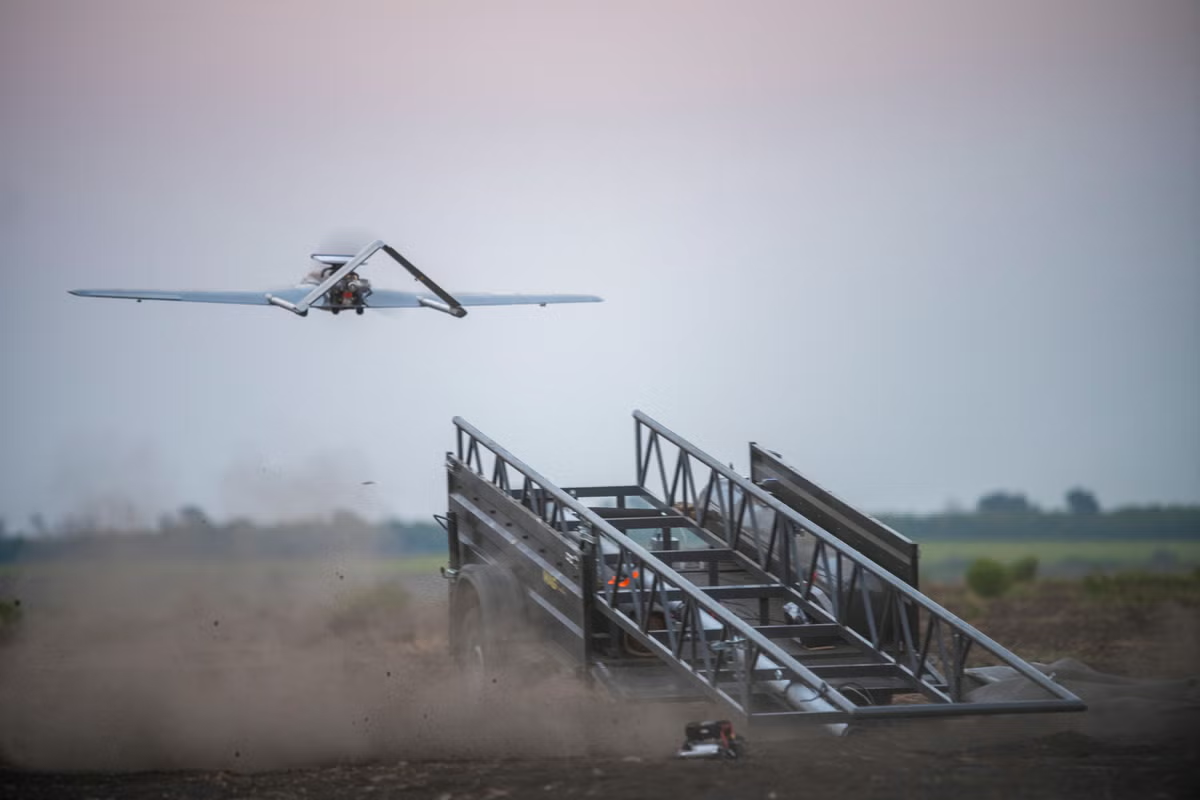
In 2023, a year into Russia’s unprecedented invasion of Ukraine, Kyiv was producing around 800,000 drones a year. By 2024, that number had more than doubled to two million. Fast forward to last month – when President Volodymyr Zelensky announced that the country was now churning out more than 10 million units annually with plans to double that number to 20 million by this time next year. The rapid rate and intensity of production is having an impact. Just this week, Russian president Vladimir Putin was forced to acknowledge that attacks on the country’s refineries and energy infrastructure were having an effect. “There are no critical consequences from such attacks, there have not been and cannot be,” he told a conference of business and economy leaders, trying to downplay their scale. However, he added: “But they certainly cause us harm, that is obvious, and we understand, see and know this.”A long-range strike drone takes off from a mobile launcher (Dan Bashakov/AP) (AP)The rare admission was a glimpse into life on the ground where exhausted Russians are queuing for fuel and complaining about skyrocketing costs. A lab for mass drone warfareSince the beginning of the war, Ukraine has found itself serving as a laboratory for the use of drones on the battlefield. As relatively cheaper weapons, they serve as a major low-cost force multiplier against Russia, with its vast stockpiles of cruise and hypersonic missiles. It understood the strategic potential of the weapons the hard way - by being attacked by swarms of Iranian-style Shahed drones by Russia. “Ukraine understood the promise of such a campaign back in 2022 when it started to be subjected to Russian strategic strikes” says Mykola Bielieskov, a Kyiv-based research fellow at the National Institute for Strategic Studies and a senior analyst at Ukrainian NGO Come Back Alive. A firefighting helicopter prepares to drop a load of water during a fire at Russian e-commerce firm Wildberries' logistics complex near the town of Podolsk, outside Moscow on August 16, 2026. (AFP/Getty)According to AFP, Russia fired 6,297 long-range drones into Ukraine last month, 14 times more than in the same month last year. On 9 July alone, a record-breaking 741 drones and decoys were entered into western Ukraine, more than the entire month of July in 2025 when 423 drones were fired into the territory. Now, it is trying to play the country at its own game. Drone swarms and strikes at the heart of MoscowOn Tuesday, Russia’s Moscow region was hit by almost 800 Ukrainian drones only two days after a similar attack, officials said. It marked one of the largest drone attacks by Ukraine since the war broke out in 2022. At least 10 people were killed in the onslaught. That came shortly after a devastating attack on Russia’s Amazon-style Wildberries facilities. A day later it was reported that a jet-powered Shahed drone flew nearly 900km from Crimea into western Ukraine in one of the deepest strikes of its kind so far. Residents walk through debris in a courtyard following a Russian missile strike on August 20, 2026 in Kyiv, Ukraine. Apartment blocks and warehouses were hit across the city overnight following a large barrage of missiles, with a children's hospital and school also damaged (Getty)Ukraine, likewise, is catching up with distance as well as number of attacks. In 2024, it demonstrated its potential for long-range drone attacks deep into Russian territory with an unprecedented strike on the Olenya air base in the Arctic, 1,900 km north of Ukraine. As part of Operation Spiderweb in May last year, it repeated its attacks with 10 explosions reported at the facility. This year, Ukrainian attacks blew out air defences more than 600 miles into the territory and only 12 miles from Putin’s $1bn presidential palace on the Black Sea coast. “Ukraine’s logic is very straightforward and has not changed much - to inflict damage to the Russian war economy through attacks against oil refineries and export facilities and the military-industrial complex,” says Bielieskov.It has had no choice but to do this, he says, as its allies are “unable or unwilling” to provide classic long range ballistic and cruise missiles for larger campaigns. A focus on amping up production has allowed the country to keep pace with the attacks. But, they “understand the overall logic and necessity of strategic strikes and support production of one-way attack UAVs”.The dormitory of the National Aviation University was hit by a Shahed drone during Russian air strikes on December 27, 2025 in Kyiv, Ukraine. (Getty)The biggest change in strategy this year compared to 2024 and 2025 is the amount of these units used for strikes beyond a range of 500km, he adds.20 million drones in 2027Panicked Russians have been withdrawing billions from their bank accounts following the most recent Ukrainian attacks amid fears that Putin could seize their deposits. With the European Commission dispensing an additional €1 billion to Ukraine for drone procurement last month, it appears Zelensky’s dream of 20 million units a year could be in reach, changing the landscape of the battle. “I remember when I first publicly announced the government’s plan—one million drones a year,” he said in July. “There was a lot of skepticism everywhere: Both abroad and at home. But now we can say: We’re producing ten million drones a year. Ten. And there will be 20 [million drones]. We will do this together with our partners, once again proving the success of the defence industry—Ukrainian, partner, and European.”
How Ukraine is trying to beat Russia at its own game with massive drone strikes
Ukraine is striking deeper into the heart of Russia than ever before with swarms of drones that have led Russians into a panic.Experts say that Kyiv’s resourcefulness is a result of studying Moscow, Maira Butt reports
912 words~4 min read