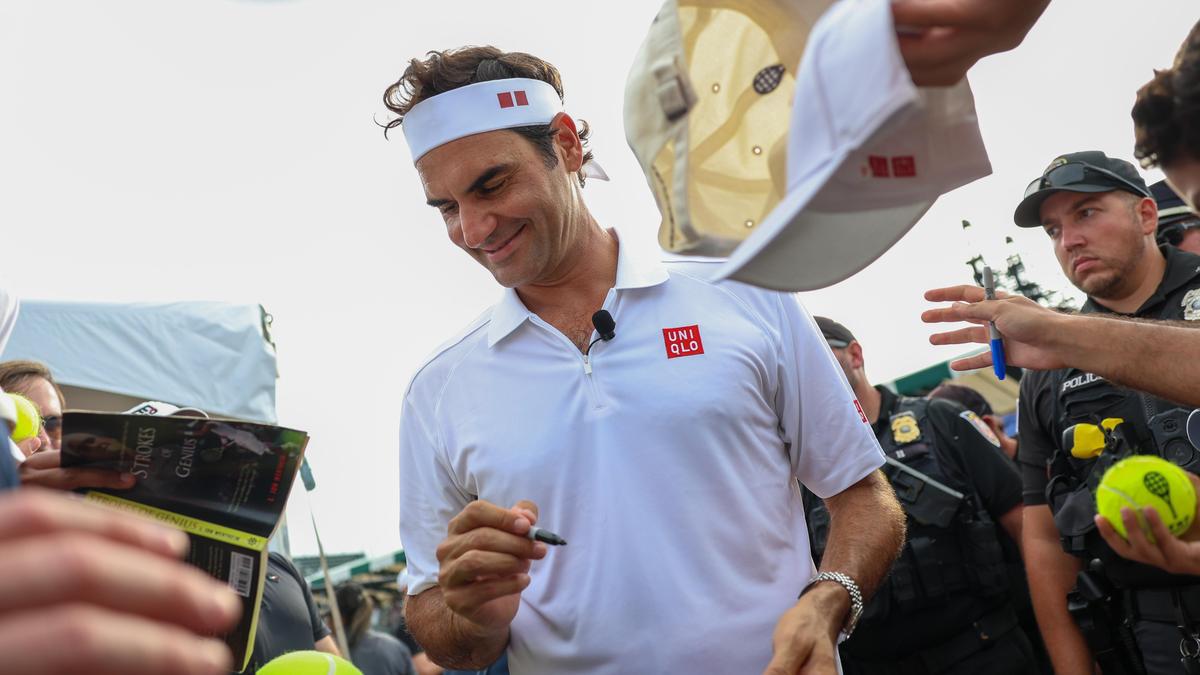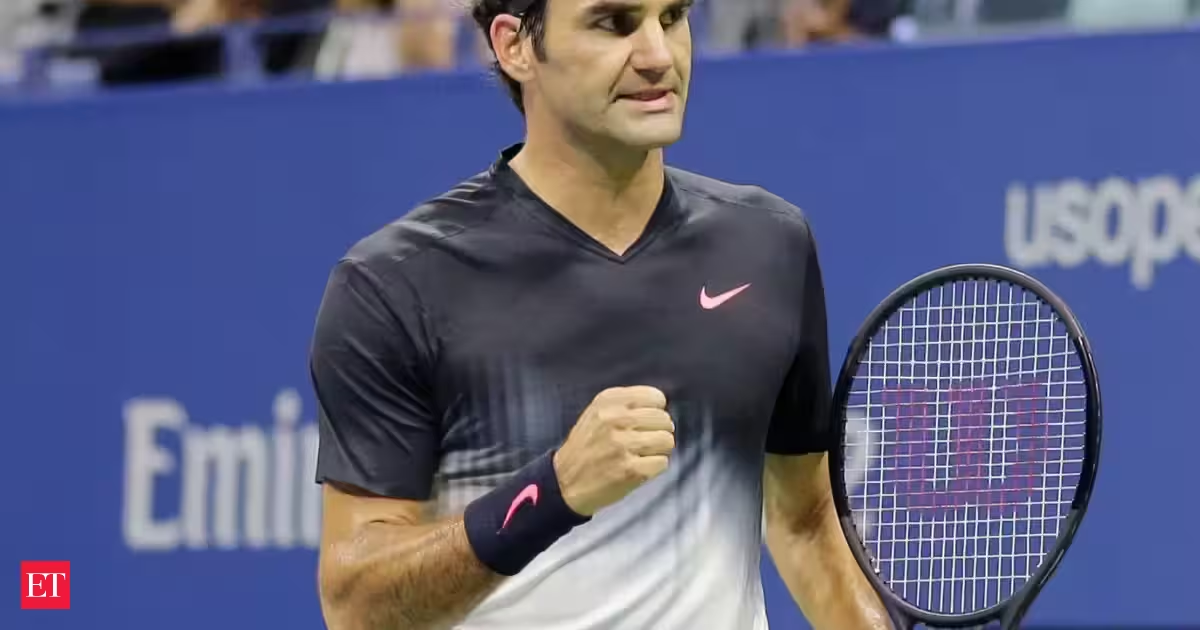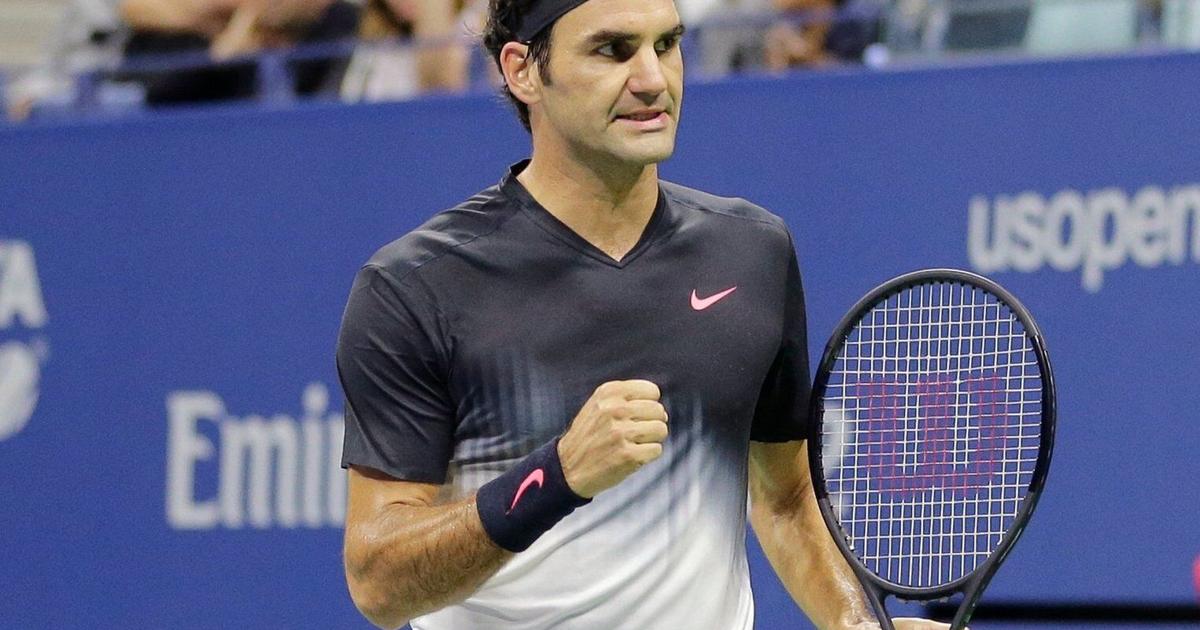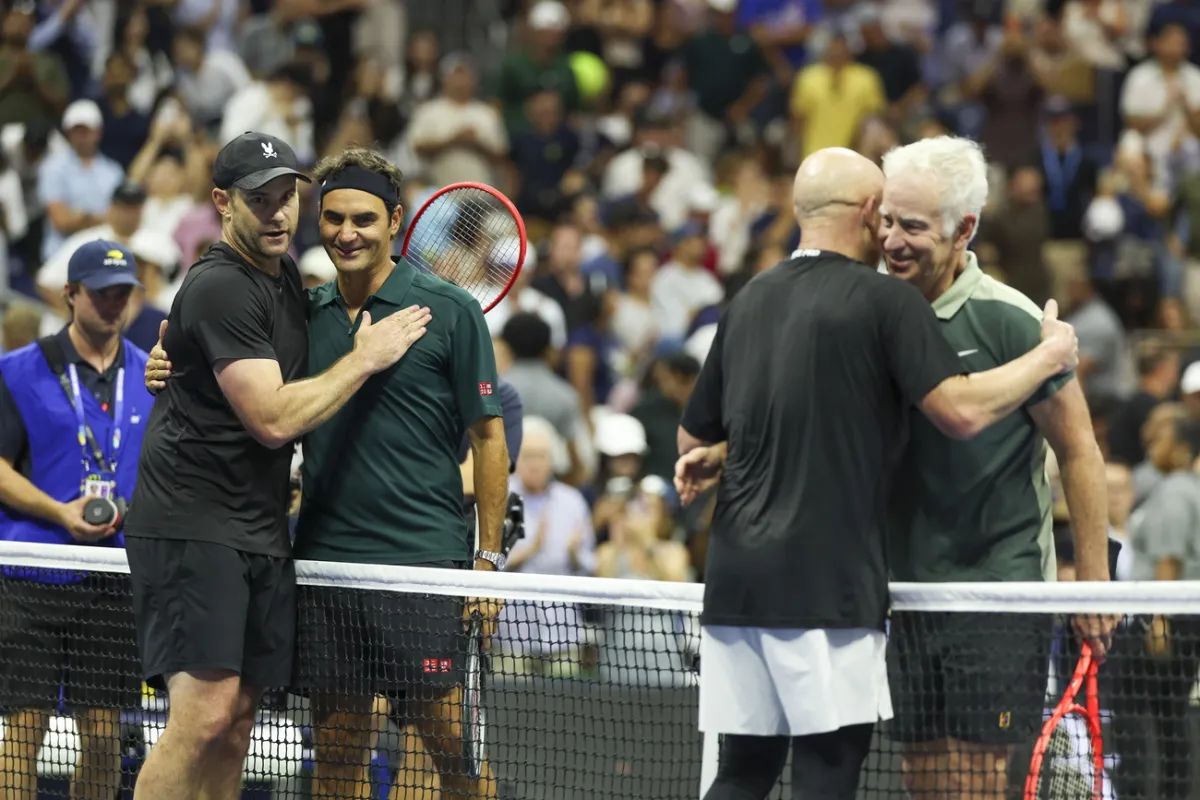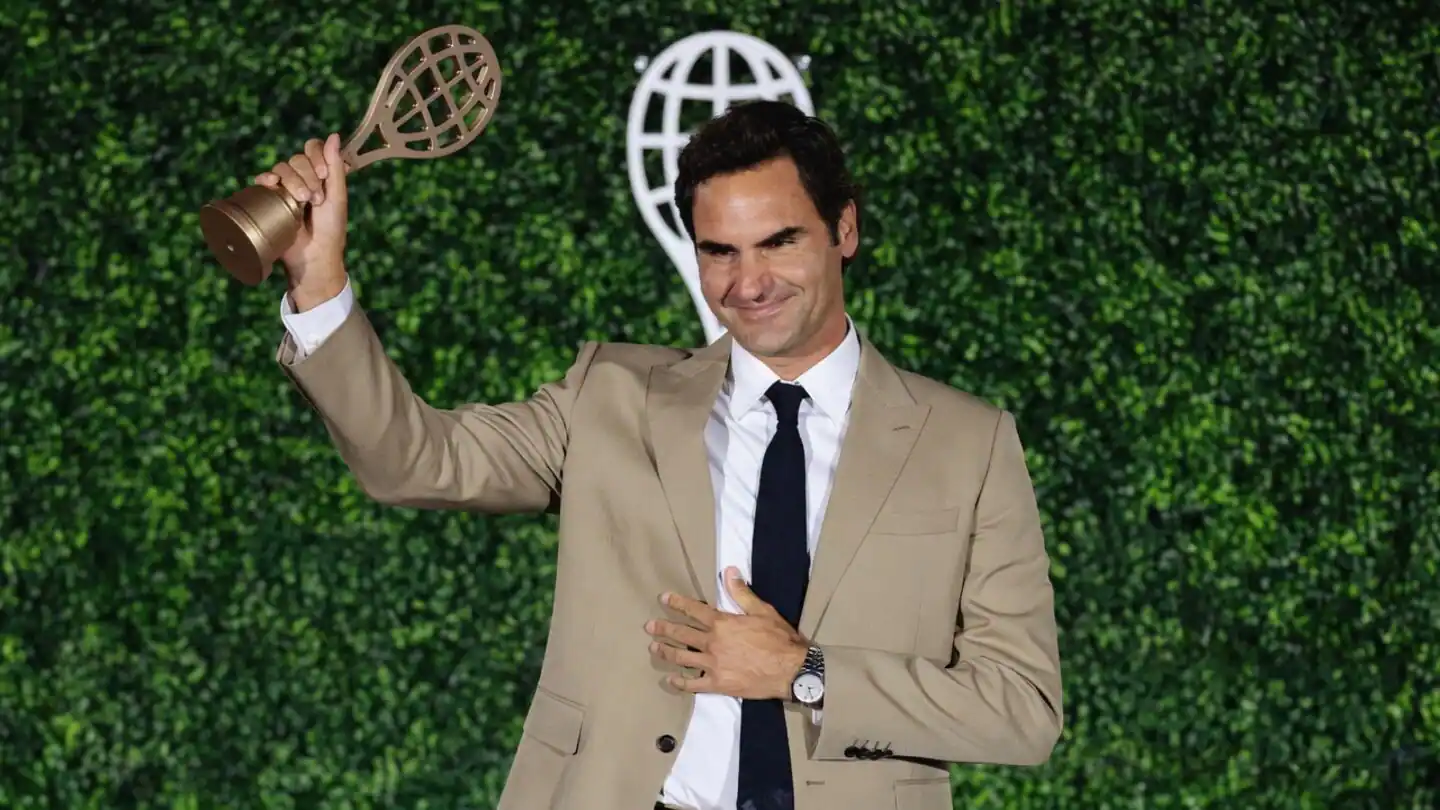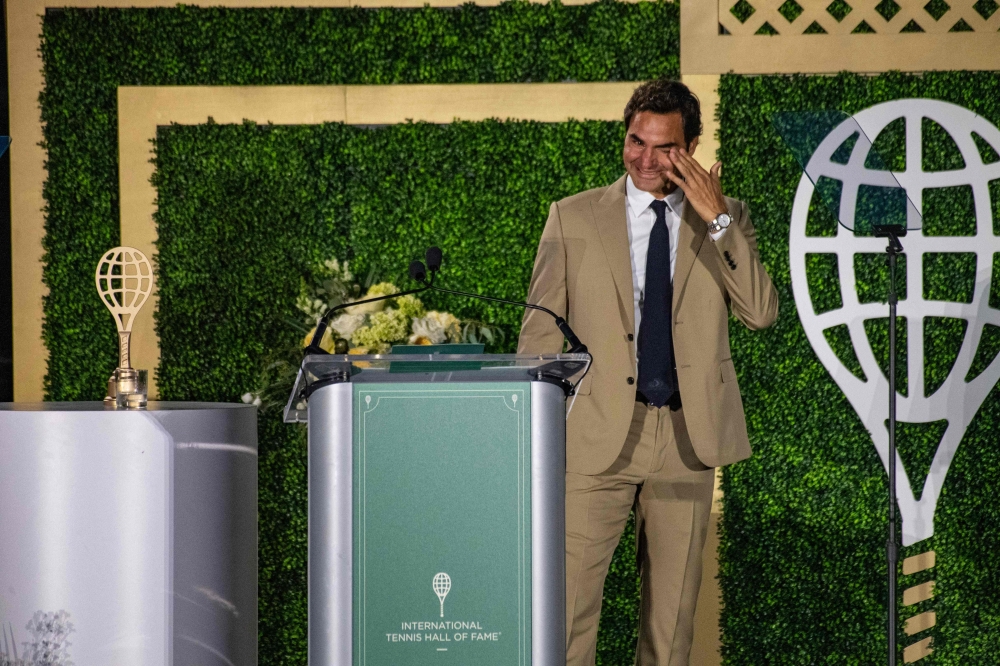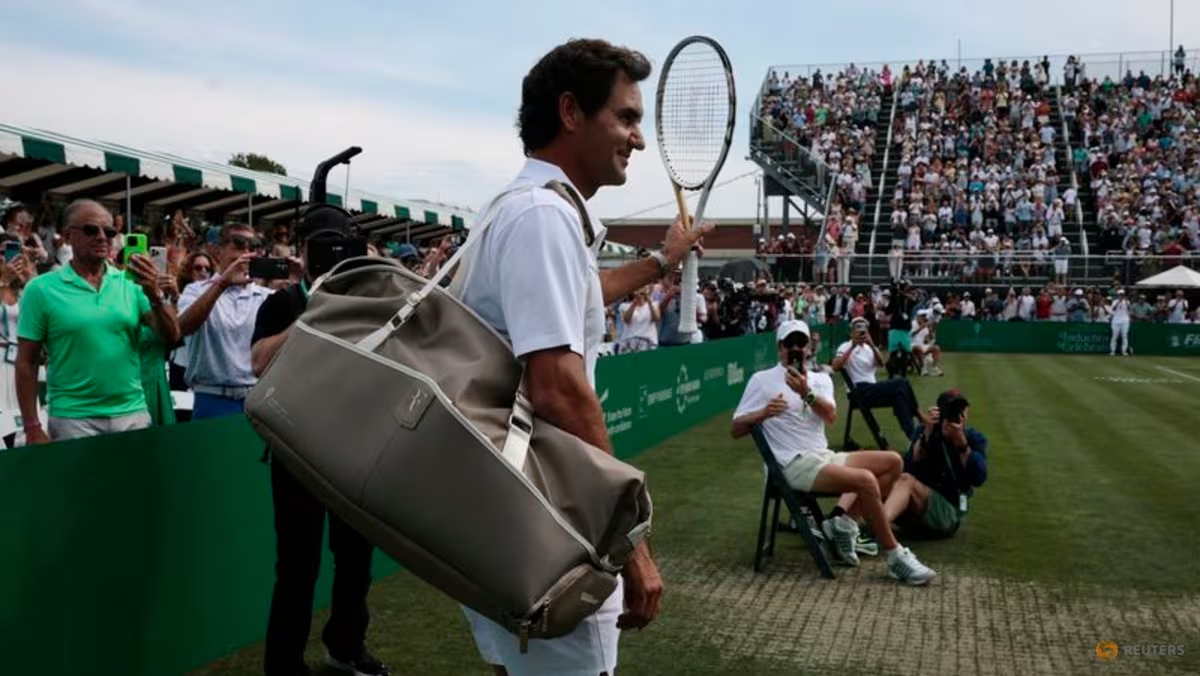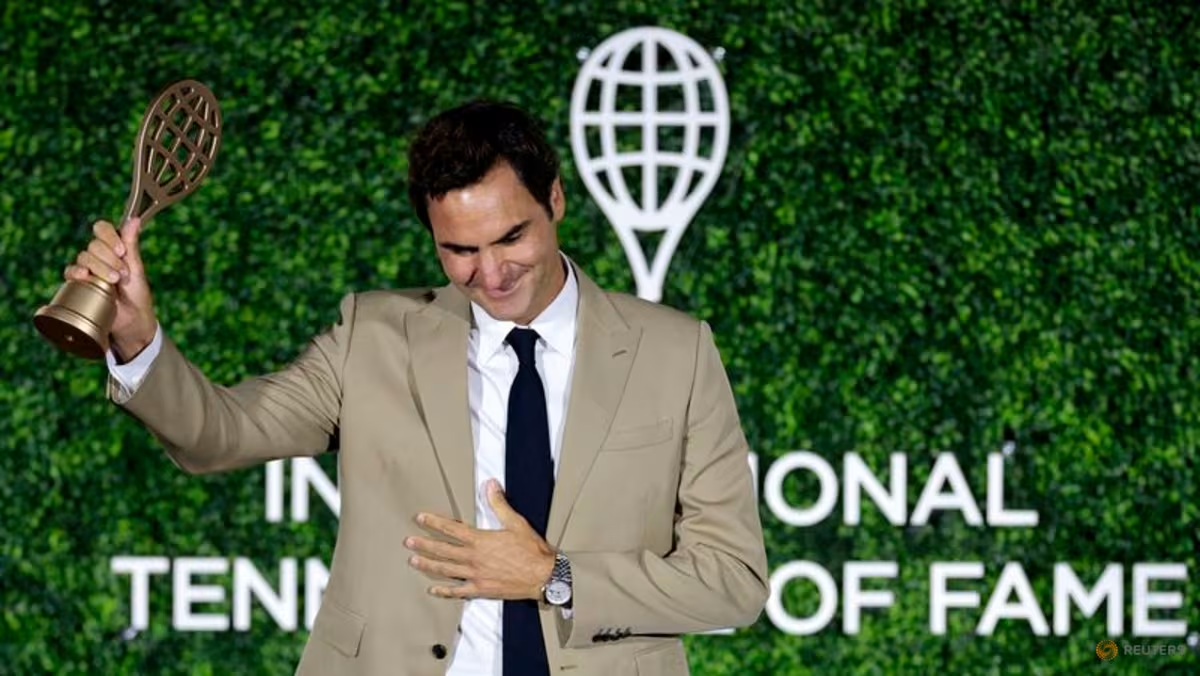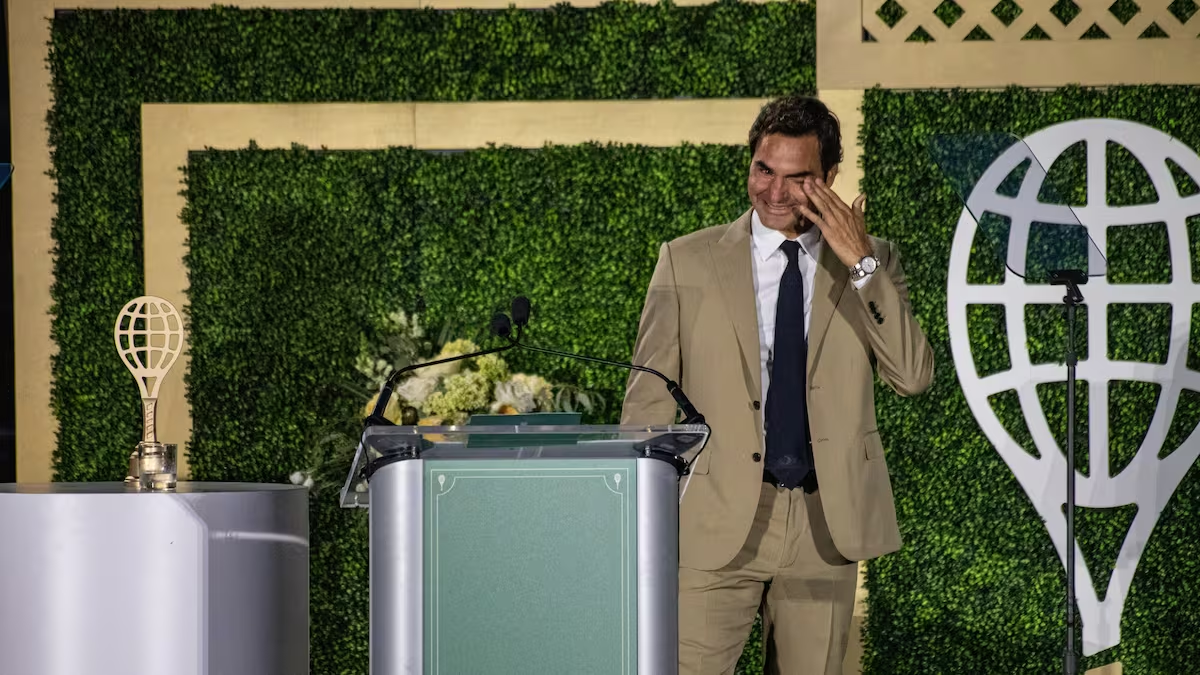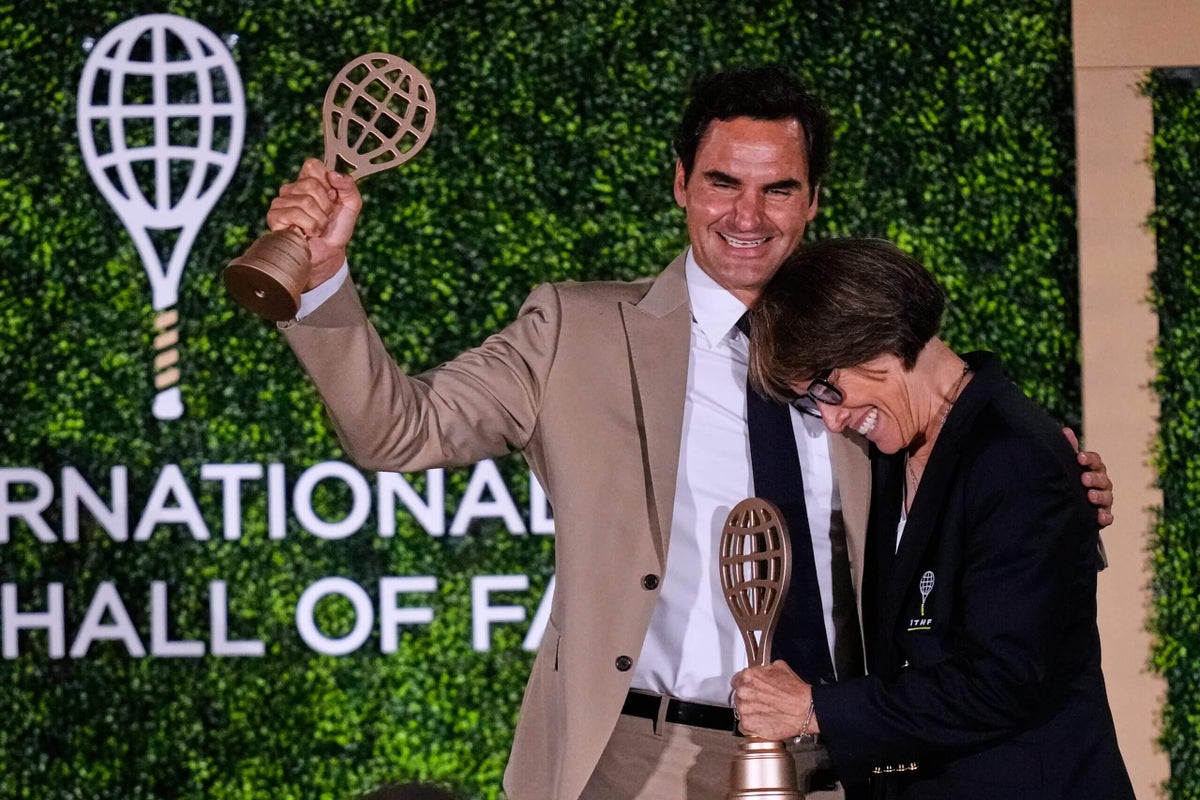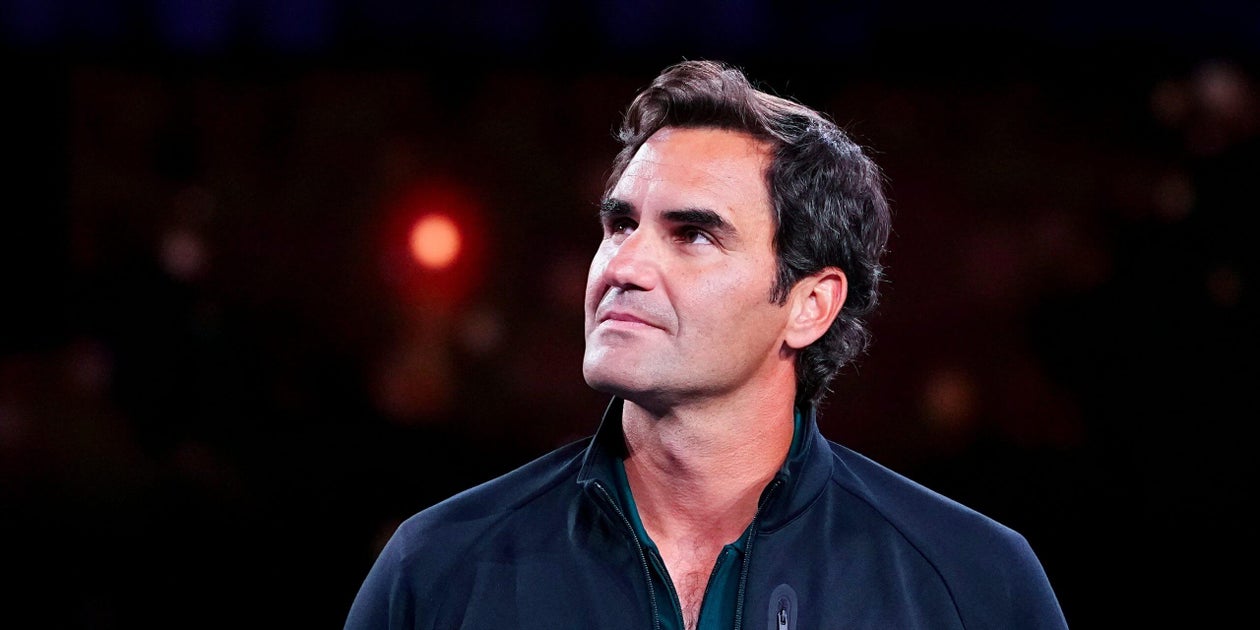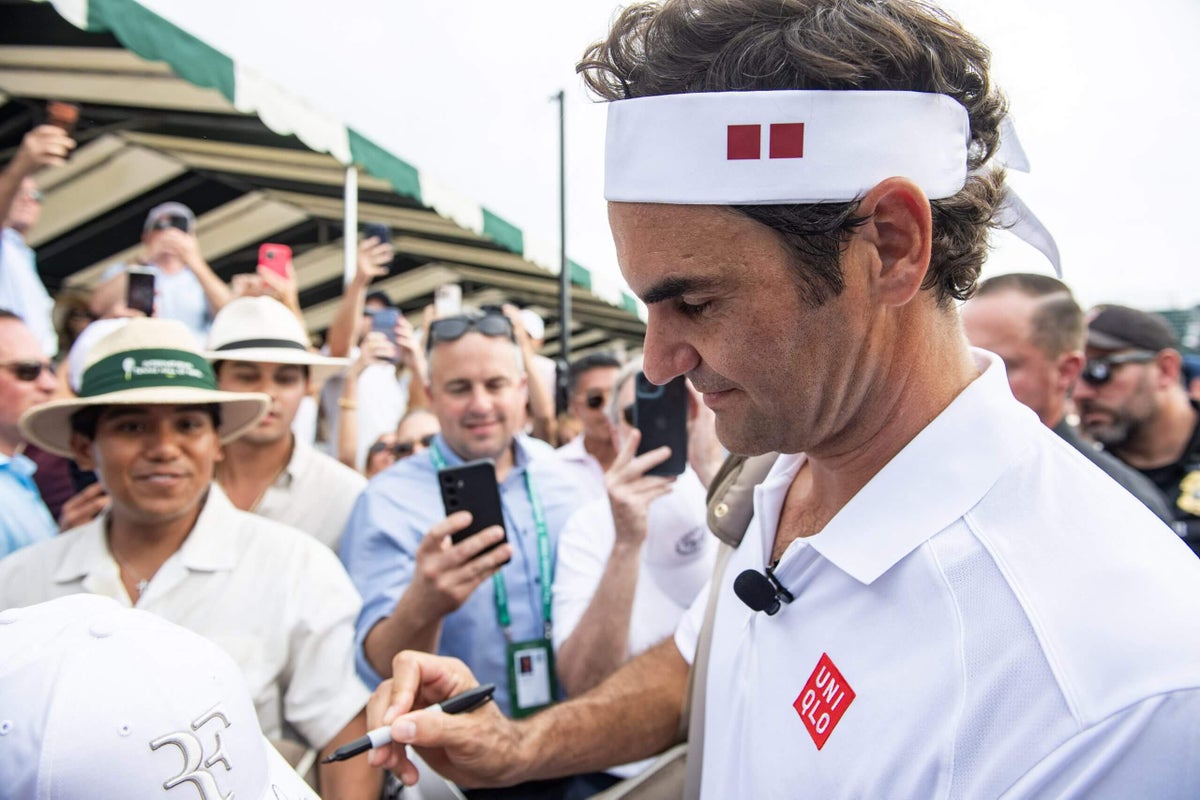
NEWPORT, R.I. — On Friday morning at the International Tennis Hall of Fame, rain was in the air.By midday, the clouds had parted over a grass tennis court, ready to welcome one of the sport’s all-time greats. Robert Fagenson felt it was fate.“The weather loves Roger Federer,” said the 77-year-old tennis player and fan.Bending the weather to his will may not be within Federer’s grasp, but the thousands gathered in Newport, R.I., could be convinced. Drawing crowds for an exhibition, after four years away from a sport that he ruled, is within his capabilities, especially when those crowds contain so many people like Fagenson, who struggle to remember what tennis was like without him.Federer, 45, retired in 2022. He is no less a legend now than he ever was. The former world No. 1 from Switzerland won plenty over his two-decade career, including 20 Grand Slams, 103 singles titles, and a record eight Wimbledon trophies.But he also won millions of fans worldwide who paid him an uncommon level of devotion, drawn not so much to his achievements as to how he achieved them. For two days, in the New England resort town which has inducted many past legends at its year-round shrine to tennis, a fraction of those millions came to celebrate not just Federer’s past, but the reanimation of a legacy that they lived vividly as it was being constructed, point by point.“He is, to me, the epitome of tennis perfection,” Bryan Carter of Atlanta, Ga., said.U.S. Open 2026 previewAva Wallace and Jen KlocknerPerfection. Elegance. Gratitude. Effortlessness. Sportsmanship. Manners. All these words tumbled out of fans’ mouths Friday and Saturday, at the events put on by the Hall of Fame to swell Federer’s induction to match his legacy.All those words have clung to Federer like the grass on his shoes at Wimbledon, both true and dissembling, hiding the seriousness, drive and occasional brattishness — at least early in his career — that propelled him into the tennis firmament. All those traits elude so many day-to-day lives, but were suffused in Federer’s pursuit of greatness, through which he became the canvas for all those qualities.Jeff and Betsy Brenner, Newport locals who have been coming to tennis player inductions for years, have a daughter who works for the Hall of Fame. “This was the biggest one yet,” said Mr. Brenner, looking at the queue snaking its way around the venue, onto the sidewalk. The tennis diehards were here — commoners and gentry alike. A few spots ahead of the Brenners, waiting in line was Gladys Szapary, scion of a local Vanderbilt countess, who recounted her family having a box at the Newport grass courts since the 1890s, back when it was just a club.Generations later, local royalty was paying tribute to modern tennis royalty. Federer’s tennis, so famously considered “religious experience,” by writer David Foster Wallace, drew an accordingly Messianic fandom. It has not dissipated. Across the Hall of Fame grounds, fans wearing red monogrammed ‘RF’ hats, the logo that became synonymous with brand Federer, On running shoes, the company on which he has hung his endorsement, abounded.For Melissa Mueller, arriving from L.A., those “RF” initials on her hat remind her of the many triumphs she has witnessed. Federer became a sensation for her Swiss family after his breakout win at the Wimbledon boys’ event in 1998.It led her to watch him play all around the world for some of his other great triumphs. As a doctor-in-training, Mueller watched the 2009 Wimbledon final on TV alongside a patient at her hospital. The patient, an American, was rooting for Andy Roddick. Federer won. Of course he did.Mueller plays tennis casually, as did many of the other fans who made the pilgrimage to Newport. Five years removed from his last competitive match, they remain in awe of Federer’s talent with a racket, and draw inspiration from what he achieved. Alex Funkhouser, a college coach whose pupils have gone on to compete at Grand Slams, appreciates the fundamentals of Federer’s game like few others. “The way he floats around the court, his movement is impeccable,” he said. “Everything’s fluid.”For other fans, it wasn’t just how Federer played, but how he conducted himself across his career. John LeBoutillier, a former U.S. Congressman from Long Island, embraced Federer’s class. “I was raised to play tennis with manners,” LeBoutillier said. “If a ball’s out, you call it out. You don’t cheat. You don’t protest.”Composure and good sportsmanship were Federer’s calling cards. He became, as LeBoutillier thought, “a great player who behaved perfectly.”Roger Federer also returned to the U.S. Open ahead of his Hall of Fame induction. (Caleb Bowlin / Getty Images)Perfection can also be boring. At the height of Federer’s tennis dominance, when his victories seemed to be foregone conclusions, it was more fun to root for the other opponent. To be universally loved is also to be frictionless, but the inverse of that is accessibility — being someone that anyone can root for. This quality, perhaps more than any other, went a long way to sealing Federer’s appeal beyond tennis.“What I really admire about him is you don’t see what goes on with him day to day. He did a really good job of keeping things hidden, and you know, when he goes to tournaments, he just looks like he’s just kind of going through the motions. But you don’t realize the work that goes into leading up to that. In the times you don’t see,” Funkhouser said.Among the true believers, Kelsey Anderson may have been one of the newer converts. Her fiancé, tennis-teaching pro-turned-reality-TV-star Joey Graziadei, was set to play a doubles exhibition match on the Stadium Court, as a warm-up act for Federer.“Honestly, it was just that Joey loved him, and then I loved him,” she said.Graziadei, along with Hall of Fame doubles players Mike and Bob Bryan, and comedian Michael Kosta, provided amusement on court, hitting soft shots against a pop-music soundtrack. The crowd cheered politely, perhaps reservedly. Eventually, the man of the hour entered the court. Phone cameras were raised in unison. Any available seat, from bleachers under the sun to shaded berths courtside, was soon filled. Federer was decked in his iconic white Uniqlo kit, holding a Wilson racket, stepping onto grass to play once again.Federer simultaneously remains and is no longer the hegemon who broke major records, but the crowd still ate it up. They “oohed” and “aahed” at every deft half-volley he made, off balls coming in at half-speed. He played two doubles matches, partnering with Martina Navratilova for the first, and his former coach Stefan Edberg for the second. He won both.Once those matches ended, it was bedlam at the exits. Red hats, tennis balls, rackets, and other souvenirs from outstretched hands brandished pens, waiting for the man himself. Security escorted other stars from the doubles matches off the court. Edberg, Lleyton Hewitt, and John McEnroe passed by without so much as a blink from those flocking. Then, the sharp elbows came out.“Roger, please!” one fan pleaded. Federer moved through the crowd, signing autographs as gracefully and efficiently as he had on courts for decades. More people gathered, and soon the crowd swelled against the black netting of the central courts of the grounds as more and more people pushed in.When he was done, Federer made his way out of the venue. The people followed. A child held out a cardboard cut-out of his face, hoisted on her parents’ shoulders. Federer was gone as soon as he arrived. His image, carried with his fans as it had been for four years, endured.Their love of tennis endures too, even as they long for their absent center of the sport.“It’s kind of hard to find someone to fill that void. So I just watch it sort of for fun now,” Carter said.
Roger Federer’s disciples meet him in the garden of tennis in America
As Federer entered the tennis firmament, the fans who afforded him Messianic devotion made a pilgrimage to see him one more time.
1,302 words~6 min read