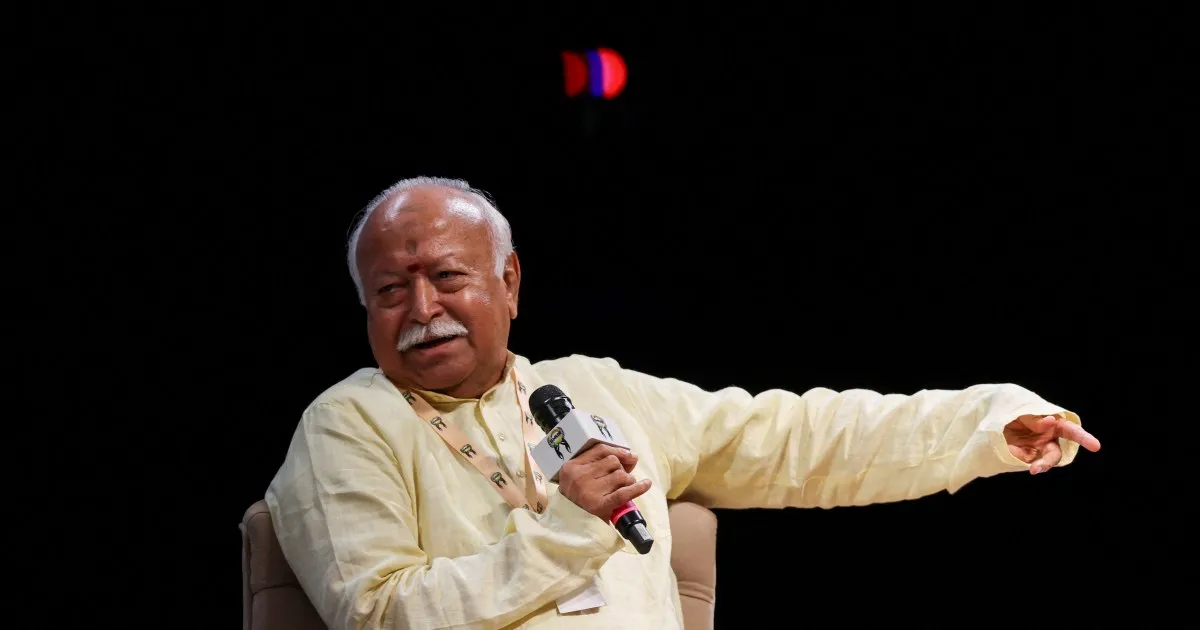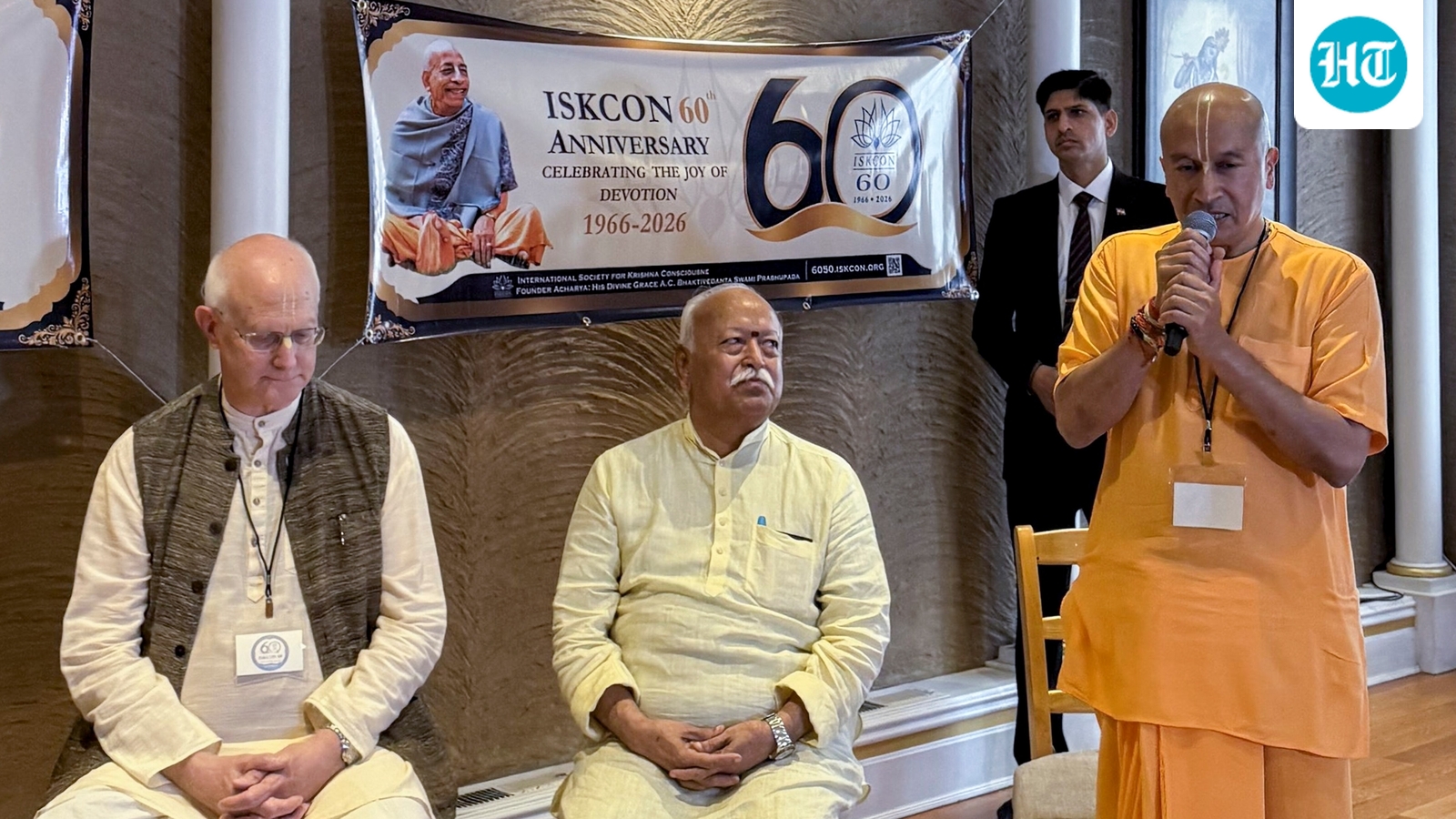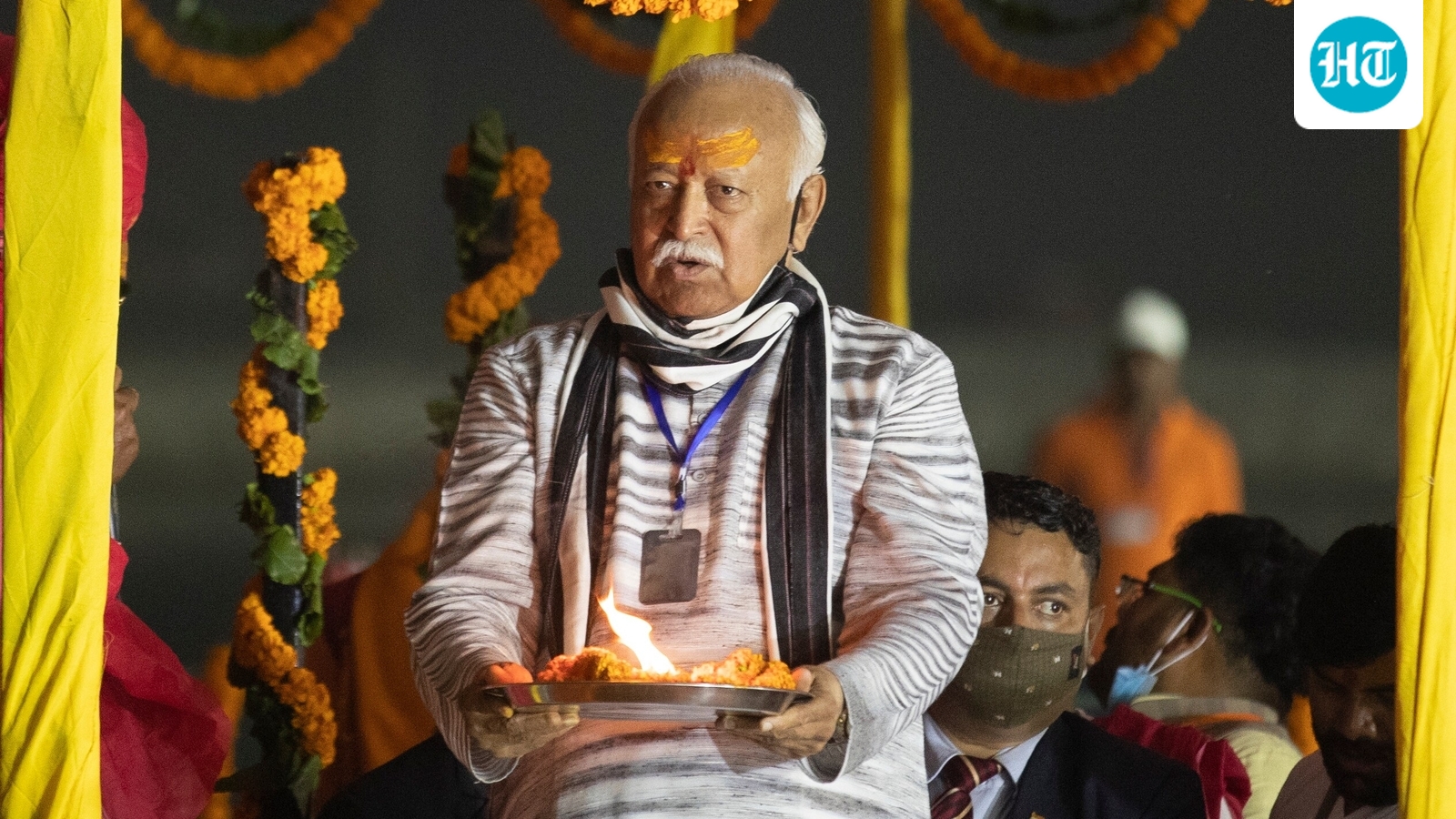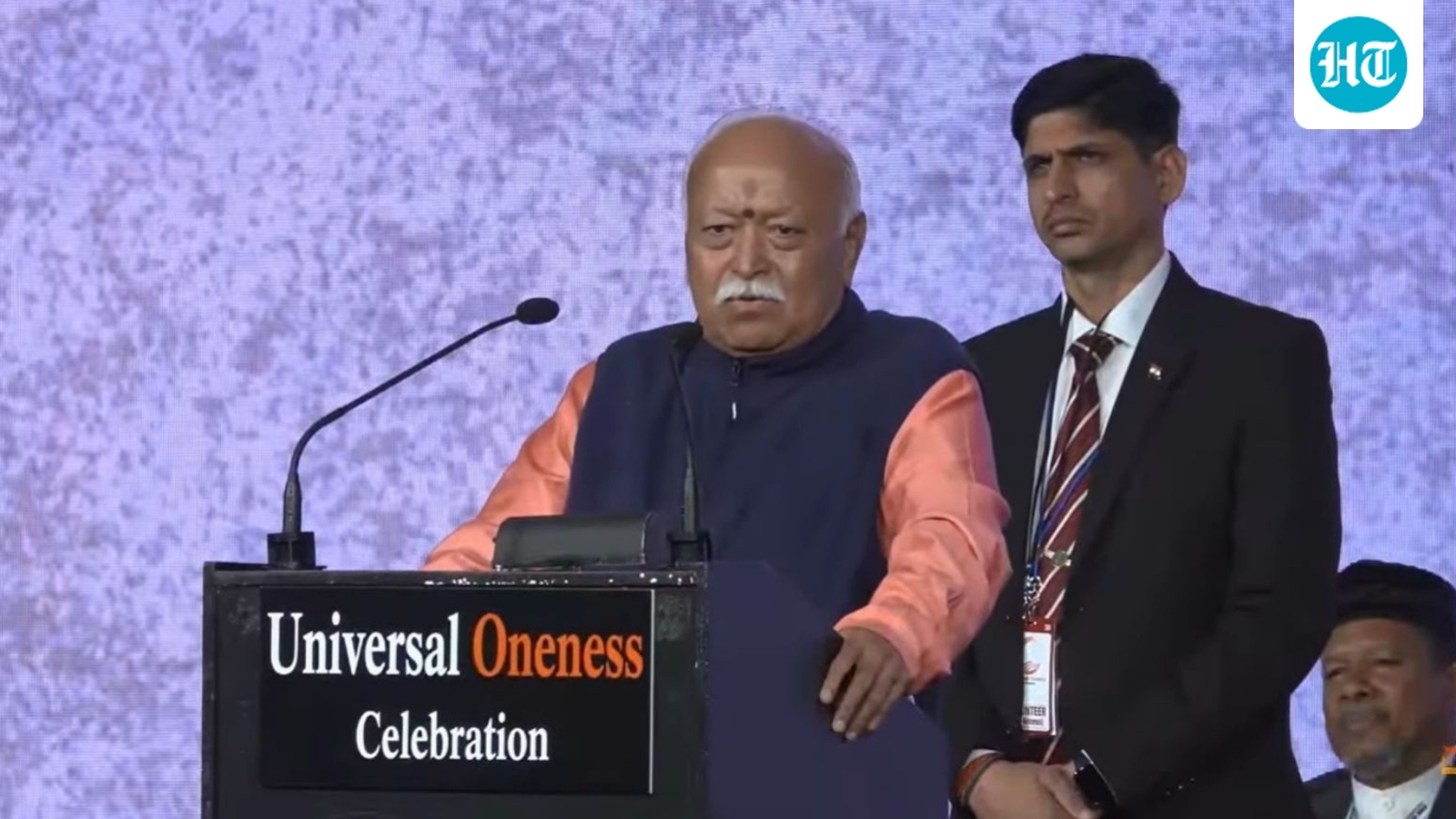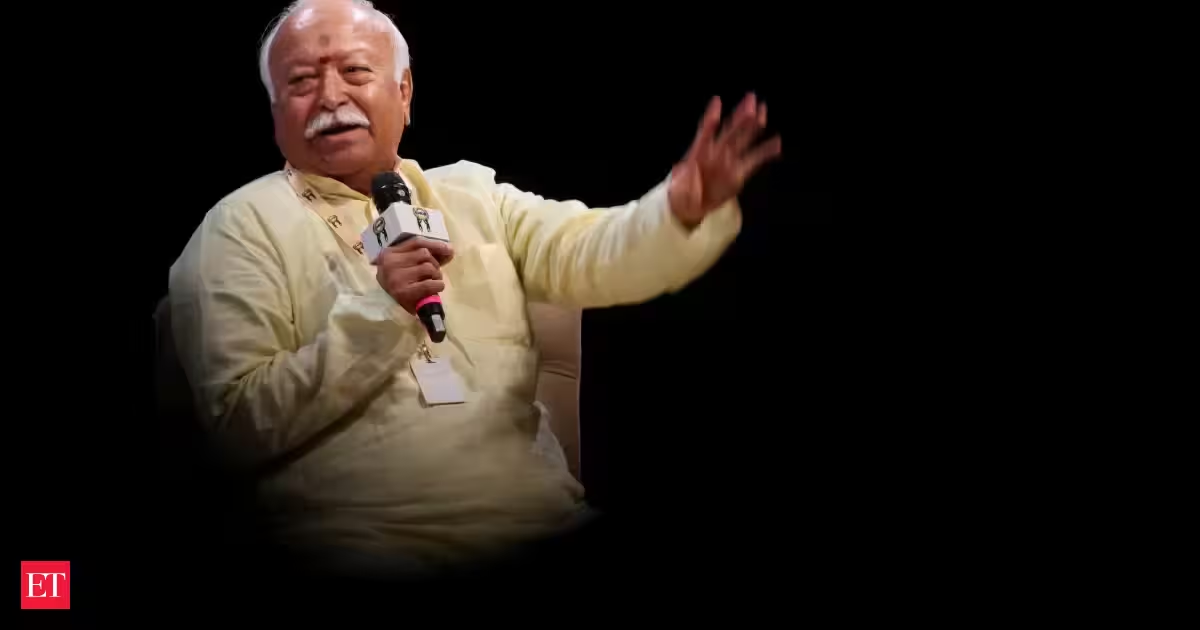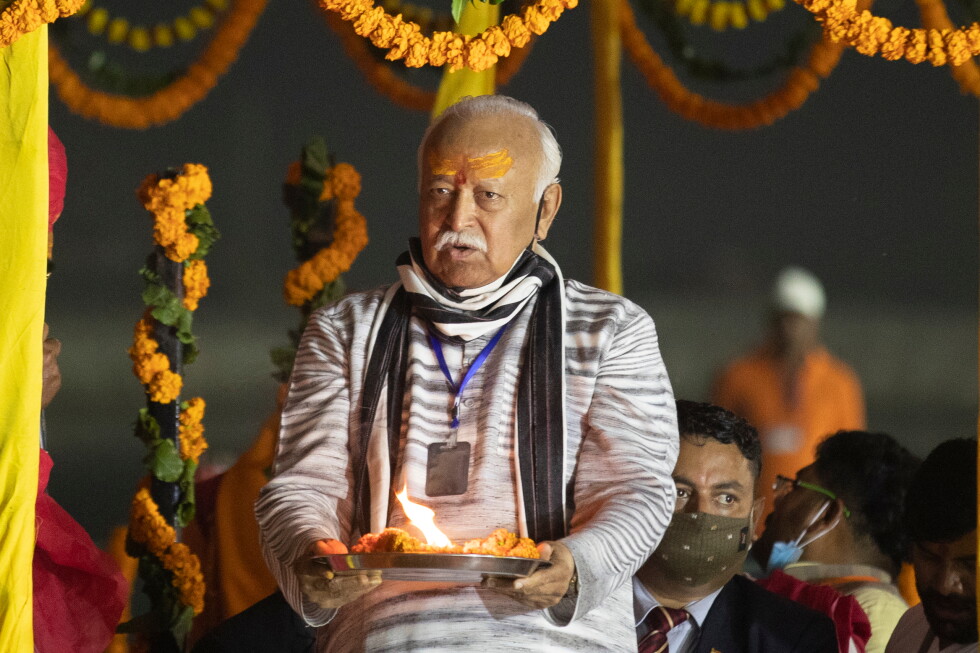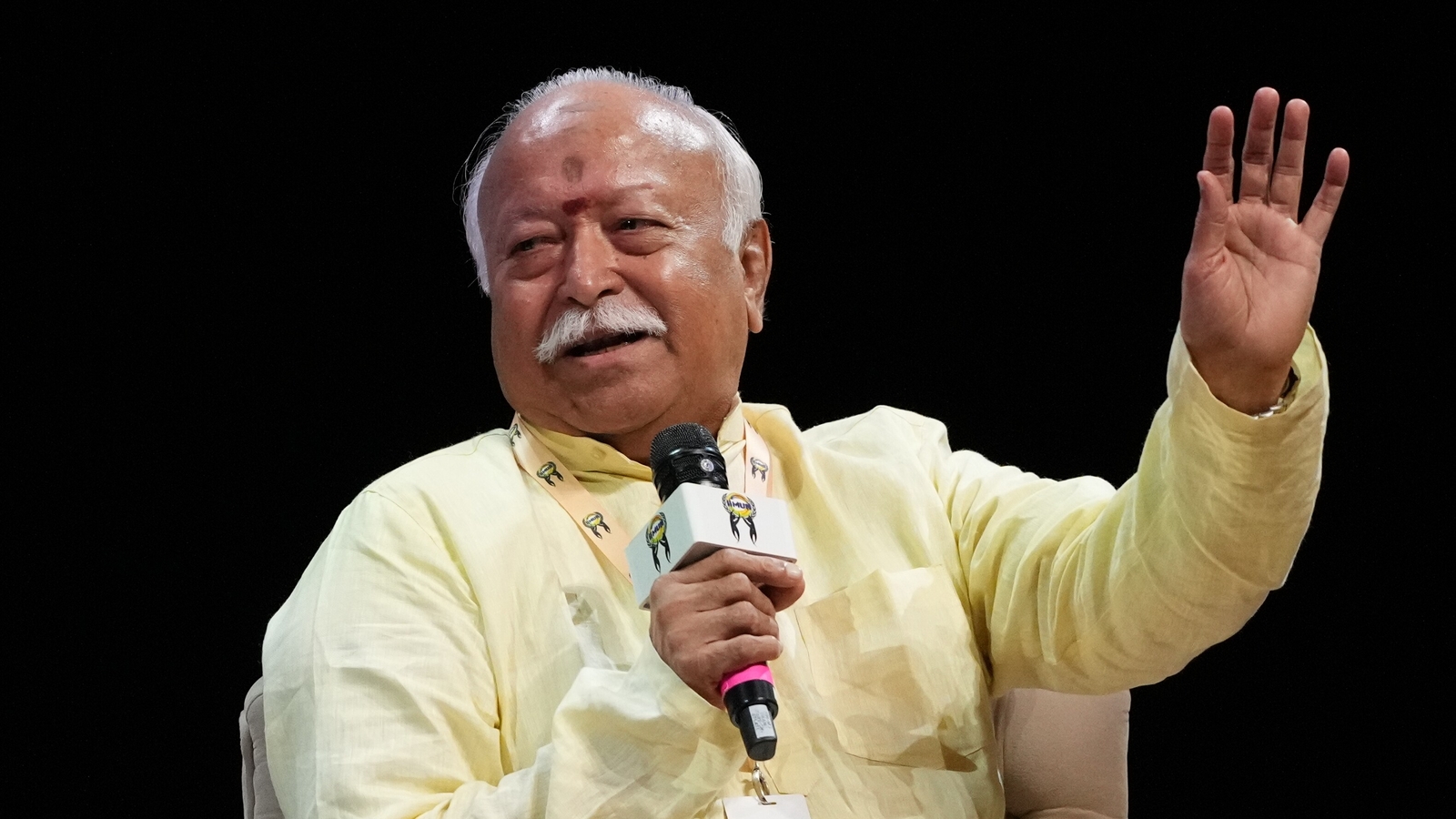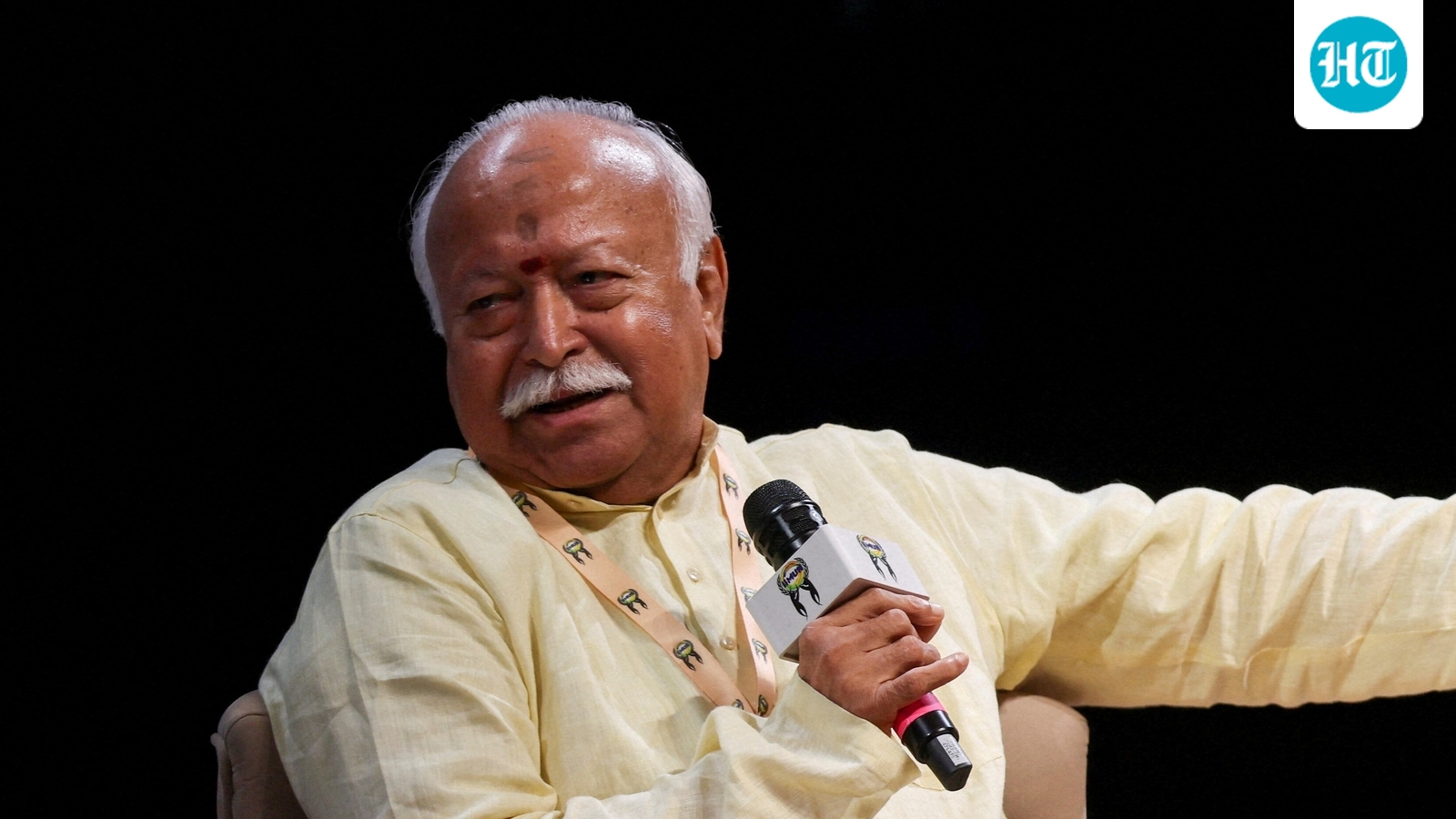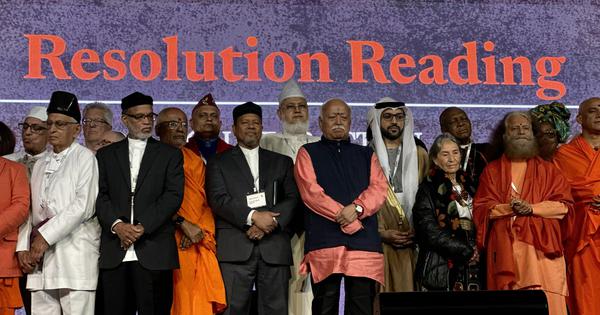
On the morning of August 29, more than 5,000 people of Indian-origin trickled into New York’s Madison Square Garden to see one man take the stage: Mohan Bhagwat, the chief of the Rashtriya Swayamsevak Sangh, the ideological parent of India’s ruling Bharatiya Janata Party.The event was titled the “Universal Oneness Celebration”. But outside the arena, there were two starkly different worlds.On one side of the entrance sidewalk, attendees in festive clothes, saffron caps and rakhis took photographs in front of the Madison Square Garden logo. In one corner, a man played the dhol and sang a rap-like version of Jana Gana Mana. “Being woke is a joke,” he shouted. “We love Modi ji,” he continued, referring to Prime Minister Narendra Modi, as some others joined in to shout “Vande Mataram”.On the other side stood coalitions protesting Bhagwat’s appearance on grounds that the RSS and BJP fostered a climate of hate and violence against religious minorities in India. On Wednesday, echoing the same concerns, the US Commission on International Religious Freedom had urged the Trump administration to revoke Bhagwat’s visa.But the demonstrations on Saturday, organised by groups including Hindus for Human Rights and the Indian American Muslim Council, seldom bothered the attendees, many of whom had travelled from far and beyond to see Bhagwat speak.“I saw Modi when he was here. It was wow. It was a once-in-a-lifetime opportunity and I got it,” said Neelima Kallaru, who posed in front of the stadium with her husband and friends, referring to Modi’s public address in Long Island in September 2024. “And now I got the second one. There was no way I would miss it,” she said.Her husband, Murali Kallaru, who immigrated from Andhra Pradesh to the US in 2000, felt similarly. The cacophony of protest slogans did not bother him either, he said.“This is about India, not just about Hindutva,” said Kallaru. “It’s one family. And families can have different opinions,” he continued, referring to the demonstrations that had grown in numbers as the event got closer.Crowds at the entrance of Madison Square Garden. ‘Oneness in diversity’As the crowds began entering the arena, chants echoed: from “Vande Mataram” to “Jai Shri Ram”. The attendees were ushered in by volunteers with the Hindu Swayamsevak Sangh, the RSS’s offshoot in the United States. The hall was packed to the brim.The event, ostensibly centred on celebrating “Vasudhaiva Kutumbakam” or “the world is one family”, began with a call to action from the organisers, the American Hindus for Engagement and Dialogue. The world is one, they said, calling around 48 faith leaders to the stage.Then entered the guest of honour, Bhagwat. He was welcomed with a standing ovation.He sat next to three people: a rabbi, an imam and a reverend. Each of them spoke one after the other. The common theme was “oneness”.“It is one world, one humanity,” said Talib M Shareef, president and imam of Washington DC’s Masjid Muhammad and a retired US Air Force member. “Not one religion. Not one culture. Not one language. Not one ethnicity. Not one nationality. But one humanity.”Finally, at the end of the nearly three-hour-long event, the RSS chief spoke.For nearly 45 minutes, Bhagwat expounded on the “unity of existence” and “dharma”, which he said stood for balance, not religion.“I come from a country where there is oneness in diversity,” he said. “We celebrate it.”The RSS chief claimed a Hindu who does not want Muslims to live in India cannot be considered a Hindu. “If you want to call yourself Hindu, you must believe that all paths lead to the same goal and that every human has dignity,” he said.Bhagwat told the Indians in the 5,000-odd crowd sitting in front of him to “be loyal” to their “karmabhoomi” or place of work – the United States. Their “janmabhoomi” or place of birth, India, “expects [them] to live the value imparted” to them.“And the value is oneness,” he said. The crowd burst into cheers.‘Hindus should come together’Bhagwat’s speech was, in many ways, starkly different from his last major public speech in the US, according to Ajit Sahi, the Director of Public Affairs of the Indian American Muslim Council.In 2018, at the World Hindu Congress in Chicago, Bhagwat spoke about the need for Hindus to “come together”, comparing them to a lion that could be overwhelmed by wild dogs if it stood alone.“You have to remember that [speech],” said Sahi, who was one of the primary organisers of the protests outside Madison Square Garden on Saturday morning. “And now he is speaking about oneness?” he continued.The contrast had become a central theme of the opposition to Bhagwat’s visit in the days leading up to his appearance.On Tuesday, New York Mayor Zohran Mamdani said he opposed the event, describing the RSS’s vision as “exclusionary” and at odds with the pluralistic and secular India he said he had grown up knowing. Mamdani, however, said the city might not have jurisdiction to cancel a private event at Madison Square Garden.The same day, former New York city comptroller Brad Lander and city council members Shahana Hanif, Lincoln Restler and Julie Won joined more than 40 civil rights and community organisations at City Hall to call on Madison Square Garden to cancel the event.Lander invoked the arena’s history as the site of a 1939 rally by the German American Bund. “MSG said it would not host hate-filled, bigoted rallies again,” he said. “It should not host this one.”Hanif said Madison Square Garden should not provide a platform to Bhagwat and the RSS, which she described as a movement with a “documented history of persecution and violence against religious minorities”.By Wednesday, the opposition had moved beyond New York.The US Commission on International Religious Freedom called on the Trump administration to consider targeted sanctions against RSS members and Indian officials involved in religious-freedom violations, and specifically urged the government to revoke Bhagwat’s US visa.“The US government has an opportunity to hold India accountable and signal that the United States stands for religious freedom for the people of India,” said the commission’s vice chair, CeCe Heil. Not doing so would only lead to more attacks on minorities by “vigilante mobs,” she added.The commission’s recommendation was non-binding, and Bhagwat remained in the country.On Thursday, 65 US organisations, including Hindu, Muslim, Sikh, Christian, Jewish, Dalit and civil-rights groups, issued a joint statement denouncing Bhagwat’s visit.The organisersAs the controversy intensified, on Friday evening, Bhagwat’s face appeared on one of the giant digital billboards in Times Square. The images were accompanied by the words “Resolve, Harmony, Dialogue”, an unmistakable display of the public-relations campaign surrounding his visit.The event itself was organised by AHEAD, a little-known nonprofit established in 2025. AHEAD presents itself as an organisation dedicated to engagement and dialogue among American Hindus and other communities.But two recent investigations by Savera, a US-based organisation that researches Hindu nationalist networks, have questioned how independent AHEAD is from the RSS’s American infrastructure.Savera reported that AHEAD was incorporated in May 2025, with its initial registration connected to Khanderao Kand, a longtime RSS and HSS figure and founder of the Foundation for India and Indian Diaspora Studies.The report found that the organisation’s three listed directors also had connections to the American Sangh: Sudesh Agrawal, one of the directors, heads the HSS’s Cleveland chapter, while other directors have participated in HSS or affiliated organisations.Savera also reported that AHEAD’s name and the “Universal Oneness” branding echoed language used by HSS in its own programming. It characterised AHEAD as part of a broader network through which the RSS’s overseas operations could organise Bhagwat’s visit while maintaining a separate formal identity. AHEAD has not publicly described itself as an RSS or HSS organisation.By Saturday morning, the argument over Bhagwat’s visit had, hence, become larger than the event itself.Inside Madison Square Garden, thousands of people listened to him. Neither did Bhagwat mention the opposition to his visit, nor anything about India or Prime Minister Modi.Outside, protesters argued that giving the RSS chief one of New York’s most prominent stages was itself a statement about who gets to define that “oneness” – and its history.All photographs by Oishika Neogi.
At New York event, Bhagwat preaches ‘oneness in diversity’ amid a storm of protests
The speech was in stark contrast to what the RSS chief had said in his last major public appearance in the United States.
1,357 words~6 min read