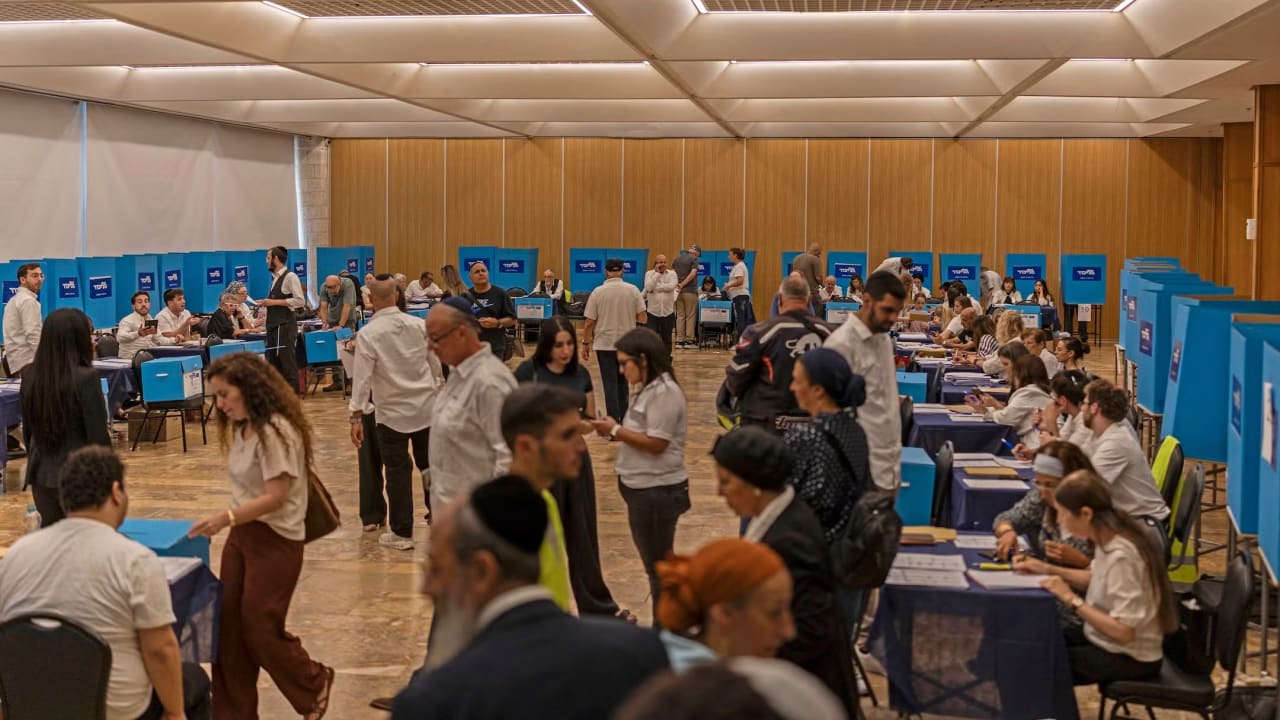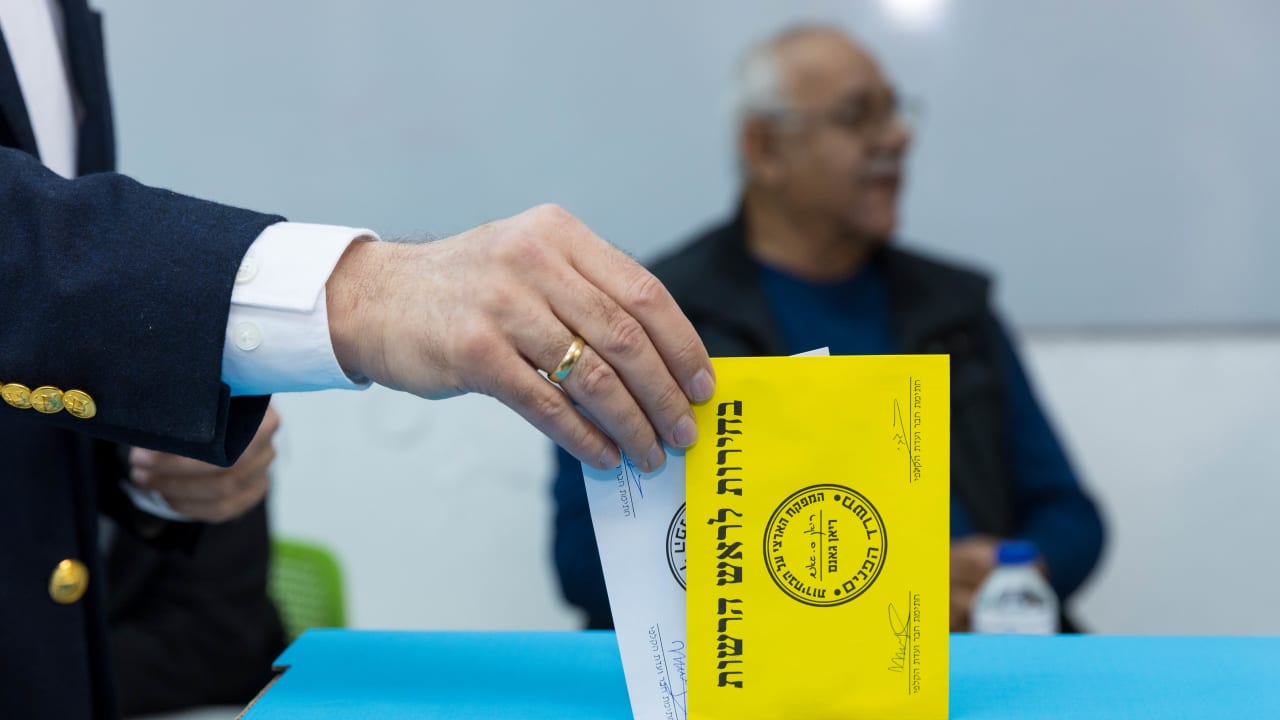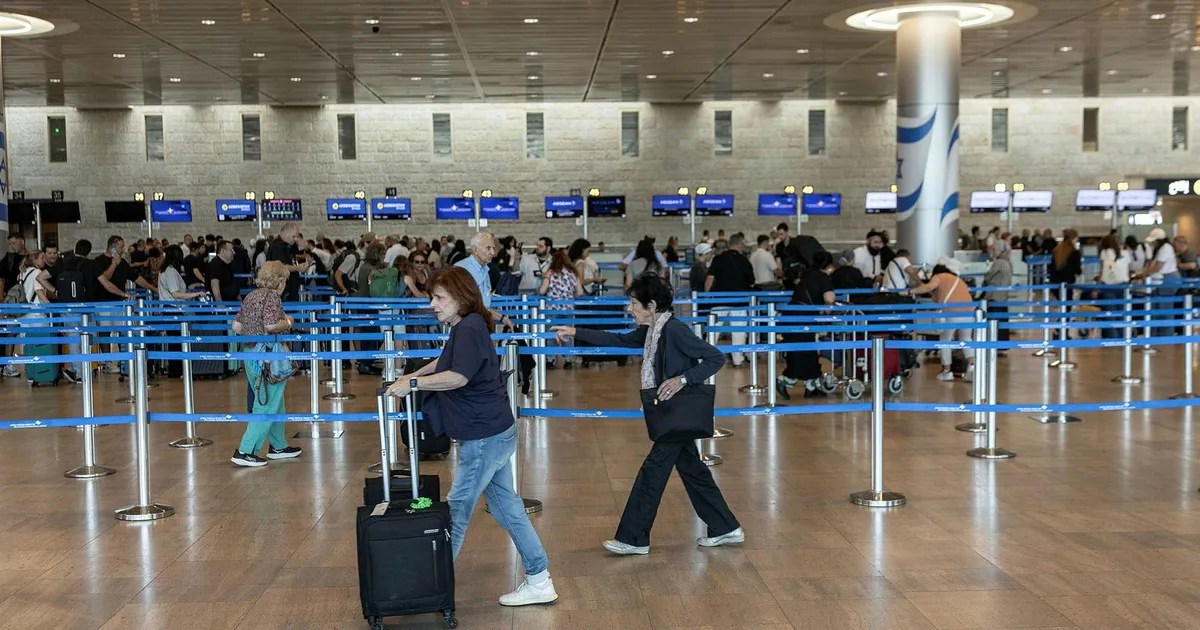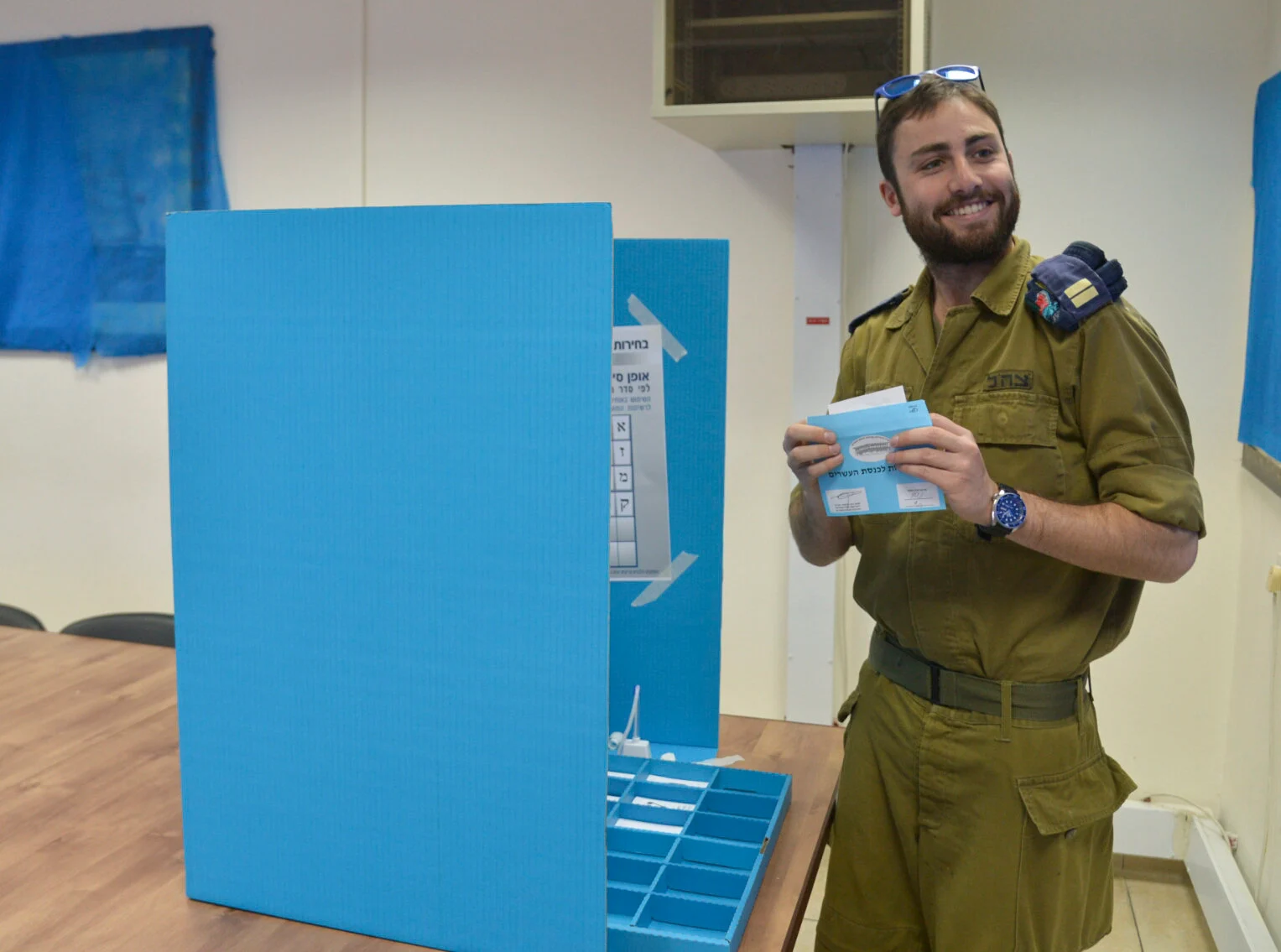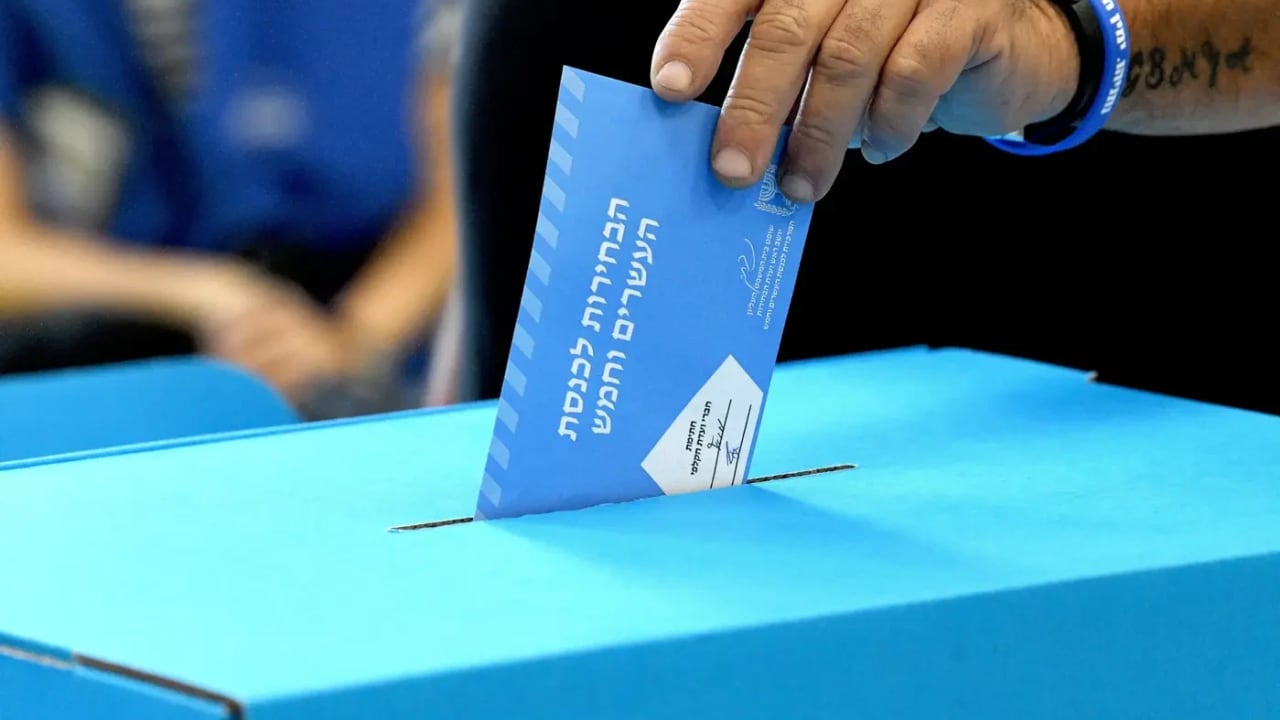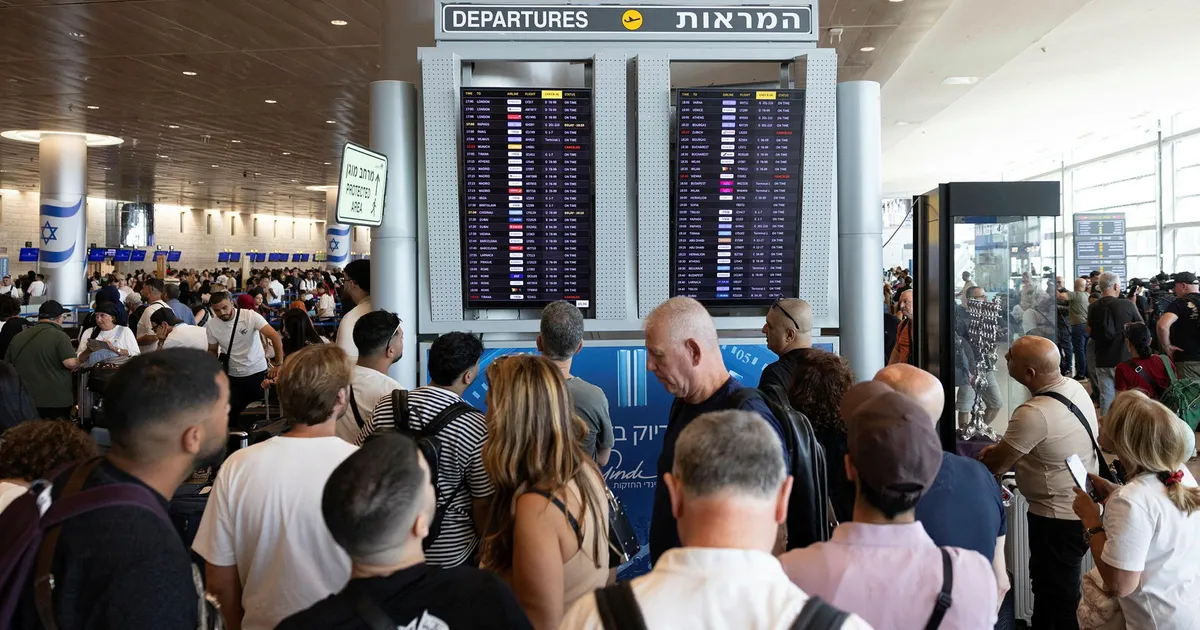
Israel operates polls at over 100 missions worldwide, but most citizens abroad cannot use them; why can state envoys vote overseas while students and expats cannot, how do other countries handle it and is Israel’s law outdated?For one Israeli couple living in Paris, voting in the coming Knesset election will require far more than a short walk to the neighborhood polling station. To cast their ballots, they had to buy flights to Israel costing nearly $4,800.Other Israelis living or temporarily staying in the United States, Europe and elsewhere have described similar expenses in recent weeks, sometimes amounting to thousands of dollars, along with vacation days they will have to take simply to be in Israel on October 27, the date of the election for the 26th Knesset.At first glance, the reason appears simple: Israelis cannot vote from abroad. Except that is not entirely true. While those voters make the long journey to Ben Gurion Airport, an Israeli polling station may be operating just a few miles from their homes inside an embassy or consulate. Israel already holds elections overseas. It knows how to verify voters, transport sealed ballots back to Israel and include them in the count. In the 2022 election, about 4,500 eligible voters were registered at 103 polling stations in 101 Israeli missions around the world.But an Israeli living in New York cannot simply walk into the consulate on election day and vote. Those polling stations are not open to the Israeli public at large. The issue, in other words, is not that Israel cannot organize voting abroad. It is that the law allows only certain Israelis to use the system.The restriction does not apply only to people who have moved abroad permanently. An Israeli whose main home remains in Israel, who pays taxes there and lives there throughout the year but happens to be overseas on election day, whether on vacation, a business trip or a family visit, cannot vote at an Israeli mission either. To participate in the election, that person must be physically present in Israel. Someone who booked a vacation months in advance and later discovered that the election would take place during the trip therefore faces a simple choice: change the plans or give up the vote.Israel’s Basic Law: The Knesset grants every Israeli citizen aged 18 and over the right to vote. But the electoral system is largely based on assignment to a specific polling station inside Israel, and voters are generally required to appear there in person on election day. Israel has no general system of postal voting, early voting for the entire electorate or online voting.Shevah Weiss and Chaim Herzog (Photo: Yaakov Saar, GPO)The law does, however, create a defined list of exceptions abroad. Israelis posted overseas as state employees, including soldiers, can vote at Israeli diplomatic missions. So can employees and emissaries of the Jewish Agency, the World Zionist Organization, the Jewish National Fund and Keren Hayesod. Their spouses and children up to age 20 may also be covered if they are eligible voters.A Foreign Ministry employee posted to Washington can vote there. An Israeli who moves to the city for a two-year doctoral program cannot. A Jewish Agency emissary in London can vote in London. An employee of an Israeli technology company sent to the same city on relocation must return to Israel. That distinction can appear arbitrary in 2026, but its roots go back decades.In July 1982, the Knesset held a debate that sounds strikingly similar to the argument today. MK Chaim Herzog, who would later become president, proposed allowing citizens sent abroad by the state or national institutions to vote at Israeli missions. MK Shevach Weiss asked why the arrangement should stop there. Why not also allow Israelis studying at universities abroad to vote?Herzog objected. Such an expansion, he argued, would be too broad, and he cited what Israelis at the time commonly called yerida, permanent emigration from Israel. The problem, he said, was distinguishing between someone temporarily abroad who intended to return and someone who had left the country for good. A state emissary, by contrast, was abroad by definition for a limited assignment.Herzog’s proposal did not become law. The current arrangement was enacted only in 1990, through legislation initiated by Weiss and Edna Solodar and merged with a government bill. But that earlier debate exposed the question that still hangs over the issue: Is citizenship alone enough to make someone part of the electorate choosing the Knesset even while living outside the country?That is the central argument made by opponents of expanding overseas voting. Someone living in Israel feels the consequences of government decisions every day, in schools, health care, taxes, the cost of living, transportation and security. An Israeli who has lived for years in Los Angeles or Berlin may retain a strong Israeli identity but does not necessarily bear those same consequences.The argument surfaced sharply this month when Communications Minister Shlomo Karhi said, referring to Israelis abroad, that “those who live in the country should influence its future,” adding that anyone who does not live there “is welcome to make aliyah,” meaning immigrate or return to Israel.“The left is now trying to bring masses of people from abroad,” Karhi said. “Those who don’t live here in the country should not come only because of their ‘anyone but Bibi’ agenda to try to replace the government.”His remarks drew fierce criticism from Israelis overseas, who argued that temporary residence abroad does not erase their citizenship or connection to Israel. But this is where the problem becomes more difficult: Where should the line be drawn?Should a student who spends three years in Boston be allowed to vote? What about a high-tech employee on a six-year relocation? An Israeli who left a decade ago but still owns an apartment in Israel? Someone born in Israel who moved to Canada as a child?Giving every Israeli citizen abroad an unrestricted right to vote would solve the boundary problem, but create another concern: a large population that does not live in Israel could influence the composition of a government whose decisions primarily affect those who do. For that reason, even researchers who support broader overseas voting often focus on people whose stay abroad is temporary and whose main center of life remains in Israel.Shlomo Karhi votes in the Likud primaries Israeli law already recognizes, to some degree, a distinction between citizenship and residency. Every adult Israeli citizen has the constitutional right to vote, but to exercise it the voter must be included in the electoral register. That register includes citizens who are listed in the Population Registry as residents.An Israeli who left the country permanently and whose status was updated accordingly may therefore be absent from the register altogether. Even returning to Israel on election day would not necessarily allow that person to vote. There is, however, no simple rule under which someone automatically loses the ability to vote after five or 10 years abroad. In practice, eligibility depends on Population Registry status, which does not always reflect a person’s center of life consistently.Constitution, Law and Justice Committee Chairman Simcha Rothman said that on election matters he preferred arrangements that enjoyed broad political agreement. So the same question remains. If a young Israeli sent to perform national service in the United States could vote there, why not an Israeli student? If an employee of one of Israel’s national institutions is eligible, why not an employee of an Israeli company sent abroad?Rather than applying a uniform test based on a person’s connection to Israel, the law still relies largely on a list of approved categories. Two Israelis can therefore live in the same foreign city, stay there for the same length of time and hold the same citizenship, yet only one may be allowed through the consulate doors to vote.International comparisons show how restrictive Israel’s model is, although there is no single system used across democracies. According to the International IDEA database, 131 of 218 countries and territories surveyed offer some form of external voting in parliamentary elections. In Europe, 44 of 48 do.But “voting abroad” can mean many things: voting in person at an embassy, postal voting, proxy voting and, in some countries, electronic voting.An Air France plane at Ben Gurion Airport; French citizens do not have to return home to vote in elections (Photo: Ronen Fefer / Shutterstock)France sits at the broad end of the spectrum. French citizens living abroad can vote in parliamentary elections and even elect representatives from 11 dedicated overseas constituencies to the National Assembly. They can also vote online in parliamentary elections, alongside other methods. In the 2024 parliamentary elections, 599 polling stations were set up at 352 locations for French voters abroad, and online voting accounted for a significant share of participation.In the United States, most citizens living overseas can vote in federal elections through absentee-voting procedures. The rules for receiving and returning ballots vary by state. Voting material may be sent by mail, email or fax, with ballots returned according to local requirements. U.S. embassies and consulates do not generally function as polling stations, but they can help transmit voting materials.Britain has moved in the opposite direction from Israel in recent years by expanding access. Until 2024, British citizens who had lived abroad for more than 15 years generally lost the right to vote in parliamentary elections. That limit has now been abolished. Eligible former residents can register as overseas voters even after many years abroad and can vote by mail or proxy.Canada allows eligible citizens living abroad to register in an international voters list and vote using a special ballot sent by mail. Their vote is assigned to the constituency where they most recently lived in Canada.US citizens vote in Bangkok, Thailand, in 2020 (Photo: Mladen Antonov / AFP)(Photo: Mladen Antonov / AFP)Perhaps the most relevant examples for Israel, however, lie between the two extremes. Germany allows some citizens living abroad to vote but does not rely on citizenship alone. Germans no longer registered as residents may qualify if they lived in Germany for a certain period after age 14 within the previous 25 years, or if they can demonstrate direct familiarity with and exposure to German political conditions.Germany’s voting method is also instructive. Rather than simply opening polling stations at every embassy, German authorities say that would be cumbersome and expensive, in part because the country has hundreds of constituencies and different ballot papers, and because reaching an embassy can itself require travel over hundreds or thousands of miles. Voting is therefore conducted largely by mail.Australia offers another middle-ground model. Citizens who leave the country can register as overseas voters under conditions intended to show that their stay abroad does not amount to a permanent break with Australia, including an intention to return within a defined period.They can vote by mail or at overseas voting centers. In the 2025 federal election, Australia operated 111 overseas voting centers, with the final election report listing centers across 81 countries and tens of thousands of ballots cast abroad.Australian citizens vote in London in 2013 (Photo: Dan Kitwood / Getty Images)Australia therefore does not have to choose between two absolutes: only people physically inside the country or everyone who holds a passport. It has created a third category: citizens who are abroad but whose connection to the country and intention to return remain strong enough for them to stay part of the electorate.Ireland, by contrast, looks more like Israel. Irish citizens living abroad generally cannot vote in general elections. Exceptions apply to limited groups such as diplomats and their spouses, as well as certain members of state services posted overseas.Israel is therefore on the restrictive side of Western democracies, but it is not alone.One argument against expanded overseas voting is logistical complexity: identifying voters, preventing double voting, protecting ballot secrecy and transporting votes securely. But in one respect, Israel is relatively well positioned.Its parliamentary elections use nationwide proportional representation. The entire country is effectively one electoral constituency, and all voters choose from the same party lists. Unlike Germany or the United States, Israel does not need to prepare different ballots according to a voter’s home district.More importantly, much of the system already exists. Israel already operates polling stations abroad, maintains lists of eligible overseas voters and transports their ballots back to Israel. Expanding the system would clearly require a much larger operation, but it would not mean building one from scratch.The central question, therefore, is not whether Israel can place another voting booth inside its embassy in Paris. It is who will be allowed to stand behind the curtain.Voting in New York in Israel’s 25th Knesset election in 2022; the mechanism already exists (Photo: Naftali Shvulson)Supporters of expansion also raise an equality argument. Under the current system, Israel does not entirely prevent citizens abroad from voting. It allows them to do so if they return to Israel.Someone who can afford a plane ticket, has flexibility at work and can take several days off can exercise the right. Someone who cannot may be excluded in practice. In this election, that is no longer an abstract argument.When a family must spend thousands of dollars simply to reach a polling station, the right to vote still exists on paper, but the cost of exercising it is very different from the cost faced by someone already living in Israel.If the Knesset decides to change the system, it will have to answer two questions: who qualifies, and how they vote.Lawmakers could adopt a broad model under which almost every registered Israeli citizen can vote from abroad. Or they could restrict the right to people who lived in Israel in recent years, whose main center of life remains there or who are abroad only for a limited period.That would create a middle category: not treating every Israeli who leaves the country as having immediately surrendered a place in the electorate, while also not giving an unlimited overseas vote to every passport holder indefinitely.The second question is the voting method. Embassy polling stations are the most obvious option, but not the only one. Israel could consider postal voting, early voting or other systems used elsewhere.Every model raises questions of security and election integrity. But the experience of other democracies shows that the choice is not simply between the current system and opening embassy polling stations to every citizen anywhere in the world.Netanyahu reads a book in the Knesset; when it comes to Israelis voting abroad, no new chapter has been written yet (Photo: Ilia Yefimovich / AFP)Ultimately, the argument over voting abroad is far less technical than it sounds. Ballot envelopes, voter lists, diplomatic mail and secured polling stations are mechanisms Israel already knows how to operate.The real question is who counts as part of the public entitled to choose the Knesset.Is citizenship enough? Must a voter also live in Israel? And how long can someone remain abroad while still belonging to Israel’s political community?In 1982, when Shevach Weiss asked why Israeli students overseas should not also be allowed to vote, Chaim Herzog warned of the difficulty of distinguishing them from people who had permanently left the country.More than four decades later, the same question remains unresolved. Until the Knesset answers it differently, most Israelis who find themselves outside the country on October 27 will still have only one route to the ballot box: through the airport.Not because Israel has no polling stations abroad, but because the law says those polling stations are not for them.
Israel has polling stations around the world, so why can't Israelis abroad use them?
Israel operates polls at over 100 missions worldwide, but most citizens abroad cannot use them; why can state envoys vote overseas while students and expats cannot, how do other countries handle it and is Israel’s law outdated?
2,575 words~12 min read