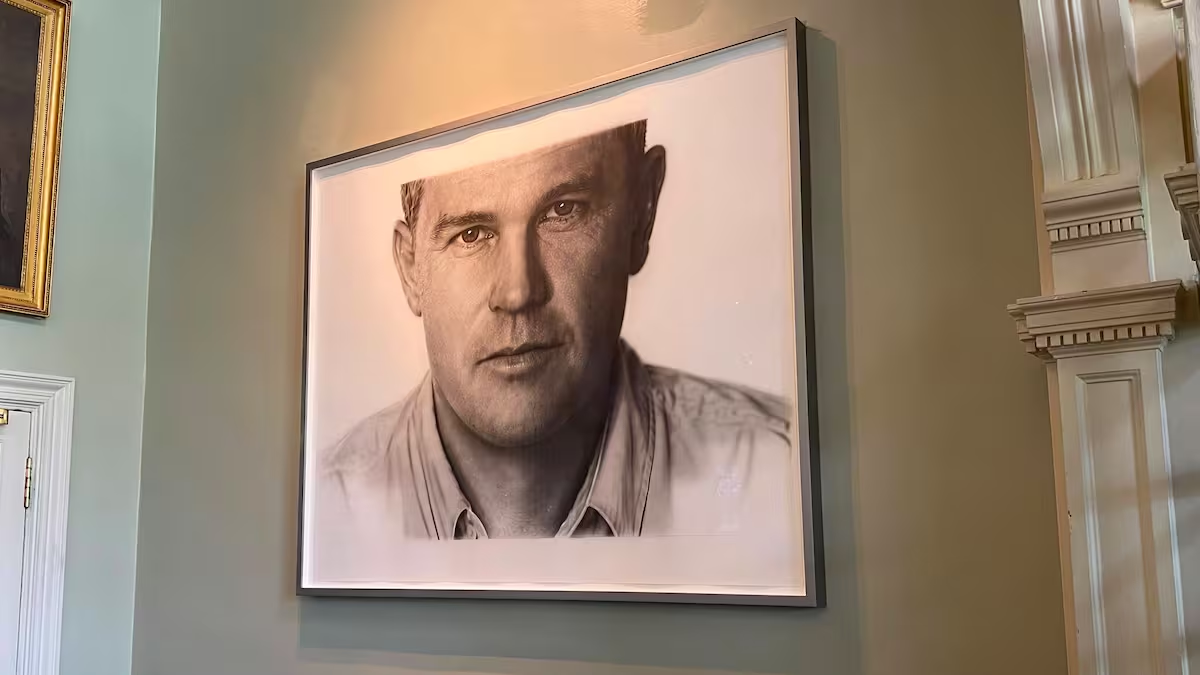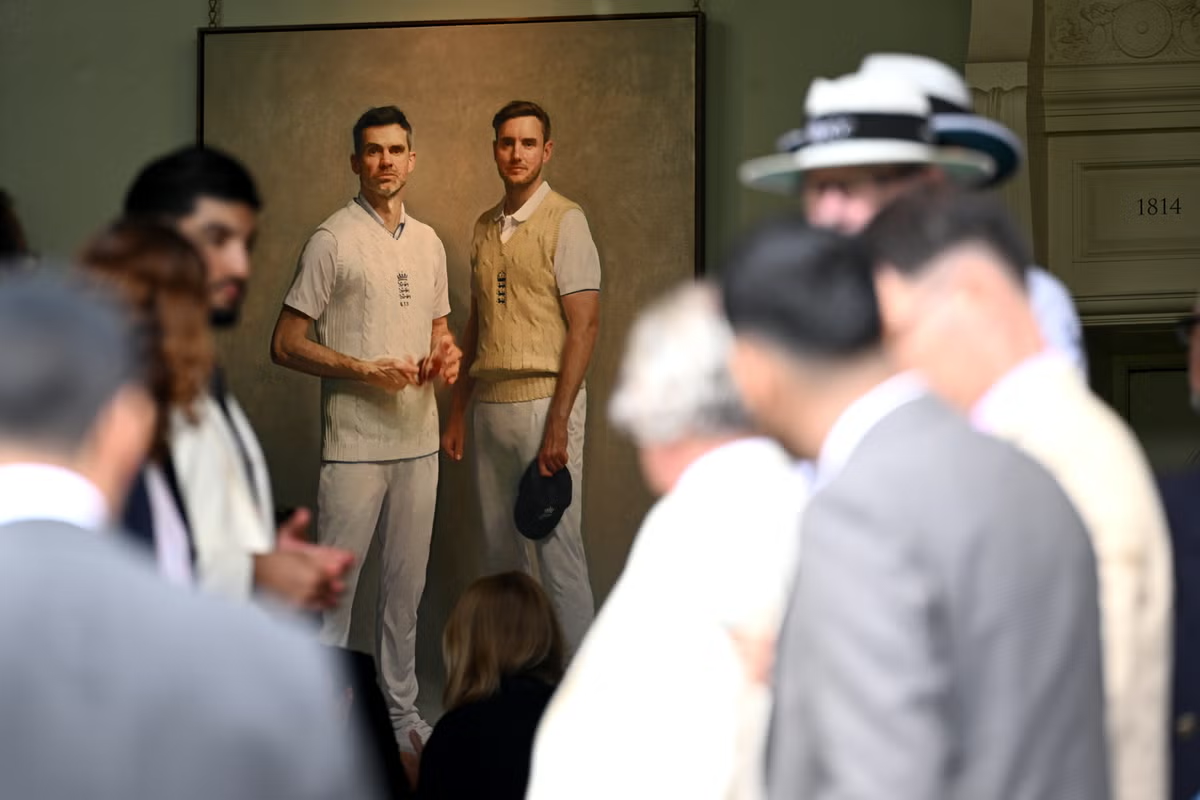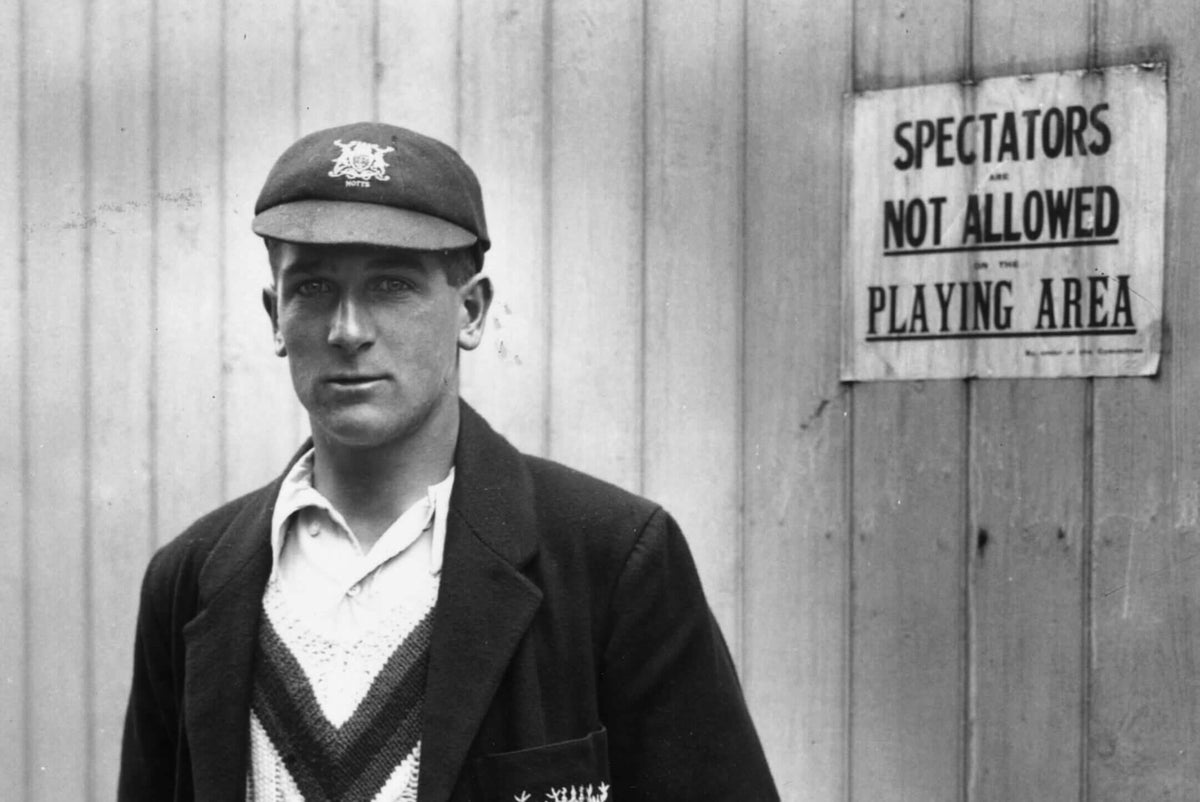
Jimmy Anderson and Stuart Broad stood proudly in the Long Room of the Lord’s pavilion ahead of the second Test against Pakistan as the MCC, owners of the most famous cricket ground in the world and custodians of the game’s laws, unveiled a painting of England’s most successful fast-bowling partnership.It was the latest in a storied collection of artwork of the great and the good of world cricket commissioned by the MCC and displayed in the north London stadium’s historic pavilion for members to enjoy.Just this year, along with the striking likeness of both Anderson and Broad, a portrait of the late, great New Zealander Martin Crowe — a piece paid for by his cousin, the actor Russell Crowe — has been added to the collection, along with one of Australia cricketer Belinda Clark.The works are all created by different artists drawn from a pool used by the MCC, and most capture their subjects perfectly. Others, like the one of Ashes-winning England captain Michael Vaughan, are less flattering.The painting of former England bowlers Jimmy Anderson (left) and Stuart Broad in the Long Room at Lord’s (Gareth Copley/Getty Images)But there is one omission among the priceless collection that has prompted a campaign featuring another former England captain and now respected broadcaster and writer Mike Atherton, who is himself captured on canvas in the Lord’s pavilion, to rectify it ahead of next year’s Ashes.The former England fast bowler Harold Larwood was the symbol of one of the most controversial Ashes series of all time, the 1932-33 ‘Bodyline’ series. When his grandson, Andrew, and his wife Becks visited London last year from their home in Sydney, the MCC gave them a tour of Lord’s.It struck them that, even though there were paintings of the other two leading figures from a series that severely strained English-Australian relations, the England captain Douglas Jardine and the great Australian batter Don Bradman, Larwood is missing.It is not his record of 78 wickets in 21 Test appearances that demands a place among the elite of the game at Lord’s. Rather, it is Larwood’s status as one of the most significant and principled figures in cricket history, and a man who scandalously never played for England again after the Bodyline series.“My surprise was more at the fact that my grandfather was made to feel as though he was in the wrong and asked to apologise for simply following and executing the instructions of his captain, yet there is a portrait of that captain in such a prominent place,” Larwood’s grandson told The Telegraph’s cricket correspondent Nick Hoult, who is spearheading the campaign along with Atherton.“Why isn’t there also a portrait of our grandfather as an acknowledgement of his achievements as an England cricketer?”Harold Larwood bowling for England (Central Press/Getty Images)It is a good question, because the legend of Larwood, a fast bowler from the mining community of Nottinghamshire in England’s East Midlands, has lived on for almost a hundred years. He has been recognised far more in Australia where, ironically considering the controversy he helped create when playing there, he settled happily in the aftermath of the abrupt end to his international career.That came to a sudden halt when he refused to apologise for the Bodyline bowling that played a huge part in England’s 4-1 victory over Australia in the 1932-33 Ashes, and caused a diplomatic crisis that would last until the start of the Second World War.Bodyline — or “fast leg theory”, as it was diplomatically known in England — was the invention of England captain Jardine, who was looking for the best way to stop the great Australian batter Bradman. The tactic involved bowling at leg stump or just outside it but pitching the ball short so that, on bouncing, it reared up at the body of a batter if standing in an orthodox position.A ring of fielders would wait expectantly on the legside, waiting for the batter to fend off deliveries that could prove highly dangerous, in the pre-helmet age, when propelled by bowlers with the extra pace possessed by Larwood.Jardine came up with the idea when watching footage of the 1930 Ashes and decided Bradman, commonly regarded as the greatest batter the game has seen, just might be vulnerable to short-pitched bowling. “I’ve got it — he’s yellow (scared),” Jardine, an establishment figure in the age of ‘gentlemen’ cricketers, was said by his daughter to have proclaimed.Bill Woodfull ducks a bouncer from Harold Larwood in 1933 as England’s legside cordon await a catch (Central Press/Hulton Archive/Getty Images)The policy met with mixed results in the first two Tests — another England player, Gubby Allen, refused to bowl Bodyline and clashed with Jardine — but the controversy erupted, with the series tied 1-1, in the third match in Adelaide.A brutal delivery from Larwood struck Australian captain Bill Woodfull over the heart, causing him to drop his bat and stagger around.“Well bowled, Harold!” said Jardine, while the 50,000-plus crowd began to bay for English blood.Woodfull batted on but was hit several more times and, after the close of play, Pelham Warner, who was acting as England’s tour manager, visited the Australian dressing room to check on him. “I don’t want to see you, Mr Warner,” Woodfull was reported to have told him. “There are two teams out there. One is trying to play cricket, the other is not.”It was only the start of hostilities.At the end of the fourth day’s play in that third Test, the Australian Board of Control sent a cable to the MCC, the game’s ruling body, warning that unless Bodyline was stopped, it would “upset relations between Australia and England”.It elicited a reply from the MCC which stated: “We deplore your cable. We have the fullest confidence in captain, team and managers and are convinced they would do nothing to infringe either the Laws of Cricket or the Spirit of the Game.”Larwood continued to follow the Bodyline plan but was the only England bowler to do so as they went on to win the series comfortably. The controversy rumbled on for years, with the MCC eventually outlawing the tactic and ordering him to apologise.When he refused, understandably pointing out he was just following the instructions of his captain, Larwood was banished and left England for a new start in Australia. He always insisted he had nothing to apologise for. He died in 1995 at age 90.Bill Woodfull is bowled by Harold Larwood on the Bodyline tour (Allsport Hulton/Archive)The MCC are currently looking for funding of £6,000 to pay for a maquette of Larwood’s statue, which stands in his hometown of Kirkby-in-Ashfield, but it is a portrait that would be a fitting final honour for a man who has never been properly recognised in his home country.The problem is that the MCC have a long established and strictly controlled criteria for their portrait projects. Subjects are either current or recently retired players, and the club’s Heritage and Collections committee commissions two per year, one male and one female, at a cost of around £25,000 each.But the privately-funded painting of Crowe shows that it is a policy which can be overlooked, and the response to articles in The Times by Atherton and The Telegraph by Hoult has been extremely positive.“The comments beneath the article were overwhelmingly in favour of the idea, and we’ve had a lot of emails in support,” Atherton told The Athletic, while Hoult has been approached by an artist of repute offering to produce a portrait of Larwood for free.Time could be a factor if the MCC do want to commission a painting of Larwood in time for the Ashes in England next June and July, while the fact many of the best portrait artists like to work with real life rather than old pictures might also be an issue.But Mark Nicholas, the former Hampshire captain turned chairman of the MCC, and a known admirer of Larwood, offered encouragement that the campaign may have a happy ending.“It’s an idea that’s been mooted for a while now, and we look forward to making it happen,” Nicholas told The Athletic. “Harold Larwood’s place in the pantheon of the game is unarguable, and the MCC would be proud to recognise exactly that.”So perhaps Larwood will be belatedly added to the MCC’s hall of fame and one of the game’s huge wrongs in the treatment of one of England’s finest but most hard-done-by bowlers will be put right.
Harold Larwood, a portrait at Lord’s and why the MCC are seeking to make amends
The England fast bowler's refusal to apologise for Bodyline saw him shunned, but a painting of his captain Douglas Jardine hangs at Lord's
1,401 words~6 min read