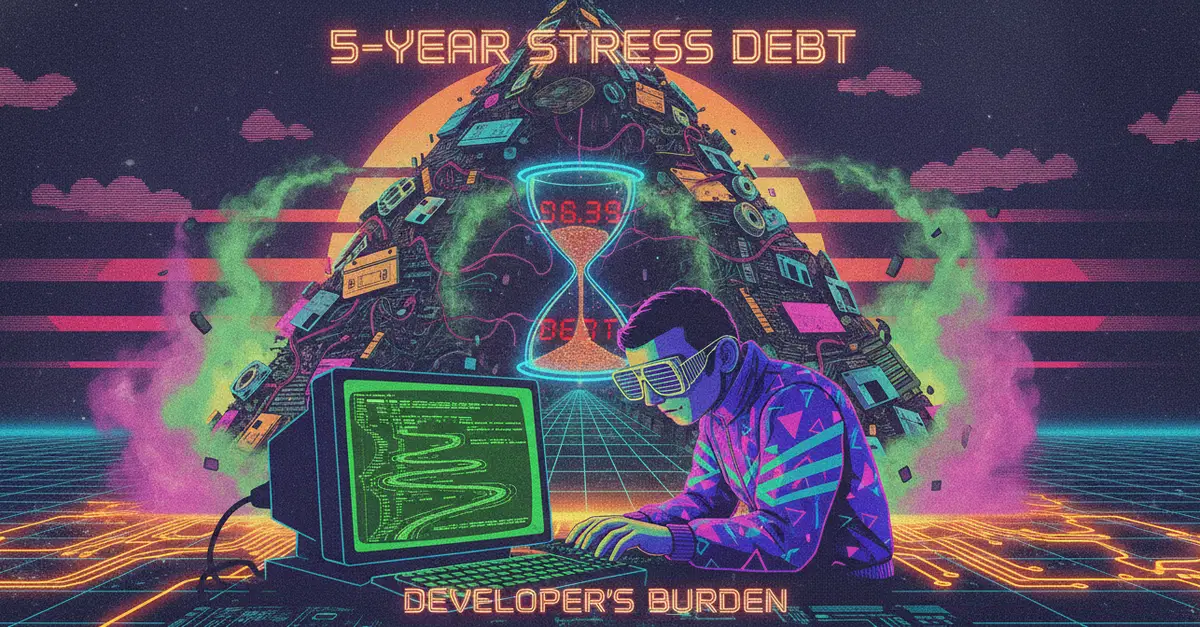
You know technical debt.
Code that works today but accumulates hidden costs over time. Shortcuts that seem reasonable in the moment and compound into architectural problems that take months to untangle. The kind of debt that doesn't announce itself until the system starts failing in ways that are expensive and slow to fix.
Chronic stress works the same way.
Every sprint crunch, every production incident at 11PM, every sustained period of pressure without adequate recovery — these aren't just experiences you have and move past. They're transactions against a biological account. And like technical debt, the interest compounds quietly until the system starts failing.
Here's what the debt actually is, how it accumulates, and — most importantly — how to stop it before the refactor becomes mandatory.