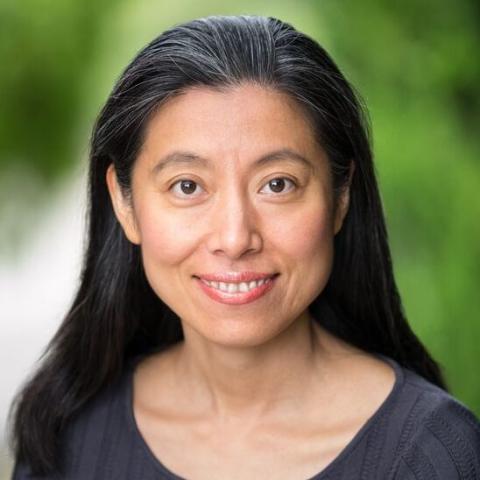
Yankai Wang, a Ph.D. student in organizational behavior at Stanford Graduate School of Business, was reading a paper about how transformers—the architecture behind large language models (LLMs) like ChatGPT and Claude—might be used to study disease development by tracing how one condition tends to follow another.
It struck him that the way people work together could be modeled in a similar fashion: as a sequence of discrete events unfolding over time. Could the same architecture that learned the grammar of human language by predicting the next word in a sentence learn the "grammar" of coordination by predicting the next event in an organization?
"Innovation comes when you borrow an idea from one realm and project it onto another," says Amir Goldberg, the Amman Mineral Professor of Organizational Behavior and one of the faculty directors of the Computational Culture Lab.
"The genius of Yankai's idea is treating coordination as text, thinking about sequences of coordination as if they were textual representations of language and envisioning an architecture parallel to that of LLMs. But the language here, the words in the language, are not words: They are organizational events."
When Wang came across the AI for Organizations Grand Challenge, his nascent idea felt like a natural fit. Collaborating with Goldberg, Wang entered the contest, which offered a $100,000 prize to researchers studying AI tools in the workplace.