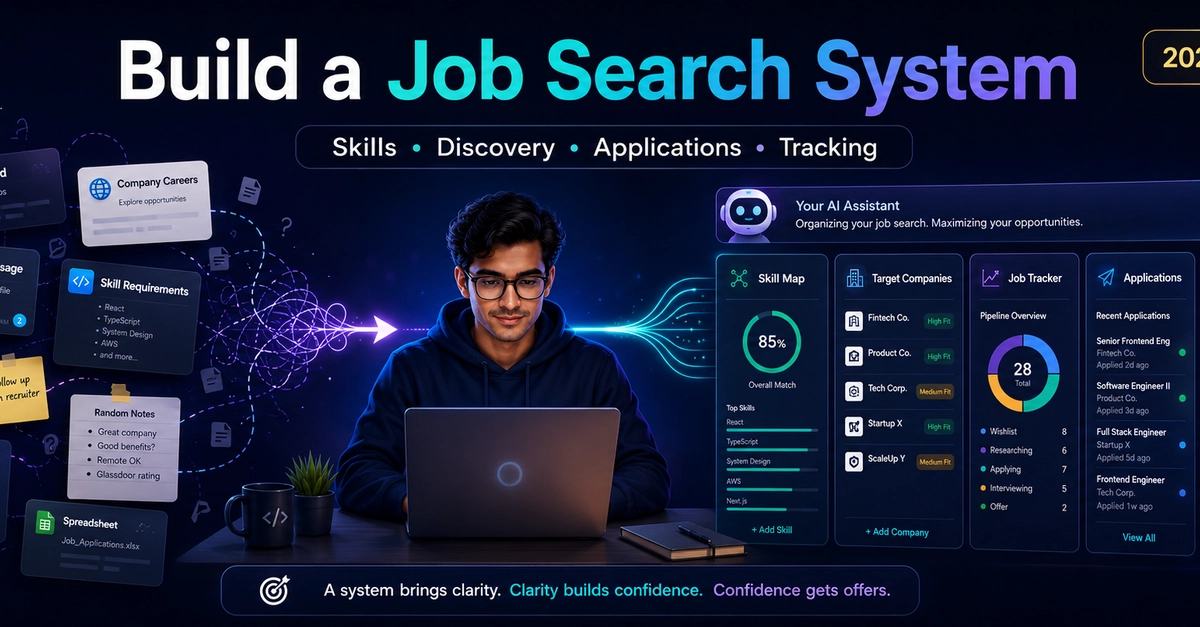
Most job searches look the same from the inside: a dozen open browser tabs, a spreadsheet that was accurate for about four days, and a nagging feeling that something is slipping. Applications leak out the bottom. Follow-ups get forgotten. And after a few weeks of it, you have done a lot of work and learned almost nothing about what is actually working.
I ran mine that way for a while. Then I stopped treating it as a to-do list and started treating it as a pipeline: named stages, a scoring step at the front, and a follow-up cadence that did not depend on my memory. That one shift changed how the whole search felt. Here is the system.
Why a list fails you
A to-do list is good at exactly one thing: telling you what to do next. That is also its limit.
A list cannot tell you what is working. It has no stages, so you cannot see where things stall. Are you not getting responses because your applications are weak, or because you are aiming at the wrong roles, or because you never follow up? A list shrugs. It just shows you the next unchecked box.